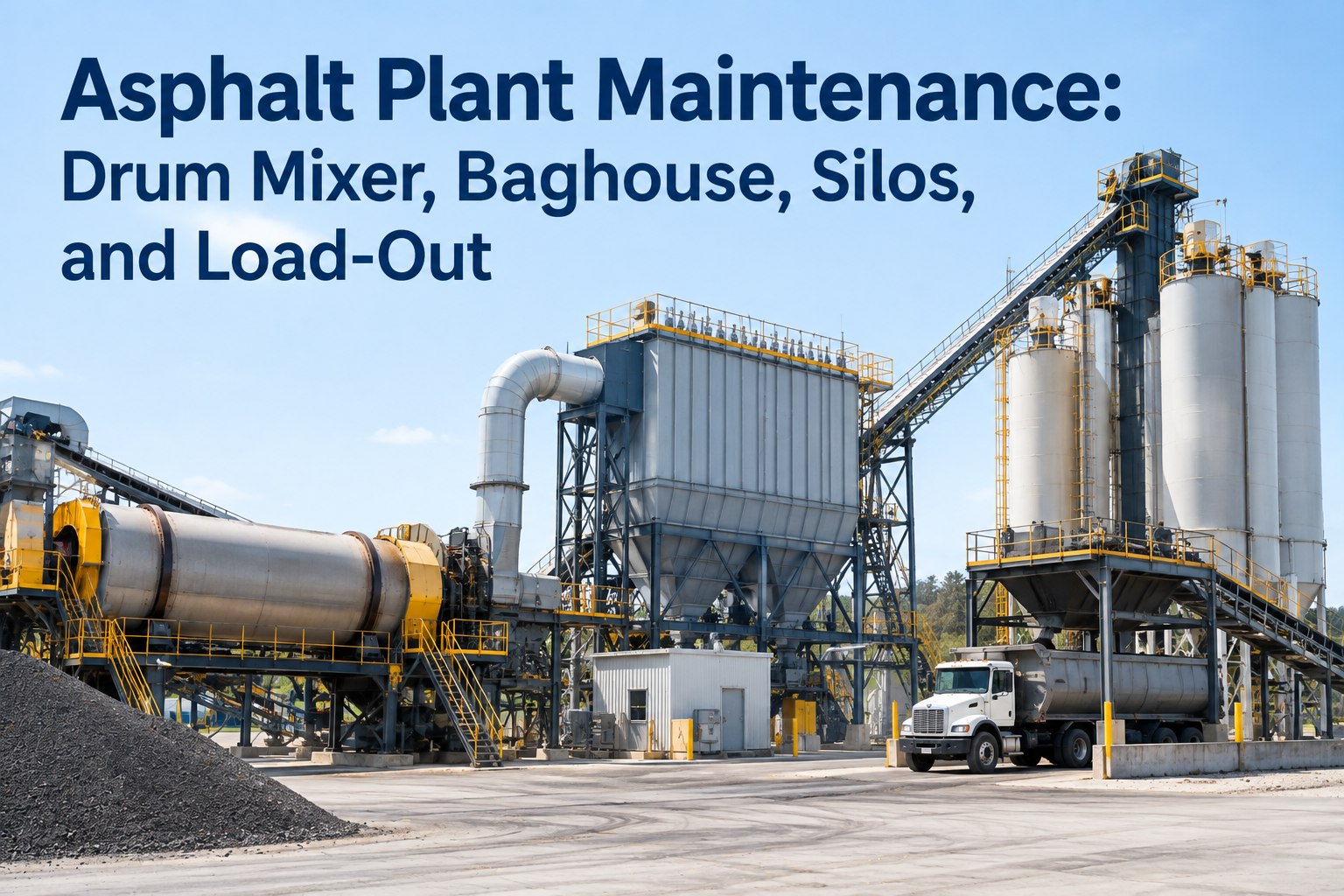
An asphalt plant doesn't fail gradually — it fails on the first hot day of the season, in front of a paving crew that's already loaded and waiting. That's the tax on seasonal equipment: it sits idle through winter, and every worn flight, cracked bag, and seized reducer that got skipped in the off-season surfaces at start-up, when downtime is at its most expensive. As the plant managers say it plainly — the single most expensive part of plant maintenance is the plant not running. The fix isn't more reactive wrenching in July; it's a disciplined pre-season overhaul plus a tight in-season daily check, run across the four systems that carry the plant: the drum mixer, the baghouse, the storage silos, and load-out. This guide lays out both calendars for all four, and shows how OxMaint keeps the whole program on schedule instead of on memory. Book a demo to build your pre-season checklist.
Four Systems, Two Calendars
The plant that starts clean in spring is the one that got its off-season work done — and its daily checks logged all summer.
Why Seasonal Plants Fail at Start-Up
The physics of a hot-mix plant work against you in the shoulder season. Material left packed in the drum or drag hardens over winter. Condensation sits in air lines and reducers. Bag filters that were near end-of-life in October don't recover in April. None of it shows while the plant is cold — it all shows on the first burner light, at maximum cost.
#1
Downtime is the top cost. A stalled plant costs more than any part you'd buy to prevent the stall — every idle hour burns crew, trucks, and the paving window.
↓
Packed material compounds. Skip regular cleaning and hardened mix in the drum or drag conveyor turns a cheap job into a seized reducer and a torn-down drum.
5
The top pre-season touchpoints. Burner, pumps, baghouse and exhaust fan, drag conveyor, and belts — the five systems most worth inspecting before spring start-up.
The Pre-Season Overhaul · System by System
Winter downtime is the one window to open, inspect, and rebuild without losing production. This is the off-season checklist for each of the four systems — the work that decides whether spring start-up is a smooth first load or a scramble.
Drum Mixer
Inspect every flight — conditioning, showering, combustion — for wear, heat curling, impact bending, and cracking; mark for replacement
Check mixing tips/paddles for wear; rotate reversible tips and remove drum buildup together
Assess trunnions and tires for wear beyond the hardening point; grind or polish with trained crews
Service the burner and verify the drive train and seals
Baghouse
Inspect and replace bags near end of life before they fail mid-season
Verify the pulse-clean system and backwash air pressure (typically 90–100 psi)
Check the exhaust fan, drop-out chamber, and pressure-drop instrumentation
Confirm the differential-pressure baseline for clean bags before start-up
Storage Silos
Take thickness-gauge readings along the cone and sidewalls; map wear per silo
Mark thin areas in the cone for plating or replacement
Inspect gates, pivots, and the air-actuation system — the primary cause of gate problems
Check air cylinders and hoses; replace substandard hoses
Load-Out
Inspect the drag conveyor, slats, and chute liners for abrasive wear
Verify the enclosure door limit switch that blocks loading unless closed
Confirm fume-capture ductwork to the drum is intact — collapsed duct is a fugitive-emission event
Service bearings, belts, and drive components on the conveyor
Turn This Overhaul Into a Tracked Project
Bring your plant's asset list to a 30-minute session. We'll load the four systems into OxMaint, build your pre-season overhaul as a tracked project with parts and priorities, and set the daily in-season checks — so nothing high-priority slips before start-up.
The In-Season Daily Check
Once the plant is running, reliability is won in the pre-shift walkaround — the operator scanning the cold feed, drum, baghouse, and load-out before the first truck, catching a torn bag or a noisy bearing while it's still cheap. These are the daily numbers and checks that keep a running plant running. Start a free trial and put the daily checklist on every operator's phone.
3–6" wc
Baghouse pressure drop
Normal operating range across the bags. Above ~7" wc, check clean rate, grain loading, pulse timing, and backwash pressure — a blinded baghouse chokes production and trips emissions limits.
Drain
Air compressor & manifold
Drain condensation from the air compressor and manifolds daily — wet air fouls pulse cleaning and silo gate actuation, two failures that stop load-out fast.
Walk
Belts & drive components
Check drag conveyor belts, drive components, and bearings each shift. A noisy bearing caught on the walkaround is a five-minute note; ignored, it's a mid-load teardown.
Clear
Drum & drag buildup
Watch for material packing in the drum and drag. Left to harden, it seizes reducers and motors — the exact compounding failure daily attention prevents.
How OxMaint Runs Asphalt Plant Maintenance
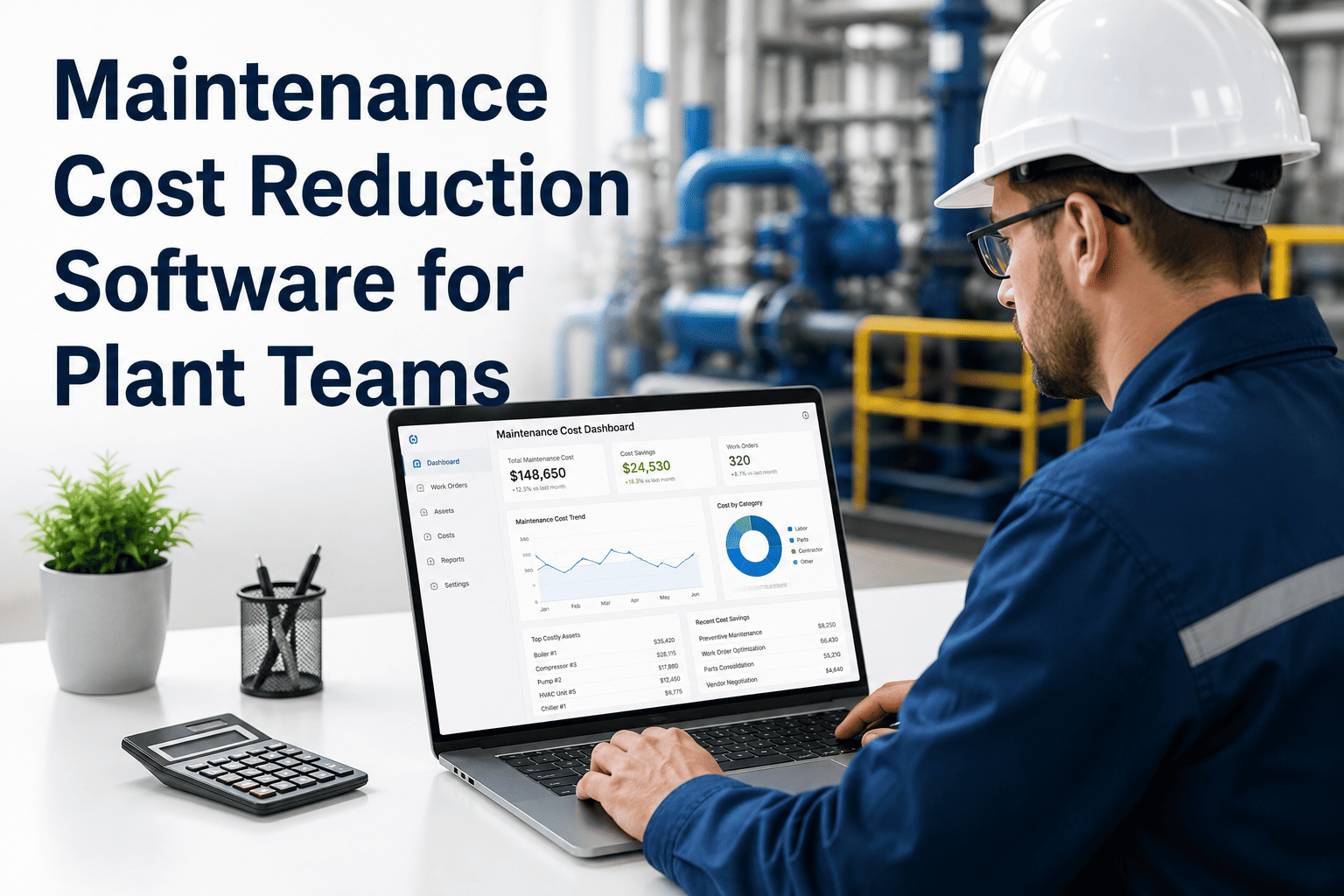
OxMaint splits the plant's work the way the season does — a pre-season overhaul run as a tracked project, and daily in-season checks that live on the operator's phone. Every asset across the four systems is QR-tagged with wear history behind it, so condition-based decisions replace guesswork. Book a demo to map your plant into OxMaint.
Project
Off-Season Overhaul Plan
Build the winter teardown and liner-replacement work as a tracked project with parts, priorities, and a start-up deadline.
Mobile
Pre-Shift Walkaround
Operators scan QR codes on the baghouse, silos, and cold feed, snap a photo of a torn bag or worn slat, and raise it on the spot.
Predict
Wear Tracking by Tonnage
Track tons produced to predict when drag slats, chute liners, and flights need replacing — condition-based, not calendar-guessed.
Log
Baghouse & Burner Logs
Digital logs for exhaust temperature and baghouse pressure differential — the readings that protect both production and emissions compliance.
Schedule
Daily Checks That Recur
The in-season checklist re-surfaces every shift, so drains, walkarounds, and buildup checks never depend on memory.
Field
Built for the Back Lot
A high-contrast mobile interface works in bright sun and handles the dead-zone corners of the yard where signal drops.
Start the Season Clean — Not Scrambling
Put the pre-season overhaul and the daily checks for your drum, baghouse, silos, and load-out onto one system that tracks wear, logs the readings, and never lets a high-priority job slip before start-up. Free forever plan available.
Frequently Asked Questions
Why do asphalt plants fail on the first day of the season?
Because the wear and damage accumulated the previous season — worn flights, near-dead bags, packed material, condensation in air lines — doesn't show while the plant is cold. It all surfaces at start-up under full load, which is exactly when downtime is most expensive. A thorough off-season overhaul is what prevents it.
Start free to build your overhaul plan.
What are the top pre-season touchpoints?
Plant builders point to five: the burner, the pumps, the baghouse and exhaust fan, the drag conveyor, and the belts. Beyond those, inspect drum flights and mixing tips, silo cone thickness, gate actuation, and load-out ductwork — the items whose failure stops production once you're running.
What baghouse pressure drop is normal?
A typical operating range is about 3 to 6 inches of water column across the bags. Above roughly 7" wc, check the filter clean rate, grain loading, pulse timing, and backwash air pressure (commonly 90–100 psi). A blinded baghouse both chokes production and risks an emissions exceedance.
How does daily maintenance prevent big failures?
The pre-shift walkaround catches small problems — a torn bag, a noisy bearing, packed material — while they're cheap to fix. Left alone, packed drum or drag material hardens and seizes reducers and motors, turning a routine check into a major teardown.
Book a demo to see the daily workflow.
Does OxMaint work for seasonal asphalt operations?
Yes. OxMaint runs the off-season overhaul as a tracked project, puts the daily pre-shift checklist on every operator's phone with QR-scan asset access, tracks wear by tonnage produced, and logs baghouse and burner readings for production and compliance — with a field-ready mobile interface for the yard. A free forever plan is available to trial the full workflow.