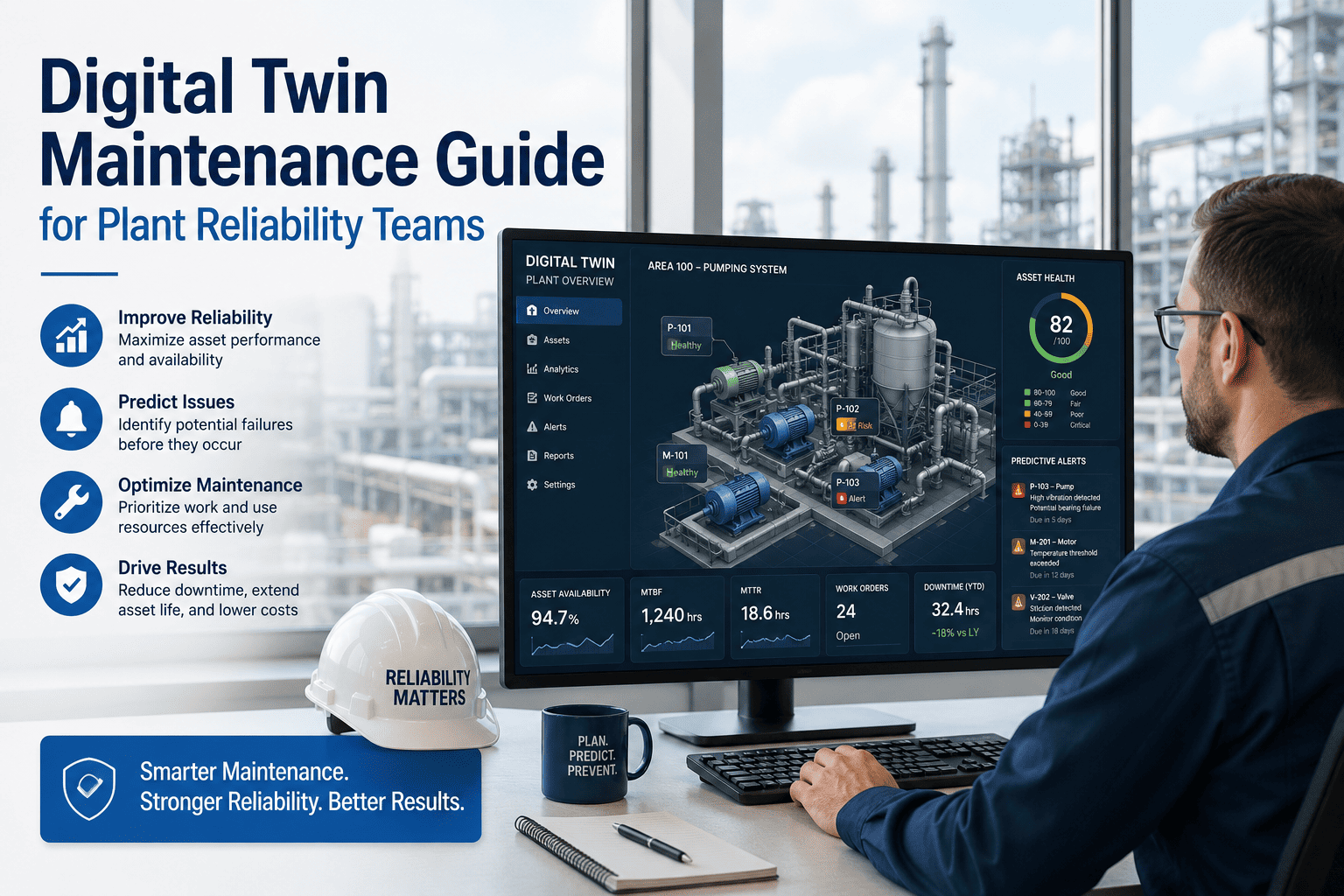
Plant reliability teams face a critical challenge: predicting equipment failures before they happen. Traditional time-based maintenance schedules leave plants reacting to breakdowns rather than preventing them. Digital twin technology on OxMaint changes that equation entirely — giving reliability engineers a live virtual replica of every asset, continuously updated with real sensor data, so failures get spotted weeks before they surface on the shop floor.
What Is a Digital Twin in Maintenance?
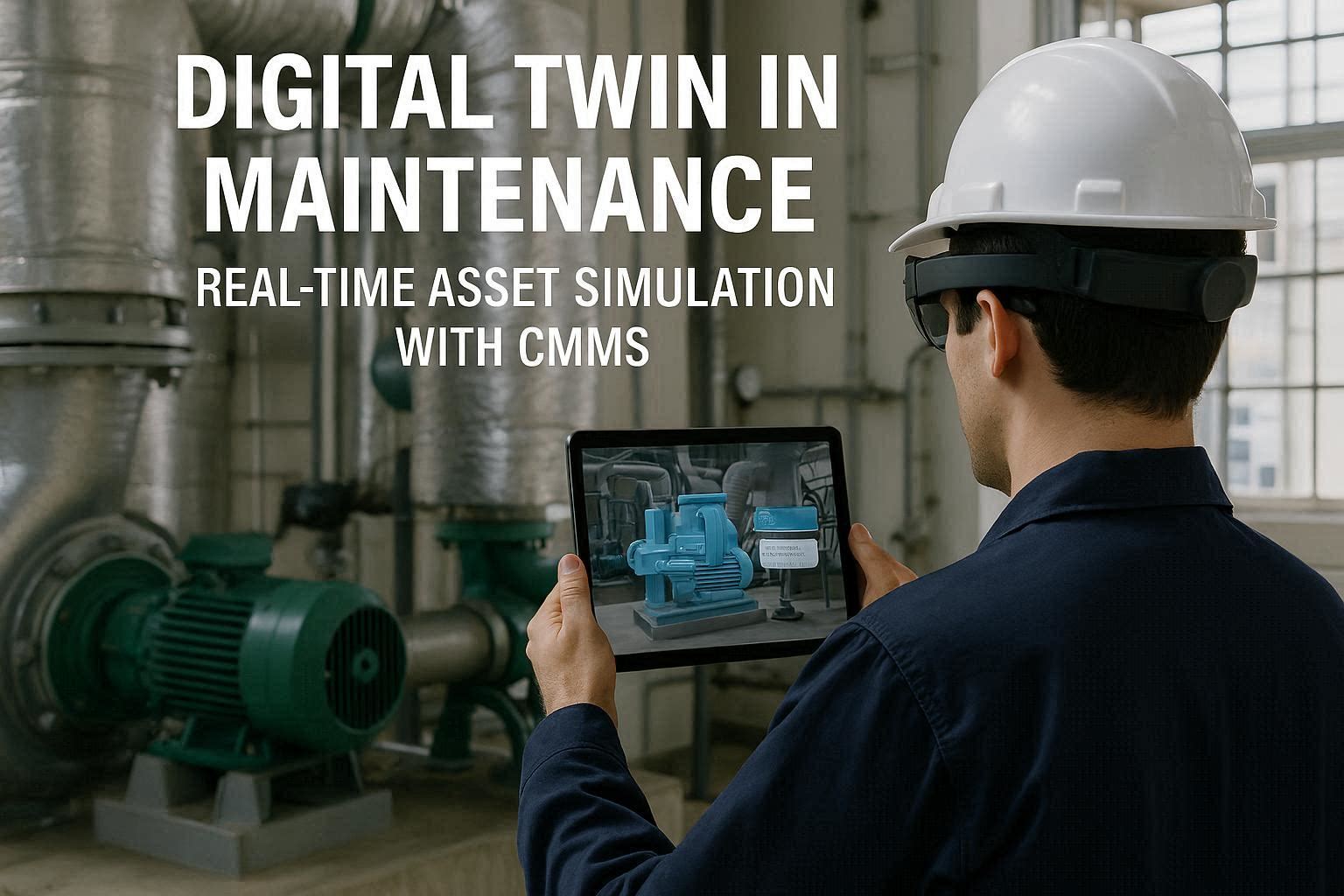
A digital twin is a continuously synchronized virtual model of a physical asset — not a static drawing or a CAD file. Every sensor reading from your DCS, SCADA, and IoT instruments flows into the twin in real time. The virtual model mirrors the actual equipment state at every moment: temperature trends, vibration signatures, lubrication condition, runtime hours, and historical failure patterns all feeding one unified asset intelligence layer.
Reliability teams use digital twins to answer the single most important question in maintenance: which asset is most likely to fail next, and when? Instead of scheduling maintenance based on calendar intervals, decisions get made on actual condition data — eliminating both over-maintenance and catastrophic under-maintenance simultaneously.
4 Ways Digital Twins Improve Plant Reliability
AI models trained on historical degradation curves predict when an asset will reach failure threshold — with 88–97% accuracy according to industry studies. Reliability engineers see a countdown, not a surprise.
The twin simulates what happens when a bearing fails, a seal degrades, or a gearbox overheats — before it happens in real life. Teams practice response procedures against virtual failure events.
Instead of shutting down assets on a schedule, the twin identifies the exact right intervention window — maximizing asset life while eliminating the risk of running to failure.
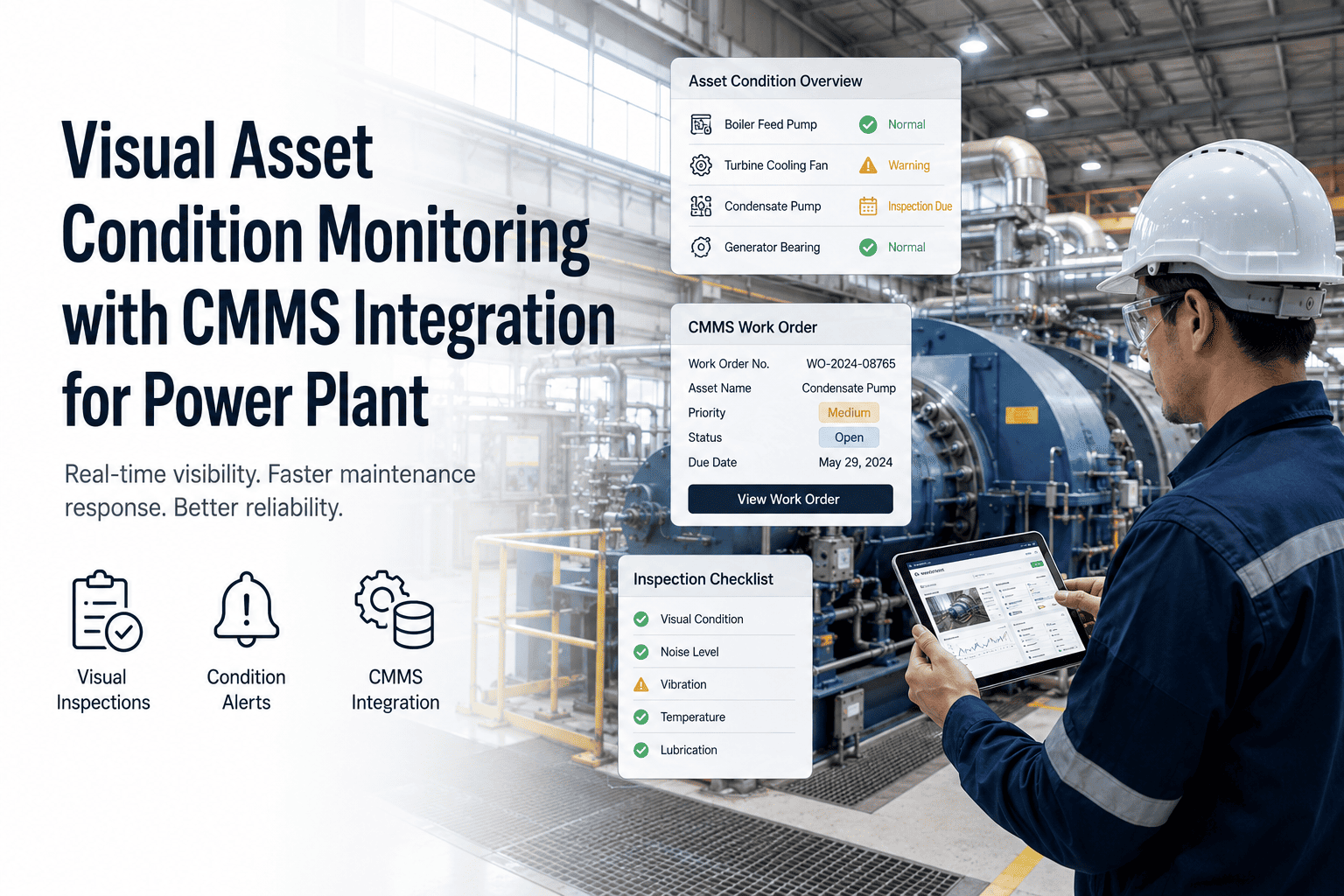
When the digital twin detects a degradation pattern crossing a threshold, OxMaint automatically creates a prioritized work order — with asset details, parts needed, and scheduling guidance — without any manual trigger.
Digital Twin vs. Traditional Maintenance: The Numbers
| Metric | Reactive Maintenance | Preventive (Calendar) | Digital Twin (Condition-Based) |
|---|---|---|---|
| Failure Prediction Lead Time | 0 hours | N/A (scheduled) | 4–8 weeks average |
| Unplanned Downtime | High — all stops unplanned | Moderate reduction | 50–70% reduction |
| Maintenance Cost | Highest (emergency rates) | Over-maintains assets | 18–25% lower than preventive |
| Asset Lifespan | Shortened by run-to-failure | Some extension | 20–40% extension documented |
| Emergency Repair Rate | 100% of failures | 40–60% of failures | Under 10% of failures |
| Annual ROI | Negative | Moderate positive | 22% average (McKinsey, 2024) |
How to Get Started: Digital Twin Deployment in 4 Phases
Map your critical assets, connect existing sensors and historians (SCADA, PI, OPC-UA), and establish baseline performance profiles. Most plants complete this in 2–4 weeks without any control system changes.
Pre-trained AI models provide immediate anomaly detection from day one. Asset-specific degradation models — trained on your plant's historical data — typically reach full accuracy in 3–6 months of operation.
Configure condition thresholds for each asset class. When the twin detects a degradation pattern, OxMaint auto-generates a prioritized work order with parts list, severity score, and recommended maintenance window.
Each completed work order feeds back into the model — improving prediction accuracy over time. Most plants reach positive ROI within 8–14 months, with single prevented failures often covering the full annual platform cost.
The shift from time-based to condition-based maintenance using digital twins is the single largest reliability improvement available to industrial plants today. Plants that have made this transition consistently report 50% or greater reductions in unplanned downtime within the first year — not from heroic engineering efforts, but from simply having a system that watches every asset all the time and alerts teams before conditions become critical. The technology maturity is there. The only remaining question is implementation speed.