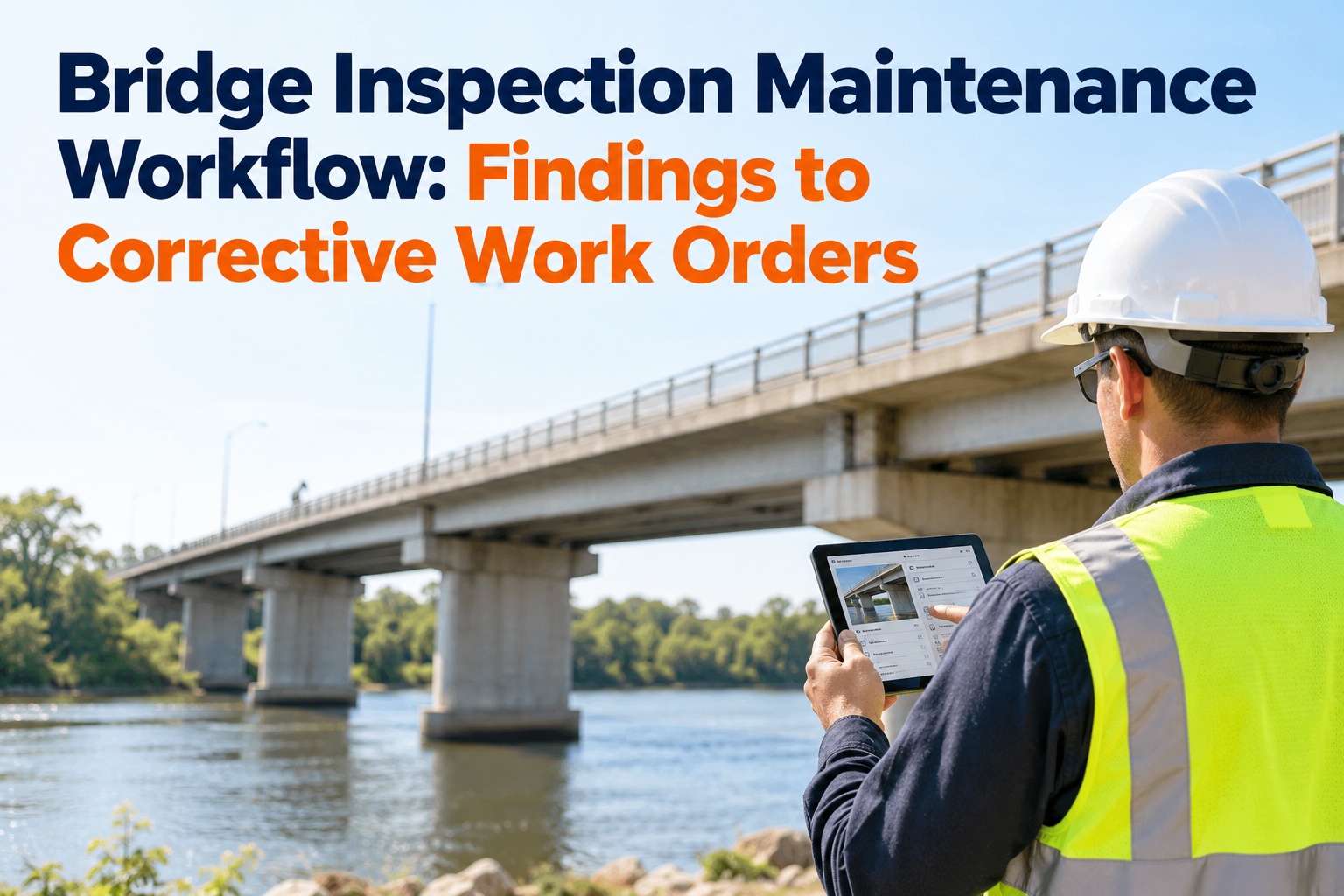
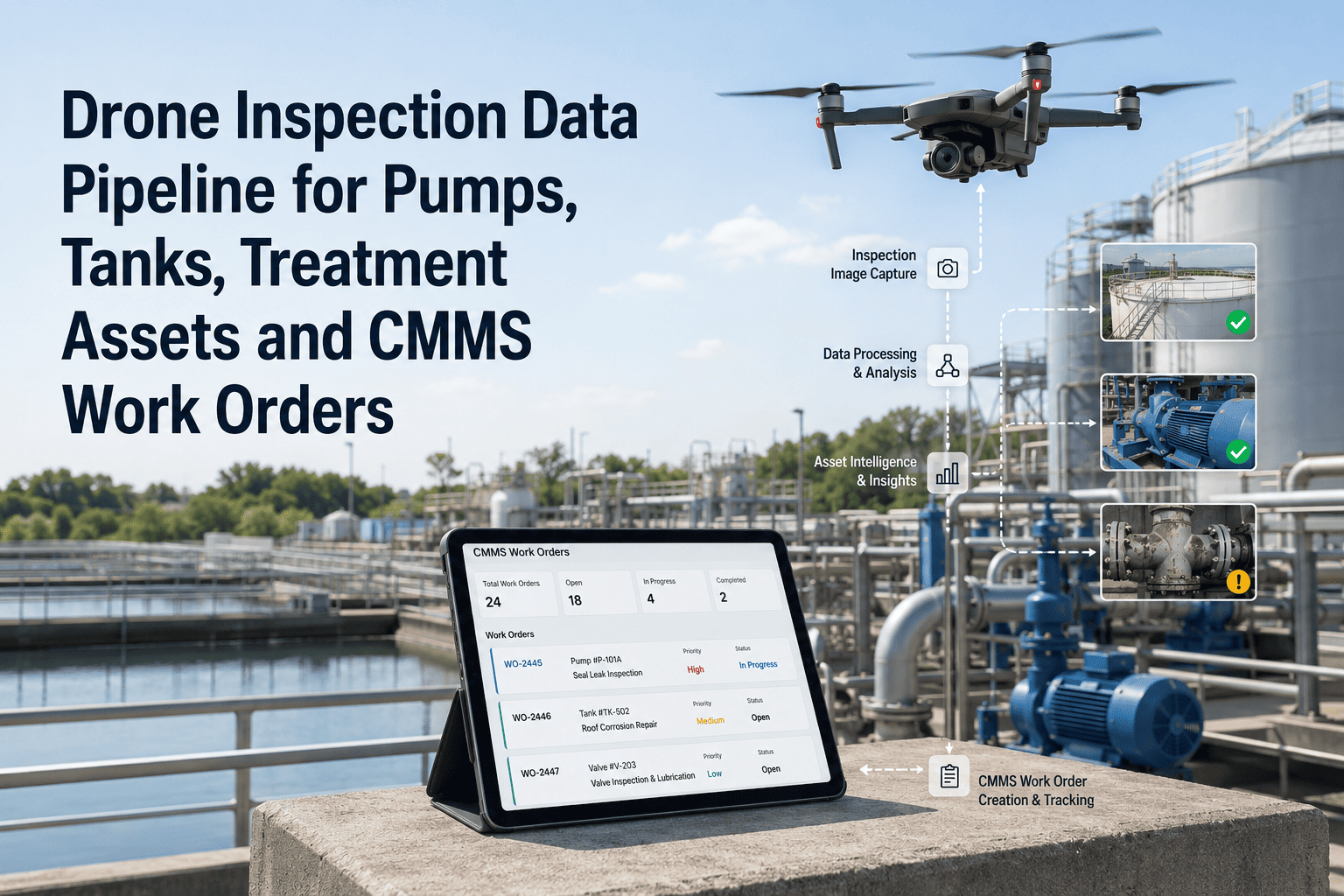
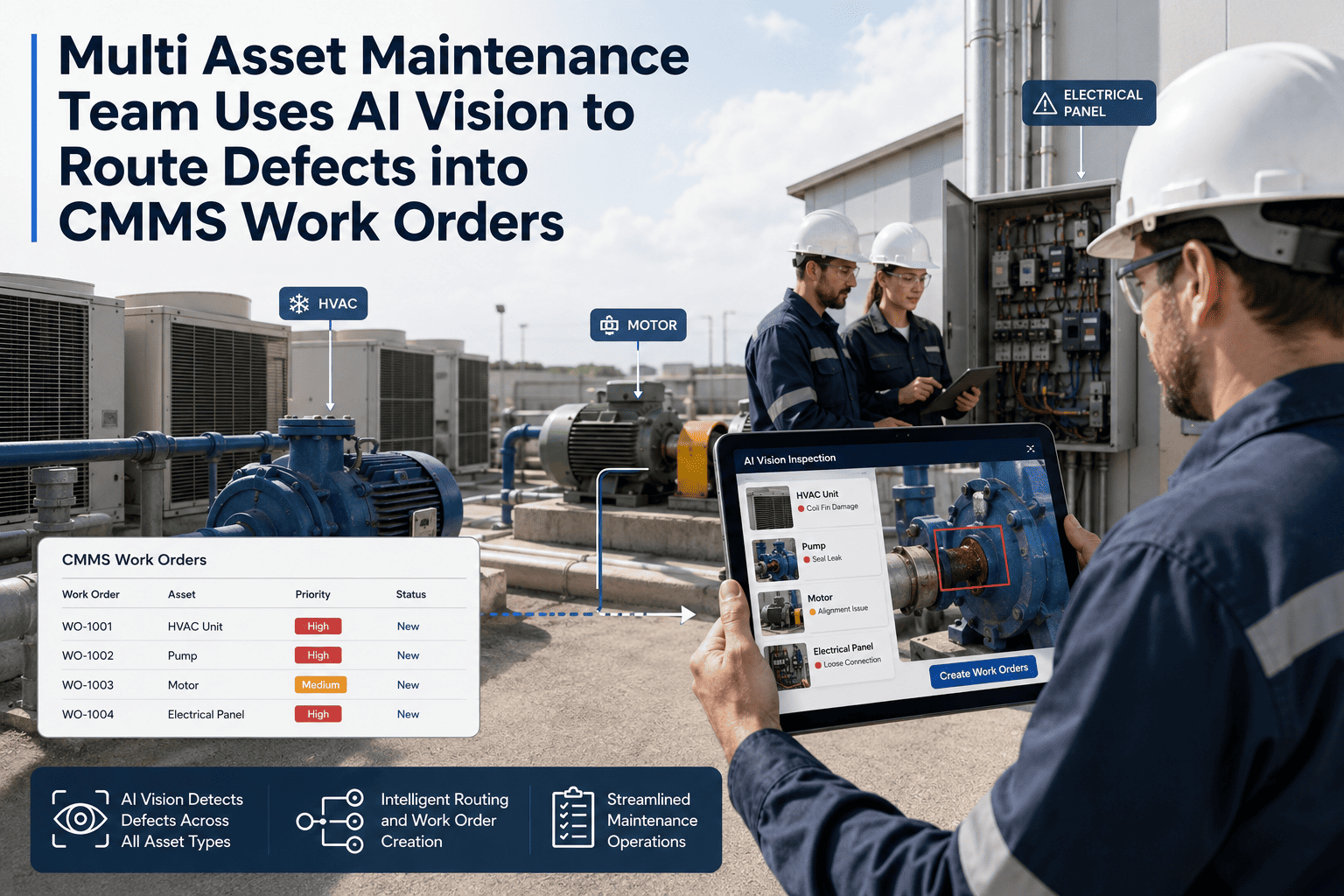
A bridge inspector flags advancing section loss on a girder — and the finding sits in a PDF on a laptop while the pier keeps deteriorating. The gap between a documented defect and a dispatched repair is where public-works liability lives. This guide maps the bridge inspection maintenance workflow from finding to corrective work order, and how OXMAINT AI, the AI-powered public-works CMMS, turns each NBI-coded finding into a prioritized, tracked work order.
Public Works · Municipal Asset Management · Bridge Inspection Workflow · 2026
Bridge Inspection Maintenance Workflow: Findings to Corrective Work Orders
A defect documented but never dispatched, a condition rating that slipped and nobody trended, a critical finding without a timestamped response — that's how a bridge program fails an audit or worse. OXMAINT AI, the AI-powered CMMS and maintenance management software, captures each NBI-coded finding in the field, grades it by severity, and raises a corrective work order with the photo, element and rating attached.
1Inspect & rate
→
2Grade severity
→
3Work order
→
4Trend & report
FINDING TO WORK ORDER
1
Field captureNBI-coded form, geo-tagged photo
2
Condition rating0–9 by deck / super / sub
3
Severity gradeMonitor / Repair / Urgent
4
Work orderRouted, ranked, tracked
5
Record & trendTimestamped, NBI export-ready
24 mo
routine & fracture-critical inspection ceiling
0–9
NBI general condition rating scale
24 hr
FHWA notification window on a critical finding
100%
inspection-currency rate that compliance targets
The Rating Decides The Work Order
Every finding carries an NBI condition rating, and the rating — together with the defect it describes — sets how fast it must become work. The scale runs 0 to 9 for the deck, superstructure and substructure, and a disciplined program maps each band to a severity tier that triggers the right queue. OXMAINT AI applies that mapping the moment a rating is entered, and you can book a demo to see rating-driven routing in OXMAINT AI.
7–9
Good to Excellent · Monitor
Minor or no deficiencies — hairline cracking, surface scaling, vegetation. Feeds the routine preventive-maintenance queue on the standard 24-month cycle.
5–6
Fair · Monitor → Repair
Primary elements sound but showing minor section loss, cracking or spalling. Increased monitoring; defects escalate to the repair queue as they progress.
3–4
Poor to Serious · Repair Required
Advanced section loss, deterioration or scour. Spalling with exposed rebar, joint-seal failure, bearing misalignment — load-posting evaluation and rehabilitation planning.
0–2
Critical to Failed · Urgent
Advanced deterioration of primary components, active fatigue cracking, foundation settlement. Immediate load posting, closure or emergency repair — FHWA notification within 24 hours.
Inspection Types Set The Schedule
The workflow starts with the right inspection at the right interval. NBIS defines the cycle for each type, and the CMMS schedules them so none lapses. The reference below is the compliance baseline — always follow the current NBIS regulation and your state DOT — and you can start free and load your inspection calendar in OXMAINT AI.
| Inspection type | Max frequency | Scope |
| Routine |
24 months |
Hands-on evaluation of deck, superstructure, substructure, waterway and approaches with NBI condition ratings by a qualified team leader |
| Fracture-critical |
24 months |
Arm's-length examination of steel tension components whose failure would cause collapse; includes non-destructive testing |
| Underwater |
60 months |
Dive assessment of submerged substructure, scour measurement and undermining detection by a certified dive team |
| In-depth / special |
As needed |
Triggered by routine findings — concrete coring, load testing, seismic or detailed component analysis, often PE-led |
| Damage / interim |
Event-driven |
After impact, flood or earthquake, or to watch a known defect between scheduled cycles |
Baseline per NBIS — confirm against the current regulation and your state DOT. Scroll sideways on mobile to see every column.
A Finding In A PDF Is Not A Repair.
The liability gap is the stretch between a documented defect and a dispatched crew. When a finding becomes a work order automatically — graded, routed and timestamped — the response is tracked and defensible, not dependent on someone remembering to transcribe the report.
How OXMAINT AI Runs The Workflow
From the scheduled inspection to the FHWA submission, the whole chain lives in one system so nothing falls between the inspection report and the asset record. OXMAINT AI ties scheduling, field capture, prioritization and documentation together, and you can book a demo to see the bridge workflow in OXMAINT AI.
01
Automated Scheduling
Work orders generated on each bridge's NBIS interval, with escalation alerts at 90, 60 and 30 days before the deadline.
02
Mobile Field Capture
Standardized NBI-coded forms on a tablet — condition ratings, geo-tagged defect photos and measurements, synced in real time.
03
Condition Trend Analysis
Ratings tracked across cycles — a deck sliding from 6 to 5 flags accelerating decline and a recommended frequency change.
04
Capital Prioritization
Condition, traffic exposure, detour impact, posting status and deterioration rate combine into a ranked inventory index.
05
NBI Data Export
Findings formatted for state DOT and FHWA submission, validated against the Recording and Coding Guide.
06
Liability Documentation
Every inspection, action and critical-finding response timestamped and archived as a due-diligence record.
The Numbers A Bridge Program Reports On
A workflow is only as good as what it lets you measure. With findings, ratings and responses in one system, the program's health is a live dashboard rather than a year-end reconstruction.
Inspection currency
Share of bridges inspected on schedule — the compliance target is 100%
Condition distribution
Share of the inventory in good, fair and poor bands over time
Deterioration velocity
Rating change per cycle — surfaces the structures declining fastest
Critical-finding response
Days from detection to corrective action, against the 24-hour notification rule
Load-posting rate
Bridges carrying weight restrictions — the freight and detour impact
NBI submittal accuracy
Clean coding on the annual submission — typically targeted above 98%
“
Our bridge findings used to live in inspection PDFs that somebody had to read, interpret and turn into work — and in a county our size, things slipped. Grading each finding by its condition rating the moment it's captured, auto-routing the urgent ones and trending the ratings cycle over cycle changed how defensible the program is: a critical finding now has a timestamped response, the capital ranking is built from real condition data, and the FHWA submission is an export instead of a transcription marathon.
Public Works Bridge Program Manager · County DOT
Frequently Asked Questions
How does an inspection finding become a work order?
The inspector captures the defect on an NBI-coded mobile form with a geo-tagged photo and a condition rating. That rating and the defect type set a severity tier — monitor, repair-required or urgent — which routes the finding to the right queue as a work order with the evidence attached, so nothing stays trapped in a report.
Book a demo to see finding-to-work-order routing in OXMAINT AI.
What do the NBI 0-9 condition ratings mean?
They grade the deck, superstructure and substructure separately: 7-9 is good to excellent, 5-6 is fair, 3-4 is poor to serious (load-posting evaluation and rehab planning), and 0-2 is critical to failed, where immediate closure or emergency repair and FHWA notification apply. The rating drives both the maintenance response and the inspection frequency.
How often must bridges be inspected?
Under NBIS, routine and fracture-critical inspections run on a 24-month maximum cycle, underwater inspections on a 60-month maximum, and in-depth or special inspections as needed or when a routine finding triggers them. Damage inspections are event-driven after impact, flood or earthquake. Always confirm intervals against the current regulation and your state DOT.
How are defects prioritized for repair?
By severity tier and then by a composite index. Monitor-level defects feed preventive maintenance; repair-required defects enter rehabilitation planning; urgent defects trigger immediate action. Capital ranking then combines condition rating, traffic exposure, detour impact, posting status and deterioration rate to order the whole inventory from most to least urgent.
How does a CMMS help with NBIS compliance?
It schedules each inspection type on its interval with 90/60/30-day alerts, captures NBI-coded findings validated against the Recording and Coding Guide, enforces critical-finding escalation, exports the annual submission, and timestamps every action as a due-diligence record — turning an FHWA review into a search rather than a scramble.
Start free and run your bridge program in OXMAINT AI.
Close The Gap Between The Finding And The Fix.
Run your bridge inspection program on the OXMAINT AI maintenance management software — NBI-coded field capture, rating-driven severity grading, corrective work orders routed and ranked, condition trending across cycles, and FHWA-ready records timestamped against every asset. Turn inspection findings into tracked, defensible work.