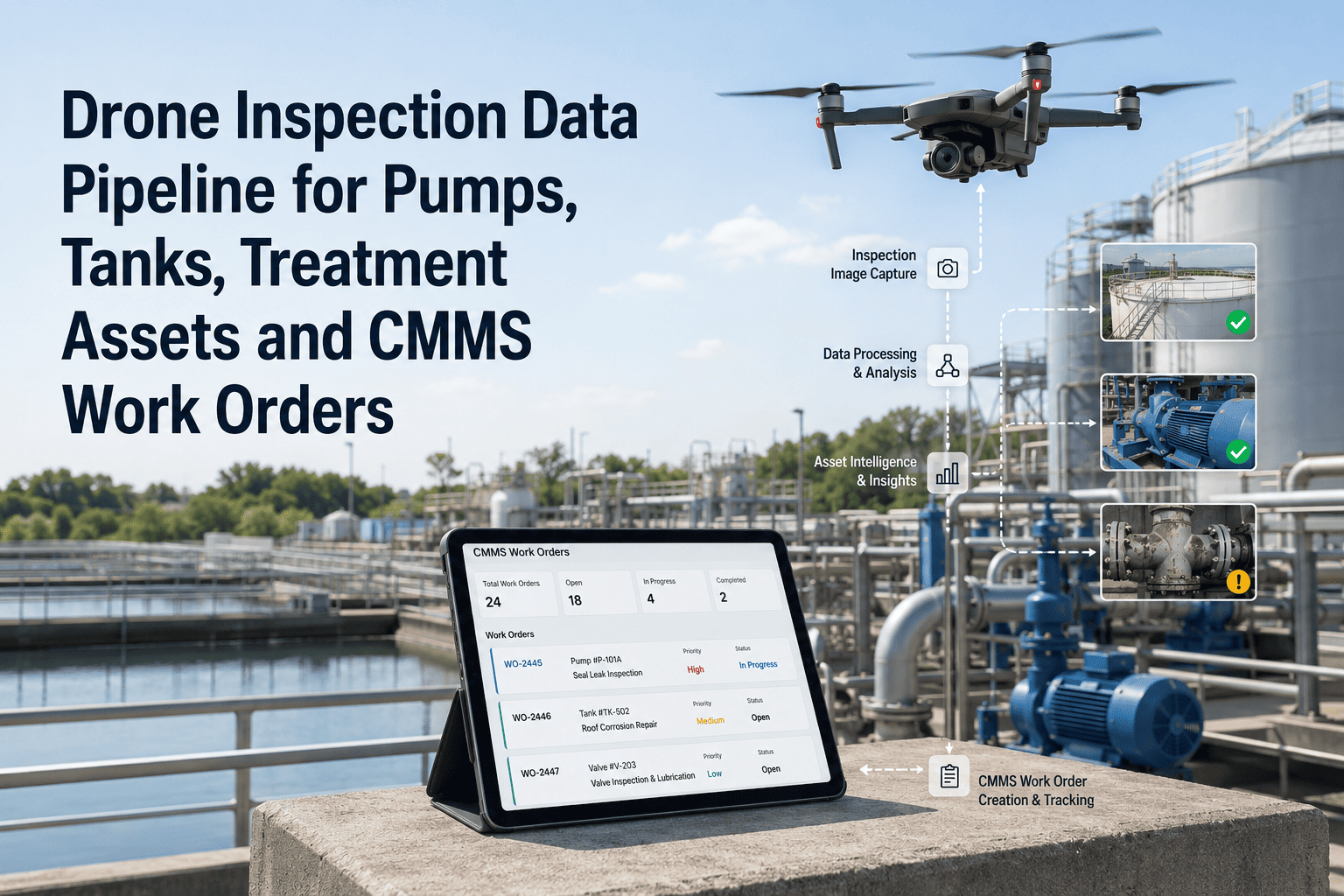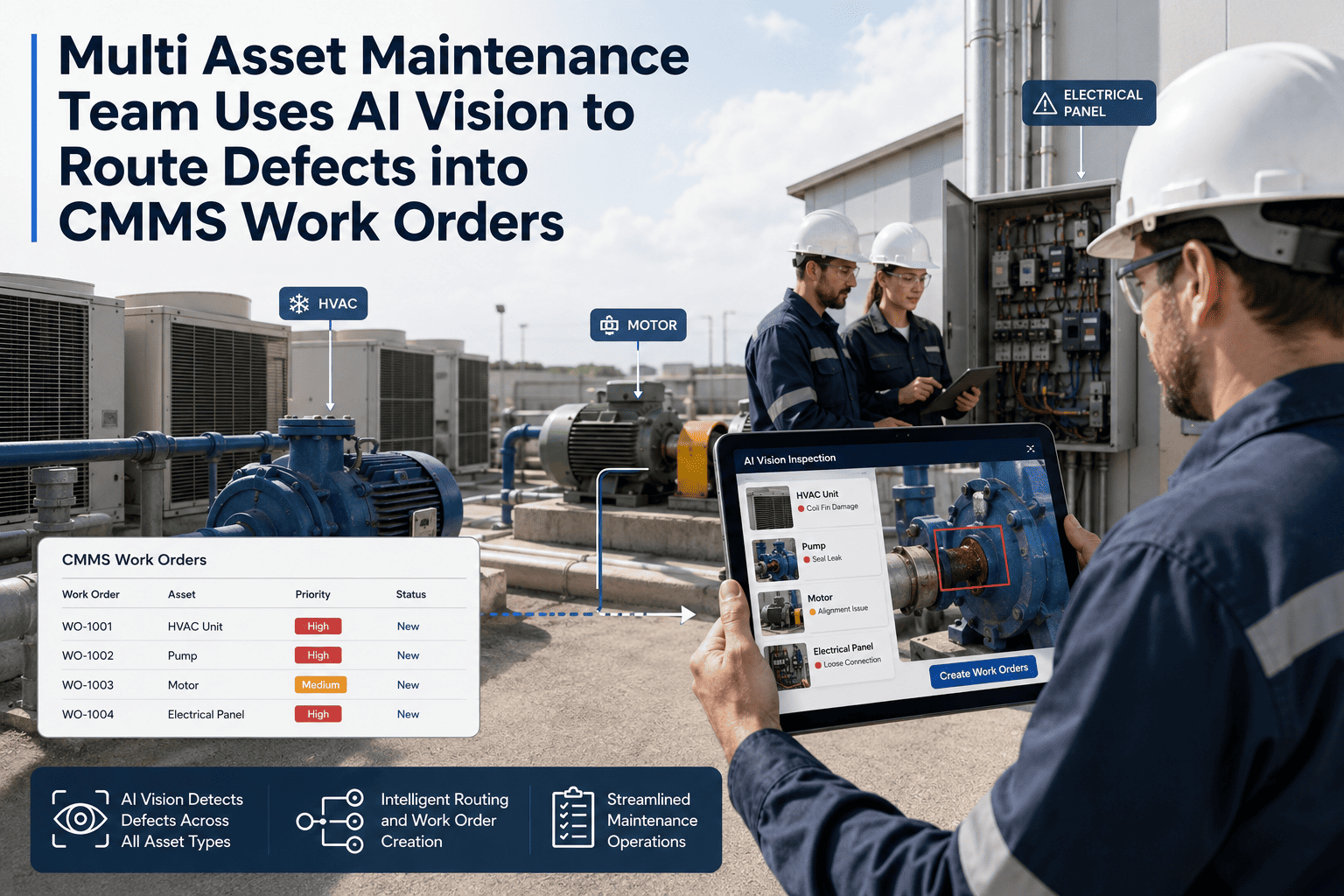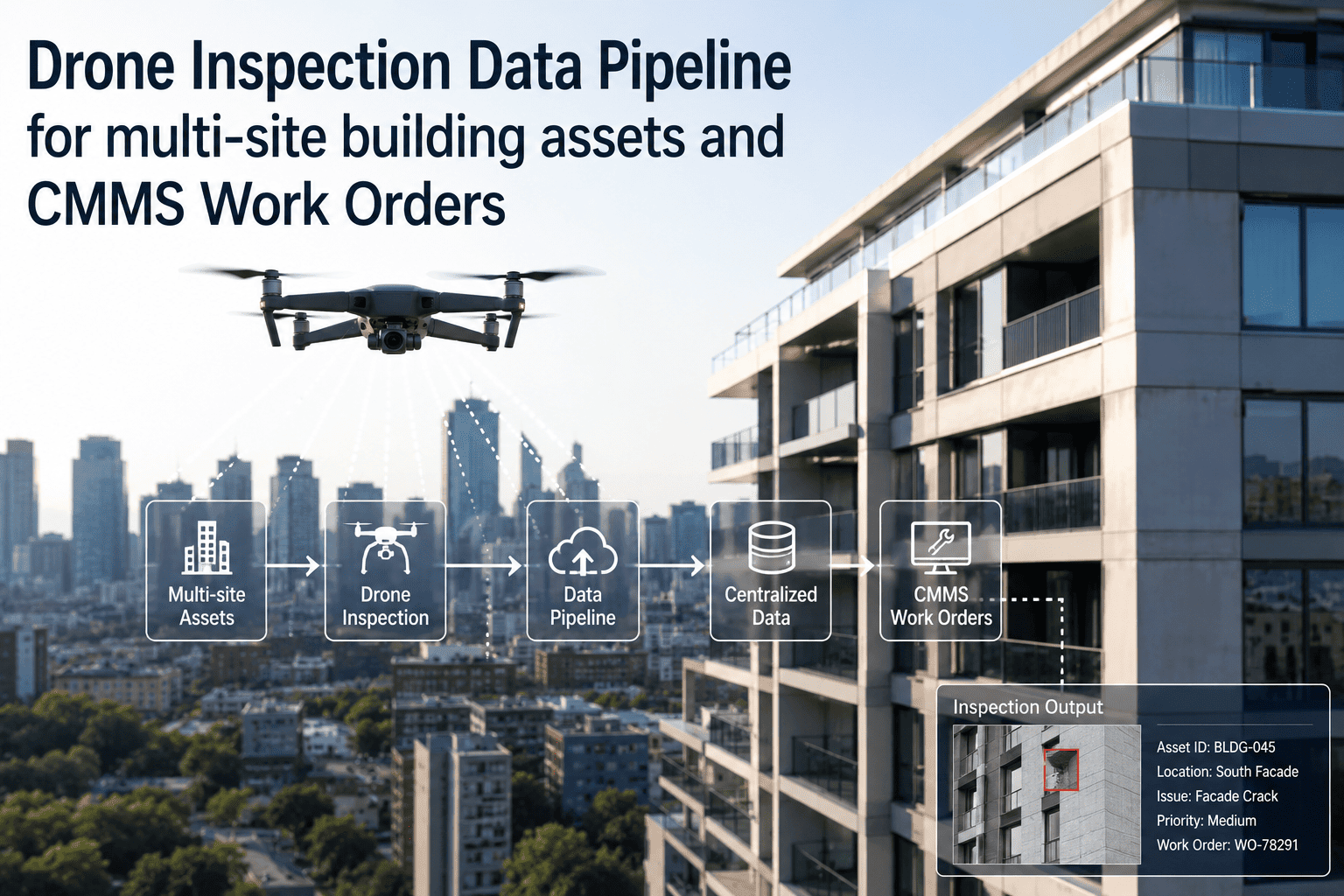
Multi-site facility management teams face a consistent problem when deploying drone inspection programs: the data collected during each flight — thousands of high-resolution images, thermal frames, and LiDAR scans — lands in a shared drive, sits unreviewed for days, and produces a defect report that a maintenance planner manually re-enters into a CMMS work order. The inspection happened. The intelligence did not transfer. Across documented commercial MRO and industrial deployments in 2025–2026, AI-driven drone inspection programs that automatically route findings to OxMaint CMMS as structured work orders reduced total inspection-to-repair cycle time by 60 to 75% compared to unintegrated workflows. For facility management teams responsible for 3 to 50 building assets across multiple sites, a structured drone-to-CMMS data pipeline is no longer optional — it is the operational difference between inspection as a cost center and inspection as a reliability engine. A petrochemical facility running a comparable pipeline across 34 structures completed all inspections at $127,000 total cost in 22 flight days — versus $1.1 million annually with scaffolding and rope-access teams. Book a demo to see the full pipeline configured for your building portfolio.
The Gap Between Drone Data and Maintenance Action
The bottleneck in most multi-site drone programs is not the flight — it is what happens between landing and repair. In a typical unintegrated workflow, a pilot uploads footage, an engineer reviews it 3 to 15 days later, a defect report is emailed to a planner, and a work order is created manually — sometimes referencing the wrong asset ID, sometimes not created at all. The 5-stage structured pipeline below eliminates every manual handoff.
- Drone footage uploaded to shared drive
- Engineer reviews imagery 3–15 days later
- PDF defect report emailed to planner
- Work order created manually — often missing asset context
- Repair completed with no link back to original drone finding
- No inspection history, no trend baseline, no capital planning data
- Drone data auto-ingested on mission completion
- AI classifies defects with severity, location, and photo evidence
- Work order auto-generated in OxMaint within 60 seconds
- Asset record, maintenance history, and GPS location attached
- Repair closure logged against original drone finding
- Trend dashboard built automatically across every site and cycle
How the Drone-to-CMMS Data Pipeline Works
Capture — Autonomous Flight Mission
Pre-programmed drone missions execute GPS-defined flight paths across rooftops, facades, structural frames, HVAC equipment, and parking structures. Sensors capture RGB imagery, thermal frames (RJPEG with radiometric data), and LiDAR point clouds simultaneously — with GPS coordinates, altitude, and asset tag IDs embedded in every capture.
Process — AI Defect Classification
Computer vision models trained on building asset imagery classify corrosion, concrete spalling, membrane delamination, thermal hotspots, water ingress staining, structural crack propagation, and HVAC surface anomalies — with automated severity grading against configurable acceptance criteria. Classification accuracy reaches 94% validated against engineering review.
Document — Structured Inspection Record
Classified findings are assembled into a structured inspection record: asset ID, site, defect type, severity tier, GPS coordinates, annotated photo evidence, and recommended corrective action. Records conform to facility condition index standards and feed directly into OxMaint asset registers.
Integrate — OxMaint CMMS Work Order Generation
Defects above configured severity thresholds trigger automatic work order creation in OxMaint — within 60 seconds of analysis completion. Work orders carry asset ID, defect severity, GPS location, annotated image evidence, and priority ranking. No manual transcription, no data entry delay, no findings lost between platforms.
Track — Repair Closure and Trend Analysis
Repairs are logged in OxMaint against the original drone finding — closing the inspection-to-repair loop with timestamps, technician records, and photo verification. Completed inspection cycles build degradation trend baselines that power condition-based maintenance scheduling and multi-year capital planning across all sites.
Configure the full drone-to-CMMS pipeline for your building portfolio — including asset mapping, drone platform API connection, and work order templates across all sites.
Building Asset Types Covered Across Sites
| Building Asset | Drone Sensors | Defects AI Detects | CMMS Integration Output |
|---|---|---|---|
| Roofing Membranes | RGB + Thermal | Delamination, standing water, puncture, heat loss | Work order with defect zone GPS and severity tier |
| Building Facades and Cladding | RGB + LiDAR | Panel displacement, sealant failure, corrosion, spalling | Work order with annotated image and location pin |
| Structural Frames and Columns | RGB + Thermal | Crack propagation, corrosion depth, section loss | Priority-graded work order with historical defect comparison |
| Rooftop HVAC Equipment | Thermal + RGB | Compressor hotspot, coil fouling, drain blockage | Thermal anomaly work order with trend vs baseline |
| Parking Structures | RGB + LiDAR | Concrete spalling, rebar exposure, drain failure, deflection | Work order linked to structural inspection schedule |
| Elevated Walkways and Bridges | RGB + Thermal | Joint failure, bearing corrosion, surface crack | Condition index update + maintenance work order |
Before structuring the pipeline, our drone program produced beautiful imagery that sat in a folder. Defects we identified in November were still showing up on the same rooftop in March because nobody had created a work order. Connecting drone findings directly to OxMaint work orders closed that gap on day one. Our repair closure rate went from 58% to 94% in the first quarter.
Why the Pipeline Compounds Value Across Sites
Standardized Data Across Every Location
Every site produces inspection records in the same format — same asset ID structure, same defect classification taxonomy, same severity tiers — making portfolio-level condition reporting possible for the first time.
Cross-Site Defect Benchmarking
OxMaint tracks defect rates, repair cycle times, and condition index scores across all sites — identifying which properties are underperforming and which maintenance teams are resolving work orders fastest.
Prioritized Capital Budgeting
Degradation trend data across inspection cycles tells you which roof, facade, or structure will need capital investment in 12, 24, or 36 months — replacing gut-feel budget requests with condition-backed forecasts.
Compliance-Ready Audit Trails
Every inspection, defect, work order, and repair closure is timestamped and linked in OxMaint — producing audit-ready documentation for insurance, regulatory inspection, and ISO 55001 asset management compliance across all sites.
Frequently Asked Questions
Stop Storing Inspection Data. Start Acting on It.
OxMaint connects your multi-site drone inspection program to automated work orders, asset trend dashboards, and capital planning data — turning every flight into maintenance intelligence your team can act on before the repair becomes urgent.