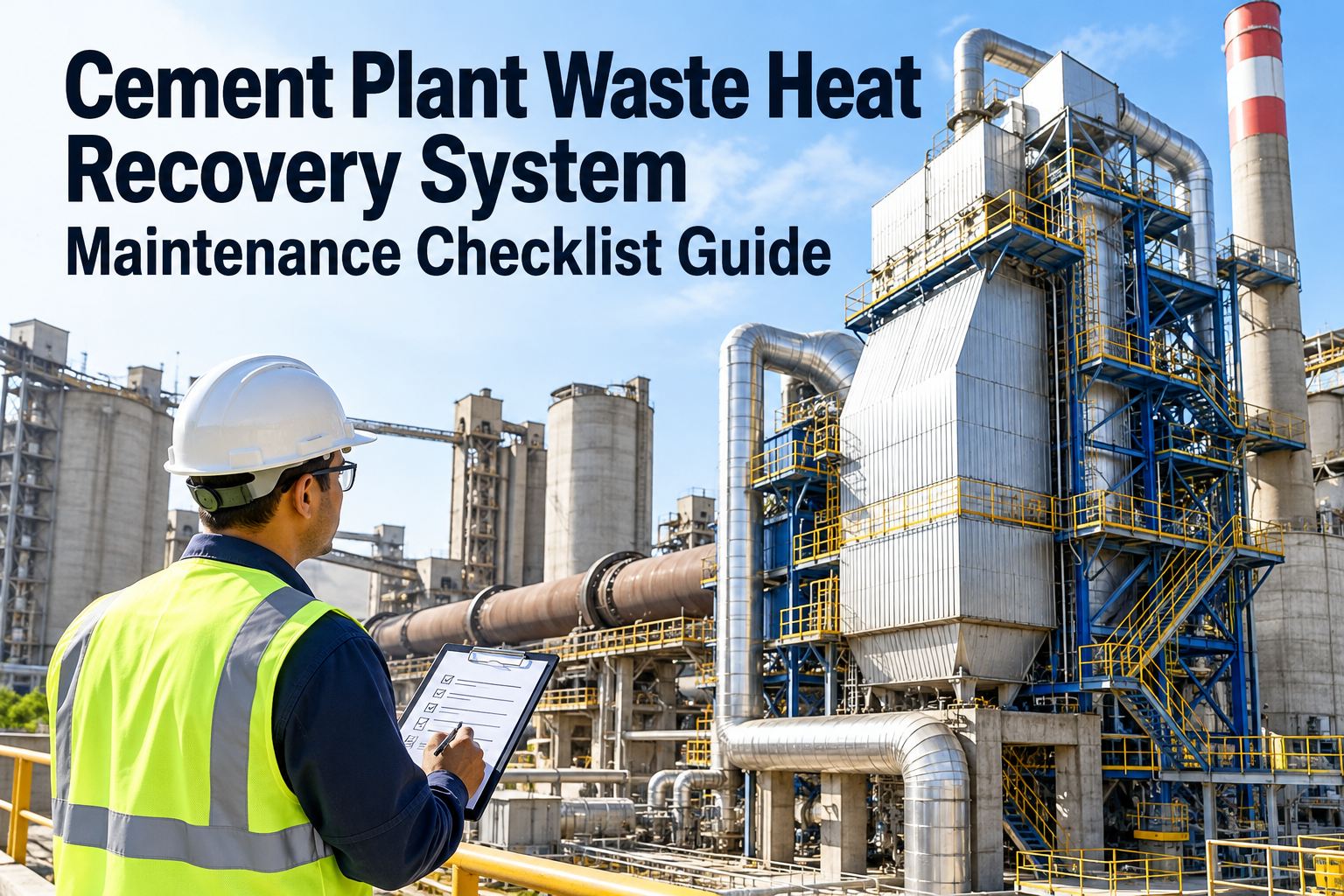
In a cement plant, the waste heat recovery (WHR) system quietly turns kiln and cooler exhaust into power — typically around 20–30% of a plant's electricity demand, according to industry sources. But dust-laden gas fouls boiler tubes, steam paths drift, and small defects stay hidden until output drops or a boiler trips. This checklist guide walks through what to inspect, how often, and how OXMAINT AI, the AI-powered CMMS, turns each finding into a tracked work order.
Cement Plant Waste Heat Recovery Maintenance Checklist: Catch Boiler and Turbine Issues Before Output Drops
A checklist on paper finds problems. It rarely closes them. Fouled PH boiler tubes, a drifting condenser vacuum or a noisy turbine bearing get noted on a round sheet, then lost between shifts. OXMAINT AI-powered CMMS keeps the whole loop in one platform: WHR inspection checklists log the defect, the defect becomes a work order, and preventive schedules make sure the same check comes back on time.
How Heat Becomes Power — and Where It Breaks
Hot exhaust gas from the preheater (PH) and the air quenching cooler (AQC) passes through waste heat boilers. The steam drives a turbine-generator, then is condensed and returned. Every stage has its own failure modes, so the checklist follows the flow. Book a demo to see each stage as a tracked asset in OXMAINT AI.
The Zone-by-Zone Checklist
Use these as a starting point and adjust limits to your OEM manuals and plant procedures. Start free and turn them into digital checklists in OXMAINT AI.
How Often to Check What
Not everything needs a daily look. A tiered schedule keeps operators focused on trends and saves deep inspections for planned outages.
| Frequency | Typical WHR tasks | Who |
|---|---|---|
| Every shift | Gas temperatures, steam pressure and flow, vibration, vacuum, leaks, unusual noise | Operator |
| Weekly | Soot-blower audit, pump seals, cooling tower, oil levels, alarm checks | Technician |
| Monthly | Water chemistry review, lube oil samples, instrument calibration spot-checks | Technician / Lab |
| Annual / outage | Boiler tube survey, turbine inspection, safety valve testing, condenser cleaning, protection trip tests | Maintenance & contractors |
Checklist Findings Mean Nothing Until Someone Acts on Them.
OXMAINT AI links each inspection finding to the asset, creates the work order, and keeps the preventive schedule running — so a fouled boiler or a weak vacuum trend becomes a tracked job, not a line in a notebook.
Symptom to Likely Cause: Quick Troubleshooting
When WHR output slips, these patterns point you to the right zone first. Book a demo to see how OXMAINT AI keeps this history by asset.
Why a CMMS Beats Paper Rounds for WHR
| Paper & spreadsheets | OXMAINT AI CMMS |
|---|---|
| Readings sit in notebooks | Readings logged per asset and visible to the whole team |
| Defects reported verbally | Findings become work orders with owner and status |
| PM dates tracked by memory | Preventive schedules generate tasks automatically |
| History lost at shift change | Full maintenance history stays on the asset |
Our WHR round sheets were thorough, but the findings never travelled. A boiler fouling trend would be spotted on one shift and forgotten on the next. Once inspections created work orders and PMs came back on schedule, the team could finally see what was open and what was repeating.
Frequently Asked Questions
Keep Recovered Power Running.
Put your WHR boilers, turbine, condenser and feedwater system on one maintenance platform. Digitize the checklists, turn findings into work orders and keep every preventive task on schedule with OXMAINT AI.