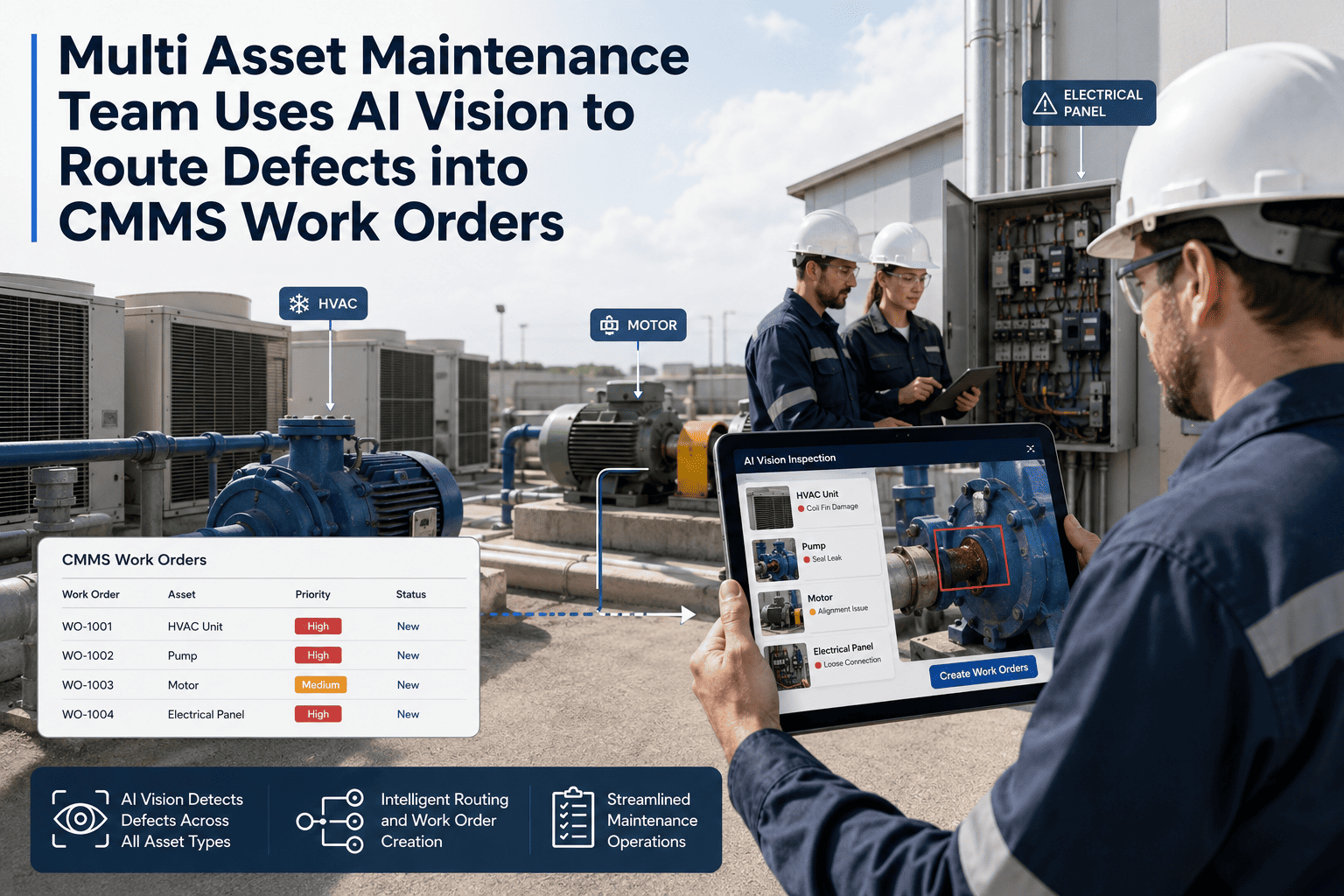
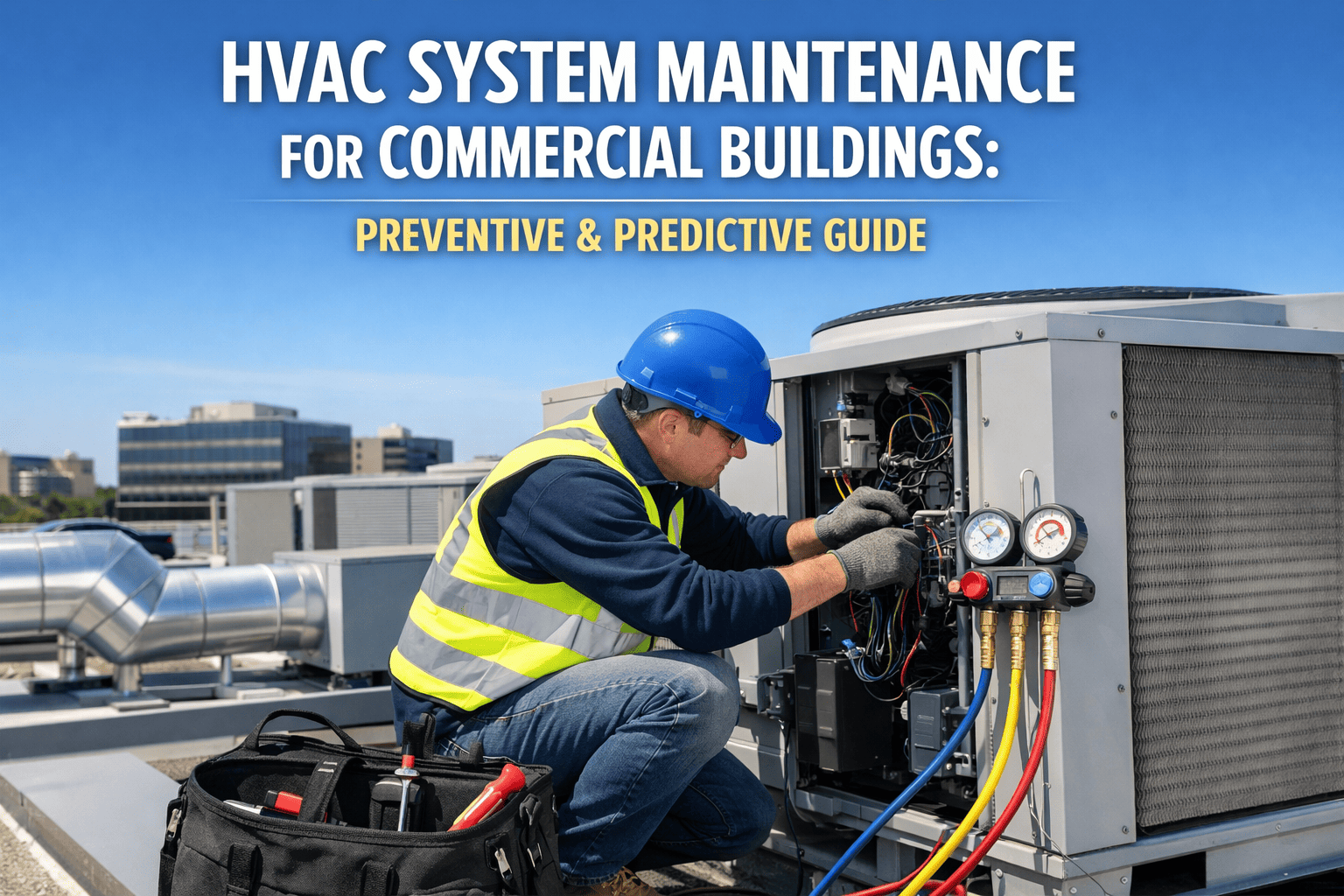
When a chiller throws an alarm, the clock is already running — on a hot afternoon, a tripped unit is a warm building or a stalled process within the hour. The good news is that most chiller faults follow familiar patterns: a handful of root causes behind dozens of symptoms, and a first check that resolves the majority of them. This guide walks through 27 of the most common chiller problems, grouped by symptom, each with its likely causes and the diagnostic step to run first. And because the vast majority of these are preventable, it shows how OXMAINT AI, the AI-powered CMMS, trends the parameters that predict a fault before it trips.
HVAC & Refrigeration · Chiller Diagnostics · Troubleshooting Guide 2026
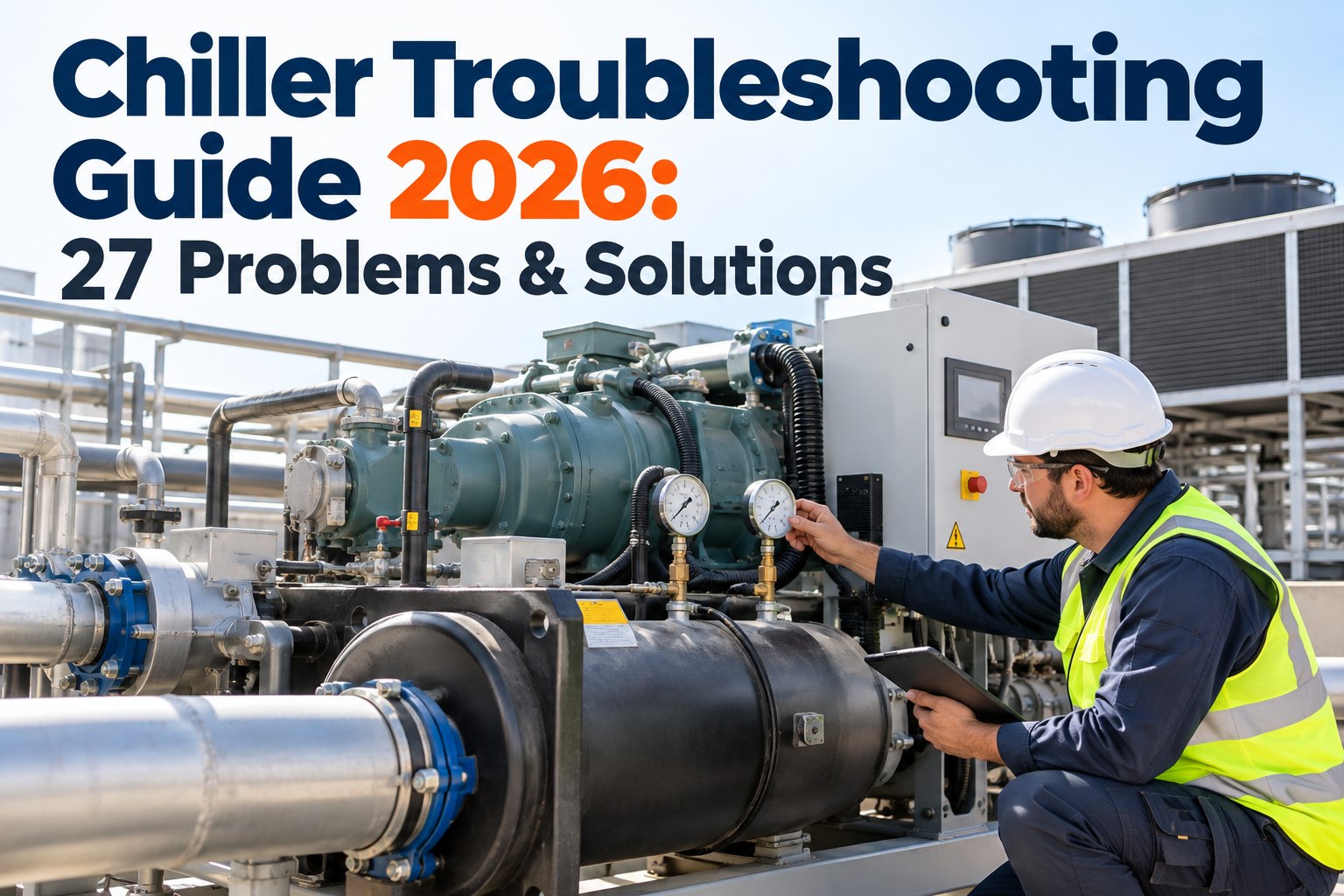
Chiller Troubleshooting Guide 2026: 27 Problems & Solutions
Most chiller failures don't come out of nowhere — they build as a drifting pressure, a creeping approach temperature, or a rising amp draw that a monthly log would have caught. Use this guide to diagnose the fault in front of you, then let OXMAINT AI trend those same parameters across every unit, so the next fault becomes a scheduled work order instead of an emergency callout.
Alarm or symptom
→
Diagnose the cause
→
Fix & log it
→
Trend to prevent
27 faults, causes & first checks
Parameter trending that predicts faults
Repairs prioritized as work orders
How to Use This Guide
The 27 faults are grouped into six categories by the symptom you're seeing — cooling, pressure, compressor, water/flow, electrical, and efficiency. Find your symptom, check the likely causes in order, and run the first diagnostic before reaching for anything more invasive. A recurring theme: many of these show up as a slow trend long before the alarm, which is exactly what makes them preventable. Start free and log the trends that warn you early.
ACooling Capacity (1–5)
BPressure Faults (6–11)
CCompressor (12–16)
DWater & Flow (17–20)
EElectrical & Controls (21–24)
FEfficiency & Fouling (25–27)
ACooling Capacity Problems
01Chiller Not Cooling to Setpoint
Likely causes: Low refrigerant charge, load exceeding capacity, fouled evaporator or condenser, failed expansion device.
First check: Compare operating pressures to the design plate and check the sight glass for bubbles — a low charge is the most common root cause and points to a leak, not just a top-up.
02Gradual Loss of Capacity Over Weeks
Likely causes: Slow refrigerant leak, progressive tube fouling, scaling in the water circuit.
First check: Trend suction pressure against historical logs — a steady downward drift is the earliest sign of a slow leak, often months before an alarm.
03Leaving Water Temperature Too High
Likely causes: Undersized for added load, hot-gas bypass, low charge, evaporator pump underperforming.
First check: Confirm the actual load hasn't grown from building or process changes, then verify chilled-water flow before assuming a refrigerant fault.
04Chiller Short-Cycles on Cooling
Likely causes: Oversized for current load, low flow, faulty thermostat or sensor, refrigerant overcharge.
First check: Verify chilled-water flow is within design and confirm the control sensor reads accurately against a reference thermometer.
05Rising Evaporator Approach Temperature
Likely causes: Evaporator tube fouling, poor refrigerant distribution, water-side scaling.
First check: Compare evaporator approach to design — a rising trend means reduced heat transfer, so plan tube cleaning before capacity falls further.
06High Head / Discharge Pressure Alarm
Likely causes: Dirty or scaled condenser, inadequate condenser water/airflow, refrigerant overcharge, non-condensables in the system.
First check: Inspect the condenser for fouling and confirm full condenser water flow or clean airflow — the most common driver of high head pressure.
07Low Suction / Evaporator Pressure Alarm
Likely causes: Low refrigerant charge, restricted or blocked filter drier, failed expansion valve, dirty/iced evaporator, low load.
First check: Check the sight glass and charge first; if charge is good, inspect the filter drier for a temperature drop indicating a restriction.
08Repeated High-Pressure Trips at Peak Load
Likely causes: High ambient plus marginal condenser capacity, a failed condenser fan, cooling-tower shortfall.
First check: On air-cooled units, confirm every condenser fan is spinning — one down raises head pressure and a second failure trips the unit. Don't reload immediately after a reset.
09Low Discharge Pressure
Likely causes: Insufficient charge from a leak, restricted refrigerant flow, failed or stuck-open expansion valve, very low ambient.
First check: Verify charge and expansion-valve operation; on air-cooled units in cold weather, confirm head-pressure control is functioning.
10Non-Condensables in the System
Likely causes: Air or moisture drawn in during service or through a low-side leak, driving elevated head pressure.
First check: Compare condensing saturation temperature to condenser water temperature; an unexplained high approach with clean tubes suggests non-condensables and a need to purge/evacuate.
11Pressure Readings Erratic or Implausible
Likely causes: Failed or drifting pressure transducer, wiring fault, controller input problem.
First check: Cross-check the suspect transducer against a manifold gauge before acting on the reading — a bad sensor mimics a real fault.
12Compressor Won't Start
Likely causes: Tripped safety (HP/LP/oil), open overload, control-circuit fault, blown fuse or tripped breaker, active lockout.
First check: Read the control panel for active alarms/lockouts, then confirm power and control voltage before suspecting the compressor itself.
13Compressor Short-Cycles
Likely causes: Refrigerant overcharge, stuck expansion valve, faulty overload protector, low load, control sensor error.
First check: Watch suction/discharge pressures through a cycle and verify the control sensor — rapid cycling wears the compressor fast, so don't leave it running.
14Excessive Compressor Noise or Vibration
Likely causes: Failed isolation mounts, liquid floodback, internal mechanical wear, loose components.
First check: New or worsening internal noise warrants shutdown and inspection — check superheat for floodback and inspect mounts before further running.
15Low Oil Pressure Trip
Likely causes: Low oil level, oil dilution from floodback, failed oil pump, clogged oil filter, refrigerant migration.
First check: Confirm oil level and filter condition; recurring oil-pressure trips point to lubrication problems that will destroy bearings if ignored.
16Centrifugal Surge
Likely causes: High lift (low condenser water temp is ideal; high is not), low load, fouled condenser raising head.
First check: Log load %, lift, and condenser water temperature during the event and review with the OEM — repeated surge damages bearings and the impeller, so don't just reset and ignore it.
17Low Chilled-Water Flow Alarm
Likely causes: Airlock, blocked strainer, closed isolation valve, failed pump or pump seal, VFD/control fault.
First check: Inspect the strainer and confirm valve positions, then verify the pump is developing differential pressure — low flow risks freezing the evaporator.
18Evaporator Freeze / Low-Temp Trip
Likely causes: Low flow, low refrigerant charge, faulty freeze sensor, incorrect glycol concentration.
First check: Don't just reset — confirm flow and charge and verify the freeze sensor; a genuine freeze trip means the evaporator neared freezing and can crack tubes.
19Cooling-Tower / Condenser-Water Shortfall
Likely causes: Tower fan fault, low basin level, poor water treatment, drift-eliminator or fill fouling.
First check: Confirm tower fan operation, basin level, and treatment dosing — a neglected tower is a leading cause of high head pressure downstream.
20Scaling or Biofouling in Water Circuit
Likely causes: Inadequate water treatment, hard water, biological growth in condenser/evaporator tubes.
First check: Trend both approach temperatures; a steady rise signals fouling — brush-clean or chemically descale when approach climbs above design.
EElectrical & Control Problems
21Unit Completely Dead — No Power
Likely causes: Tripped breaker, blown fuse, control-transformer failure, main disconnect open, control-board fault.
First check: Confirm supply voltage at the disconnect; if voltage is present but the unit is dead, suspect the control fuse or board.
22Voltage or Current Imbalance
Likely causes: Supply imbalance, loose connections, failing contactor, developing winding fault.
First check: Measure voltage across all three legs — an imbalance beyond ~2% causes overheating and premature compressor failure; tighten connections and investigate the supply.
23Faulty Sensor or Transducer Readings
Likely causes: Drifting temperature/pressure sensor, damaged wiring, loose terminal, failed input channel.
First check: Verify the suspect reading against a known reference before acting — a bad sensor triggers false trips and masks real ones.
24Controller Lockout Won't Reset
Likely causes: Unresolved underlying fault, repeated safety trips, control-board or firmware issue.
First check: Read the fault history — a lockout that won't clear usually means the root cause is still present, not that the controller is broken.
FEfficiency & Fouling Problems
25Rising Energy Use for Same Cooling
Likely causes: Condenser/evaporator fouling, low charge, aging compressor, poor control staging.
First check: Trend kW per ton against baseline; each 1°F of condenser approach above design costs efficiency, so fouling shows up as creeping energy use.
26Dirty / Restricted Condenser Coils or Tubes
Likely causes: Airborne debris on air-cooled coils, scale and biofilm in water-cooled tubes.
First check: Inspect and clean coils or tubes; condenser approach above design is the objective signal that cleaning is due.
27Refrigerant Leak Degrading Performance
Likely causes: Leaks at fittings, Schrader cores, brazed joints, or the evaporator — small losses degrade performance disproportionately.
First check: Look for sight-glass bubbles and a downward suction-pressure trend; locate with an electronic detector or UV dye. Undetected leaks are a leading cause of compressor failure.
Notice the Pattern? Almost Every Fault Above Trends First.
Rising approach, drifting suction pressure, climbing amps, creeping kW/ton — the alarms are late. OXMAINT AI logs these parameters on every unit and flags the drift, so the fault becomes a scheduled work order on a calm morning instead of a callout on the hottest day of the year.
The Checks That Prevent Most of These
A large share of reactive chiller callouts trace back to a handful of skipped routine checks. These are the recurring PMs that keep the faults above from ever tripping — and the kind OXMAINT AI schedules and assigns automatically. Start free and put these on a schedule.
Monthly
Log all operating parameters — supply/return temps, refrigerant pressures, compressor amps — so trends reveal problems before a trip
Monthly
Cooling-tower inspection: fan operation, basin level, drift eliminators, and water-treatment dosing
Monthly
Chilled-water pump checks: duty/standby changeover, motor current, bearing noise, differential pressure
Quarterly
Condenser tube/coil inspection and approach-temperature check; clean when approach climbs above design
Quarterly
Refrigerant leak check and charge verification; inspect and test expansion valves and safety controls
From Fault to Fix — How OXMAINT AI Helps
Diagnosing the fault is half the job; making sure it doesn't recur is the other half. OXMAINT AI turns each of these into tracked, prioritized work. Book a demo to see it on your plant.
Trends the predictive parameters
Approach temperatures, suction/discharge pressures, and compressor amps are logged per unit, so the slow drift behind most faults is visible weeks before the alarm.
Prioritizes repairs as work orders
A flagged fault becomes an assigned, prioritized work order — critical chillers and safety trips first, cosmetic items later — so the crew works by real impact.
Schedules the preventive checks
The monthly and quarterly PMs that prevent these faults generate and assign themselves, so tower, pump, and tube checks never quietly slip.
Keeps full fault history per unit
Every alarm, reading, and repair lives on the chiller's record, so a recurring surge or repeat leak is obvious and repair-or-replace calls rest on data.
Frequently Asked Questions
What's the single most common chiller problem?
Low refrigerant charge from a leak — it shows up as poor cooling, low suction pressure, and rising superheat, and left undetected it's a leading cause of compressor failure. A downward suction-pressure trend is the earliest warning.
Start free and trend suction pressure.
Why does approach temperature matter so much?
Approach — the gap between refrigerant saturation and water temperature — is a direct read on heat-transfer health. A rising trend means fouling or distribution problems, and every degree above design costs efficiency, so it's one of the best early indicators to log.
Book a demo to trend approach temps.
Should I just reset a chiller that keeps tripping?
No — a lockout that won't clear or a trip that recurs usually means the root cause is still present. Repeatedly resetting a high-pressure, freeze, or surge trip risks real damage. Diagnose the underlying fault first.
Start free and track recurring trips per unit.
How many of these faults are actually preventable?
The large majority. Industry maintenance guidance consistently points to a basic monthly/quarterly PM program eliminating most reactive callouts — the tower, pump, tube, and charge checks in this guide are exactly those.
Book a demo to schedule preventive checks.
How does a CMMS help with chiller troubleshooting specifically?
By turning the parameters you log into trends that predict faults, converting flagged issues into prioritized work orders, and keeping a full fault history per unit — so troubleshooting shifts from reactive firefighting to planned, data-backed maintenance.
Start free and move from reactive to planned.
Fix the Fault Today. Prevent It Tomorrow.
Use this guide to diagnose what's in front of you — then let OXMAINT AI trend the parameters that predict these faults, schedule the checks that prevent them, and turn every repair into a prioritized work order.