Successful CMMS implementation with Oxmaint transforms maintenance operations from paper-based chaos to digital excellence, improving maintenance efficiency by 45-65% while reducing operational costs by 20-30%. Industry research shows that 70% of CMMS implementations fail to achieve expected results due to poor planning, inadequate training, and resistance to change. Oxmaint's proven implementation methodology delivers 95% success rate, with organizations achieving full ROI within 6-9 months and sustained efficiency improvements of 50%+ through structured deployment, comprehensive training, and continuous optimization support.
The Foundation: Understanding CMMS Implementation Success Factors
Modern maintenance departments face increasing pressure to maximize asset reliability while minimizing costs, making CMMS implementation critical for operational excellence. Traditional maintenance management approaches create inefficiencies that compound across organizations, from missed preventive maintenance to excessive inventory costs.
Poor Work Order Management
Without CMMS, 60% of maintenance work goes undocumented, creating knowledge gaps, compliance issues, and inability to track costs or identify improvement opportunities.
Reactive Maintenance Culture
85% of non-CMMS organizations operate reactively, resulting in 3x higher maintenance costs and 50% more equipment downtime than preventive approaches.
Inventory Management Chaos
Manual inventory tracking leads to 30% excess stock, 25% stockouts on critical parts, and $500K+ in unnecessary carrying costs for mid-sized facilities.
Resource Allocation Issues
Without systematic scheduling, maintenance teams waste 35% of productive time on administrative tasks, travel, and searching for information.
Limited Performance Visibility
Lack of maintenance metrics prevents data-driven decisions, with 90% of organizations unable to calculate true maintenance costs or ROI.
Compliance Risk Exposure
Paper-based systems create audit failures, safety violations and regulatory penalties averaging $250K annually for non-compliant organizations.
The Cost of Failed CMMS Implementations
Before implementing Oxmaint's structured approach, organizations risk common implementation failures that derail CMMS projects and waste significant resources:
- $100K-$500K in wasted software investments from systems that never achieve full adoption or utilization
- 6-12 months of lost productivity as teams struggle with poorly planned implementations
- 50% user adoption rates leading to parallel paper systems and data integrity issues
- Integration failures creating data silos and manual workarounds that negate efficiency gains
- Change resistance from inadequate training and communication causing project abandonment
Phase 1: Strategic Planning and Preparation
Successful CMMS implementation with Oxmaint begins with thorough planning that aligns technology deployment with organizational objectives, ensuring every stakeholder understands the vision and their role in transformation.
Organizational Readiness Assessment
Comprehensive readiness evaluation identifies potential obstacles and success factors, enabling targeted preparation that addresses specific organizational needs and constraints.
Current State Analysis
Document existing maintenance processes, identify pain points, catalog assets, and establish baseline metrics for measuring implementation success.
Stakeholder Mapping
Identify key stakeholders, define roles and responsibilities, assess change readiness and develop targeted communication strategies.
Resource Planning
Allocate budget, assign project team members, establish timelines, and secure executive sponsorship for sustained support.
Success Metrics Definition
Establish KPIs, set achievement targets, create measurement frameworks, and define milestone checkpoints for progress tracking.
Phase 2: System Configuration and Customization
Tailoring Oxmaint to Your Organization
Oxmaint's flexible architecture enables precise customization to match your maintenance workflows, terminology, and operational requirements without complex programming or extended timelines.
Asset Hierarchy Development
Create logical equipment structures, define parent-child relationships, establish naming conventions, and implement location tracking systems.
Workflow Configuration
Design approval processes, set escalation rules, configure notification triggers, and establish automated work order routing.
User Roles and Permissions
Define access levels, create security groups, establish data visibility rules, and implement audit trail requirements.
Forms and Templates
Customize work order forms, create PM checklists, design inspection templates, and configure report formats.
Phase 3: Data Migration and System Integration
Ensuring Data Integrity and Connectivity
Data migration represents a critical implementation phase where historical maintenance information transitions into Oxmaint, requiring careful planning to maintain accuracy and completeness.
Legacy Data Assessment
Evaluate existing data quality, identify gaps and inconsistencies, prioritize migration requirements, and develop cleansing strategies.
Migration Planning
Map data fields, establish transformation rules, create validation procedures, and develop rollback contingencies for risk mitigation.
Phased Migration Execution
Transfer data in logical sequences, validate after each phase, maintain parallel systems temporarily, and ensure business continuity.
Integration Implementation
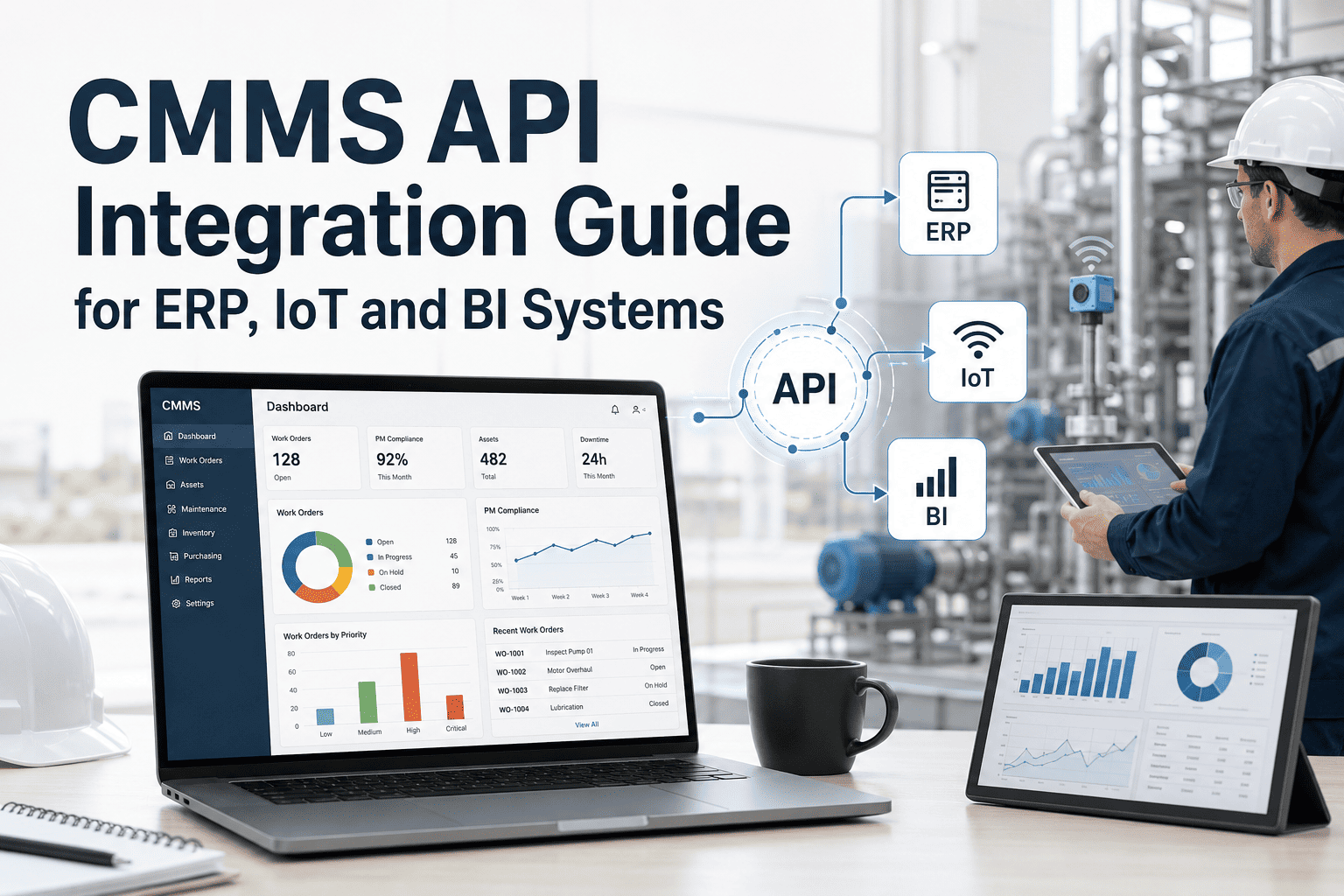
Connect ERP systems, link IoT sensors, integrate with procurement, and establish real-time data synchronization.
System Integration Best Practices
Seamless integration with existing systems maximizes CMMS value by eliminating data silos and enabling automated information flow across the organization.
- ERP integration synchronizing financial data, inventory levels, and purchase orders automatically
- SCADA connectivity enabling real-time equipment monitoring and automated work order generation
- Mobile platform deployment providing technicians with anywhere access to work orders and documentation
- Business intelligence tools leveraging CMMS data for advanced analytics and predictive insights
- Document management systems linking equipment manuals, drawings, and procedures to assets
Phase 4: Training and Change Management
Building User Competency and Adoption
Comprehensive training programs ensure every user understands both the technical aspects of Oxmaint and how it improves their daily work experience.
Role-Based Training Paths
Customized curricula for technicians, supervisors, planners, and managers focusing on relevant features and workflows.
Hands-On Learning Labs
Practical exercises using real scenarios, sandbox environments for practice, and competency assessments ensuring readiness.
Train-the-Trainer Programs
Develop internal champions, create sustainable knowledge transfer, and establish ongoing education capabilities.
Continuous Learning Support
Online resources, refresher sessions, new feature training, and user community forums for peer learning.
Change Management Strategies
Successful CMMS adoption requires cultural transformation that addresses human factors beyond technical implementation.
? Communication Excellence
Regular updates on implementation progress, success story sharing, addressing concerns transparently, and celebrating milestones publicly.
? Quick Win Identification
Implement high-impact features first, demonstrate immediate value, build momentum through visible improvements, and maintain enthusiasm.
? Resistance Management
Identify adoption barriers, address individual concerns, provide additional support where needed, and convert skeptics to champions.
? Adoption Monitoring
Track usage metrics, identify training gaps, provide targeted interventions, and ensure consistent system utilization.
? Incentive Alignment
Recognize early adopters, reward process improvements, tie performance metrics to CMMS usage, and create positive reinforcement.
? Feedback Integration
Collect user suggestions, implement improvements rapidly, demonstrate responsiveness to concerns, and maintain engagement.
Phase 5: Go-Live and Stabilization
Executing Successful System Launch
The go-live phase of Oxmaint implementation requires careful orchestration to ensure smooth transition from legacy systems while maintaining operational continuity.
Pilot Program Execution
Launch with select department or asset group, validate processes and configurations, gather feedback, and refine before full rollout.
Phased Rollout Strategy
Expand systematically across departments, maintain support focus on new users, ensure stability before adding complexity.
Parallel Run Period
Operate legacy and new systems temporarily, verify data accuracy, build user confidence, and ensure no information loss.
Hypercare Support
Provide intensive assistance during initial weeks, rapid issue resolution, on-site support presence, and immediate training reinforcement.
Phase 6: Optimization and Continuous Improvement
Maximizing CMMS Value Post-Implementation
Post-implementation optimization with Oxmaint transforms initial deployment into continuously improving maintenance excellence through data analysis, process refinement, and feature expansion.
- Performance analytics review identifying bottlenecks and optimization opportunities through KPI analysis
- Process refinement based on user feedback and operational data to streamline workflows
- Feature adoption expansion implementing advanced capabilities as user maturity increases
- Integration enhancement adding new connections and automation as needs evolve
- Predictive maintenance evolution leveraging accumulated data for condition-based strategies
Common Implementation Challenges and Solutions
Overcoming Typical Obstacles
Understanding common implementation challenges enables proactive mitigation strategies that keep your Oxmaint deployment on track.
Challenge: Data Quality Issues
Solution: Implement data validation rules, conduct thorough cleansing, establish ongoing data governance, and assign data stewards.
Challenge: User Resistance
Solution: Increase communication frequency, provide additional training, identify and address specific concerns, showcase success stories.
Challenge: Scope Creep
Solution: Maintain clear project boundaries, implement phase gates, defer non-critical requests, focus on core objectives first.
Challenge: Resource Constraints
Solution: Prioritize critical functions, leverage Oxmaint support services, consider phased implementation, utilize cloud deployment.
Measuring Implementation Success
Key Performance Indicators and ROI Tracking
Quantifying CMMS implementation success requires systematic measurement of both operational improvements and financial returns.
Success Metrics Framework
Efficiency Metrics
Work order completion rates, mean time to repair, technician utilization, and schedule compliance tracking.
Cost Metrics
Maintenance cost per unit, inventory carrying costs, overtime reduction, and contractor spend optimization.
Reliability Metrics
Equipment availability, mean time between failures, asset lifespan extension, and critical asset performance.
Compliance Metrics
Regulatory adherence, safety incident reduction, audit pass rates, and documentation completeness.