A forklift operator at a distribution center enters the loading dock without a high-visibility vest. A camera mounted above the bay entrance captures the violation — but it is a standard CCTV camera recording to a DVR that no one reviews until after an incident. Fourteen minutes later, a reversing reach truck clips the unvested operator in a blind spot. The investigation reveals 340 hours of footage showing the same worker entering that dock without PPE on 23 separate occasions over five weeks, and four near-miss events involving other unvested personnel that were never flagged, never documented, and never corrected. The camera saw everything. The system did nothing. This is the reality at thousands of industrial facilities running passive video surveillance — cameras that record but do not analyze, that store footage but do not alert, and that generate terabytes of evidence that only becomes relevant after someone gets hurt. In 2026, AI-powered computer vision is replacing this passive model with active safety intelligence: cameras that detect PPE violations in real time, recognize unsafe behaviors as they happen, enforce restricted zone boundaries automatically, and generate documented safety events that integrate directly into CMMS work orders and compliance records. Start free trial today.
AI Safety Vision 2026
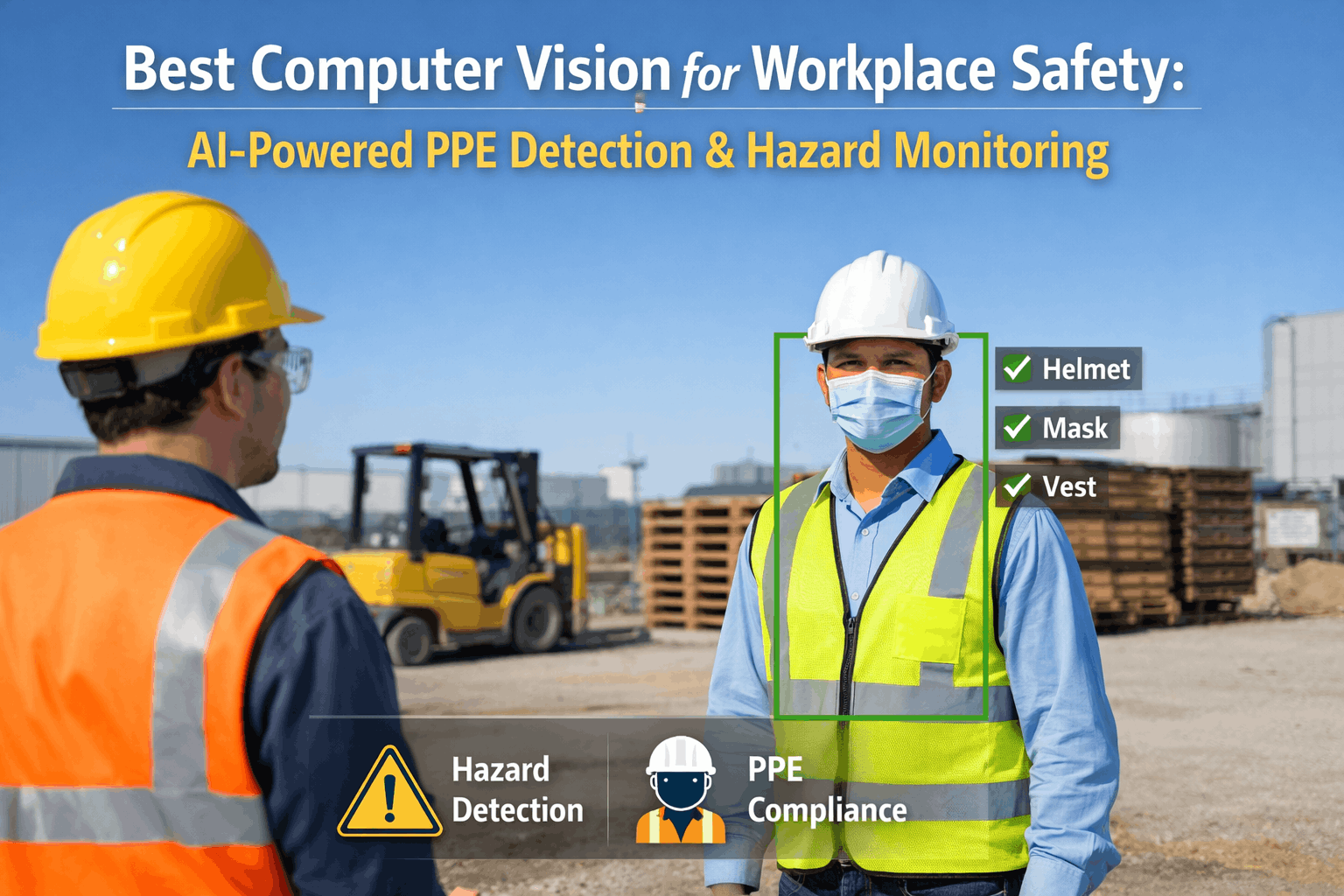
Best Computer Vision for Workplace Safety: AI-Powered PPE Detection & Hazard Monitoring
Deploy AI-powered camera systems that detect PPE violations, monitor restricted zones, recognize unsafe behaviors, and auto-generate CMMS safety work orders — transforming passive surveillance into active hazard prevention across every facility zone.
91%PPE Compliance Rate
<3 secViolation Detection Speed
72%Fewer Safety Incidents
24/7Continuous Monitoring
The Safety Maturity Spectrum
Workplace safety monitoring programs typically fall into one of three operational categories. While most facilities rely on "Passive" surveillance — recording footage that is only reviewed after incidents — Oxmaint helps organizations advance toward "Active" and "Predictive" safety, where AI vision systems detect violations in real time and identify hazard patterns before injuries occur.
Passive (Record & Review)
55%
Active (Real-Time Alerts)
30%
Predictive (AI + CMMS)
15%
Critical Detection Capabilities
AI-powered computer vision systems are sophisticated safety technology. Deploying them effectively requires understanding the distinct detection modules that protect workers across different hazard scenarios. A comprehensive CMMS acts as the action layer — converting every AI detection event into documented incidents, corrective work orders, and compliance records.
AI Vision Safety Detection ModulesCore Capabilities
PPE
Hard Hat Detection
AI identifies workers entering designated hard hat zones without head protection. Detects proper wearing versus carrying, backward orientation, and non-compliant hat types using trained neural networks.
Head Injury Risk
PPE
High-Visibility Vest
Computer vision detects presence and reflectivity of high-vis garments in vehicle interaction zones, loading docks, and construction areas where visibility is a life-critical requirement.
Strike-By Risk
Zone
Restricted Area Intrusion
Virtual perimeters around hazardous equipment, energized zones, and confined spaces trigger instant alerts when unauthorized personnel cross boundaries — without physical barriers.
Unauthorized Access
Behavior
Unsafe Act Recognition
AI models trained on ergonomic and procedural violations detect unsafe lifting postures, improper ladder use, running in prohibited areas, and operating equipment from unauthorized positions.
Injury Imminent
PPE
Eye & Face Protection
Detects safety glasses, goggles, and face shields in grinding, chemical handling, and welding zones. Distinguishes compliant safety eyewear from prescription glasses and sunglasses.
Eye Injury Risk
Vehicle
Pedestrian-Vehicle Proximity
Tracks spatial relationship between forklifts, trucks, and pedestrians in real time. Triggers alerts when minimum safe distances are violated in shared traffic zones.
Collision Risk
Hazard Severity Classification
In AI-powered safety monitoring, not all detections carry equal urgency. A missing safety glasses violation requires correction but not evacuation; a worker inside an energized lockout boundary requires immediate intervention. This severity scale helps safety managers configure alert escalation paths that match response urgency to actual risk level.
5
Life-Threat
Worker in active danger zone — energized equipment, moving machinery, or confined space without permit. Immediate alarm and area shutdown.
4
High Risk
Pedestrian-vehicle proximity violation or restricted zone intrusion. Real-time alert to supervisor and equipment operator simultaneously.
3
PPE Critical
Missing hard hat, harness, or respirator in required zone. Audio alert at entry point plus CMMS work order for corrective action.
2
PPE Minor
Missing safety glasses or gloves in designated area. Digital notification to team lead for correction during current shift.
1
Observation
Near-miss behavior or housekeeping issue detected. Logged for trend analysis without immediate alert escalation.
Turn Every Camera into a Safety Officer
Oxmaint integrates AI computer vision detections with CMMS work orders, incident documentation, and compliance reporting. Every PPE violation, zone intrusion, and unsafe behavior becomes a documented, tracked, and resolved safety event — automatically.
A robust AI vision safety program is composed of interconnected detection, documentation, and action modules. Implementing these as integrated workflows in Oxmaint ensures every detection event produces a traceable safety record — from initial AI alert through corrective action to compliance close-out.
Detection
PPE Compliance Engine
Real-Time
Multi-class PPE detection across all camera feeds simultaneously. Identifies hard hats, vests, gloves, glasses, face shields, respirators, and fall harnesses with zone-specific enforcement rules.
Hard HatsHi-Vis VestsSafety GlassesRespirators
Critical
Zone Enforcement
Continuous
Virtual perimeter monitoring for restricted areas, lockout/tagout zones, confined space entries, and exclusion boundaries around heavy machinery, energized panels, and chemical storage.
LOTO ZonesConfined SpaceMachine GuardsChemical Areas
Analysis
Behavior Recognition
AI-Powered
Trained neural networks recognize unsafe lifting, improper ladder positioning, running in prohibited zones, cell phone use in hazard areas, and operating equipment from unauthorized locations.
Unsafe LiftingLadder SafetyDistractionPosture Risk
Action
Incident Documentation
Automatic
Every AI detection auto-generates a timestamped incident record with camera snapshot, violation type, zone, severity, and worker area — linked directly to CMMS corrective action workflow.
Photo EvidenceTimestampsZone MappingCMMS Link
Intelligence
Safety Analytics Dashboard
Continuous
Real-time dashboards showing violation frequency by zone, shift, PPE type, and severity. Trend analysis reveals systemic issues — identifying which areas, shifts, and behaviors need targeted intervention.
HeatmapsTrend LinesShift CompareZone Scores
Compliance
Regulatory Reporting
On-Demand
Auto-generate OSHA-ready safety observation logs, near-miss documentation, PPE compliance rates, and corrective action completion records for regulatory audits and insurance reviews.
OSHA LogsNear-Miss DocsPPE RatesAudit Export
Different facility zones present unique challenges for AI safety vision deployment. From confined manufacturing cells to sprawling outdoor construction yards, the camera placement strategy, detection models, and alert escalation paths must adapt to the specific hazard profiles, lighting conditions, and traffic patterns of each environment.
Manufacturing / Assembly
Machine Guard Bypass Detection
Eye Protection in Grinding Zones
Lockout/Tagout Zone Enforcement
Variable Lighting Conditions
High Worker Density & Occlusion
Warehousing / Logistics
Forklift-Pedestrian Proximity
Loading Dock Hi-Vis Enforcement
Racking Climb Detection
Aisle Obstruction Recognition
Overhead Door Clearance Zones
Construction / Outdoor
Hard Hat + Harness Enforcement
Excavation Exclusion Zones
Crane Swing Radius Monitoring
Weather & Dust Interference
Mobile Camera Deployment
The Cost of Passive Surveillance
The cost pyramid illustrates that for every serious workplace injury, there are hundreds of undetected PPE violations and near-miss events underneath. Passive CCTV captures all of them — and acts on none. AI vision systems collapse this pyramid by converting every detectable violation into a documented, correctable event before it escalates into an injury, a regulatory citation, or a lawsuit.
$0 - $50
AI Detection & Correction
PPE violation detected, worker alerted, corrective action documented. Zero injury, zero lost time, zero regulatory exposure.
Frequency: High (Hundreds/Month)
$15K - $75K
Recordable Injury
OSHA recordable incident from undetected violation. Medical costs, lost workdays, investigation hours, experience modification rate increase.
Frequency: Medium (Several/Year)
$500K+
Fatality / OSHA Citation
Willful violation citation, wrongful death litigation, facility shutdown order, criminal referral for repeated unaddressed hazards.
Frequency: Low (But Catastrophic)
Stop Reviewing Footage After Injuries. Start Preventing Them.
Don't wait for incident investigations to discover what your cameras already captured. Oxmaint integrates AI vision detections into automated CMMS safety workflows — turning every violation into a documented, correctable event before it becomes an injury.
CMMS Integration for AI Safety Vision
A computer vision system without action infrastructure is just a smarter camera. The real value emerges when every AI detection flows into a CMMS that assigns corrective actions, tracks completion, documents evidence for regulators, and builds the analytics foundation for continuous safety improvement.
A
Auto-Generated Safety Work Orders
Every AI detection event auto-creates a CMMS work order with violation type, camera snapshot, zone ID, timestamp, and severity level — assigned to the responsible supervisor for corrective action within the current shift.
B
Incident Evidence Library
All AI detections are stored with photo evidence, video clips, and metadata in a searchable CMMS database. Retrieve any safety event by date, zone, violation type, or severity for investigations and audit responses.
C
Zone Compliance Scoring
Each monitored zone receives a real-time compliance score based on PPE adherence, zone intrusion frequency, and unsafe behavior rates. Scores feed into facility-wide safety KPIs visible to management and EHS teams.
D
Shift-Based Safety Reports
Auto-generated end-of-shift safety reports summarize all detections, corrective actions taken, pending items, and compliance rates. Incoming shift supervisors receive a structured safety handover — not a verbal guess.
E
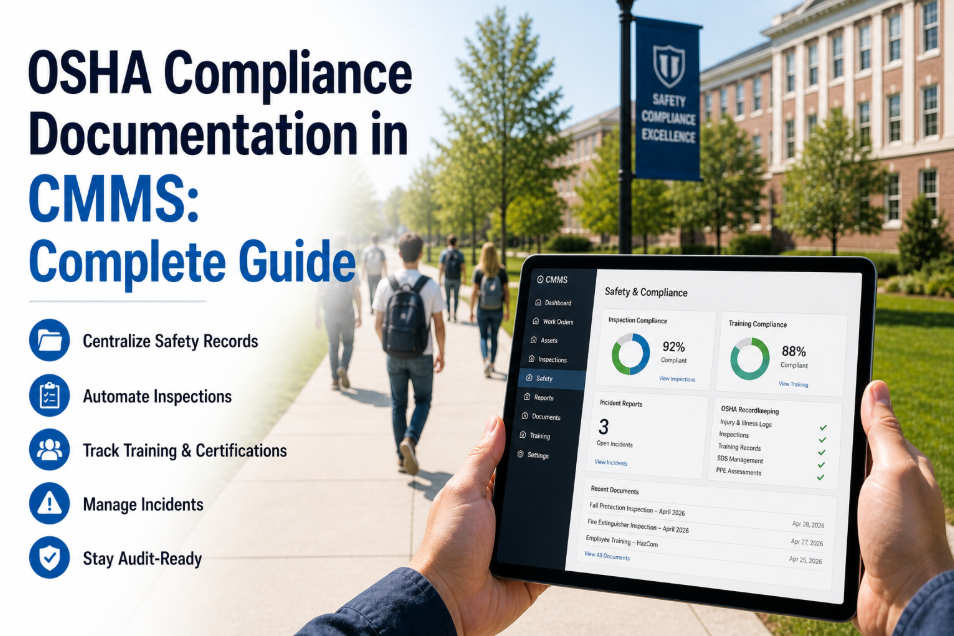
OSHA Compliance Documentation
Generate OSHA-ready observation logs, near-miss tracking records, PPE compliance statistics, and corrective action close-out documentation on demand — reducing audit preparation from weeks to minutes.
F
Predictive Safety Analytics
AI analyzes detection patterns across zones, shifts, and time periods to identify emerging hazard trends — predicting which areas and behaviors are most likely to produce the next incident before it occurs.
Frequently Asked Questions
Q. What types of PPE can AI computer vision detect?
Modern AI vision systems detect and classify a wide range of personal protective equipment including hard hats (presence, orientation, and type), high-visibility vests and jackets (including reflective stripe verification), safety glasses and goggles (distinguishing from prescription eyewear), face shields and welding helmets, respirators and dust masks, safety gloves, fall protection harnesses, and steel-toed boots. Detection accuracy exceeds 95% under normal industrial lighting conditions. Each PPE type can be configured as required, optional, or not applicable on a zone-by-zone basis — so hard hats are enforced on the production floor but not in the break room.
Start your free trial to configure zone-specific PPE rules for your facility.
Q. How does restricted area monitoring work without physical barriers?
AI vision systems create virtual perimeters — digital boundaries drawn on camera views that define restricted zones around hazardous equipment, energized panels, confined space entries, and exclusion areas. When the AI detects a person crossing a virtual boundary, it triggers configurable responses: audible alarms at the zone, instant mobile notifications to supervisors, visual alerts on control room dashboards, and auto-generated CMMS incident records. Unlike physical barriers that can be removed or bypassed, virtual perimeters are invisible and persistent — they cannot be moved by a worker and they operate 24/7 without gaps.
Q. Can AI vision systems work with existing CCTV cameras?
Yes. Most AI vision platforms are designed to integrate with existing IP camera infrastructure via RTSP or ONVIF protocols. This means you can retrofit AI analysis onto cameras you already own — the AI processing runs on edge computing devices or cloud servers connected to your existing camera feeds. Minimum camera requirements are typically 1080p resolution at 15+ FPS, which most cameras installed in the last 5-7 years meet. New deployments should consider cameras with wider dynamic range and IR capability for facilities with challenging lighting conditions.
Q. How does the AI vision system integrate with Oxmaint CMMS?
Every AI detection event generates a structured data payload containing violation type, severity level, camera ID, zone ID, timestamp, and captured image. This payload flows into Oxmaint CMMS via API integration, where it auto-generates a safety work order assigned to the responsible supervisor. The work order includes the violation details, photo evidence, corrective action requirements, and a completion deadline based on severity. Supervisors acknowledge, resolve, and close safety work orders through the same mobile CMMS interface they use for maintenance tasks — no separate safety software required. All data feeds into analytics dashboards for trend analysis and compliance reporting.
Q. What is the ROI timeline for AI safety vision deployment?
Most facilities see measurable impact within the first 30 days — PPE compliance rates typically increase 25-40% in the first month simply because workers know the system is active. Financial ROI depends on your current incident rate, but the math is straightforward: the average OSHA recordable incident costs $42,000 in direct and indirect costs. A facility experiencing 10 recordables per year that reduces incidents by 72% saves over $300,000 annually — against a typical AI vision system deployment cost of $50,000-$150,000 for a mid-sized facility. Payback periods of 3-8 months are common. Additional value comes from reduced workers' compensation premiums, lower experience modification rates, and avoided OSHA citation fines.
Book a demo to calculate projected savings for your specific facility profile.