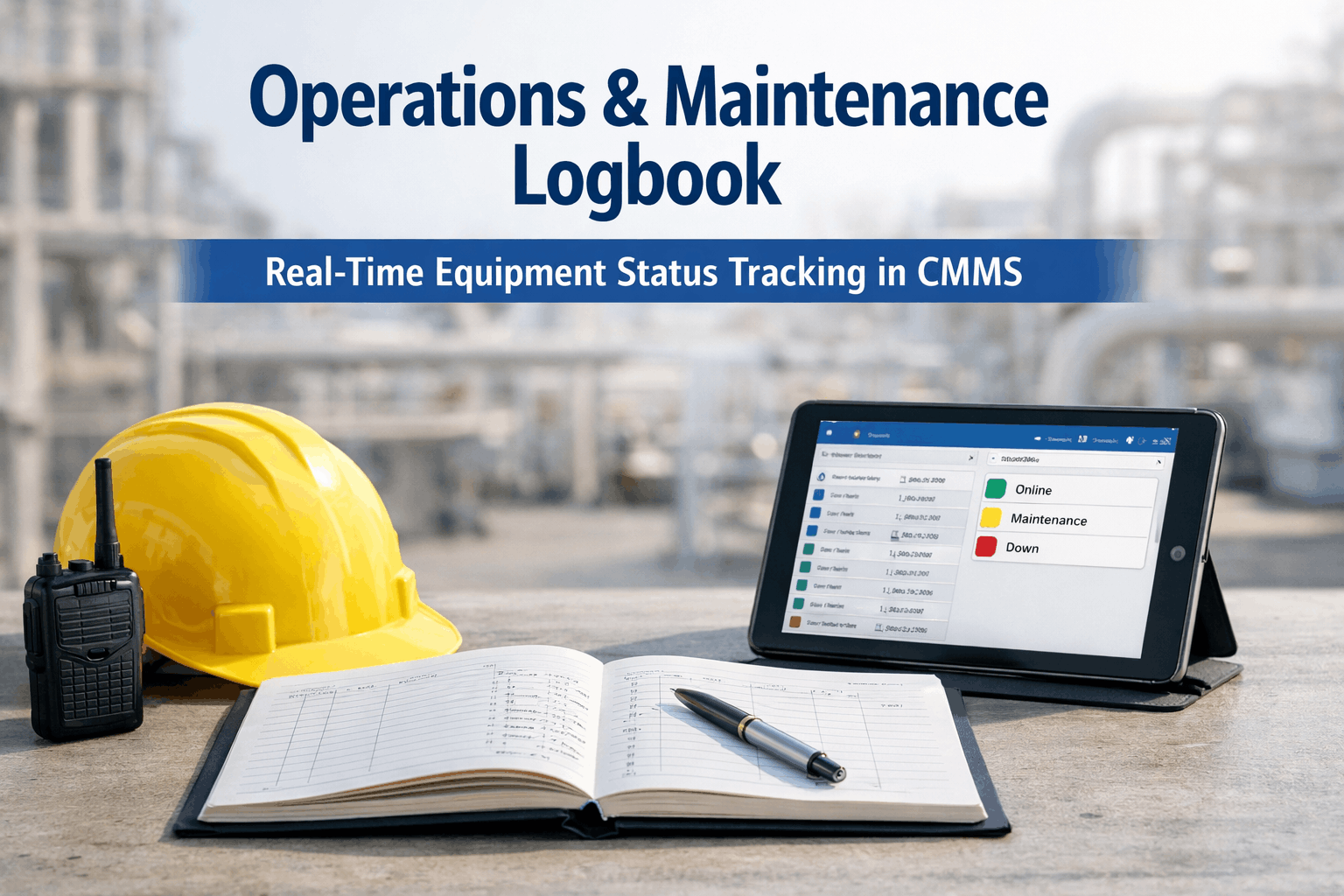
Operations & Maintenance Logbook: Real-Time Equipment Status Tracking in CMMS
It is 11:42 PM on a Saturday. The overnight operator at a water treatment plant notices Pump Station 3 drawing 15% more current than normal. He walks to the control room whiteboard, writes "PS3 running hot — check Monday?" in dry-erase marker, and resumes his rounds. By Monday morning, the whiteboard has been partially erased by the day shift, the note is illegible, and no one investigates. Wednesday at 2:17 AM, the pump seizes. The bearing failure cascades into a $67,000 motor replacement, 14 hours of emergency bypass operations, a regulatory notification for reduced treatment capacity, and a root cause investigation that will eventually trace back to a Saturday night observation that was never documented, never escalated, and never acted upon. The operator did notice the problem. The system failed to capture it. This is the reality at thousands of continuous-operation facilities running on paper logbooks, whiteboards, and tribal knowledge — where critical equipment observations vanish between shifts because the documentation infrastructure cannot keep pace with the operation it serves. Talk to our team about replacing paper logbooks with real-time CMMS-driven equipment status tracking that never loses an observation.
O&M Intelligence 2026
Operations & Maintenance Logbook: Real-Time Equipment Status Tracking in CMMS
Replace paper logbooks with digital O&M logging — run/stop monitoring, alarm acknowledgment, parameter trending, and shift handover documentation in a single CMMS platform
Critical observations lost between shifts with paper logbooks
70%
Reduction in unplanned downtime with real-time status logging
Real-Time
Equipment Status Visibility
Every run/stop state, alarm, and parameter change — logged, timestamped, and actionable
The Documentation Crisis in Operations & Maintenance
Continuous-operation facilities — water plants, power stations, manufacturing lines, data centers, hospitals — depend on accurate, real-time equipment status documentation for safe and efficient operation. Yet the majority still rely on paper logbooks, whiteboards, and verbal handovers that lose critical information at every shift change. The result: observations that should trigger preventive action disappear, alarms are acknowledged but never investigated, and parameter trends that predict failure go unrecognized until the equipment stops.
Anatomy of a CMMS-Driven O&M Logbook
How digital logging transforms equipment observations into preventive maintenance actions
CMMS Trigger
Operator Logs Abnormal Equipment Reading
Phase 1 — Capture
Digital Parameter Entry with Threshold Check
Operator logs the reading via mobile device. CMMS compares against normal operating range and flags the value as out-of-band with a yellow or red severity indicator.
Phase 2 — Alert
Auto-Escalation to Maintenance Team
Out-of-range reading triggers automatic notification to the shift maintenance lead with equipment ID, parameter, reading value, normal range, and operator notes.
Phase 3 — Action
Work Order Generated with Log History
If the reading exceeds critical threshold or persists across multiple rounds, CMMS auto-generates a prioritized work order linked to the full parameter trend history.
Phase 4 — Handover
Shift Report with All Status Changes
Digital shift handover includes every equipment status change, alarm acknowledgment, parameter anomaly, and pending work order — nothing is lost between crews.
Total Operational Impact
Zero Lost Observations
Every reading, every alarm, every status change — captured, escalated, and acted upon
Digital O&M logbooks do not add administrative burden to operators — they eliminate the redundant paperwork that consumes time without producing value. Instead of writing the same reading in a paper log, then copying it to a whiteboard, then verbally mentioning it at handover, the operator enters it once on a mobile device and the system handles distribution, threshold checking, escalation, trending, and shift handover documentation automatically.
Core O&M Logbook Modules in CMMS
The modern digital O&M logbook ecosystem consists of six interconnected modules. Each addresses a different aspect of real-time equipment documentation, and together they create a complete operational record that maintenance, operations, engineering, and compliance teams can access from a single CMMS platform like Oxmaint.
O&M Logbook Module Architecture
Key capabilities powering real-time equipment status tracking in CMMS
01
Run/Stop Status Logging
Track every equipment state change — running, stopped, standby, tripped, locked out — with operator ID, timestamp, and reason code for a complete operational timeline.
Equipment Status
02
Parameter Logging & Trending
Log operating parameters — pressure, temperature, flow, vibration, current — with auto-comparison against normal ranges and trend analysis across shifts, days, and weeks.
Data Trending
03
Alarm Acknowledgment Tracking
Every alarm is logged with occurrence time, acknowledgment time, operator ID, and action taken. Unacknowledged alarms escalate automatically after configurable timeout periods.
Alarm Management
04
Digital Shift Handover
Auto-generated handover reports compile every status change, alarm event, parameter anomaly, pending work order, and operator note from the outgoing shift into a structured digital package.
Shift Continuity
05
Operator Round Checklists
Mobile-accessible round sheets guide operators through equipment checks in sequence, enforcing reading entry at each point and flagging missed or out-of-range values in real time.
Field Operations
06
Compliance & Audit Trail
Every log entry is timestamped, operator-attributed, and immutable — creating a regulatory-grade audit trail for EPA, OSHA, FDA, ISO, and industry-specific compliance requirements.
Regulatory
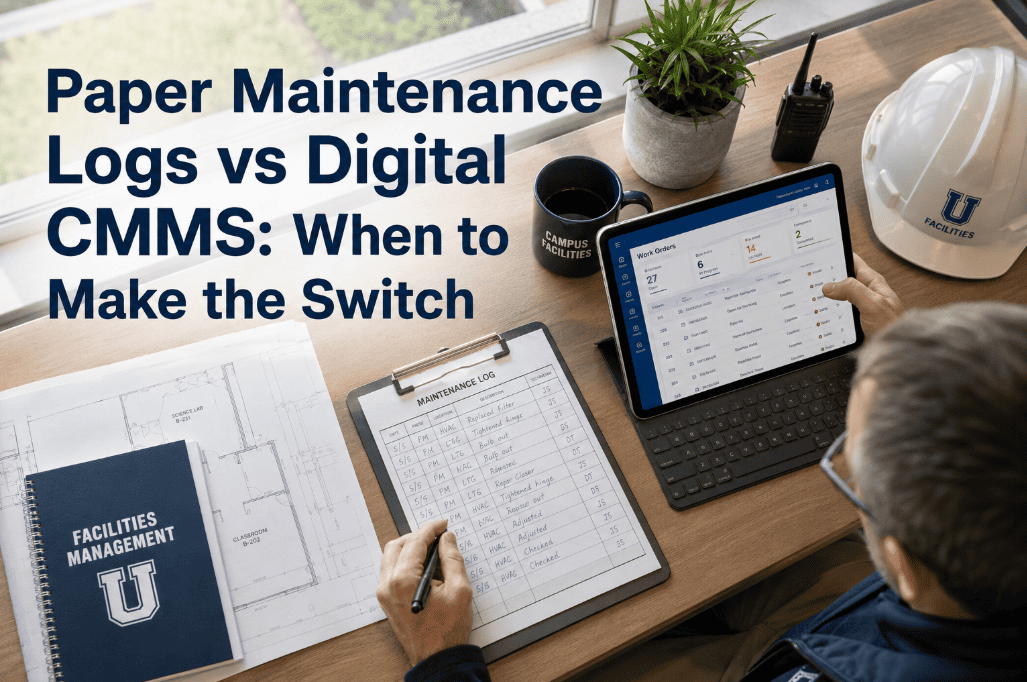
Paper Logbooks vs. CMMS-Driven O&M Logging
The shift from paper logbooks to CMMS-integrated digital logging is not an incremental improvement — it is a fundamental transformation in how facilities capture, communicate, and act on operational data. Where paper systems lose information, digital systems amplify it. Schedule a demo to see how Oxmaint replaces every paper logbook in your operation with real-time digital tracking.
Paper Logbook vs. CMMS Digital O&M Log
Operational Metric
Paper / Whiteboard
Basic Spreadsheet
CMMS-Integrated Logbook
Equipment Status
Handwritten entries, hours old
Manual spreadsheet update
Real-time run/stop with timestamps
Parameter Logging
Numbers on paper, no trending
Manual chart creation
Auto-trending with threshold alerts
Alarm Tracking
Memory-based, unrecorded
After-the-fact log entry
Real-time acknowledgment with escalation
Shift Handover
Verbal walkthrough
Email summary
Auto-generated digital handover report
Work Order Linkage
Separate system, no connection
Manual cross-reference
Auto-generated from threshold breaches
Audit Trail
Filing cabinet, weeks to retrieve
File search, version issues
Instant export, immutable records
70%Reduction in unplanned downtime
ZeroLost shift handover information
100%Audit-ready documentation
Replace Every Paper Logbook in Your Facility
See how Oxmaint CMMS captures run/stop status, logs operating parameters against thresholds, tracks alarm acknowledgments, and auto-generates shift handover reports — giving every crew complete operational visibility from day one.
For operations managers and finance directors, the business case for digital logbooks is built on three pillars: downtime prevention from early anomaly detection, labor savings from eliminated paperwork redundancy, and compliance cost reduction from instant audit readiness. For a mid-sized continuous-operation facility, the payback period is typically under four months.
Annual O&M Logbook Digitization ROI
Based on a continuous-operation facility with 50–200 monitored assets
Downtime Prevention
Early anomaly detection from parameter trending
$420K Unplanned
$126K Planned
$294,000
Operator Paperwork Labor
Eliminate redundant paper log + whiteboard + verbal
$165K Manual
$58K Digital
$107,000
Compliance & Audit Prep
Instant export replaces weeks of record assembly
$95K Annual
$19K Annual
$76,000
Handover Error Reduction
Digital handovers eliminate information loss between crews
$140K Rework
$21K Rework
$119,000
Total Annual Savings
$596K+
Per facility, plus safety, regulatory, and operational continuity benefits
Implementation Roadmap: From Paper to Real-Time
Transitioning from paper logbooks to CMMS-integrated digital logging is a phased journey. It starts with inventorying your logging requirements and ends with a fully connected, real-time operational intelligence platform. The key is deploying on your highest-volume logging points first to demonstrate immediate value and build operator adoption.
Digital O&M Logbook Implementation Roadmap
Steps to deploy real-time equipment status tracking across your facility
01
Log Inventory
Catalog all existing paper logs, round sheets, and whiteboard practices across every shift.
02
Threshold Setup
Define normal operating ranges and alert thresholds for every monitored parameter.
03
Mobile Deploy
Issue mobile devices and train operators on digital round entry and status logging.
04
Handover Activate
Enable auto-generated digital shift handover reports and alarm escalation rules.
05
Trend Analysis
Activate parameter trending dashboards and predictive threshold alerts for maintenance.
06
Full Integration
Connect IoT sensors for auto-logging, link to work order system, and enable compliance reporting.
Expert Perspective: Why Digital Logbooks Change Everything
"
We operated three water treatment plants on paper logbooks for 20 years. Every year, our auditors found gaps — missing readings, unsigned round sheets, alarm events with no documented response. After deploying Oxmaint digital logbooks, every reading is timestamped and operator-attributed, every alarm acknowledgment is tracked with response action, and every shift handover is a structured digital report. Our regulatory audit findings dropped from 14 items to zero in the first year. But the real value was operational: three potential equipment failures were caught by parameter trending that our paper logs could never have revealed. The pump station incident that used to cost us $67,000 in emergency repairs now costs $200 in a planned bearing replacement because the trend was visible two weeks before failure.
— Director of Operations, Regional Water Authority
Operational Continuity
Digital shift handovers ensure zero information loss between crews. Every status change, alarm, parameter anomaly, and pending action transfers with full context and documentation.
Predictive Detection
Parameter trending across shifts and weeks reveals deterioration patterns invisible in isolated paper readings — converting reactive breakdowns into planned, low-cost interventions.
Regulatory Defense
Immutable, timestamped, operator-attributed log entries create a regulatory-grade audit trail that satisfies EPA, OSHA, FDA, ISO, and industry-specific documentation requirements instantly.
Facilities that digitize their O&M logbooks are not adding technology for technology's sake — they are building the operational intelligence infrastructure that prevents failures, ensures compliance, and gives every operator and maintenance technician the complete picture they need to make the right decision at the right time. Schedule a consultation to start your digital logbook transformation.
Transform Your Operations Logbook with Oxmaint
Join facilities using Oxmaint to capture every equipment status change, log parameters against thresholds, track alarm acknowledgments, generate digital shift handovers, and produce audit-ready compliance documentation — all from a single CMMS platform built for continuous operations.
What equipment data does the digital O&M logbook capture?
Oxmaint's digital logbook captures five categories of real-time equipment data. Run/stop status logging tracks every state change — running, stopped, standby, tripped, in maintenance, locked out — with operator ID, timestamp, and reason code. Parameter logging records operating readings including pressure, temperature, flow rate, vibration amplitude, electrical current draw, and level — each compared against configurable normal operating ranges. Alarm acknowledgment tracking logs every alarm occurrence with time, acknowledgment timestamp, operator ID, and documented response action. Operator round entries are captured through mobile-accessible checklists that guide operators through each check point in sequence. Free-form operator notes allow observations, concerns, and recommendations to be documented with equipment context and timestamp — replacing the margin notes, sticky notes, and verbal comments that paper systems lose between shifts.
How does parameter trending prevent equipment failures?
When operating parameters are logged digitally across shifts, days, and weeks, the CMMS builds trend lines that reveal gradual deterioration invisible in isolated readings. A pump drawing 78 amps today looks normal in isolation. But when the trend shows it was drawing 72 amps three weeks ago, 74 amps two weeks ago, and 76 amps last week, the upward trajectory predicts bearing deterioration that will cause seizure within weeks. Oxmaint auto-calculates trend rates and generates alerts when parameters are trending toward threshold boundaries — even when each individual reading is still technically within range. This converts reactive breakdowns into planned, low-cost interventions scheduled during convenient maintenance windows.
How does the digital shift handover work?
At every scheduled shift transition, Oxmaint automatically compiles a digital handover report containing every equipment status change that occurred during the outgoing shift, all alarm events with acknowledgment status and response actions, any parameter readings that were out-of-range or trending toward thresholds, all open and newly generated work orders with current status, and operator notes flagged for incoming crew attention. The incoming shift lead reviews and digitally acknowledges the handover, creating a timestamped record that proves the information was transferred. This replaces verbal walkthroughs, whiteboard notes, and the critical observations that vanish when a tired operator forgets to mention them at 6 AM.
Does the digital logbook integrate with existing SCADA and BMS systems?
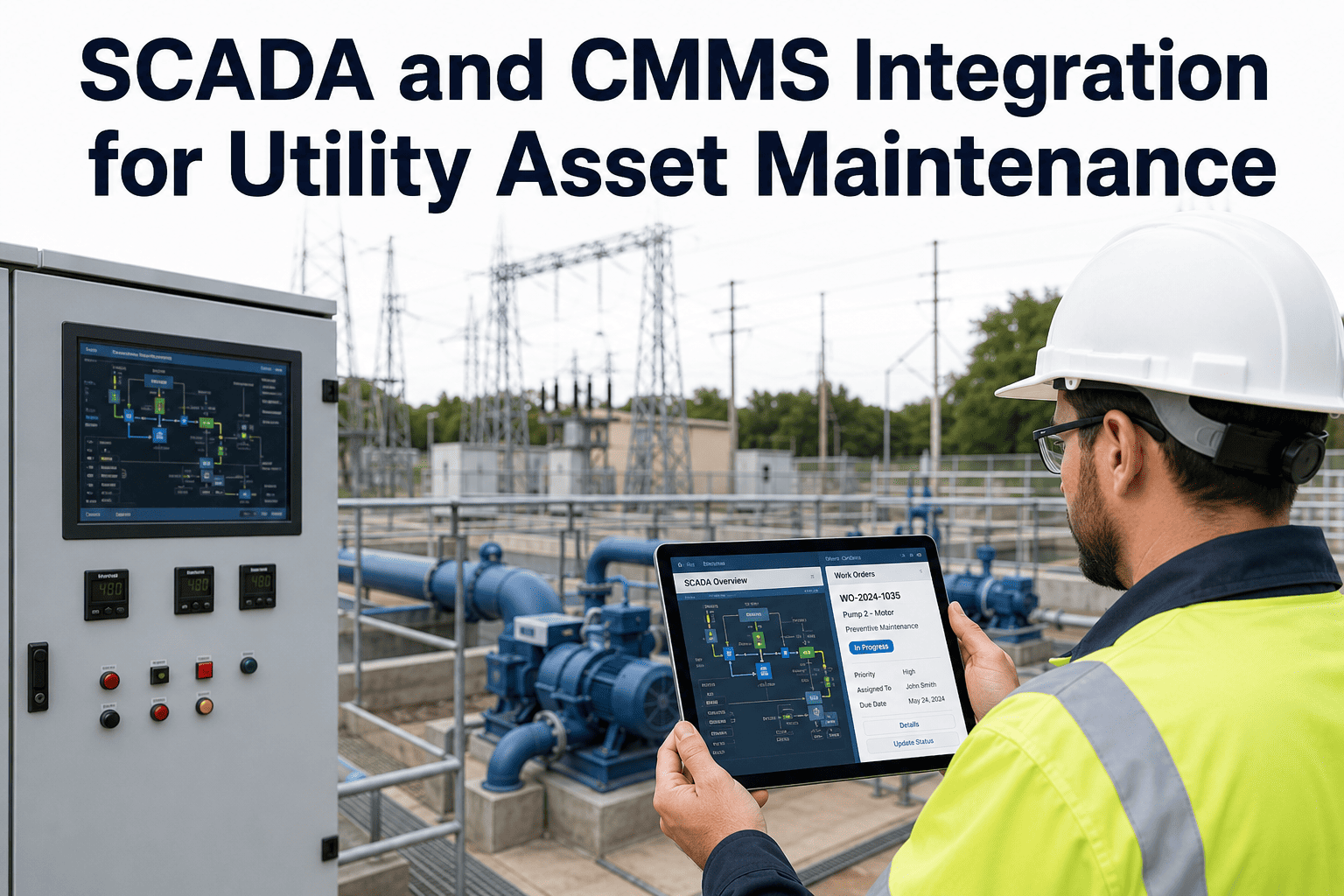
Oxmaint supports integration with SCADA, BMS, and PLC systems to auto-populate certain log entries — particularly run/stop status changes and alarm events that are already captured electronically. This hybrid approach combines automated data capture for system-monitored parameters with operator-entered readings for field observations that SCADA cannot detect (vibration feel, unusual noise, visual leaks, odors). The integrated logbook provides a single source of truth that merges both automated and human-observed equipment data, creating a more complete operational picture than either system provides alone.
What compliance standards does the digital logbook support?
Oxmaint's digital logbook produces immutable, timestamped, operator-attributed records that satisfy documentation requirements across multiple regulatory frameworks: EPA discharge monitoring reports and operational logs for water and wastewater facilities, OSHA process safety management documentation for chemical and refining operations, FDA 21 CFR Part 11 electronic record requirements for pharmaceutical and food manufacturing, ISO 55001 asset management documentation, NERC CIP operational logging for power generation and transmission, and Joint Commission documentation for healthcare facilities. Every entry is digitally signed, tamper-evident, and instantly exportable for auditors — eliminating the weeks of record compilation that paper-based facilities require before regulatory visits.

.png)
