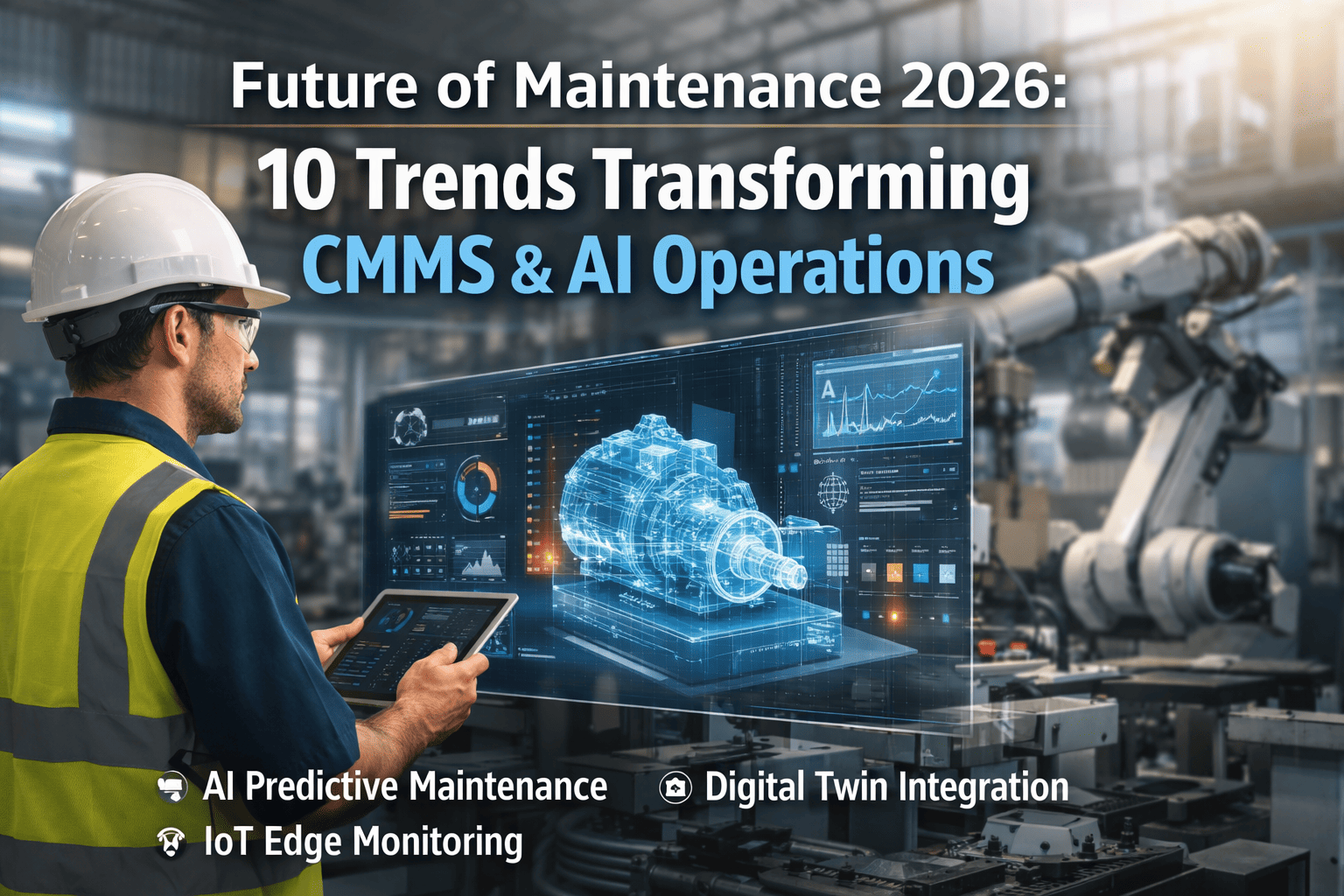
Maintenance is no longer a cost center—it is becoming the competitive edge that separates efficient operations from failing ones. In 2026, AI, IoT, and digital twins are not pilots or roadmap items—they are live in plants across every sector. If your team is still dispatching technicians with paper work orders or waiting for equipment to break before responding, you are already falling behind. Start with Oxmaint free and see how far intelligent maintenance can take your operation.
Future of Maintenance 2026
10 Trends Transforming CMMS & AI Operations
Why Reactive Maintenance Is a Losing Strategy in 2026
The average manufacturer loses over 800 hours of production per year to unplanned downtime. Equipment complexity is rising, skilled technicians are retiring faster than they are being replaced, and regulatory standards are tightening. Organizations clinging to reactive or even basic calendar-based maintenance are absorbing costs that their competitors have already eliminated through intelligent systems. The maintenance function is undergoing its most significant transformation in a generation—and the window to act is narrowing fast.
of equipment failures show detectable warning signs 30–60 days before breakdown. Teams that capture these signals with AI and IoT eliminate emergency repairs before they start. Sign into Oxmaint to activate predictive alerts on your critical assets today.
10 Maintenance Trends Defining 2026
These are not speculative futures—they are active shifts happening in manufacturing, energy, facilities, and infrastructure operations right now. Each trend represents both a risk for teams that ignore it and an advantage for teams that adopt it.
AI-Powered Predictive Maintenance
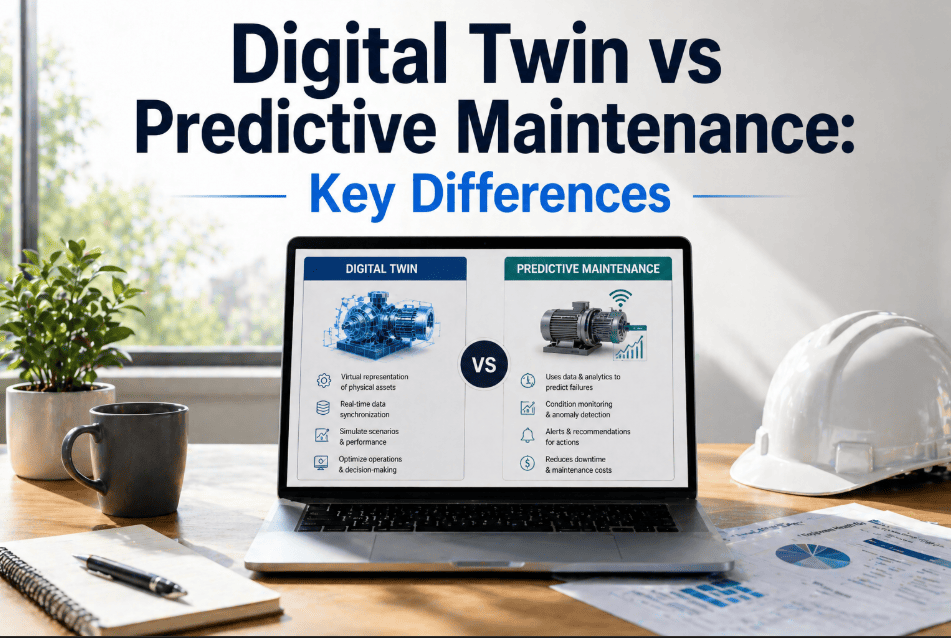
Machine learning models trained on vibration, temperature, pressure, and current data now predict failures weeks in advance with accuracy rates above 90%. These models improve continuously as they ingest more operational data from your specific equipment population.
Digital Twin Integration
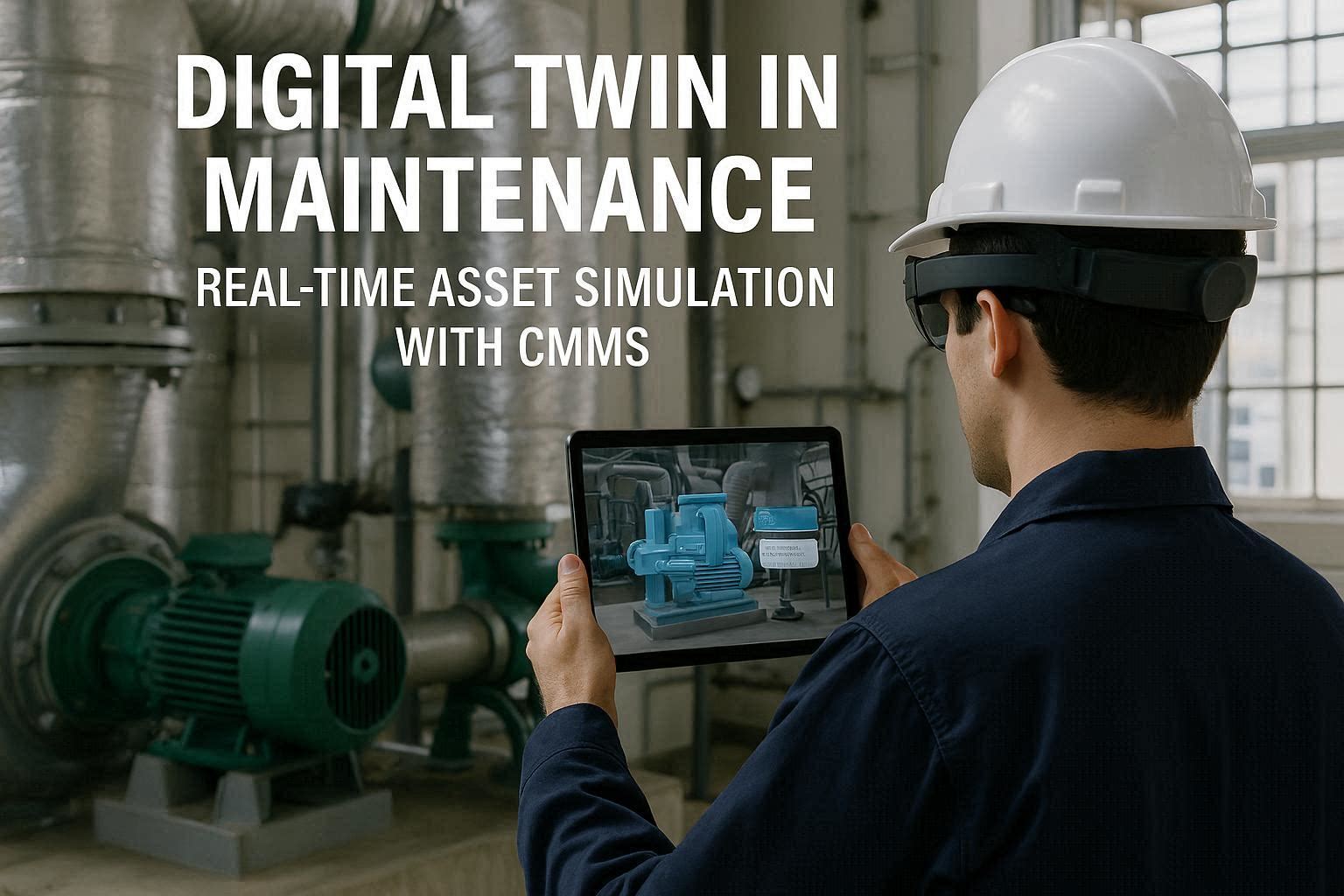
Virtual replicas of physical assets simulate operational conditions in real time, allowing maintenance teams to test failure scenarios, optimize inspection intervals, and plan interventions without touching live equipment. Oxmaint's digital twin module connects asset data directly to simulation models.
IoT Edge Monitoring at Scale
Industrial IoT sensors now cost less than $50 per node. Edge computing processes data locally, reducing latency and cloud dependency. In 2026, even mid-sized plants are deploying hundreds of connected sensors feeding real-time condition data into their CMMS without requiring a large IT infrastructure.
Autonomous Work Order Generation
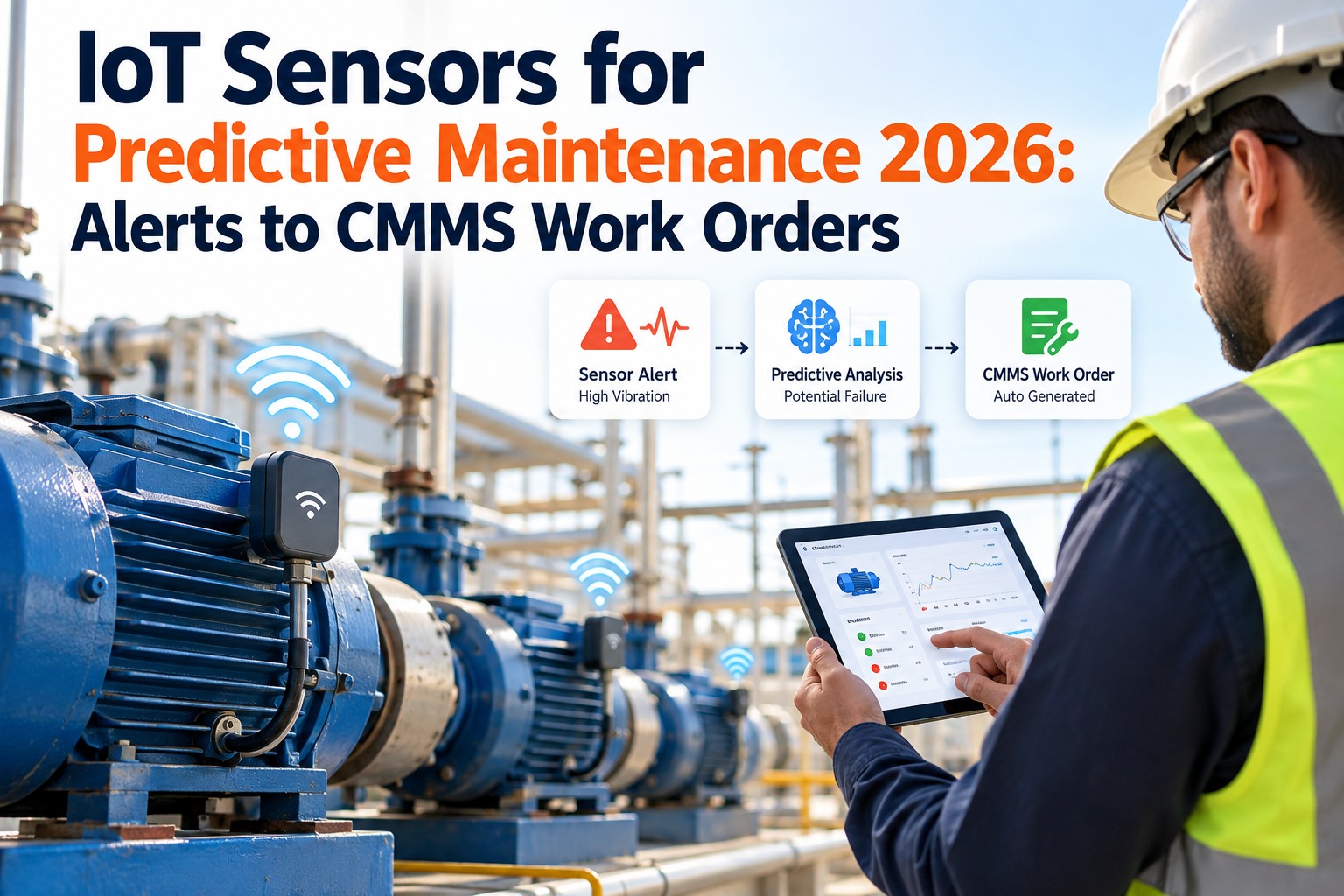
When sensors detect an anomaly, the CMMS automatically creates a work order, assigns the right technician based on skill and availability, orders required parts, and schedules the job—all without human input. This closed-loop automation compresses response time from hours to minutes.
AR-Assisted Remote Maintenance
Augmented reality overlays guide technicians through complex repairs using step-by-step visual instructions. Remote experts can annotate live video feeds to direct on-site staff in real time, dramatically reducing travel costs and enabling knowledge transfer to less experienced technicians.
Mobile-First Maintenance Execution
Technicians complete work orders, capture inspection data, record findings with photos, and close jobs entirely from mobile devices in the field. Paper-based records are being replaced by structured digital data that feeds analytics engines and audit trails simultaneously. Sign in to Oxmaint to deploy mobile workflows across your team.
Energy-Aware Maintenance Scheduling
AI-driven maintenance systems now consider energy consumption patterns when scheduling work. Poorly maintained equipment uses 10–30% more energy than design specifications. Linking maintenance status to energy monitoring surfaces hidden costs and optimizes servicing to maximize energy efficiency alongside reliability.
Condition-Based Maintenance Replacing Fixed Intervals
Fixed-interval PM schedules are being replaced by condition-triggered maintenance. Instead of servicing a pump every 90 days, CMMS platforms analyze real condition data and trigger work only when parameters indicate actual need—eliminating both premature servicing and deferred necessary work.
Advanced Maintenance Analytics and Reporting
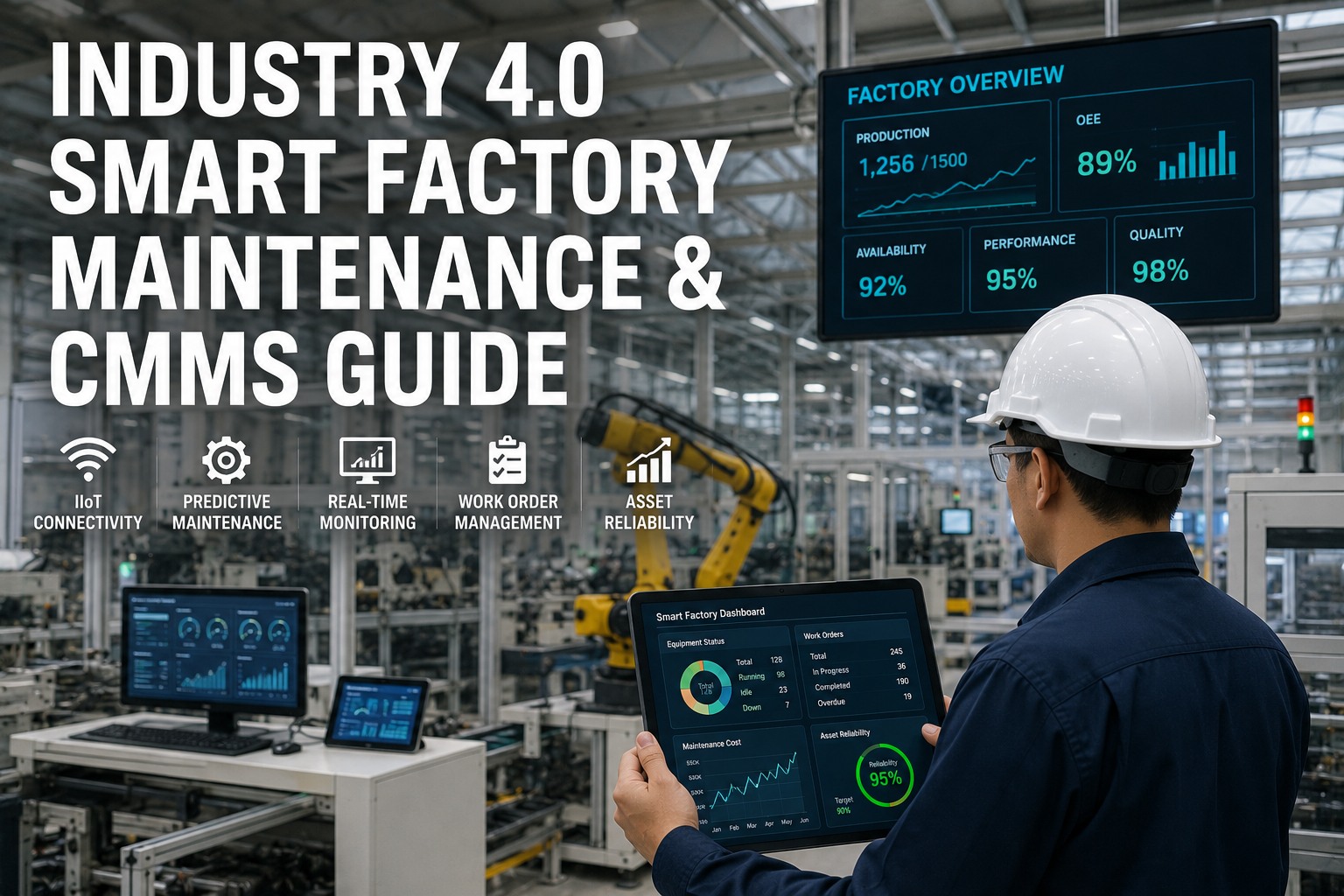
CMMS platforms in 2026 provide fleet-level performance dashboards, technician productivity metrics, MTBF and MTTR tracking, cost-per-asset reporting, and predictive budget modeling. Maintenance leaders now bring data-backed business cases to budget reviews instead of reactive justifications after failures.
Knowledge Transfer Through AI Documentation
As experienced technicians retire, AI systems capture procedural knowledge from historical work orders, annotated repairs, and expert video walkthroughs. New technicians are guided by AI-assembled SOPs drawn from years of documented field experience—preserving institutional knowledge that would otherwise leave with retiring staff.
Your competitors are already acting on these trends. Oxmaint gives you AI predictive maintenance, digital twin integration, and IoT edge monitoring in one platform built for teams that need results fast.
Reactive vs. Intelligent Maintenance: The Real Cost Difference
The gap between reactive and intelligent maintenance operations is not just operational—it is financial. Here is what the same plant looks like running two different maintenance strategies in 2026.
- Wait for equipment to fail before acting
- Emergency parts at 3–5x standard cost
- 800+ hours annual unplanned downtime
- Technicians dispatched without context or history
- Paper records, incomplete audit trails
- No visibility into impending failures
- Failures predicted 30–60 days in advance
- Planned parts procurement at standard cost
- Under 100 hours annual unplanned downtime
- Technicians arrive with full asset history and instructions
- Structured digital records with automatic compliance logging
- Real-time dashboards showing fleet health status
How Oxmaint Delivers These Trends Today
Oxmaint is not a roadmap promise—it is a live platform used by maintenance teams in manufacturing, facilities, energy, and infrastructure. Here is where the 2026 trends map directly to Oxmaint capabilities you can activate now by signing up for a free account.
AI Predictive Maintenance Engine
Oxmaint's AI layer ingests sensor data, work order history, and inspection findings to surface failure predictions ranked by urgency and asset criticality. Teams act on intelligence, not intuition.
Digital Twin Asset Registry
Every asset in Oxmaint carries a complete digital profile: installation date, maintenance history, condition scores, failure events, and real-time sensor feeds. This is your digital twin foundation, ready to connect to simulation models.
IoT Edge Integration Hub
Connect vibration sensors, thermal cameras, current transducers, and pressure gauges to Oxmaint via standard protocols. Edge data populates dashboards and triggers automated work orders without manual intervention.
Mobile Execution and Analytics
Technicians complete work orders on mobile with photo capture, parts usage logging, and digital sign-off. Leadership views fleet health, technician productivity, and cost trends on real-time dashboards built from that field data.
Most of your waste is invisible—hidden in reactive maintenance, excess inventory, and manual processes. A good CMMS makes it visible, and once you can see it, you can eliminate it.
Your 90-Day Path to Intelligent Maintenance
You do not need a two-year transformation project. Most Oxmaint customers reach measurable results within the first 30 days. Here is the proven ramp used by teams who started their free trial and never looked back.
Deploy Oxmaint on your 10 most critical assets. Digitize work orders, set preventive maintenance schedules, and establish cost baselines. Most teams identify $50K–$100K in quick-win savings in this window alone.
Connect IoT sensors to the Oxmaint edge hub. Activate condition-based alerting. Launch energy monitoring dashboards. AI models begin learning your equipment's normal operating signatures.
Expand coverage to all assets. AI failure predictions become actionable. Present your first-quarter maintenance ROI to leadership with documented downtime reduction and cost avoidance figures.
The Shift Is Happening—Which Side Are You On?
Every week of reactive maintenance is another week of preventable downtime, inflated repair bills, and missed optimization. Oxmaint gives your team AI predictive maintenance, digital twin asset intelligence, IoT edge monitoring, and full CMMS automation—in one platform designed for operations teams that need results, not complexity.

.png)
