Hospital HVAC and power systems are not ordinary infrastructure — they directly sustain patient safety, surgical sterility, and life-support continuity. When a chiller fails during peak summer load or a UPS trips in the ICU, the consequences go far beyond maintenance downtime. AI predictive maintenance changes the equation by detecting failure signals weeks before breakdown, giving facilities teams the lead time to plan, schedule, and prevent. OxMaint brings that capability into a single platform your team can act on every day.
Healthcare Facilities · AI Predictive Maintenance
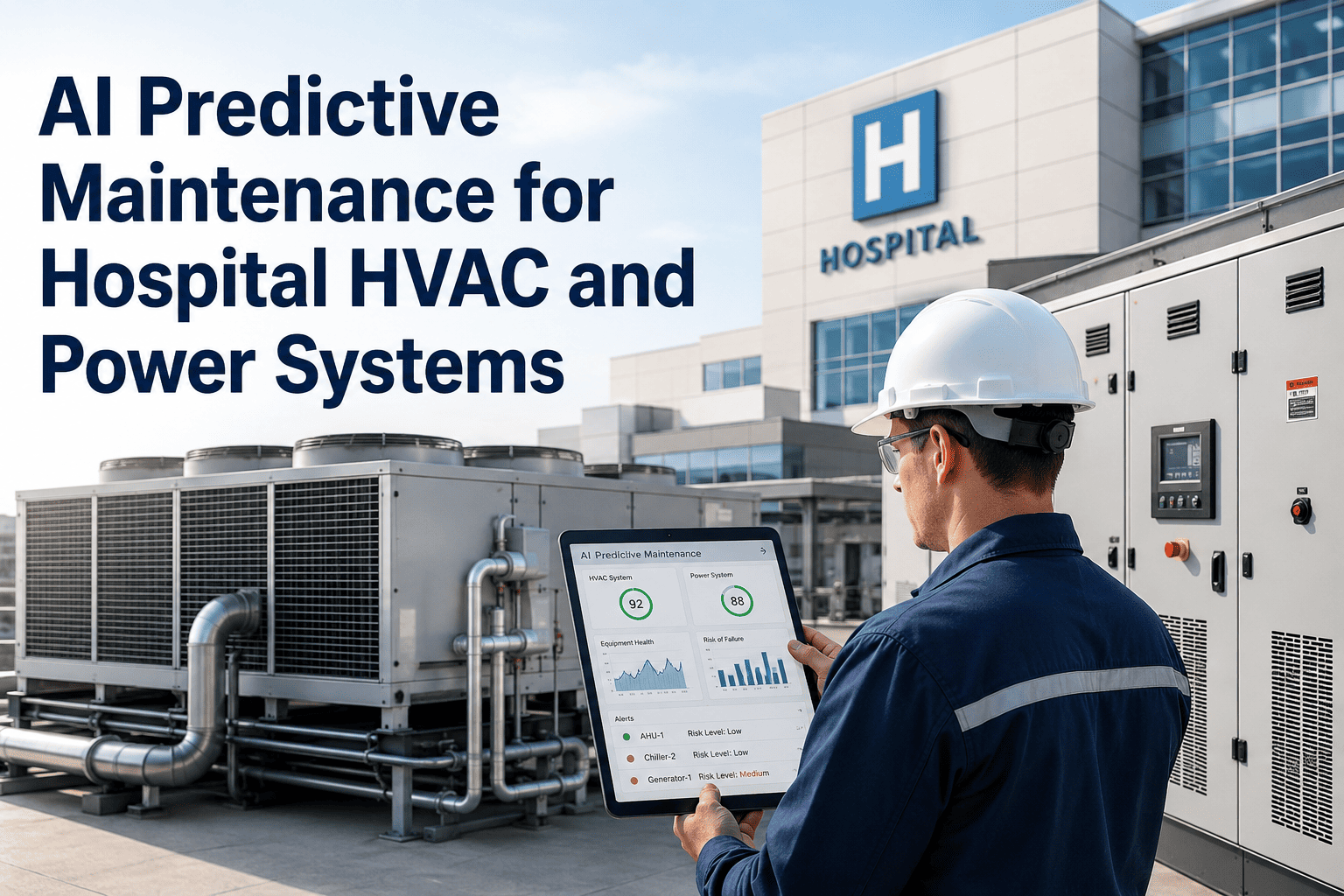
AI Predictive Maintenance for Hospital HVAC and Power Systems
Patient safety depends on infrastructure that never fails. See how AI-powered maintenance scheduling keeps critical hospital systems running — and what reactive maintenance is quietly costing your facility.
34%
of hospital downtime linked to HVAC failure
$38K
average cost per unplanned power event
72%
of failures preventable with scheduled PM
The Real Risk
What Happens When Hospital Infrastructure Fails
Hospitals run 24/7 under strict regulatory and patient-care obligations. An HVAC failure in a surgical suite triggers immediate infection control protocols. A power disruption in the ICU activates emergency transfers. These are not theoretical risks — they are documented incidents that happen to facilities without structured predictive maintenance programs.
OR Contamination Risk
HVAC pressure differential failures in surgical suites trigger sterility protocol shutdowns averaging 6–18 hours of operating room downtime.
ICU Power Events
UPS and generator failures in critical care units result in emergency patient transfers, regulatory reporting obligations, and CMS compliance review.
Pharmacy Cold Chain
Cooling failures in pharmacy and blood bank storage trigger drug and product disposal, restocking costs, and mandatory adverse event reporting.
Joint Commission Findings
Facilities without documented PM programs for HVAC and electrical systems regularly receive Environment of Care deficiencies during accreditation surveys.
How AI Changes This
From Scheduled Guesswork to Signal-Based Prevention
Traditional preventive maintenance schedules assets by calendar interval — replace filters every 90 days, inspect chillers quarterly. AI predictive maintenance reads actual operating conditions: runtime hours, vibration trend, temperature delta, electrical draw. It flags assets showing degradation patterns before the pattern becomes a failure.
1
Asset Sensor Data Collection
OxMaint ingests runtime data from BMS integrations, IoT sensors, and manual meter readings entered by your team during rounds.
2
Anomaly Detection and Trending
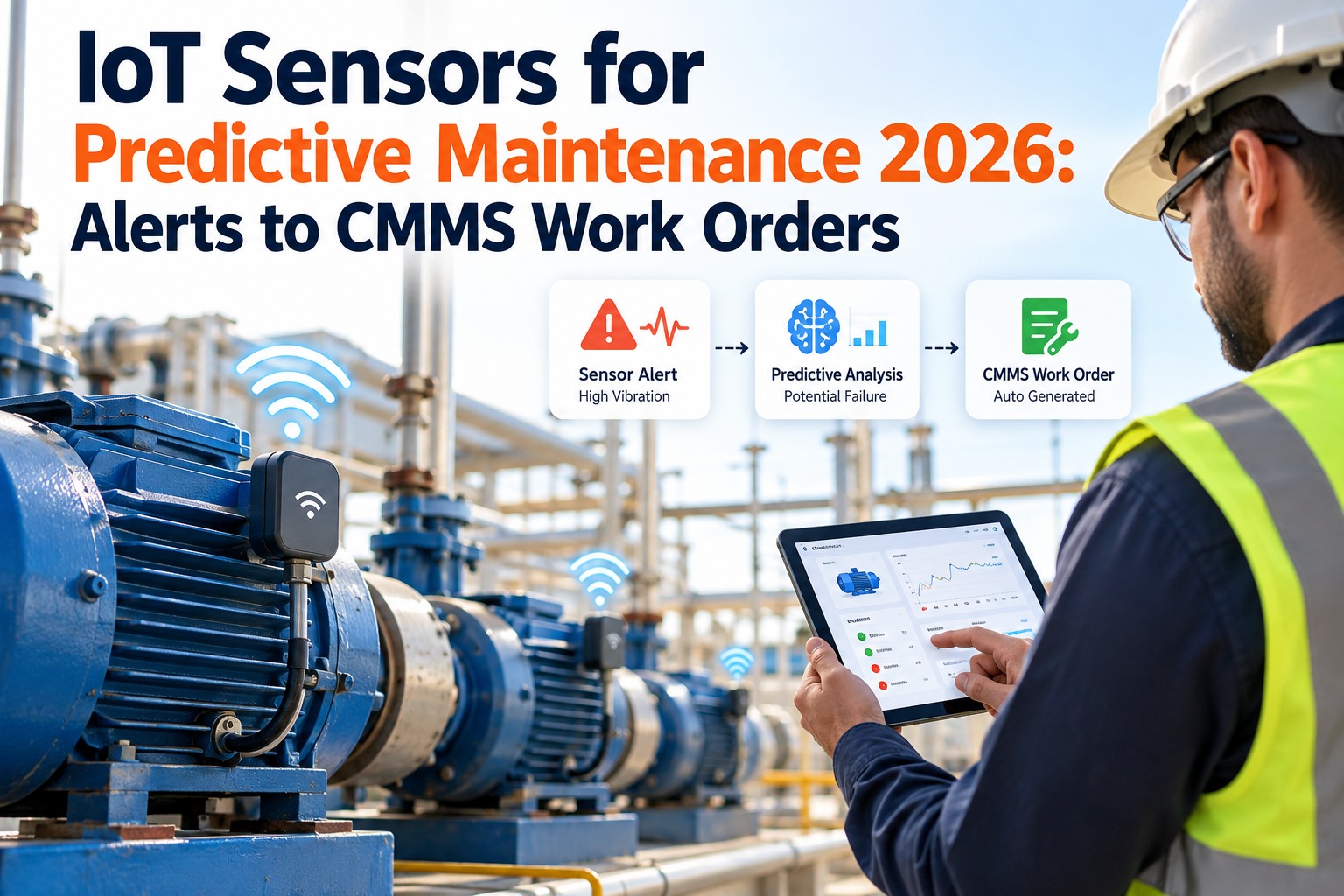
The AI engine identifies deviation from baseline operating ranges and flags assets trending toward failure before threshold breach.
3
Auto-Generated Work Orders
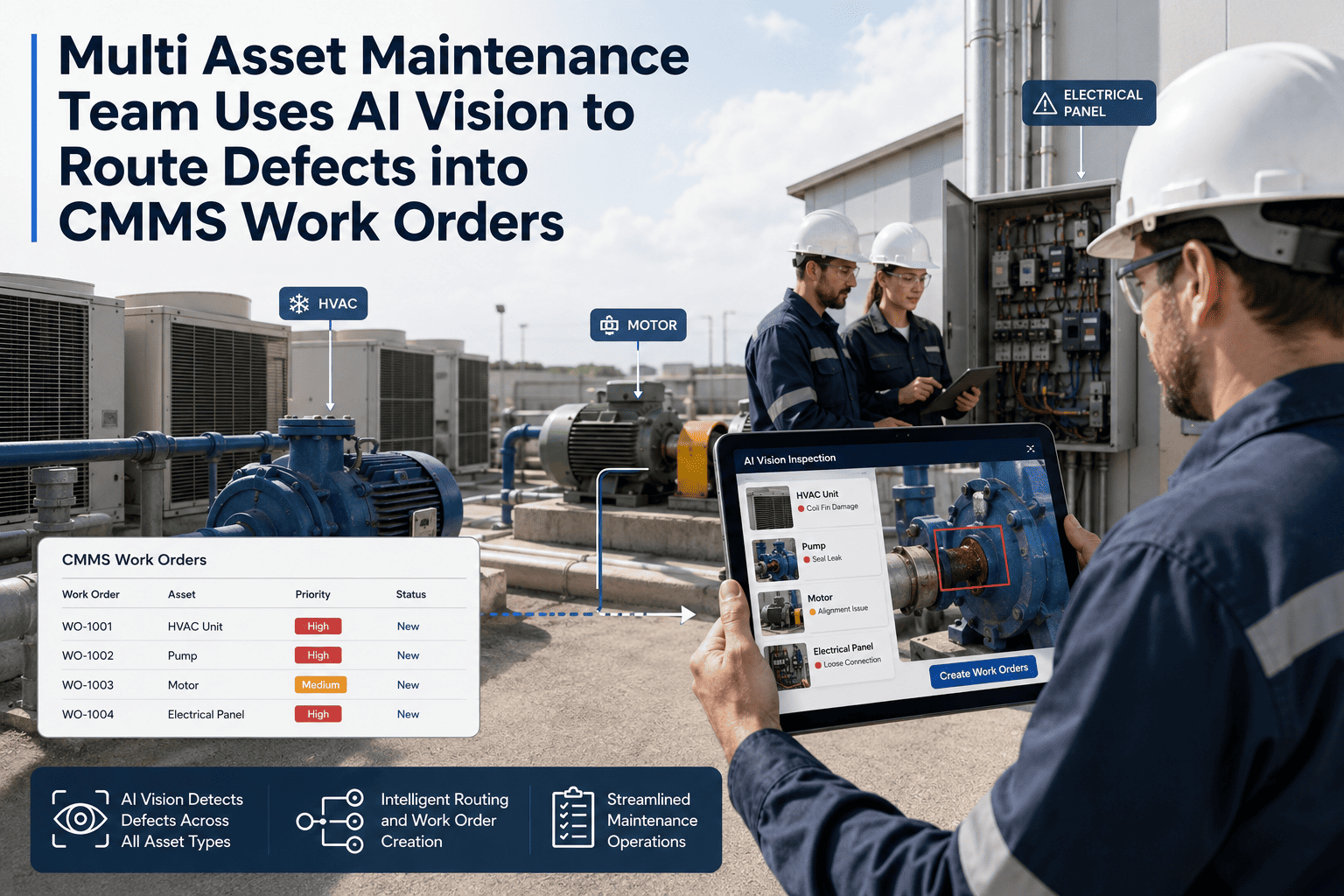
OxMaint creates a prioritized work order with asset history, last PM record, and recommended action — assigned to your technician before failure occurs.
4
Compliance Documentation
Every intervention is logged with technician, timestamp, and outcome — producing the audit trail Joint Commission and CMS reviewers require.
System Coverage
What OxMaint Tracks in Hospital Facilities
| System Category |
Key Assets |
AI Signals Monitored |
Failure Prevented |
| HVAC Infrastructure |
Chillers, AHUs, cooling towers, VAV boxes |
Delta-T deviation, vibration, refrigerant pressure |
OR sterility failure, pharmacy over-temp |
| Electrical Power |
UPS, ATS, generator sets, distribution panels |
Battery test trends, load imbalance, runtime hours |
ICU power event, equipment damage |
| Medical Gas Systems |
Vacuum pumps, compressors, manifolds |
Pressure trends, cycle time, duty cycle ratio |
Surgical gas supply interruption |
| Water and Plumbing |
Steam sterilizers, cooling towers, water heaters |
Legionella risk temp bands, flow rate deviation |
Infection control failures, HAI exposure |
| Fire and Life Safety |
Sprinkler systems, fire pumps, suppression panels |
Test record gaps, pressure readings, inspection intervals |
Compliance deficiency, code violation |
See It Live
Schedule a 30-Minute Demo for Your Hospital Facilities Team
We'll walk through your specific asset categories and show exactly how OxMaint builds predictive PM schedules for HVAC and power systems.
By the Numbers
What Healthcare Facilities Gain with Predictive PM
85%
Reduction in unplanned HVAC failures (ASHRAE Healthcare Study 2024)
60%
Lower emergency repair cost vs reactive maintenance (ASHE 2024)
40%
Longer asset life with structured PM versus reactive-only programs
92%
Joint Commission PM documentation compliance in OxMaint-run facilities
Sources: ASHRAE Healthcare Facilities HVAC Performance Report 2024 · ASHE Maintenance Cost Benchmarking Survey 2024 · AHA Equipment Lifecycle Analysis 2023
Expert Perspective
What Healthcare Facilities Leaders Say
The most dangerous assumption in hospital facilities management is that a system running today will run tomorrow. HVAC and power infrastructure in healthcare ages under high-duty conditions — often with deferred PM because the clinical schedule never stops. AI predictive maintenance gives you the early warning you need to plan interventions without pulling staff from urgent reactive work. The facilities teams we've worked with that implemented sensor-driven PM consistently report fewer emergency calls and better accreditation outcomes. The documentation alone is worth the investment.
Patricia Mensah
Director of Facilities Engineering · Regional Medical Center Network · 22 years healthcare infrastructure management
★★★★★
Every Joint Commission Environment of Care survey I've been through has one predictable flashpoint: PM documentation gaps for life-safety and HVAC systems. Surveyors want to see scheduled intervals, completion records, and corrective actions — all linked to a specific asset. When that documentation lives in spreadsheets or a vendor portal your team doesn't control, you're always one survey away from a deficiency finding. A CMMS that generates that documentation automatically as work orders close changes the accreditation risk profile entirely.
Book a demo to see OxMaint's compliance reporting.
Marcus Oyelaran
Biomedical and Facilities Compliance Director · Academic Medical Center · 18 years regulatory compliance
★★★★★
Common Questions
What Hospital Facilities Teams Ask About OxMaint
Does OxMaint integrate with existing hospital BMS and building automation systems?
OxMaint connects with common BMS platforms via API and CSV-based data import, pulling runtime and alarm data directly into asset records. For facilities without BMS integration, technicians can log meter readings and sensor observations during rounds, which OxMaint uses to build the operational history needed for trend analysis. Either path produces the asset condition record required for predictive scheduling.
Sign up free to explore the integration options for your specific BMS platform.
How does OxMaint handle PM documentation for Joint Commission and CMS compliance requirements?
Every work order completed in OxMaint generates a timestamped record with asset ID, technician name, PM checklist completion, findings, and corrective actions taken. These records are exportable in formats aligned with Joint Commission Environment of Care documentation standards and CMS Conditions of Participation for hospital maintenance. The system also tracks PM compliance rates by asset category, giving you the rolling 12-month performance data surveyors typically request during review. Internal links connect each PM record to the asset's full maintenance history, making survey preparation faster and less stressful for your facilities team.
Can OxMaint manage both in-house technician work and vendor service contracts on the same platform?
Yes. OxMaint manages work orders for both internal staff and external vendors in the same asset record. Vendor service visits are logged as work order completions with attached service reports, parts records, and technician notes. This creates a unified asset history that includes both your in-house PM activity and OEM or third-party service events — giving your team full visibility into what has been done to each piece of equipment regardless of who performed the work. That combined record is also what gives you the strongest position when renegotiating service contracts based on documented failure frequency.
What is the implementation timeline for a hospital deploying OxMaint across multiple facilities?
Most hospital facilities teams complete asset registry setup and first PM schedule configuration within two to four weeks for a single site. Multi-site deployments follow a phased approach starting with the highest-risk asset categories — typically HVAC and power — before expanding to full asset coverage. OxMaint's onboarding team works directly with your facilities director to build the asset list, configure PM intervals to manufacturer and regulatory standards, and train technicians on mobile work order completion. The platform is designed so frontline staff can complete work orders on mobile devices without training beyond a single session.
Book a demo to get a deployment timeline specific to your facility count and asset volume.
Get Started
Protect Patient-Care Environments Before the Next Failure
OxMaint gives hospital facilities teams AI-powered PM scheduling, Joint Commission-ready documentation, and full asset history in one platform. Book a demo and we'll build the picture for your specific system categories.



.png)