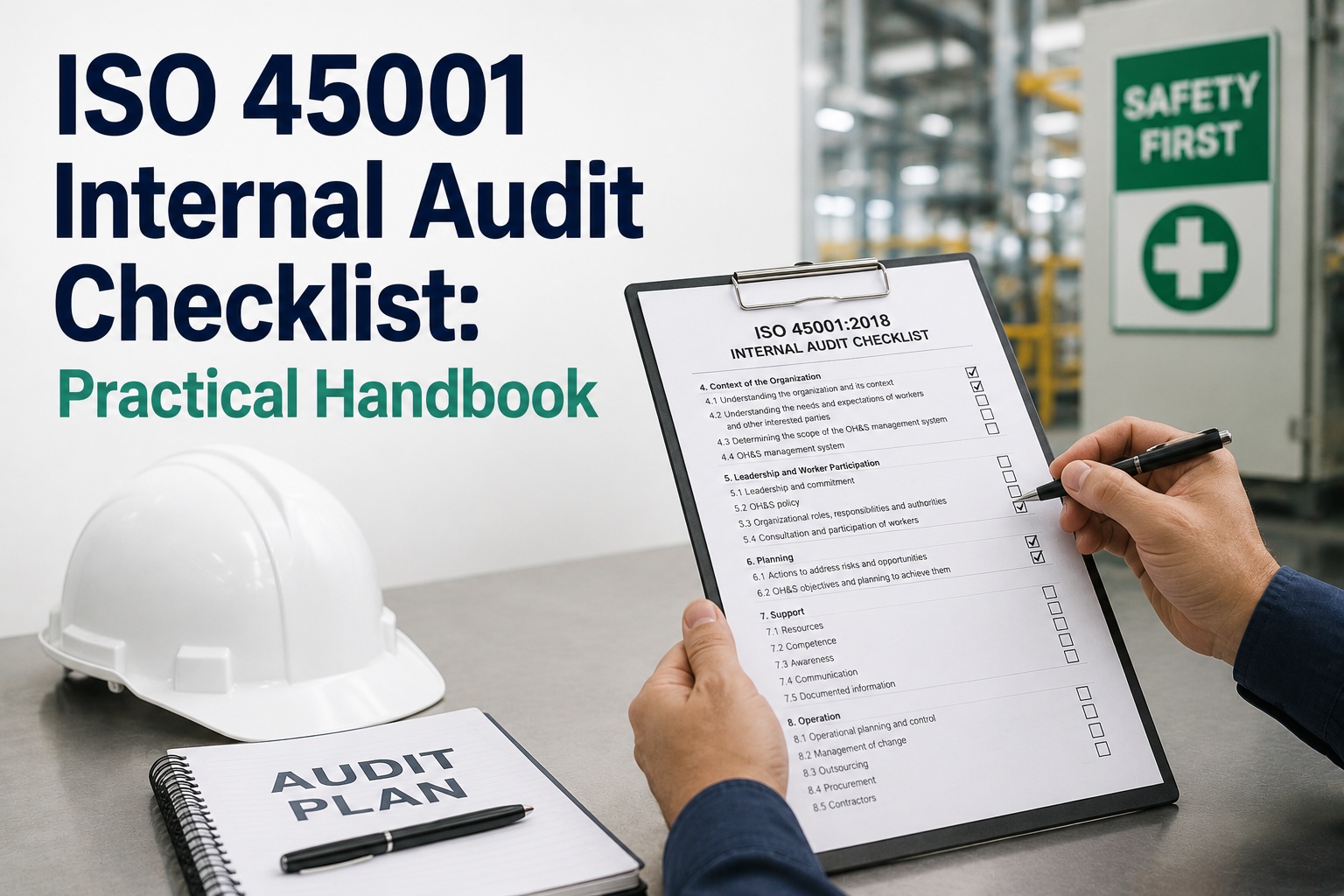
An ISO 45001 internal audit checklist is the structured tool Environment, Health & Safety (EHS) and maintenance reliability teams use to verify that their Occupational Health and Safety Management System (OHSMS) meets every clause of the ISO 45001:2018 standard before a formal certification or surveillance audit. Rather than scrambling to assemble paper records, binders, and scattered spreadsheets the week before an auditor arrives, a standardized internal audit template ensures continuous compliance by mapping evidence to specific requirements—hazard identification, risk assessment, operational controls, and emergency preparedness. When paired with a digital CMMS like OxMaint, this checklist becomes a live, automated process: technicians capture photo evidence and e-signatures on mobile devices, mandatory fields prevent incomplete sign-offs, and any identified deficiencies instantly trigger corrective and preventive action (CAPA) work orders. Stop reacting to audit deadlines and start managing safety compliance proactively when you Start Free Trial today.
ISO 45001:2018 Compliance
Is Your Maintenance Team Audit-Ready or Just Hoping for the Best?
Paper-based safety audits fail at the exact moment you need them most—during an incident investigation or certification review. Digitize your ISO 45001 internal audit checklist to enforce mandatory fields, capture real-time photo evidence, and auto-generate corrective work orders the second a deficiency is found.
Clause-by-Clause Coverage
ISO 45001 Internal Audit Checklist by Clause
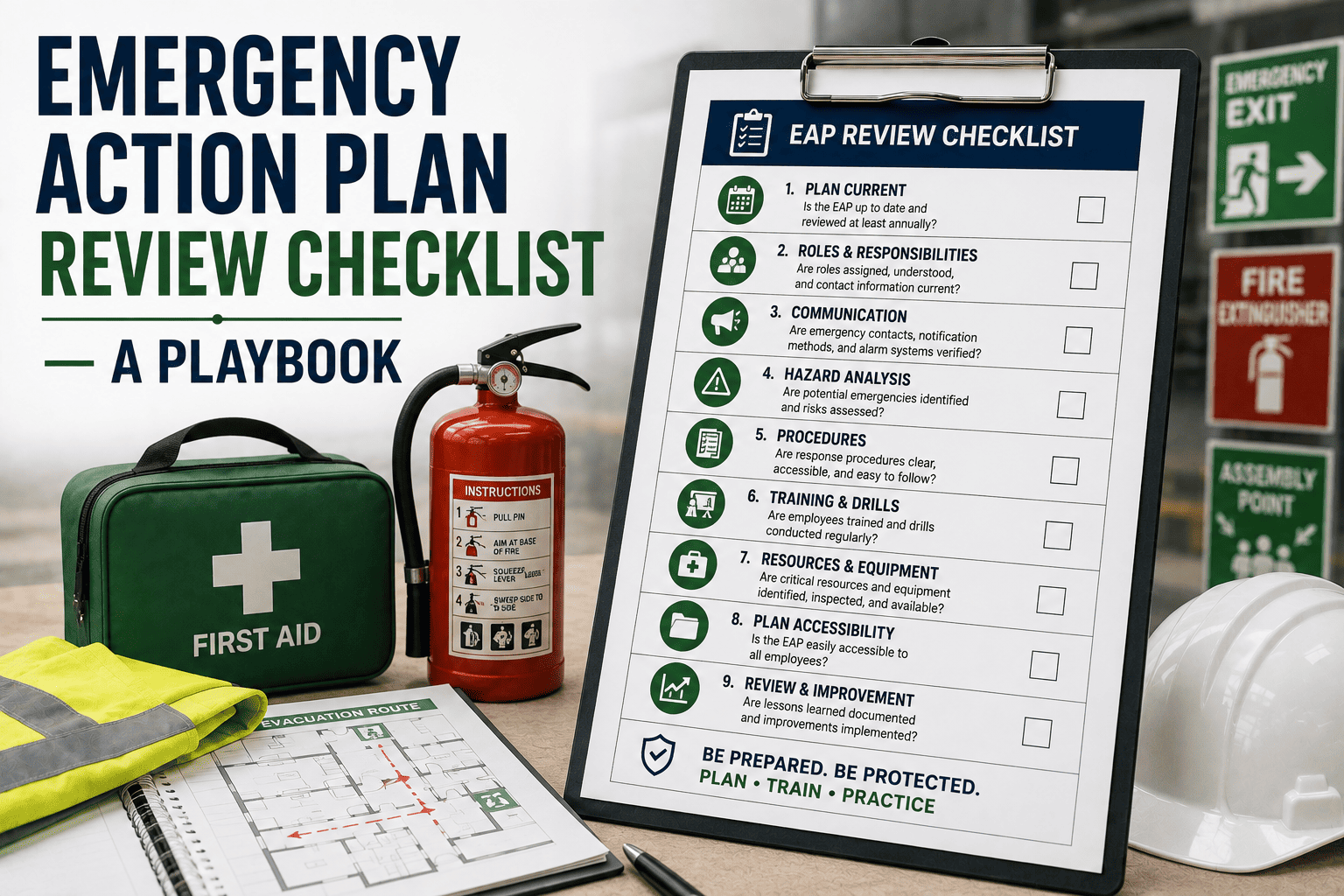
A robust ISO 45001 internal audit checklist SOP must map directly to the standard's high-level structure (HLS). Use these tiered checklists to ensure no requirement is missed during your internal gap analysis.
Context, Leadership & Worker Participation
- Has the organization determined internal/external OHSMS issues affecting its strategic direction?
- Are workers and worker representatives consulted and actively participating in the development, planning, and implementation of the safety management system?
- Is there a documented OHS policy that includes a commitment to continuous improvement and compliance with legal requirements?
- Have top management roles, responsibilities, and authorities for OHS been assigned and communicated?
Planning, Risk & Support Resources
- Are hazard identification and risk assessment methodologies documented and updated when changes occur?
- Have OHS objectives been established at relevant functions, and are they measurable and monitored?
- Is there a process to determine and provide the necessary competence, training, and awareness for workers?
- Are documented information controls in place to ensure version control, accessibility, and protection?
Operational Controls & Emergency Preparedness
- Are operational criteria established and maintained to control identified hazards and risks?
- Is change management (MOC) applied to new processes, materials, equipment, or regulatory updates?
- Are procurement controls and contractor management processes verified to meet OHS criteria?
- Are emergency preparedness and response plans tested at planned intervals, and are lessons learned documented?
Performance Evaluation & Improvement
- Are internal audits conducted at planned intervals, covering all clauses and sites?
- Is management review meeting frequency documented, with inputs and outputs recorded effectively?
- Are incident investigations root-caused, and do they trigger corrective and preventive action workflows?
- Is there evidence of continual improvement driving OHS performance beyond baseline compliance?
Audit Findings & CAPA Workflows
How to Structure Audit Findings and Corrective Actions
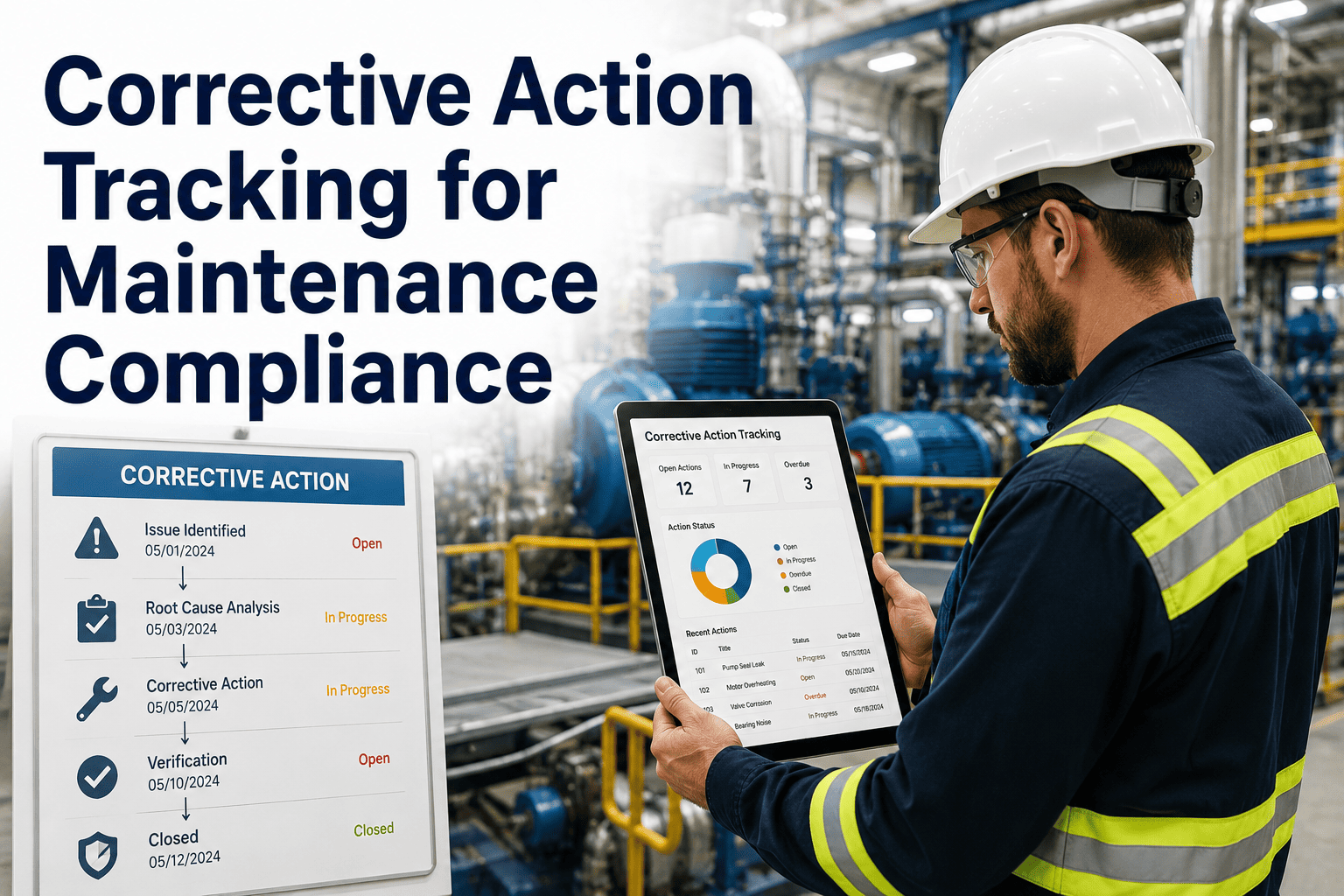
Finding a nonconformity is only the beginning. Closing it requires a disciplined corrective and preventive action (CAPA) process. A plant managing 180 assets typically uncovers 25–40 minor findings during an internal gap analysis; without automated tracking, 30% of those remain open at certification time.
| Audit Finding Category | Evidence Required | CAPA Timeline | OxMaint Automation |
|---|---|---|---|
| Critical Nonconformity | Immediate hazard exposure (e.g., missing LOTO on live equipment) | 24–48 hours | Priority-1 work order auto-triggered to maintenance lead |
| Major Nonconformity | Systemic breakdown (e.g., no preventive maintenance schedule for safety valves) | 14–30 days | PM schedule auto-generated; mandatory e-sign on completion |
| Minor Nonconformity | Isolated documentation gap (e.g., missing training record for one contractor) | 60–90 days | Digital task assigned to HR/EHS with automated email reminders |
| Opportunity for Improvement | Proactive safety enhancement (e.g., upgrading machine guarding) | Next budget cycle | Logged in asset history; tied to predictive analytics dashboard |
The Real Cost of Paper Audits
Why Paper-Based ISO 45001 Checklists Cost You More
Real-World Scenario
Consider a 180-asset food processing plant spending $42,000 annually on manual safety compliance tracking. During their last certification surveillance audit, the external auditor issued a major nonconformity because three pressure vessel inspection records were missing technician signatures and dates. Because the plant used spreadsheets, there was no way to enforce mandatory fields. By migrating to OxMaint, they enforced digital sign-offs, cut audit prep time from 6 days to 4 hours, and eliminated $12,000 in annual contractor administrative overhead.
CMMS + EHS Compliance
How OxMaint Powers Your ISO 45001:2018 Compliance
OxMaint brings the same rigorous discipline reliability teams use for preventive maintenance directly to your safety compliance execution. Walk into every audit with your evidence already assembled.
Mandatory Digital Checklists
Replace printable ISO 45001 internal audit checklists with mobile forms that force technicians to complete every field, capture a photo, and provide an e-signature before the system accepts the submission. Outcome: 100% data completeness and zero illegible records.
Automated CAPA Work Orders
When an internal auditor or technician flags a deficiency, OxMaint instantly generates a corrective work order, assigns it to the right technician, and tracks it to closure. Outcome: Cuts audit finding resolution time by 40–60%.
Immutable Audit Trail
Every status change, photo, signature, and timestamp is locked to the asset record and cannot be deleted or backdated. Outcome: External auditors and regulatory bodies can trace any safety event back to its origin in seconds.
Predictive Safety Analytics
Leverage AI-driven maintenance analytics to identify assets and equipment that consistently fail safety inspections, allowing you to proactively schedule replacements or rebuilds. Outcome: Reduce unplanned safety incidents by 30–50%.
Audit Readiness Starts Here
See OxMaint on Your Assets — Book a 30-Min Demo
Stop building the compliance file the week before your audit. Discover how digital checklists and automated CAPA workflows keep you certified year-round.
Frequently Asked Questions
ISO 45001 Internal Audit Checklist Guide
What should be included in an ISO 45001 internal audit checklist?
An ISO 45001 internal audit checklist must cover all clauses of the ISO 45001:2018 standard, including organizational context, leadership commitment, hazard identification, risk assessment, operational controls, and performance evaluation. It should require specific evidence points—such as training records, inspection logs, and management review minutes—and provide a clear pass/fail or conformity rating for each item. Digitizing this checklist in a CMMS ensures photo evidence and signatures are attached directly to each requirement.
How often should ISO 45001 internal audits be conducted?
Internal audits should be conducted at planned intervals based on risk, size, and complexity, but most organizations perform them annually at minimum. High-risk areas or processes that undergo frequent changes may require quarterly audits. You can schedule and automate these intervals using OxMaint's preventive maintenance calendar to ensure no audit cycle is ever missed.
What is the difference between a gap analysis and an internal audit?
A gap analysis is typically a one-time assessment performed before initial certification to identify what needs to be implemented to meet the standard. An internal audit is a recurring, systematic evaluation of the fully implemented management system to ensure it is maintained and continually improved. Both require a structured checklist and documented evidence of findings.
Can I use a printable ISO 45001 internal audit checklist PDF?
While a PDF checklist is a good starting point for understanding requirements, paper-based audits are highly prone to lost records, illegible handwriting, and incomplete fields. Transitioning to a digital checklist via OxMaint enforces mandatory data capture, instantly generates corrective action work orders for any failed item, and provides a secure, searchable audit trail. To see the difference, Book a Demo today.
How do you track corrective and preventive actions (CAPA) from an audit?
Every nonconformity found during an internal audit must be logged with a root cause analysis and a assigned corrective action owner. OxMaint automates this by converting failed checklist items directly into priority work orders, tracking them through resolution, and notifying the EHS team upon closure. This ensures no finding falls through the cracks before the external certification audit.
Digitize Your Safety Compliance
Turn ISO 45001 Audits Into a Continuous, Automated Process
Join the maintenance and reliability teams using OxMaint to eliminate paper binders, enforce real-time compliance, and walk into every audit fully prepared.
Free 14-day trial · No credit card required