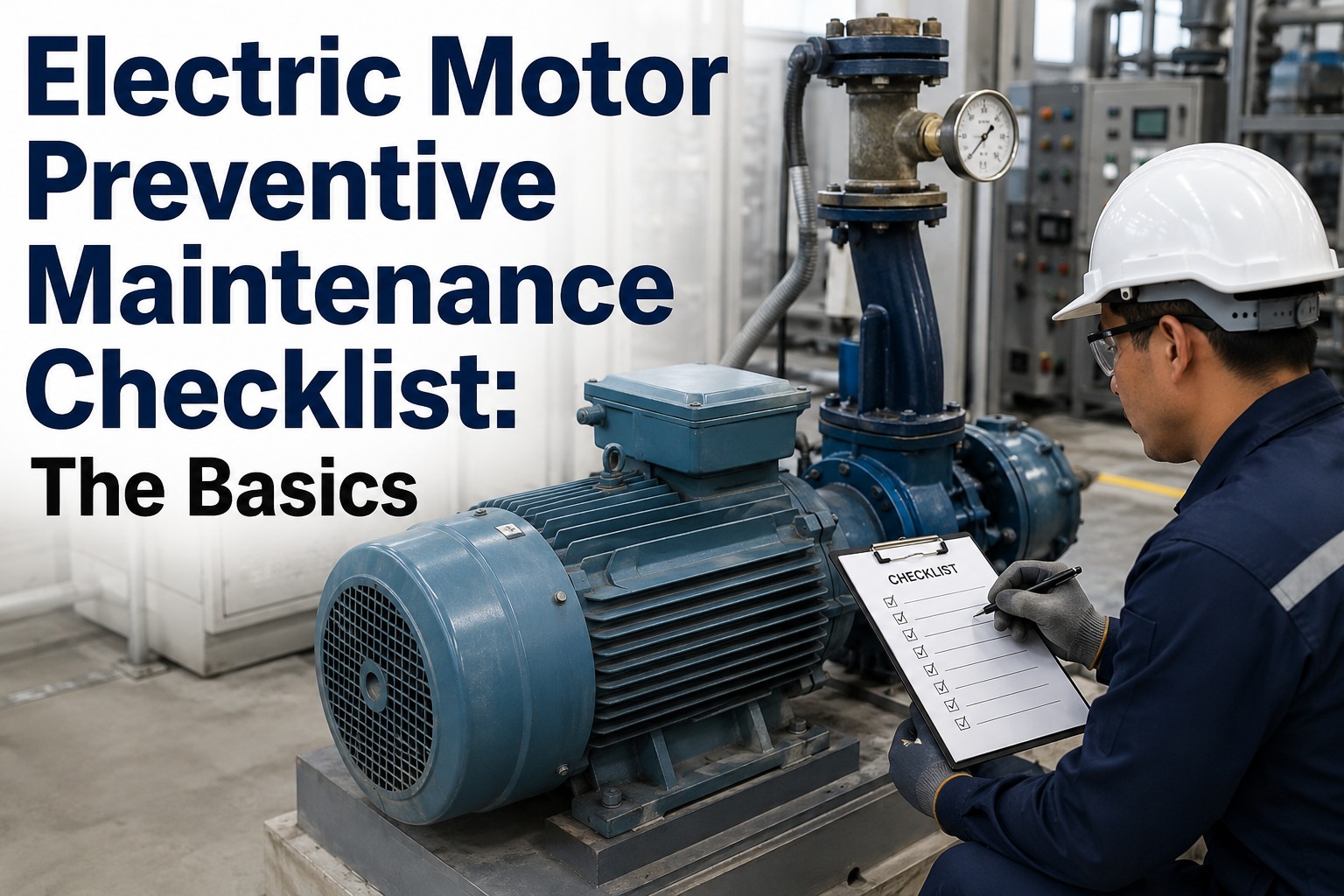
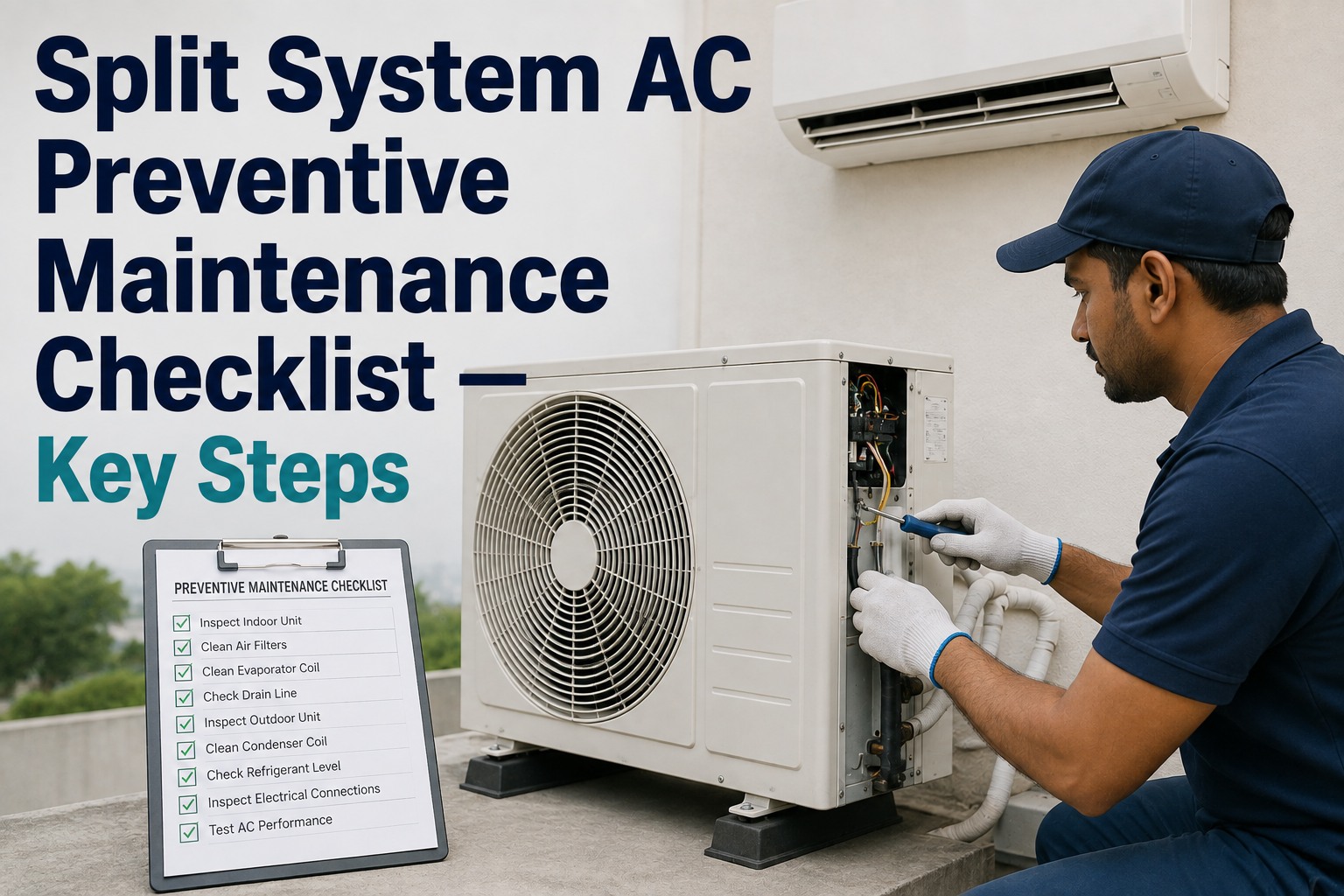
A maintenance technician at a food processing plant performs a routine inspection on a critical refrigeration compressor. He checks the oil level — it looks fine. He listens for unusual sounds — nothing obvious. He signs the paper logsheet and moves on. Three weeks later, the compressor seizes. The root cause: a slow refrigerant leak that had been reducing efficiency for months, detectable only through systematic pressure testing — a step that was never on the checklist because there was no standardized checklist. The post-failure review reveals the same compressor had been "inspected" 14 times in 6 months by four different technicians, each performing a different set of checks based on personal judgment rather than documented procedure. Three of those inspections missed the same failing gasket. The technicians did their jobs. The system failed them. This is the reality at thousands of facilities running preventive maintenance without standardized checklists — where inspection quality depends on individual memory, where critical steps get skipped because they were never formally defined, and where equipment degrades silently because no one documented what "inspected" actually means. In 2026, structured preventive maintenance checklists integrated into CMMS platforms are replacing this ad-hoc approach with standardized, repeatable, and auditable inspection procedures: checklists that ensure every technician checks every critical parameter, every time, with documented results that feed directly into maintenance analytics and compliance records. Start free trial today.
PM Best Practices 2026
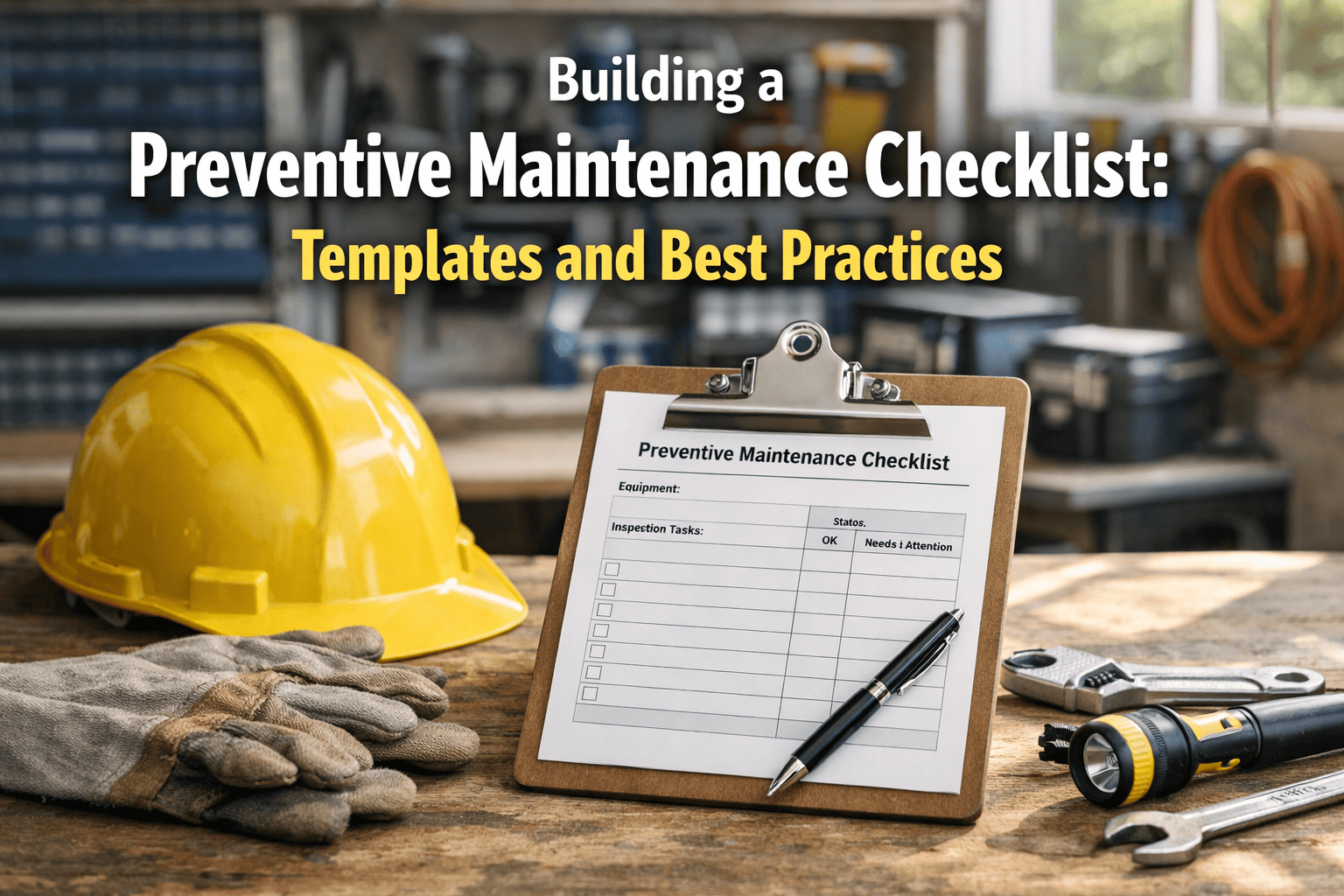
Building a Preventive Maintenance Checklist: Templates & Best Practices
Create effective PM checklists with customizable templates that ensure consistent inspections, standardize maintenance procedures across your team, and auto-generate CMMS work orders — transforming ad-hoc inspections into documented, repeatable, and auditable maintenance workflows.
37%Less Unplanned Downtime
2.5xEquipment Lifespan Increase
58%Fewer Missed Inspections
100%Audit-Ready Documentation
The Maintenance Maturity Spectrum
Maintenance programs typically fall into one of three operational categories. While most facilities rely on "Reactive" maintenance — fixing equipment only after it breaks — Oxmaint helps organizations advance toward "Preventive" and "Predictive" maintenance, where standardized checklists ensure consistent inspections and data-driven analytics identify failures before they occur.
Reactive (Fix When Broken)
50%
Preventive (Scheduled PM)
35%
Predictive (Data + CMMS)
15%
Essential PM Checklist Components
A well-designed preventive maintenance checklist is more than a to-do list. Each component serves a specific purpose in ensuring thorough, consistent, and documented inspections. A comprehensive CMMS acts as the management layer — converting every checklist completion into tracked maintenance records, trend data, and compliance documentation.
PM Checklist Core ComponentsBuilding Blocks
Visual
Visual Inspection Points
Standardized visual checks for leaks, corrosion, wear patterns, belt condition, hose integrity, and structural damage. Each point includes pass/fail criteria so every technician applies the same judgment standard.
Early Detection
Measure
Measurement & Readings
Defined parameters requiring quantitative measurement — temperature, pressure, vibration levels, fluid levels, voltage, amperage, and tolerance gaps. Includes acceptable ranges and out-of-spec escalation procedures.
Trend Tracking
Lube
Lubrication Tasks
Specifies exact lubrication points, lubricant types, quantities, and application methods for each equipment component. Eliminates over-greasing, under-greasing, and wrong-lubricant errors that cause premature bearing failure.
Bearing Protection
Safety
Safety & Lockout Steps
Integrated lockout/tagout procedures, PPE requirements, and safety verification steps embedded directly into the PM checklist — ensuring safety compliance is part of the inspection workflow, not a separate process.
Worker Safety
Replace
Part Replacement Triggers
Defined criteria for when consumable parts must be replaced — filter differential pressure thresholds, belt wear indicators, brake pad minimums, and hours-based replacement schedules built into the checklist flow.
Failure Prevention
Test
Functional Testing
Operational tests that verify equipment performs within design parameters — motor start/stop cycles, safety interlock verification, alarm function tests, and emergency shutdown procedure validation.
Reliability Assurance
PM Checklist Priority Classification
Not all checklist items carry equal weight. A lubrication check on a non-critical conveyor bearing requires attention but not urgency; a safety interlock test on a hydraulic press requires immediate verification before operation. This priority scale helps maintenance managers structure checklists that allocate technician time and attention proportionally to actual equipment risk.
5
Safety-Critical
LOTO verification, emergency stop tests, pressure relief valve inspection. Must be completed before equipment returns to service. Zero tolerance for skip.
4
Production-Critical
Primary drive components, cooling systems, control circuits. Failure causes immediate production stoppage. Strict schedule adherence required.
3
Condition-Based
Vibration readings, temperature trending, oil analysis samples. Data-driven checks that identify degradation patterns before functional failure occurs.
2
Routine Service
Lubrication, filter changes, belt tension adjustment. Scheduled consumable service tasks with defined intervals and standard procedures.
1
Housekeeping
Equipment cleaning, area organization, label verification. Important for overall program quality but lowest individual task urgency.
Turn Every Inspection into a Documented Maintenance Event
Oxmaint integrates customizable PM checklists with CMMS work orders, equipment history, and compliance reporting. Every inspection, measurement, and corrective action becomes a documented, tracked, and auditable maintenance record — automatically.
PM Checklist Templates by Equipment Type
Different equipment categories demand different inspection approaches. A universal checklist fails because a compressor, a conveyor, and a forklift have fundamentally different failure modes, critical parameters, and safety requirements. These equipment-specific templates in Oxmaint ensure every asset receives the right checks at the right intervals with the right documentation.
HVAC
HVAC System Checklist
Monthly / Quarterly / Annual
Comprehensive inspection template covering refrigerant levels, coil condition, belt tension, filter replacement, thermostat calibration, condensate drain lines, and electrical connection integrity across rooftop units, split systems, and chillers.
Refrigerant CheckFilter ReplaceCoil CleaningBelt Tension
Critical
Electrical Systems Checklist
Quarterly / Semi-Annual
Switchgear inspection, transformer oil testing, circuit breaker exercising, thermal imaging scan points, grounding resistance verification, arc flash label validation, and emergency generator load bank testing procedures.
Thermal ScanBreaker TestGround CheckOil Analysis
Fleet
Vehicle & Forklift Checklist
Daily / Weekly / Monthly
Pre-operation safety checks, fluid level verification, tire condition and pressure, brake function testing, hydraulic system inspection, mast chain lubrication, fork wear measurement, and safety device verification for industrial vehicles.
Pre-Trip CheckBrake TestFluid LevelsFork Condition
Production
Rotating Equipment Checklist
Weekly / Monthly / Quarterly
Vibration baseline readings, bearing temperature monitoring, coupling alignment verification, seal and gasket inspection, lubrication point service, motor amperage draw, and belt/chain condition assessment for pumps, motors, and compressors.
Vibration CheckBearing TempAlignmentLubrication
Facility
Building & Facility Checklist
Monthly / Quarterly / Annual
Roof inspection points, plumbing system checks, fire suppression equipment testing, elevator maintenance verification, lighting system audit, door and hardware function, parking lot condition, and ADA compliance verification items.
Fire SystemsPlumbingRoof InspectElevator PM
Safety
Safety Equipment Checklist
Weekly / Monthly
Fire extinguisher inspection, eyewash station testing, emergency shower flow verification, first aid kit inventory, AED function test, emergency lighting battery check, safety signage condition, and exit path obstruction audit.
ExtinguishersEyewash TestAED CheckExit Lights
Industry-Specific Checklist Challenges
Different industries present unique preventive maintenance challenges. From FDA-regulated pharmaceutical clean rooms to OSHA-regulated manufacturing floors, the checklist structure, documentation requirements, and regulatory compliance standards must adapt to the specific operational, safety, and quality demands of each environment.
Manufacturing / Production
Machine Guard Integrity Checks
LOTO Procedure Verification
Conveyor Belt Tension & Tracking
Pneumatic System Leak Testing
Production Line Calibration
Healthcare / Hospitality
HVAC Air Quality Compliance
Medical Gas System Checks
Elevator & Lift Inspections
Fire & Life Safety Systems
Joint Commission Documentation
Fleet / Transportation
DOT Pre-Trip Inspection Forms
Brake System Measurement Points
Tire Tread & Pressure Standards
Emission Control Verification
CDL Compliance Documentation
The Cost of Inconsistent Inspections
The cost pyramid illustrates that for every major equipment failure, there are hundreds of missed inspection points and skipped checklist items underneath. Ad-hoc maintenance captures some of them — and standardizes none. Structured PM checklists in a CMMS collapse this pyramid by converting every inspection into a documented, consistent, and traceable maintenance event before minor wear becomes catastrophic failure.
$50 - $200
Checklist-Caught Issue
Worn belt detected during scheduled PM, replacement ordered and installed during planned downtime. Zero unplanned stoppage, zero emergency labor cost, full documentation.
Frequency: High (Dozens/Month)
$5K - $50K
Unplanned Breakdown
Missed inspection leads to component failure during production. Emergency repair costs, overtime labor, rush-shipped parts, lost production output, and downstream schedule disruption.
Frequency: Medium (Several/Year)
$250K+
Catastrophic Failure
Repeated missed inspections cause cascading equipment failure. Full asset replacement, extended production shutdown, regulatory investigation, and potential safety incident liability.
Frequency: Low (But Devastating)
Stop Guessing What "Inspected" Means. Start Standardizing It.
Don't let inspection quality depend on which technician shows up. Oxmaint provides customizable PM checklist templates integrated into automated CMMS workflows — turning every inspection into a documented, repeatable, and auditable maintenance event that drives real reliability improvement.
CMMS Integration for PM Checklists
A checklist on a clipboard is just a piece of paper. The real value emerges when every completed inspection flows into a CMMS that tracks results over time, triggers corrective work orders from failed items, documents compliance evidence for auditors, and builds the analytics foundation for continuous maintenance improvement.
A
Auto-Generated Work Orders from Failed Items
When a technician marks a checklist item as "Failed" or "Out of Spec," the CMMS auto-generates a corrective work order with the failure details, equipment ID, photo evidence, and recommended repair — assigned to the appropriate trade for resolution.
B
Equipment History & Trend Tracking
Every completed PM checklist becomes part of the equipment's permanent maintenance history. Readings and measurements are trended over time — showing gradual degradation that individual inspections alone cannot reveal.
C
PM Compliance Scoring
Each asset and zone receives a real-time PM compliance score based on checklist completion rates, on-time percentages, and failed-item resolution speed. Scores feed into facility-wide maintenance KPIs visible to management.
D
Mobile Checklist Execution
Technicians complete PM checklists on mobile devices with guided step-by-step workflows, photo capture for anomalies, barcode scanning for asset identification, and offline capability for facilities without consistent connectivity.
E
Regulatory Compliance Documentation
Generate audit-ready inspection logs, PM completion records, corrective action documentation, and equipment certification records on demand — reducing audit preparation from weeks to minutes for OSHA, FDA, Joint Commission, and ISO reviews.
F
Interval Optimization Analytics
CMMS analyzes checklist results over time to identify assets being over-maintained (always passing) or under-maintained (frequently failing). Data-driven interval adjustment eliminates wasted PM labor while protecting critical equipment.
Frequently Asked Questions
Q. What should be included in a basic preventive maintenance checklist?
A comprehensive PM checklist should include equipment identification (asset ID, location, and nameplate data), safety prerequisites (lockout/tagout requirements and PPE), visual inspection points with pass/fail criteria, measurement and reading tasks with acceptable ranges, lubrication points with specified lubricant types and quantities, part replacement triggers with defined thresholds, functional testing steps with expected outcomes, and a sign-off section with technician name, date, and completion time. Each item should be specific enough that any trained technician can execute it identically — "check belt" is inadequate; "inspect drive belt for cracking, glazing, or tension loss — deflection should not exceed 1/2 inch at midspan" is actionable.
Start your free trial to access our library of equipment-specific PM checklist templates.
Q. How often should PM checklists be performed?
PM frequency depends on equipment criticality, manufacturer recommendations, operating environment, and historical failure data. Common intervals include daily (pre-operation safety checks for vehicles and heavy equipment), weekly (general visual inspections and basic fluid level checks), monthly (detailed mechanical inspections, filter replacements, lubrication service), quarterly (electrical system testing, calibration verification, comprehensive mechanical inspection), and annually (full equipment overhaul inspections, safety certification renewals). The key is matching interval to actual need — a CMMS with historical data can help identify assets being over-maintained or under-maintained and adjust intervals accordingly.
Q. How do I standardize PM checklists across multiple technicians?
Standardization requires three elements: documented procedures with unambiguous pass/fail criteria for every inspection point, a CMMS platform that delivers the same digital checklist to every technician regardless of experience level, and a training program that walks technicians through each checklist item using the actual equipment. Paper checklists fail at standardization because they allow interpretation and shortcuts. Digital CMMS checklists enforce sequence (technicians must complete steps in order), require evidence (photo capture on critical items), and prevent skipping (mandatory fields must be completed before sign-off).
Q. How does Oxmaint CMMS handle PM checklist management?
Oxmaint provides a complete PM checklist lifecycle: create custom checklist templates from scratch or adapt from our equipment-specific template library, assign checklists to assets with configurable frequency schedules (time-based, meter-based, or condition-based triggers), deliver checklists to technician mobile devices with guided step-by-step workflows, auto-generate corrective work orders from any failed inspection items, track all readings and measurements in equipment history for trend analysis, and produce compliance reports showing PM completion rates, on-time percentages, and corrective action resolution metrics.
Book a demo to see how PM checklists integrate with your maintenance workflow.
Q. What is the ROI of implementing standardized PM checklists?
Facilities implementing structured PM checklist programs typically see 25-37% reduction in unplanned downtime within the first year, because consistent inspections catch developing problems before they cause failures. The financial impact is straightforward: unplanned downtime costs an average of $260 per hour compared to $17 per hour for planned maintenance — a 15x cost multiplier. A manufacturing facility experiencing 200 hours of annual unplanned downtime that reduces breakdowns by 37% saves over $19,000 in downtime costs alone — before accounting for reduced emergency parts markup, overtime labor, and cascading production losses. Additional value comes from extended equipment life (typically 2-3x), lower replacement capital expenditure, improved regulatory compliance, and reduced safety incident exposure. Most facilities achieve full payback within 4-8 months of implementation.