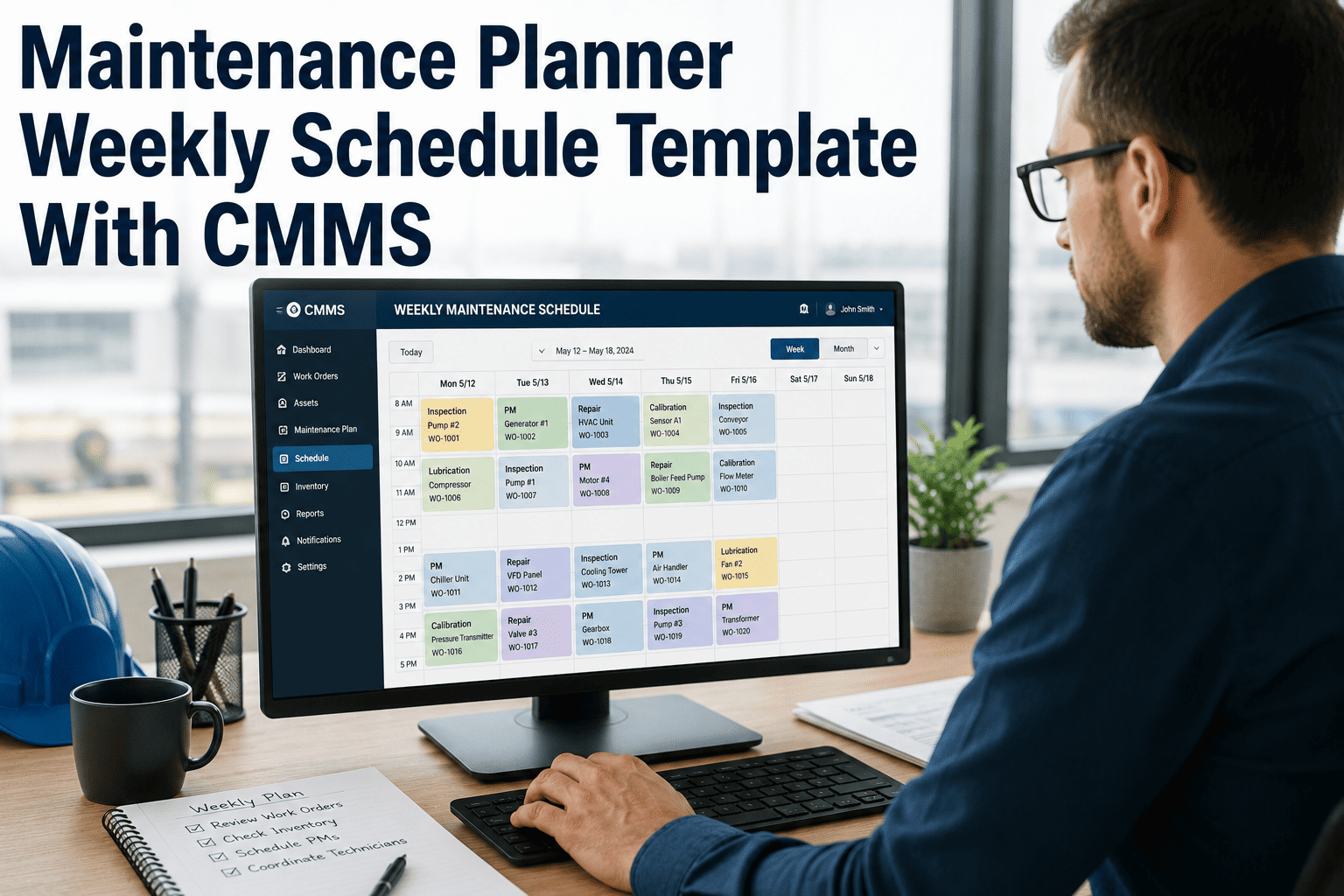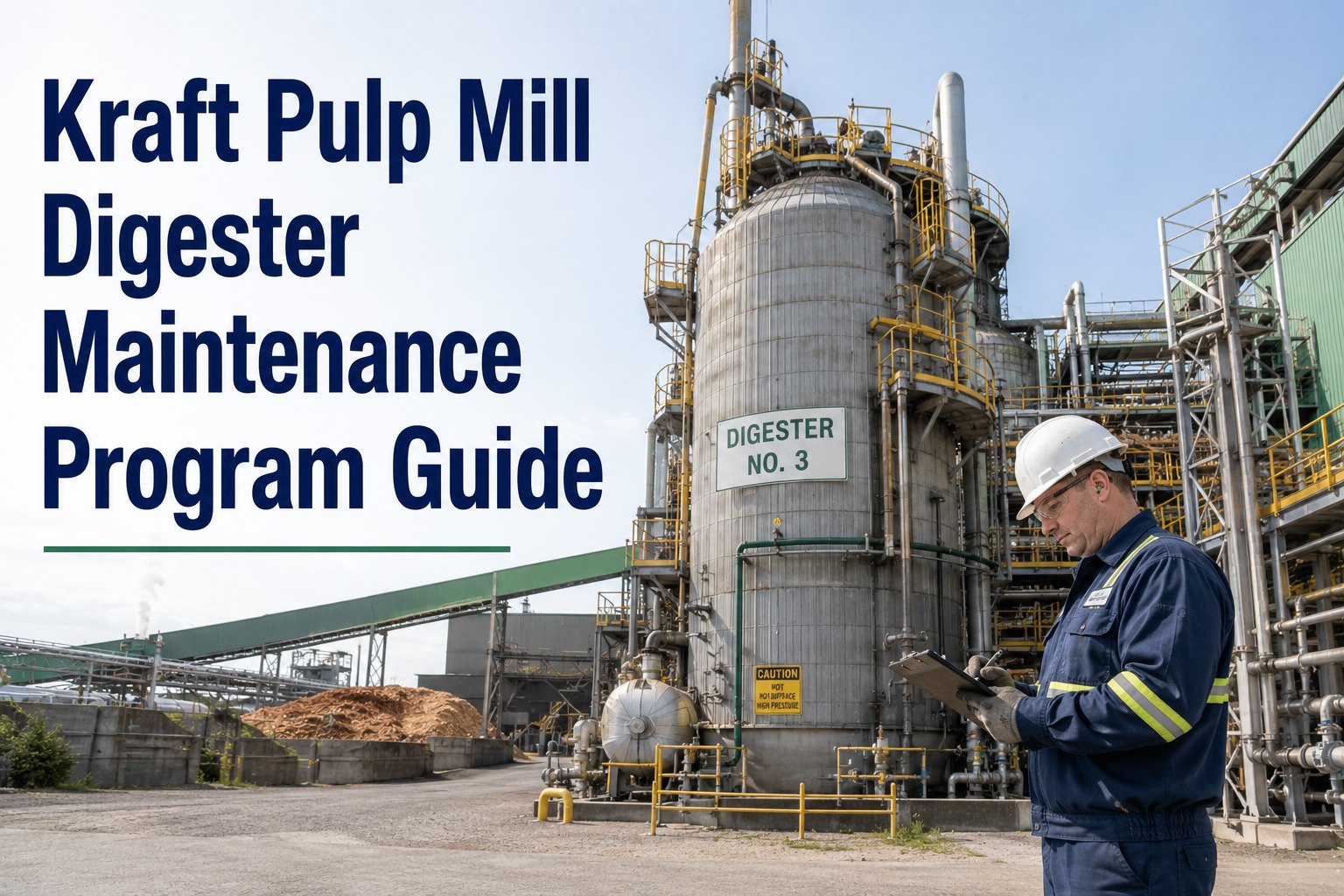
A kraft pulp mill digester maintenance program governs the reliability of the most critical pressure vessel in the pulping line — where a single unplanned blow-valve failure or liquor heater tube leak can idle production for 72 hours and cost over $250K in lost throughput. Effective digester maintenance combines strict pressure vessel inspection compliance, chip-level sensor calibration, and TAPPI-aligned preventive maintenance scheduling to sustain yield and protect life safety. By transitioning from reactive spreadsheet tracking to a kraft mill CMMS like OxMaint, reliability teams gain defensible audit trails, automated PM triggers, and predictive analytics that cut unplanned downtime 30–50%. You can Start Free Trial today or book a personalized demo to see the platform configured for your digester assets.
Is Your Digester Maintenance Program Defensible — or Just Reactive?
Most kraft pulp mills lose 48–96 hours of production annually to digester-related unplanned downtime. OxMaint structures every inspection, PM, and safety-system test into a single audit-ready CMMS — so your pressure vessel records withstand jurisdictional scrutiny and your reliability targets stay on track.
The Real Cost of Digester Downtime in a Kraft Mill
A continuous digester processing 1,200 air-dried metric tons (ADt) per day generates roughly $150K–$200K in daily revenue. When a blow valve seizes, a liquor heater fouls to tube failure, or a chip-level sensor misreads and causes a chip plug, that revenue stops — and the recovery cycle adds days. Here is what a typical mid-sized kraft operation faces when digester maintenance stays spreadsheet-driven:
A Pacific Northwest kraft mill running two batch digesters at 800 ADt/day was tracking PM intervals on shared spreadsheets. During a jurisdictional inspection, the team could not produce continuous thickness-monitoring records for the impregnation zone — resulting in a forced 5-day shutdown and $680K in lost production. After implementing OxMaint as their kraft mill CMMS, the same mill automated ultrasonic thickness (UT) measurement reminders, linked them to code-compliant work order templates, and passed their next audit with zero findings.
Kraft Pulp Digester Inspection & PM Checklist by System
A defensible digester maintenance program breaks the asset into its major subsystems — pressure boundary, liquor circuit, chip feed, and blow system — each with its own inspection cadence, acceptance criteria, and documentation requirements. Below is a structured checklist aligned with TAPPI TIPs and ASME Section VIII pressure vessel expectations.
Pressure Vessel & Shell Integrity
- Annual ultrasonic thickness (UT) survey at high-erosion zones: top circulation, extraction screens, blow discharge
- Weld seam inspection per ASME Section VIII — document map coordinates and readings
- Refractory / brick lining condition assessment during every extended outage
- Relief device (PSV) pop-test and re-certification — typical 5-year interval, verify against nameplate set pressure
- MTC and welding repair records archived for jurisdictional inspector access
Liquor Heater & Circulation System
- Tube bundle inspection for scaling, sulfidity corrosion, and tube-wall thinning — clean or retube as UT dictates
- Liquor transfer pump vibration analysis monthly — trend bearing wear and impeller clearance
- Heat-transfer efficiency test quarterly — fouling factor trending predicts cleaning interval
- Steam-side trap inspection and condensate return flow verification
- Inlet/outlet temperature differential log reviewed against baseline performance curve
Chip Feed & Level Control
- Chip-level sensor (nuclear or radar) calibration verification monthly — drift causes chip-plug events
- High-pressure feeder star-feeder clearance check — target 0.8–1.2mm tip clearance
- Steaming vessel condensate drain and level-control valve function test
- Chip bin weigh-feeder load-cell calibration — directly impacts liquor-to-wood ratio and yield
- Rotary valve seal inspection and packing replacement at 6-month intervals
Blow System & Safety Interlocks
- Blow valve (typically a Kawerno or similar ball/gate valve) PM every 90 days — seats, actuator, positioner
- Safety interlock logic test (SIS) — blow-permissive pressure switch, chip-level-low interlock, liquor-flow-low trip
- Blow tank relief path inspection — verify no blockage in blow-line and entrainment separator
- Emergency blow-down valve manual exercise and stem-packing leak check
- DCS alarm-setpoint audit — confirm alarms match current operating envelope and HAZOP study
Batch vs Continuous Digester Maintenance Schedule Comparison
Batch and continuous (Kamyr) digesters share pressure-vessel obligations but differ sharply in mechanical complexity, liquor flow dynamics, and PM frequency. The table below maps a typical kraft digester maintenance schedule so reliability engineers can benchmark their current program.
| Maintenance Task | Batch Digester | Continuous Digester | Code / Standard |
|---|---|---|---|
| Internal visual & UT thickness survey | Every 12 months (vessel entry during outage) | Every 18–24 months (requires extended outage) | ASME Sect. VIII, NBIC |
| Blow valve PM (seals, actuator) | Every 90 days — high cycle frequency | Every 180 days — lower cycle count | OEM manual, TAPPI TIP 0606 |
| Liquor heater tube inspection | Annual — single heater per vessel | Every 12 months — multiple heaters, radial flow | TEMA, API 660 |
| Chip-level sensor calibration | Not applicable — batch fill by volume | Monthly — critical for chip-plug prevention | ISO 9001 process control |
| Pressure relief valve (PSV) test | Every 5 years or per jurisdiction | Every 5 years or per jurisdiction | ASME Sect. VIII UG-136 |
| Refractory / lining assessment | Every 3–5 years | Every 2–3 years — impregnation zone high wear | OEM spec, TAPPI TIP |
| Safety interlock (SIS) proof test | Every 12 months | Every 12 months | IEC 61511, OSHA PSM |
ROI: What a CMMS Saves a Kraft Mill Digester Program
Moving from reactive maintenance and spreadsheet PM tracking to a structured CMMS delivers measurable, recurring savings. The formula below models the annual payback for a representative 1,000-ADt/day kraft operation — use it to benchmark your own numbers.
Annual Savings = (Downtime Hours Avoided × Production Value per Hour) + (Emergency Repair Cost Avoided) + (Compliance Penalty Risk Avoided) − (CMMS Annual Cost)
How OxMaint CMMS Solves Kraft Mill Digester Maintenance
OxMaint is built for the maintenance and reliability realities of heavy process industries. For kraft pulp digester operations, it replaces fragmented spreadsheets and paper work orders with a single AI-powered platform that ties every asset, PM trigger, inspection reading, and spare part to a defensible audit trail. Here is how specific OxMaint capabilities map to digester reliability outcomes:
Automated PM & Inspection Triggers
Schedule UT thickness surveys, blow valve PMs, and PSV tests on calendar, runtime, or condition-based triggers. OxMaint auto-generates work orders with code-compliant checklists so nothing falls through the cracks.
Outcome: Eliminate 95% of missed PM intervalsPredictive Analytics on Asset Condition
Trend vibration, UT thickness, and heat-transfer efficiency data over time. OxMaint's AI engine flags degradation patterns on liquor heater tubes and circulation pumps before failure — turning condition data into action.
Outcome: Cut unplanned downtime 30–50%Jurisdictional Audit-Ready Records
Every inspection reading, weld repair, and safety interlock test is timestamped, geotagged, and linked to the asset hierarchy. Generate a complete pressure vessel history for any inspector in under 60 seconds.
Outcome: Pass audits with zero documentation findingsSpare-Parts Inventory for Critical Spares
Track blow valve seats, heater tube bundles, and PSV spares with min-max reorder points tied to lead times. OxMaint ensures the right critical spare is in stock when a digester outage window opens.
Outcome: Reduce outage duration by 20–35%See OxMaint Configured for Your Digester Assets
Book a 30-minute demo and we will map your digester hierarchy, PM schedules, and inspection checklists inside OxMaint — live, on your real asset data.
Kraft Pulp Digester Maintenance: Common Questions
How often should a kraft pulp digester be inspected?
A kraft pulp digester should undergo an internal visual and ultrasonic thickness (UT) survey every 12 months for batch vessels and every 18–24 months for continuous digesters, aligned with ASME Section VIII and NBIC requirements. The pressure relief valve must be pop-tested or replaced every 5 years. OxMaint automates these intervals and generates work orders ahead of the due date so your team never misses a jurisdictional deadline. Start Free Trial to set up your inspection triggers today.
What is the most common cause of unplanned digester downtime?
Blow valve failure and liquor heater tube fouling or leaks are the two leading causes, together accounting for over 40% of unplanned digester outages. Both are preventable with disciplined 90-day PM on blow valve seats and actuation systems, plus quarterly heat-transfer efficiency trending on liquor heaters to predict cleaning cycles before performance drops below threshold.
How does a CMMS improve kraft mill reliability?
A CMMS like OxMaint improves kraft mill reliability by replacing reactive, spreadsheet-tracked maintenance with automated PM triggers, condition-based predictive alerts, and centralized asset history. Mills typically cut unplanned downtime 30–50% within the first year, eliminate missed inspections, and produce audit-ready records that withstand jurisdictional and corporate scrutiny. Book a Demo to see the workflow on your assets.
What records are required for digester pressure vessel compliance?
Jurisdictional inspectors expect a continuous record of UT thickness readings with location maps, weld repair documents and MTCs, PSV test certificates, safety interlock proof-test results, and a documented PM history showing the vessel was maintained per code. OxMaint stores all of these against the asset hierarchy and can produce a complete compliance dossier in under a minute.
What is the difference between batch and continuous digester maintenance?
Batch digesters require more frequent blow valve PM (every 90 days vs 180 days) due to higher cycle counts, while continuous digesters demand rigorous monthly chip-level sensor calibration and more complex liquor heater management due to radial flow across multiple heaters. Both share identical pressure vessel inspection and PSV obligations, but continuous units need longer outage windows for internal entry — typically 18–24 months between full inspections.
Stop Losing Production to Reactive Digester Maintenance
Join the kraft mills using OxMaint to cut unplanned downtime, pass audits with zero findings, and extend pressure vessel life — all from one AI-powered CMMS platform.
Free 14-day trial · No credit card