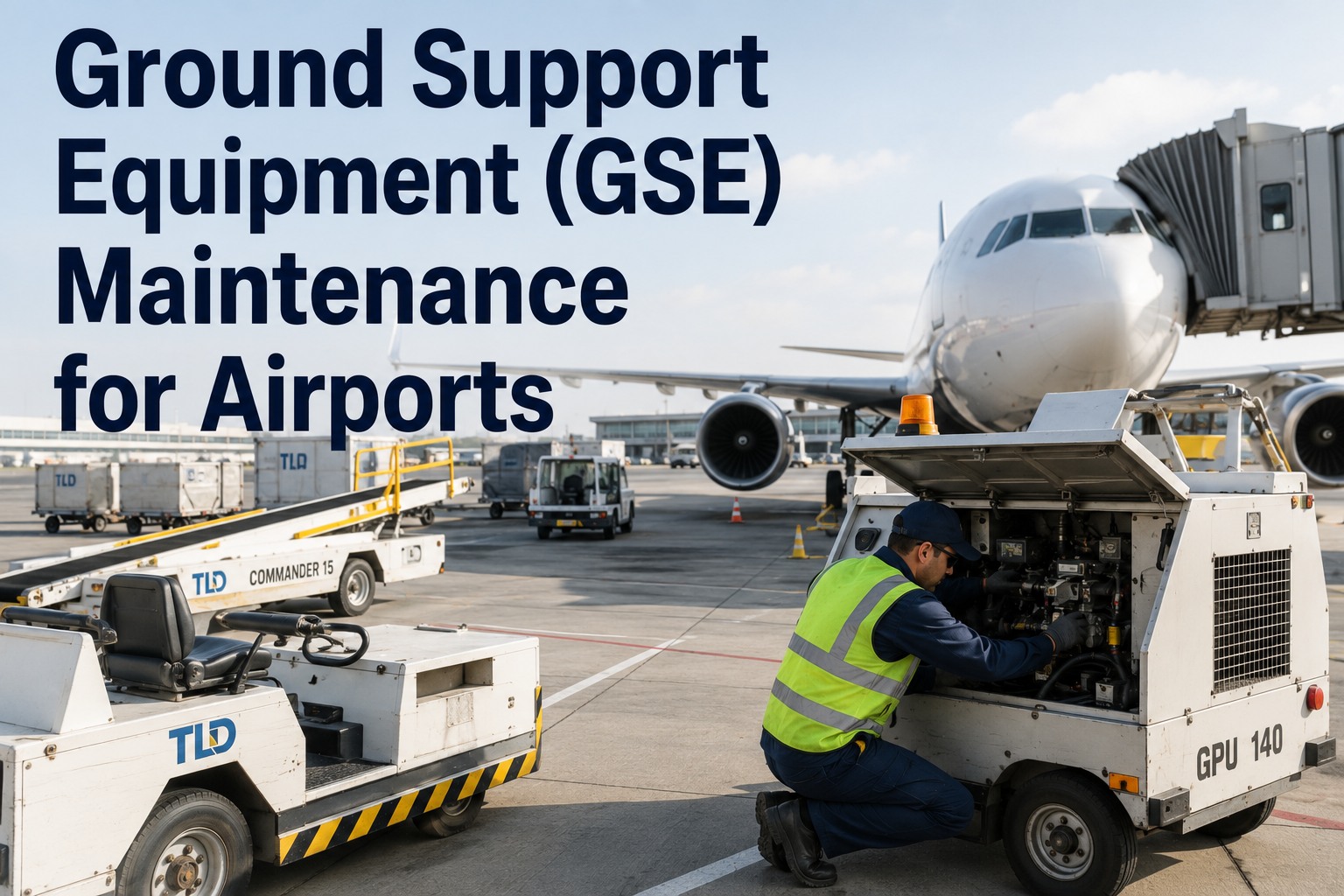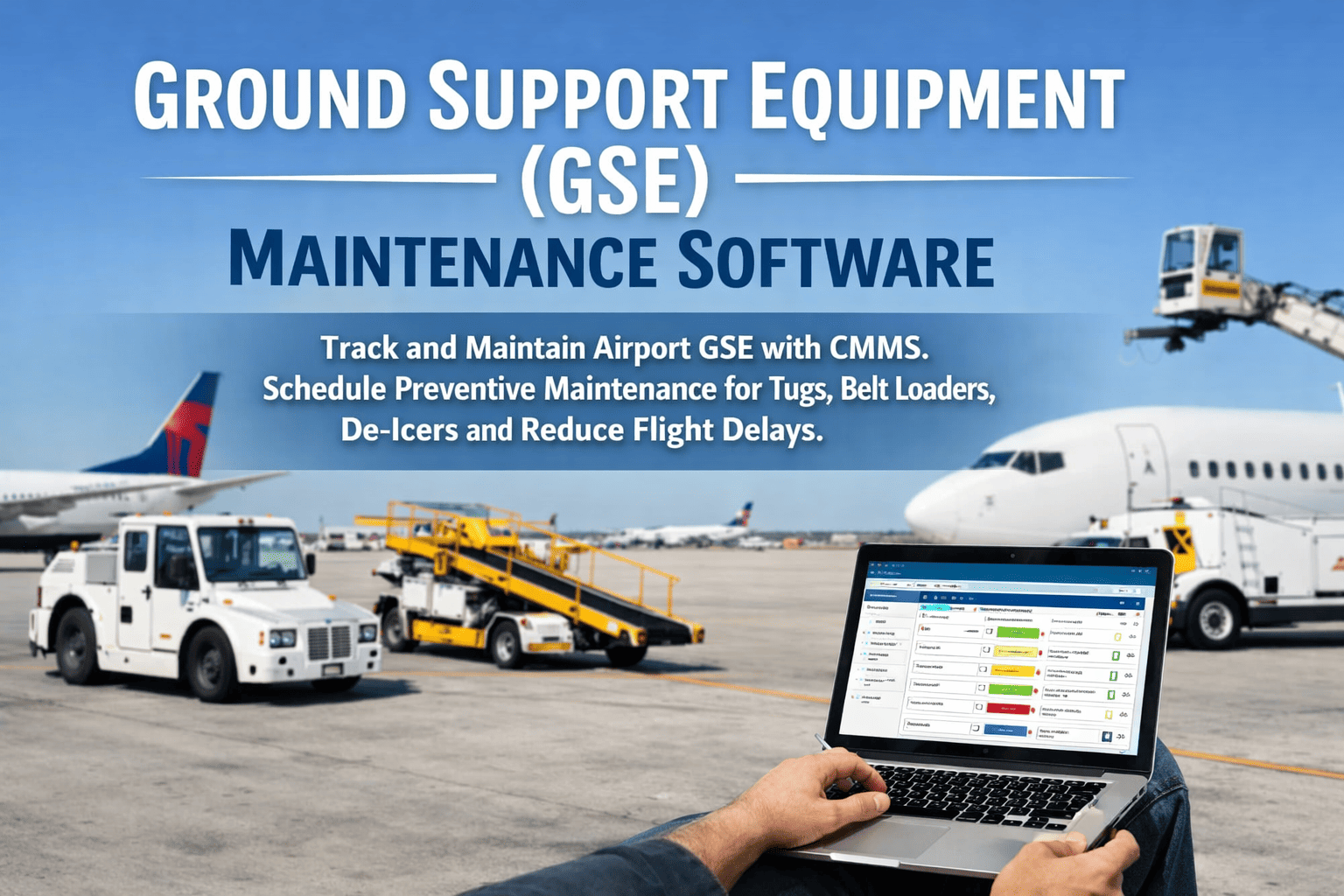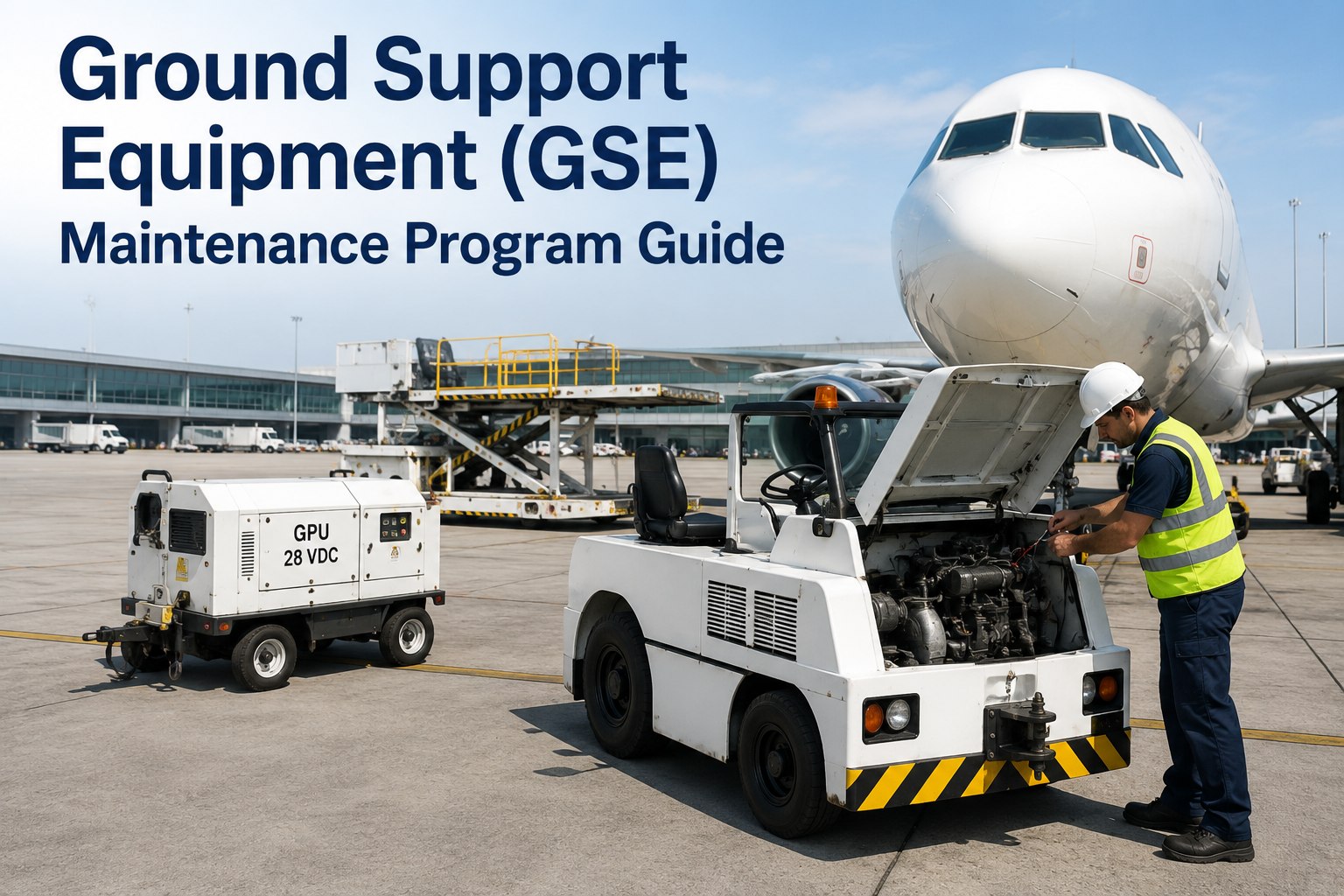
Ground support equipment maintenance is the operational backbone of every airport apron — when a pushback tractor, belt loader, or GPU fails at the gate, turnaround times spike, flight schedules slip, and costs cascade across multiple airlines. A structured GSE PM program prevents these failures by scheduling preventive maintenance, automating inspections, and tracking asset compliance before equipment breaks down. Modern airport operations require more than clipboards and spreadsheets; they need a CMMS built for airside reliability. This guide walks through building a ground support equipment maintenance program — from inspection checklists to CMMS scheduling templates — and shows how teams use OxMaint to cut unplanned downtime and stay audit-ready. Ready to replace reactive chaos with structured PM? Start Free Trial and configure your GSE asset library today.
Is your GSE PM program costing you gate turnaround time?
A single pushback tractor failure can delay a flight by 20+ minutes, trigger airline SLA penalties, and cascade across the day's schedule. Most ground handling teams still manage GSE preventive maintenance on spreadsheets and paper checklists — and pay for it in unplanned downtime, missed audits, and expensive rush repairs.
Average cost of unplanned GSE downtime
Per grounded asset at a major hub — including flight delay penalties, crew standby, and repositioning costs. A 50-asset fleet losing 4 hours/week to unplanned failures bleeds over $240K annually.
What goes into a ground support equipment PM program?
A robust GSE PM program combines manufacturer-recommended service intervals, airport regulatory requirements, and real-time asset utilization data. The goal is zero unplanned equipment failures during active operations — achieved through five layered maintenance streams, each scheduled and tracked in a CMMS.
Pre-Shift Walkaround Inspections
Operators complete a 5–10 minute visual and functional check before each shift — fluid levels, tires, lights, safety interlocks, horn, brakes. Results feed directly into the CMMS via mobile, flagging defects that need a maintenance work order before the asset leaves the ramp.
Functional Safety Checks
Mechanics verify safety-critical systems: pushback tractor hitch operation, belt loader emergency stops, GPU output voltage, fuel truck leak detection and bonding. Each checklist item is assigned a pass/fail threshold in the CMMS with automatic escalation on failure.
Scheduled Preventive Maintenance Tiers
Tiered service intervals (typically 250 / 500 / 1,000 operating hours) covering oil changes, filter replacements, drivetrain inspection, hydraulic system testing, and calibration. OxMaint auto-generates work orders based on hour-meter readings or calendar intervals.
Deicing & Winterization PM
Before deicing season, every deicer gets glycol system flushing, nozzle calibration, tank integrity testing, and boom inspection. Seasonal PM is scheduled in advance in the CMMS so no asset enters winter operations without certification.
Regulatory & Audit Documentation
All inspection records, work orders, parts replaced, and mechanic sign-offs are stored in a tamper-evident audit trail. When a regulator or airline asks for proof of maintenance, the full asset history is one click away.
GSE inspection checklist templates by equipment type
Every asset class on the apron has unique failure modes and safety-critical components. Below are condensed inspection checklist templates for the five most common GSE categories — use them as a starting point in your CMMS, then customize thresholds to your airline agreements and OEM specifications.
Pushback Tractor
TOW / TOWBLESS- Hitch / towbarless capture mechanism operation
- Hydraulic fluid level & leak inspection
- Brake system pressure & pedal response
- Tire condition, tread depth & pressure
- Engine oil, coolant & DEF levels
- Beacon, headlights & reversing lights
- Hour-meter reading logged in CMMS
Belt Loader
CARGO / BAGGAGE- Belt tension, tracking & surface condition
- Hydraulic lift cylinder & hose inspection
- Emergency stop function (both stations)
- Engine / motor oil & filter condition
- Wheel chocks & parking brake
- Ground drive speed control
- Safety handrails & interlock gates
GPU (Ground Power Unit)
ELECTRICAL- Output voltage: 28 VDC ±2V (aircraft spec)
- Cable insulation & connector pin condition
- Engine oil, fuel & air filter
- Battery / alternator charge state
- Overload & ground-fault protection test
- Hour-meter & fuel consumption log
- Hourly output stability under load
Fuel Truck / Bowser
FUELING- Bonding & grounding cable continuity
- Deadman switch function & response
- Hose condition, couplings & nozzle
- Tank interior / exterior leak inspection
- Filter vessel & differential pressure
- Fire extinguisher charge & seal
- Spill kit inventory & signage
Deicing Truck
WINTER OPS- Glycol concentration & tank level
- Spray nozzle pattern & flow rate
- Boom hydraulics, hoses & cylinders
- Cab heater & defroster operation
- Boom basket emergency descent
- Heated lines & tank heater function
- Operator cab intercom / radio
Passenger Steps / Bus
PASSENGER- Step tread surface & non-slip condition
- Handrail stability & height adjustment
- Door operation & emergency exits
- Interior / exterior lighting
- Wheelchair lift function (if equipped)
- Brake system & parking brake
- Engine fluid levels & belt condition
Airport GSE preventive maintenance schedule by interval
This schedule template aligns with typical OEM recommendations and IATA ground handling standards. Import it directly into OxMaint as your baseline GSE PM library, then adjust intervals based on asset age, utilization, and your airline SLA requirements.
| Equipment Type | Daily (Pre-Shift) | Weekly / 50 hrs | Monthly / 250 hrs | Quarterly / 500 hrs | Annual / 1,000 hrs |
|---|---|---|---|---|---|
| Pushback Tractor | Fluids, tires, lights, hitch | Brake test, hydraulics, battery | Oil & filter change, driveline | Transmission service, axle inspection | Full engine service, hitch rebuild |
| Belt Loader | Belt, E-stop, controls | Belt tension, hydraulics, rollers | Engine oil, filters, lift cylinder | Belt replacement (if worn), drive chain | Full hydraulic service, roller rebuild |
| GPU | Output voltage, cable, fuel | Battery, alternator, load test | Oil, air & fuel filter, connections | Alternator / generator service | Full generator overhaul, calibration |
| Fuel Truck | Bonding, hoses, deadman, leaks | Filter pressure, nozzle, extinguisher | Engine service, filter vessel | Tank inspection, valve service | Tank internal inspection & cert |
| Deicing Truck | Glycol %, nozzles, boom, heater | Boom hydraulics, spray pattern | Engine service, pump inspection | Nozzle rebuild, heated line check | Full boom & fluid system overhaul |
| Passenger Bus | Brakes, lights, doors, steps | Tire rotation, fluid top-up | Oil change, brake inspection | Transmission, suspension, exhaust | Full DOT-equivalent annual inspection |
The cost of spreadsheet-based GSE maintenance
Consider a mid-size ground handler at a regional airport managing 85 GSE assets — pushback tractors, belt loaders, GPUs, and a small fuel truck fleet — using Excel spreadsheets and paper work orders. Here is what that looks like over a typical year, and what changes when they switch to a CMMS.
85 assets, 4 unplanned failures per week
- Average of 4 unplanned breakdowns/week across the fleet
- $1,200/hr downtime cost × ~6 hrs/week = $7,200/week lost
- $374,400/year in unplanned downtime & rush repairs
- 2 near-miss safety events from missed brake inspections
- Audit preparation took 3 staff × 2 full days of paperwork
- Spare parts ordered reactively — 15% premium on rush shipping
Same 85 assets, 1.5 failures per week
- PM compliance jumped from 64% to 96% within 3 months
- Unplanned failures dropped 62% — from 4/week to 1.5/week
- Downtime cost reduced by $232K/year
- Zero safety near-misses — all safety-critical PMs on schedule
- Audit prep: 20 minutes — full history exported from CMMS
- Parts inventory optimized — rush shipping spend down 80%
Payback period on OxMaint subscription: less than 45 days.
How OxMaint helps ground handling teams
OxMaint is an AI-powered CMMS and EAM platform built for the reliability and compliance standards the airside operating environment demands. Here is how specific OxMaint capabilities map directly to GSE maintenance challenges — and the measurable outcomes they deliver.
Automated PM Scheduling
Auto-generate work orders based on hour-meter readings, calendar intervals, or usage triggers. OxMaint sends alerts before PMs come due — so no pushback tractor or GPU misses its 250-hour service.
Mobile Inspection Checklists
Operators complete pre-shift walkarounds on mobile devices — with photos, defect flags, and automatic work-order creation on failure. Eliminates paper checklists and transcription errors entirely.
Predictive Maintenance Analytics
OxMaint AI analyzes hour-meter trends, repair history, and failure patterns to predict which assets are trending toward failure — so you can intervene before a breakdown happens on the ramp.
Audit-Ready Compliance Trail
Every inspection, work order, part replaced, and mechanic sign-off is stored in a tamper-evident digital record. Generate a full asset maintenance history for any regulator or airline audit in under a minute.
See OxMaint manage your GSE fleet — book a 30-minute demo
We will load your actual asset list, configure PM templates for your equipment types, and show you exactly how much downtime and cost you can eliminate in the first 90 days.
GSE maintenance program FAQs
What is a GSE PM program and why is it important?
A GSE PM program is a structured preventive maintenance schedule for all ground support equipment — pushback tractors, belt loaders, GPUs, fuel trucks, deicers — that combines daily inspections, tiered service intervals, and compliance documentation. It is important because unplanned GSE failures directly cause flight delays, safety incidents, and airline SLA penalties. A well-run PM program typically reduces unplanned breakdowns by 30–50% and keeps you audit-ready at all times.
How often should ground support equipment be inspected?
GSE should be inspected daily before each shift (operator walkaround), weekly by mechanics (safety-critical systems), and at tiered service intervals of 250, 500, and 1,000 operating hours following OEM recommendations. Additional seasonal PM is required for deicing equipment before winter operations. OxMaint CMMS automates all of these intervals based on hour-meter readings or calendar triggers — see how it works when you Start Free Trial.
What does GSE CMMS software do?
GSE CMMS software like OxMaint manages work orders, preventive maintenance schedules, asset tracking, spare-parts inventory, inspection checklists, and maintenance analytics — all in one platform designed for airside operations. It replaces spreadsheets and paper checklists with automated scheduling, mobile inspections, and a tamper-evident audit trail that satisfies airline and regulatory requirements.
How much does unplanned GSE downtime cost?
Unplanned GSE downtime at a major airport hub costs approximately $1,200 per hour per grounded asset, including flight delay penalties, crew standby costs, and equipment repositioning. A 50-asset fleet averaging 4 unplanned failures per week can lose over $240,000 annually. Implementing a CMMS-driven PM program typically pays for itself in under 45 days by eliminating the majority of these unplanned events.
How do I switch from spreadsheets to a GSE CMMS?
Switching takes days, not months. Start by exporting your current asset list and PM intervals into OxMaint, then configure inspection checklist templates for each equipment type. OxMaint imports your existing data, auto-generates PM schedules, and your team can begin using mobile inspections immediately. Book a 30-minute demo and we will walk through the migration plan for your fleet.
Stop losing gates to GSE breakdowns
Join the ground handling teams using OxMaint to cut unplanned downtime 30–50%, eliminate paper work orders, and stay audit-ready year-round. Your GSE fleet deserves a CMMS built for airside reliability.
Free 14-day trial · No credit card