maintenance-planner-weekly-schedule-template-cmms

Maintenance Planner Weekly Schedule Template With CMMS


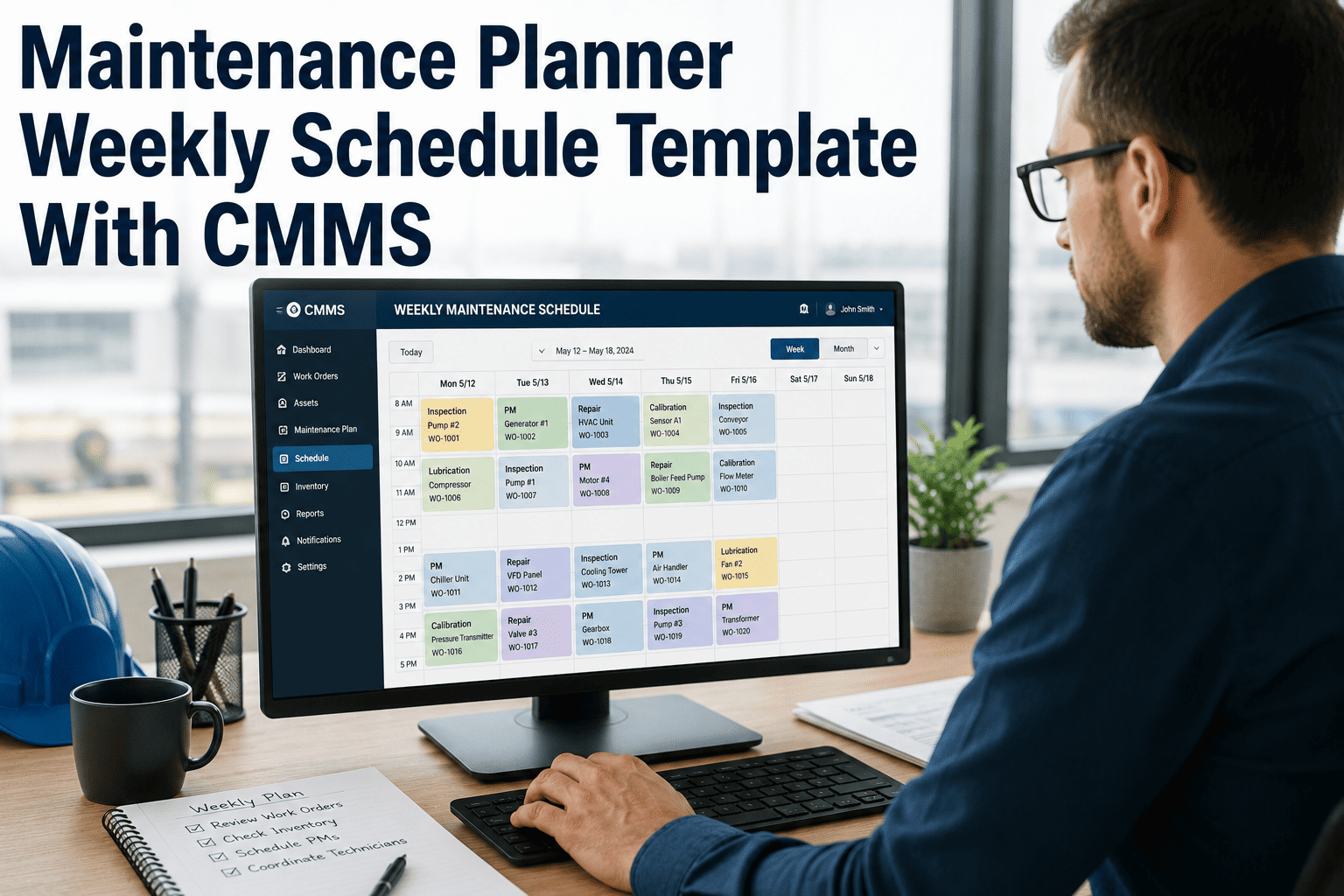
Ask any technician without a real weekly schedule how their day actually goes and you will hear the same story: walk to the parts room, wait for the machine to free up, hunt for the right manual, then finally start the job an hour later than planned. Without structured planning, technicians spend as little as 20 to 35% of their shift on actual hands-on work — the rest disappears into exactly that kind of searching and waiting. Sign in to OxMaint to build a live weekly schedule from your current backlog and technician availability. Book a demo to see the planner-to-scheduler handoff running inside one connected workflow.

OxMaint · Weekly Maintenance Schedule Template
A good weekly schedule is not a calendar of tasks. It is a promise that every technician arrives at every job with the parts, tools, and access already sorted.

What a Balanced Weekly Schedule Actually Looks Like

Most teams either overload Monday or leave Friday empty. A balanced template spreads planned work evenly and always keeps room for the corrective jobs that will inevitably show up.

Crew
Mon
Tue
Wed
Thu
Fri
Mechanical
PM — Pumps
PM — Conveyors
Shutdown Work
Corrective Backlog
Buffer / Review
Electrical
Corrective Backlog
PM — Panels
PM — Motors
Shutdown Work
Buffer / Review
HVAC
PM — Chillers
Corrective Backlog
PM — AHUs
PM — Filters
Buffer / Review
Planned PM
Shutdown-window work
Corrective backlog
Buffer / catch-up

Load the Schedule to 80–90%, Never to 100%

A fully loaded schedule looks efficient on paper and fails in practice — it leaves no room for the emergency work that always arrives mid-week.

85%
planned load target
Planned work — 80–90% of available craft hours
Reserved buffer — 10–20% for urgent corrective work
A schedule loaded to 100% capacity always looks great on Monday morning and falls apart by Wednesday afternoon. Build the buffer in before you publish it.

Five KPIs That Tell You the Template Is Working

Track these weekly. A schedule that looks organized but misses these numbers is not actually delivering the result.

55%+
Technician wrench time
90%+
PM schedule compliance
80%+
Planned maintenance percentage
2–4 wks
Healthy backlog size
80–90%
Weekly schedule compliance

Without a Planner vs With a Structured Weekly Template

The gap is not about how hard the crew works. It is about how much of that work is decided in advance versus figured out on the spot.

DimensionNo Structured ScheduleStructured Weekly Template
Technician wrench time20–35% of shift55–65% of shift
Parts availability at job startLocated after arriving on siteKitted and reserved 1–2 weeks ahead
Backlog visibilityScattered across memory and notebooksOne ranked, ready-to-schedule queue
Emergency work handlingDerails the entire week's planAbsorbed by a built-in 10–20% buffer
Production coordinationNegotiated job by job, often too lateAccess windows agreed before the week starts
Scroll right to view full comparison on mobile
Expert Review
This template was reviewed by OxMaint's maintenance operations team against weekly scheduling programs running across manufacturing and facility management accounts. The 80–90% load rule and the separation of planning from scheduling consistently correlated with the highest wrench-time gains across every account reviewed, regardless of crew size.

Frequently Asked Questions — Weekly Maintenance Schedule Template

Only in small teams. Above roughly 20 technicians, separating the planner from the scheduler prevents daily urgency from crowding out forward planning entirely. Sign in to OxMaint to see both roles running on one shared backlog.
Aim for a backlog that extends at least one to two weeks ahead, fully planned with parts and tools identified, so nothing enters the weekly schedule half-ready. Book a demo to see the ready-to-schedule queue in action.
The lowest-priority planned task for that day gets pushed to the following week rather than every task slipping — the schedule protects itself instead of collapsing. Sign in to OxMaint to see automatic re-ranking when urgent work is logged.
A backlog of two to four crew-weeks is considered healthy — below that signals under-planning, above it signals the team cannot keep pace with demand. Book a demo to see your backlog measured in crew-weeks automatically.
Yes. Each trade — mechanical, electrical, HVAC — keeps its own row on the same weekly grid, so cross-crew jobs and shared shutdown windows stay visible to everyone. Sign in to OxMaint to build a multi-crew weekly template for your team.
OxMaint · Weekly Scheduling · Maintenance Planning

A schedule your team actually follows is worth more than a perfect one nobody trusts. Build it with buffer, ranked backlog, and staged parts from day one.

Ready-to-schedule backlog. 80–90% load balancing. Cross-crew visibility. Automatic re-ranking when urgent work arrives — published every week, not rebuilt from scratch.



Share This Story, Choose Your Platform!