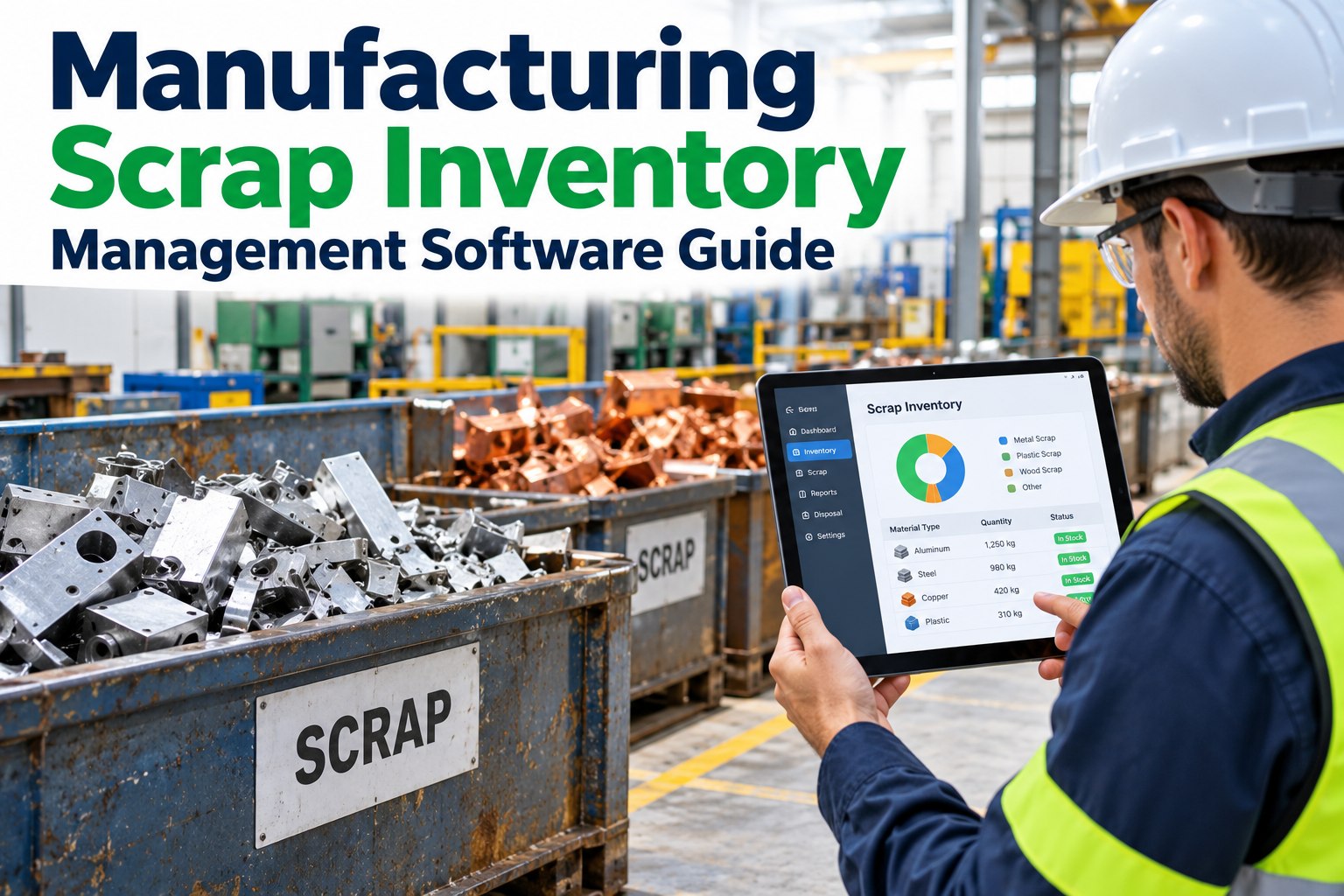
A manufacturing plant generates two to five percent of its raw material as scrap, and most plants treat it like garbage — one dumpster, one hauler, one check at month-end that nobody reconciles. Clean stainless turnings are worth four times mixed metal; a stray soda can turns a clean aluminum bin into mixed grade and the processor downgrades the whole load. Scrap is inventory with a price per pound, not waste with a disposal fee — and when it's tracked that way it pays. OXMAINT AI is the AI-powered CMMS and maintenance management software that holds every scrap bin, every weight ticket, every pickup and every reconciliation against the plant's own inventory of value — so the month-end report is a number, not a guess.
MANUFACTURING SCRAP INVENTORY · MANAGEMENT SOFTWARE GUIDE · 2026
Manufacturing Scrap Inventory Management Software Guide
Scrap tracked as inventory is scrap that generates revenue; scrap tracked as garbage is pure cost. The OXMAINT AI software holds every scrap stream by grade, every bin by location, every weight ticket by date and every settlement against the inventory of value — so the plant knows what it generated, what it shipped and what it was paid.
FFerrous
SStainless
AAluminum
CCopper / Brass
HHazardous
PPackaging
2-5%
of raw material typically ends up as scrap across most manufacturing processes
3-5×
price delta between clean segregated grades and co-mingled "mixed metal"
6+
scrap streams a typical metal-fab plant should segregate — most plants run 1-2
1
stray contaminant can downgrade a full bin and strip 60-80% of its value
The Scrap Streams — What to Segregate, Why It Pays
Scrap is not one thing. Every stream has its own grade, buyer, price and risk of contamination. OXMAINT AI holds the stream register per plant with its grade, bin location and current spot-market reference — so segregation decisions aren't guesses — schedule a walkthrough of the scrap stream register in OXMAINT AI.
FERROUS TURNINGS
Steel chips and swarf from machining. Oil-contaminated or clean — the two command different grades.
STAINLESS GRADES
300-series and 400-series separated. One mixed-stainless mistake can downgrade $4/lb material to $1/lb.
ALUMINUM
Clean extrusion, sheet, cast and chip each on their own; mixed alloy cuts the per-pound heavily.
COPPER / BRASS
Highest per-pound revenue; also highest theft risk — locked or camera-covered bin is standard.
HAZARDOUS WASTE
Oily absorbents, used coolant, grinding sludge, batteries. RCRA/state manifest tracking required — cost center, not revenue.
PACKAGING
OCC cardboard, plastic film, pallet wood. Low $/ton but high volume — the baler earns its space.
The Clean-vs-Mixed Price Impact
The single biggest driver of scrap revenue is cleanliness. A clean stainless bin and a mixed-metal bin travel on the same truck, but the processor pays very differently. OXMAINT AI holds the processor's grade sheet so operators see the real-time cost of a wrong-bin placement.
Stainless 304 · clean, segregated
Stainless 304 · chip-form oily
Stainless · mixed 300/400
"Mixed metal" · co-mingled
Contaminated (oil / fines / dirt)
The Scrap-to-Cash Workflow — From Bin to Settlement
A dollar of scrap revenue starts at the machine and ends at the bank. Between those two points, eight handoffs can lose grade, lose weight or lose the ticket. OXMAINT AI runs each handoff on one chain — so the number on the settlement matches the number in the plant log.
01
Generate
Machine throws chips, trim, offcuts — captured in a designated receptacle at point-of-generation.
02
Segregate
Operator deposits in the correct labeled bin per grade — cross-contamination strips the price.
03
Consolidate
Bin moved to central scrap yard; roll-off or gaylord staged with grade placard still attached.
04
Weigh
Platform scale or truck scale weight captured against the grade; OXMAINT AI logs weight to the ticket.
05
Ship
Bill of lading per load; hazardous waste travels on an RCRA manifest; routine metals on a shipping ticket.
06
Processor weigh
Receiving yard re-weighs the load; grade accepted or downgraded — difference logged against the ticket.
07
Settle
Processor issues the settlement sheet with grade, weight, price and net dollars — posted against the ticket.
08
Reconcile
OXMAINT AI compares the in-plant weight vs settlement weight vs expected revenue — variance flagged.
Scrap Is Inventory Priced in Dollars Per Pound.
Plants that treat it like garbage pay to haul it away; plants that treat it like inventory get paid for it. The OXMAINT AI software holds every bin, every pickup and every settlement on one chain — so the "where did our stainless go" question is one query, not a quarter of accounting.
The Live Scrap Board — Bins, Weights, Settlements
The scrap coordinator's morning view: current bin levels across the plant, pickups scheduled this week, open settlements. OXMAINT AI generates it from the scrap ledger directly — a weekly stand-up is a glance, not a dumpster walk.
LIVE SCRAP BOARD · SOUTH PLANT · WEEK 42
Bin 04 · 304 stainless chip92% full · pickup ThuScheduled
Bin 07 · Aluminum extrusion78% · pickup next weekMonitor
Bin 12 · Copper · locked4,210 lb · ready to shipSchedule pickup
Ticket T-1842 · Last ThuIn-plant 12,100 lb vs settle 11,620 lbVARIANCE · investigate
Reconciliation Variance — Where the Money Hides
The gap between in-plant weight and settlement weight is where scrap revenue leaks. Three variance patterns account for most of it — OXMAINT AI classifies each one so the fix is the right one.
UNDER 2%
Normal variance
Expected scale calibration difference, moisture, fines — log and move on.
2-5%
Watch pattern
Three consecutive loads above 2% signals a recurring issue — recalibrate scale or audit processor.
OVER 5%
Investigate
Formal variance incident; recount request; dock-camera review; processor settlement challenged.
How OXMAINT AI Runs Scrap Inventory
The stream register, bin ledger, weight-ticket capture, settlement reconciliation and variance workflow all live natively in the OXMAINT AI maintenance management software — spin up a free account and set up your scrap register in OXMAINT AI.
Stream & Bin Register
Every scrap stream held by grade, every bin by location, with the processor and current grade sheet attached.
Mobile Weight Capture
Scale weight filed from a phone or scale integration — timestamped to the bin, grade and ticket.
Hazardous Manifest Trail
RCRA / state manifest numbers attached to the shipment — the regulatory trail lives next to the revenue trail.
Settlement Reconciliation
Processor settlement loaded against the shipping ticket — weight, grade and dollars compared automatically.
Variance Routing
Under / watch / investigate thresholds route the right action — recount, audit or formal challenge.
Revenue Trend by Stream
Dollars per stream per month trended — the business case for a new baler or locked bin becomes a number.
Frequently Asked Questions
What is the single biggest scrap revenue leak?
Do we need a plant scale to use this?
No. A platform scale at the central scrap yard works for most streams; truck scale weight from the processor can also be imported. OXMAINT AI accepts either as the in-plant weight for reconciliation.
How does hazardous waste tracking differ?
Hazardous waste (grinding sludge, used coolant, oily absorbents, batteries) travels on an RCRA or state-equivalent manifest with specific generator-ID, waste-code and transporter requirements. OXMAINT AI holds the manifest number against the shipment and keeps the retention clock.
How fast can we go live?
Most plants have the stream register, bin ledger and reconciliation workflow configured in two to three weeks per site. Historical settlement data can be imported so the revenue trend is visible from day one.
Scrap Is Inventory. Treat It Like It Is.
Put every scrap stream, bin, weight ticket and settlement on the OXMAINT AI maintenance management software — segregation enforced at the bin, weight captured at the scale, settlement reconciled against the plant log, variance routed to the right action. The scrap that was costing you to haul away starts paying.


.png)

.png)