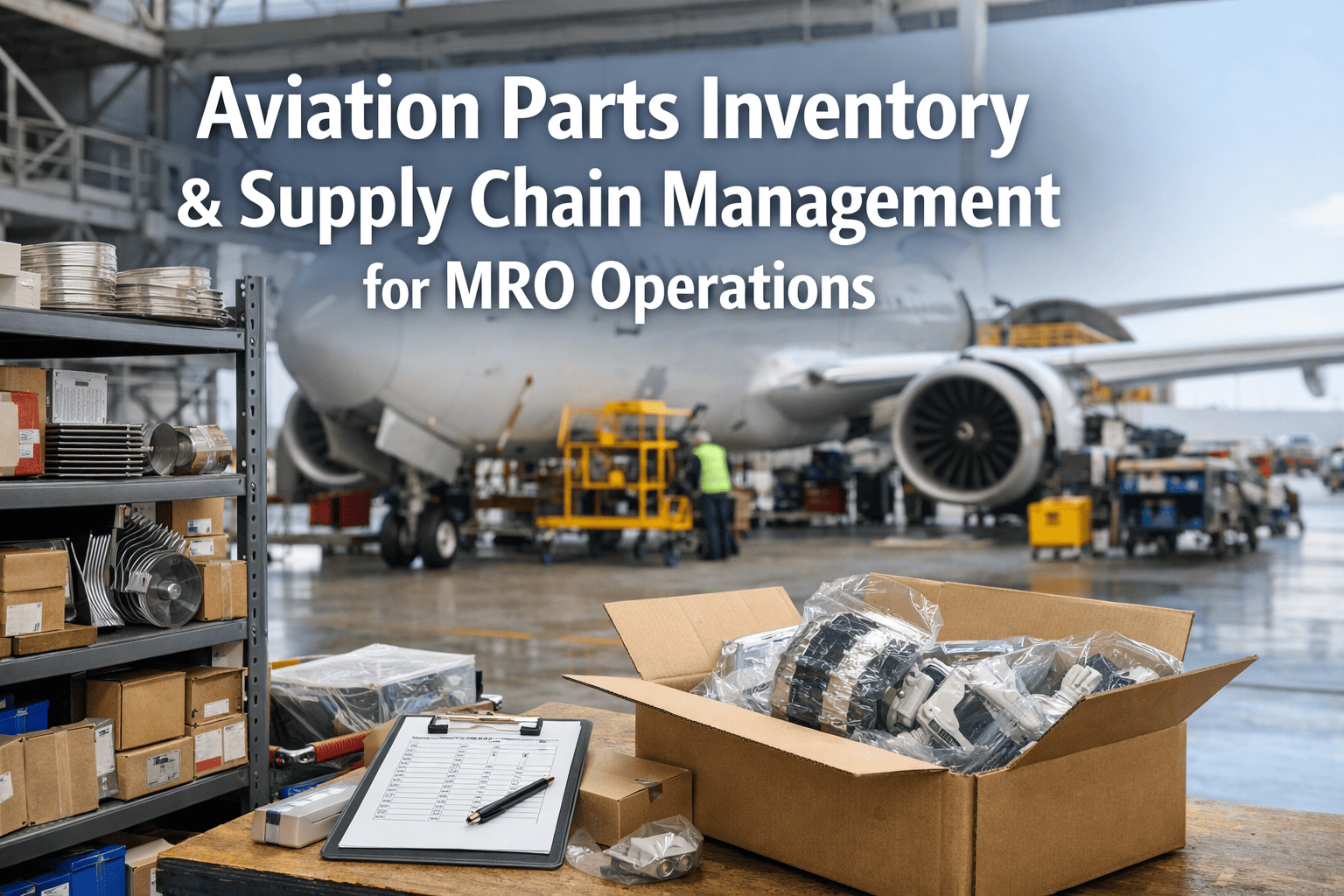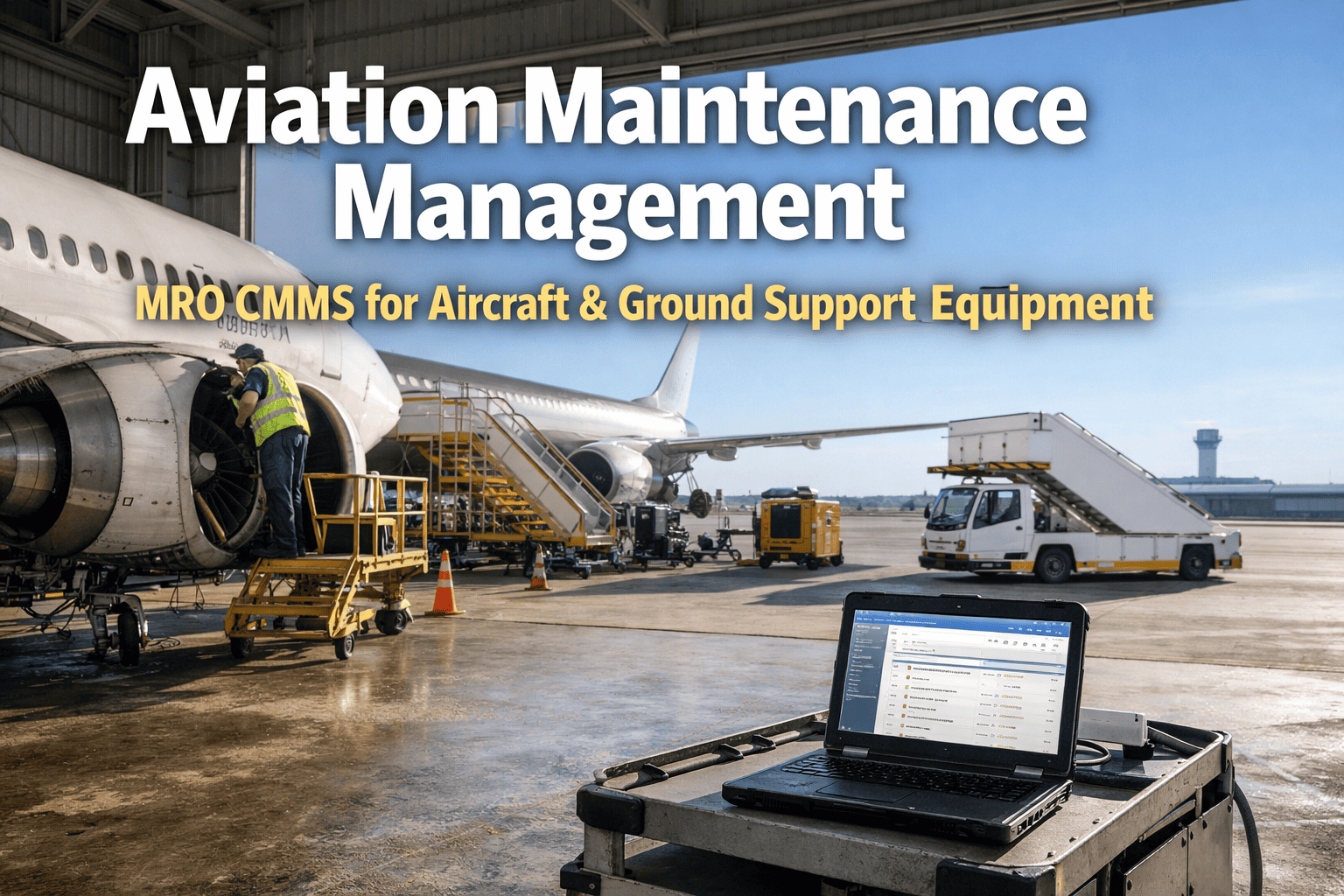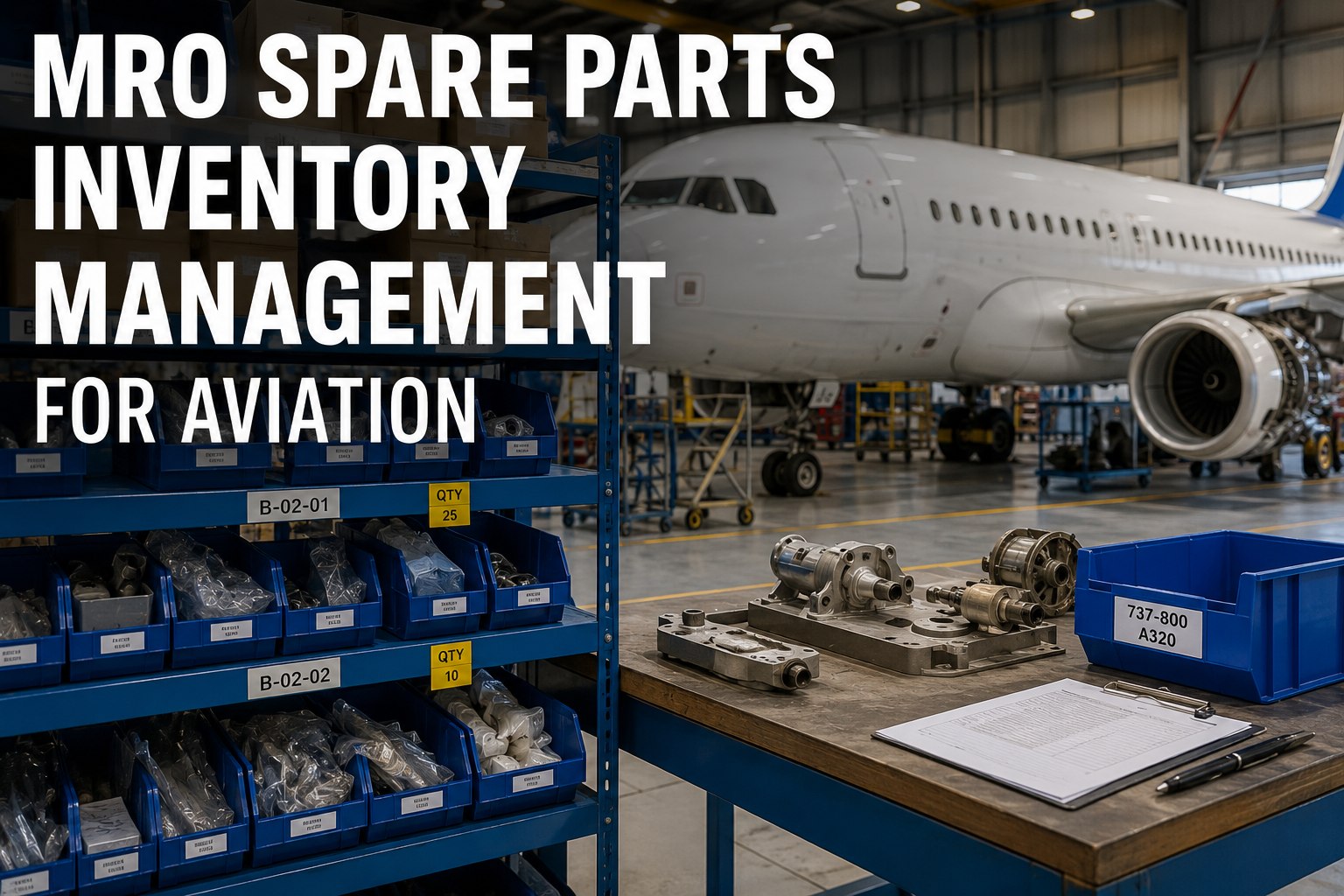
Aviation MRO spare parts inventory management is the discipline of balancing parts availability against the high cost of holding aircraft spare parts, ensuring FAA compliance and traceability while minimizing Aircraft on Ground (AOG) risk. Unlike standard manufacturing supply chains, aviation MRO inventory demands strict adherence to Part 145 and Part 121 regulations, where a missing or untraceable component can immediately ground a fleet and cost an airline up to $150,000 per day in lost revenue. OxMaint provides the CMMS structure needed to manage MRO spare parts planning, automate criticality-based stocking, and maintain defensible audit trails so your maintenance and reliability teams can transition from reactive part-chasing to predictive MRO inventory management. You can Start Free Trial today to see how quickly your aviation operation can eliminate untracked aircraft maintenance parts.
Is untraceable MRO spare parts inventory costing you millions in AOG risk?
A single missing 8130-3 tag can ground an aircraft indefinitely. OxMaint digitizes aviation spare parts management, linking every serialized component to its maintenance history so you maintain Part 145 compliance and eliminate AOG delays caused by unaccounted inventory.
Why aviation spare parts inventory management is fundamentally different
In aviation MRO, a grounded aircraft is a financial emergency. Managing aircraft parts inventory means confronting high-value, serialized components with strict lifecycles, mandatory airworthiness directives (ADs), and unbroken chains of custody.
Consider a regional airline operating 45 aircraft that suddenly grounds a jet due to a failed hydraulic pump. Without structured MRO inventory management, maintenance teams spend 18 hours manually searching three hangars and disconnected spreadsheets for a compliant replacement. If the pump is found but lacks a verifiable 8130-3 airworthiness tag, the part is unusable. The resulting AOG delay costs the airline $112,500 in lost revenue and triggers cascading schedule disruptions across five routes.
Criticality-based MRO parts planning for aircraft spare parts
Not all aircraft maintenance parts deserve the same inventory investment. Effective MRO parts planning categorizes components by operational impact, lifecycle limits, and historical failure rates to optimize shelf stock.
AOG-Critical Rotables
- Engines, APUs, landing gear, avionics LRUs
- High financial impact, long lead times (14+ days)
- Strategy: Minimum stock levels, pool agreements, proactive life tracking
- Must maintain 99.5% fill rate to prevent operational disruption
Essential Reparables
- Hydraulic actuators, pumps, generators, valves
- Medium lead time, moderate fleet impact
- Strategy: Reorder point (ROP) based on MTBR and reliability data
- Require serialized tracking and cyclical inspection records
Consumables & Expendables
- Fasteners, gaskets, sealants, filters, hardware
- Low unit cost, high volume usage
- Strategy: Vendor-managed inventory (VMI), min/max auto-replenishment
- Batch and lot tracking for airworthiness directive compliance
FAA Part 145 and Part 121 compliance for aircraft parts inventory
Defensible aviation spare parts management requires an unbroken chain of custody. A CMMS must track every serialized part from receiving inspection to installation, including airworthiness tags, historical time-since-overhaul (TSO), and removal reasons.
| Compliance Requirement | Standard Manual Process | OxMaint CMMS Process |
|---|---|---|
| 8130-3 / Form 1 Tag Tracking | Paper tags filed in hangar binders; easily misplaced | Digital attachment directly to the serialized inventory record |
| Component Life Tracking (TSO / TSN) | Manual spreadsheet calculations prone to human error | Automated flight-hour / cycle accumulation synced to work orders |
| AD / SB Compliance Verification | Manual cross-referencing of service bulletins against logbooks | Automatic alerts when non-compliant parts enter the supply chain |
| Removal & Installation History | Hand-written logbook entries with delayed data entry | Real-time work order updates linking parts directly to tail numbers |
| Audit Readiness | Weeks of document gathering for FAA or EASA audits | One-click traceability reports generated in seconds |
How OxMaint solves aviation MRO inventory management
OxMaint replaces disconnected spreadsheets and legacy MRO systems with an AI-powered CMMS built for the exacting standards of aviation maintenance, repair, and overhaul.
End-to-End Traceability
Link every aircraft spare part to its exact tail number, work order, and airworthiness documentation. Eliminate the risk of installing unverified components and pass FAA audits with one-click reporting.
Predictive Parts Planning
AI-driven analytics evaluate historical failure rates and flight cycles to forecast demand. Automatically trigger purchase orders before minimum stock levels breach, drastically reducing AOG risk.
Vendor & PO Automation
Streamline procurement with automated reorder points, vendor performance tracking, and digital receiving inspections. Cut the administrative burden of managing rotable pool agreements and repair orders.
Regulatory Documentation
Maintain a defensible, timestamped record of every maintenance action. Securely store 8130-3 tags, service bulletins, and AD compliance records directly inside the CMMS for instant retrieval.
The cost of reactive MRO inventory vs. OxMaint CMMS
Shifting from reactive part-chasing to predictive aviation spare parts management delivers measurable financial returns within the first operational quarter.
| Aviation MRO Metric | Spreadsheet / Reactive | OxMaint CMMS | Annual Impact |
|---|---|---|---|
| AOG Events per Year (15-fleet) | 22 events | 8 events | $2.1M saved |
| Inventory Holding Cost | $4.8M (overstocked) | $3.6M (optimized) | $1.2M freed capital |
| Audit Preparation Time | 180 labor hours | 12 labor hours | $18K labor saved |
| Expedited Shipping Fees | $340K annually | $95K annually | $245K saved |
See how OxMaint protects your fleet from AOG risk
Book a 30-minute demo to see live MRO inventory tracking, traceability workflows, and predictive parts planning built for Part 145 and Part 121 operations.
Aviation MRO spare parts inventory FAQs
What makes aviation MRO inventory management different from standard inventory?
Aviation MRO inventory requires strict regulatory compliance (FAA Part 145/121), serialized tracking for high-value rotable components, and airworthiness documentation like 8130-3 tags. A missing tag or broken chain of custody immediately grounds an aircraft, making traceability just as important as stock availability. You can Book a Demo to see how OxMaint automates this compliance natively.
How does a CMMS reduce AOG (Aircraft on Ground) events?
A CMMS like OxMaint reduces AOG events by automating minimum stock levels, tracking component lifecycles in real-time, and triggering proactive purchase orders before critical parts run out. It also provides instant visibility into parts availability across multiple hangars, cutting the search time from hours to seconds.
Can OxMaint track 8130-3 and Form 1 airworthiness tags?
Yes. OxMaint allows maintenance teams to attach digital copies of 8130-3 tags, EASA Form 1s, and other airworthiness documentation directly to the serialized inventory record. This ensures that every installed component has a verifiable, audit-ready trail of compliance from receiving to installation.
What is criticality-based stocking in aviation parts management?
Criticality-based stocking categorizes aircraft maintenance parts by their operational impact. AOG-critical rotables (like APUs and avionics) are kept at high fill rates with proactive life tracking, while low-cost consumables use automated min/max replenishment. This optimizes working capital while preventing operational delays.
How long does it take to implement aviation MRO software?
Most aviation maintenance teams can implement OxMaint and migrate their existing parts data within 2 to 4 weeks. The platform is designed to replace spreadsheets and legacy systems smoothly, with onboarding support to configure criticality tiers, vendor details, and compliance workflows.
Ready to modernize your aviation MRO inventory?
Join maintenance and reliability teams using OxMaint to eliminate paper work orders, predict failures, and maintain 100% audit-ready compliance.
Free 14-day trial · No credit card


.png)