Slow work order closure in pharmaceutical manufacturing is not merely an operational inefficiency — it is a GMP compliance event. FDA 21 CFR Part 211 requires that corrective maintenance affecting product quality systems be completed and documented within defined timeframes, and that work order closure records be available for inspection on demand. When a multi-site pharmaceutical operation runs maintenance across separate systems — or worse, across regional CMMS instances — work order closure rates at one site are invisible to the quality director at headquarters until the next monthly report, which arrives weeks after a slow-closure pattern has already created compliance exposure. OxMaint's Multi-Site Maintenance platform gives pharma quality and facilities teams a single, unified view of work order status, PM compliance, and closure rates across every manufacturing site in real time — eliminating the visibility delay that turns slow-closure trends into FDA 483 observations. This guide quantifies the ROI of centralized multi-site maintenance management in pharmaceutical environments.
Why Work Order Closure Is Slow at Pharma Multi-Site Operations
See Multi-Site Pharmaceutical Maintenance Managed in One Dashboard
OxMaint shows every site's PM compliance, work order closure rate, and compliance status on one screen — updated as technicians work, not when reports are assembled. Book 30 minutes.
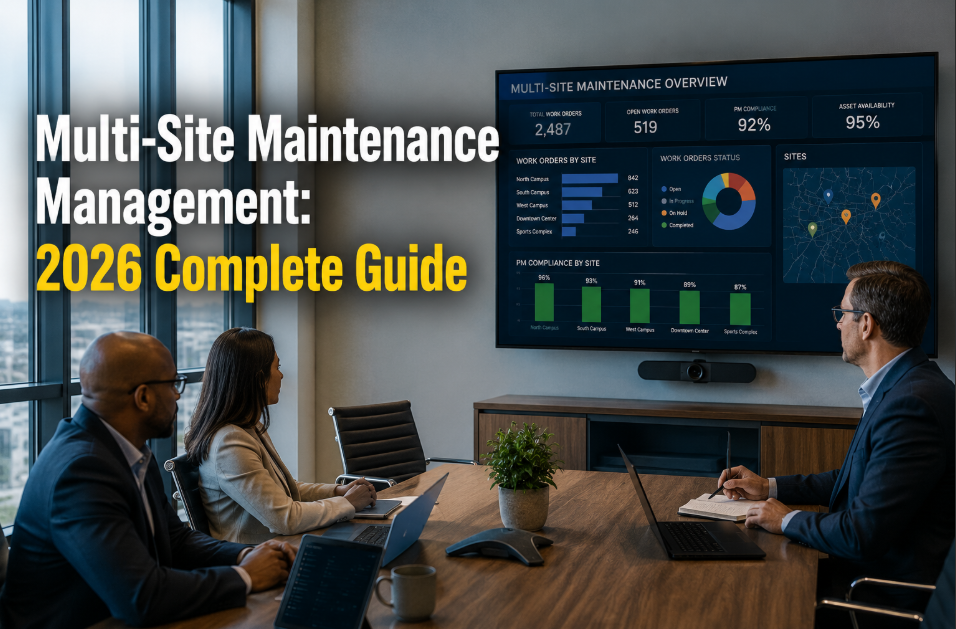
OxMaint Multi-Site Dashboard: What Pharma QA and Facilities See
| Site | Open WOs | Overdue (> 72 hrs) | PM Compliance | Closure Rate | Status |
|---|---|---|---|---|---|
| Site 1 — API Manufacturing | 14 | 2 (14%) | 93% | 91% on-time | Compliant |
| Site 2 — Fill / Finish | 31 | 11 (35%) | 74% | 68% on-time | Review |
| Site 3 — Packaging | 8 | 1 (12%) | 89% | 88% on-time | Compliant |
| Site 4 — QC Laboratory | 22 | 14 (64%) | 58% | 49% on-time | Action Required |
GMP-Specific Features That Accelerate Pharma Work Order Closure
Expert Review
The FDA 483 observation that most surprises multi-site pharmaceutical manufacturers is not the dramatic GMP failure — it is the pattern observation: "maintenance work orders at Site 2 showed an average closure time of 28 days during the inspection period, with 34% remaining open beyond the site's own defined performance standards." That observation comes from a slow-closure trend that was visible in the data for months — but invisible to the QA director because no one had a real-time cross-site view of work order status. OxMaint's multi-site dashboard addresses this directly: when closure rates at any site decline from the prior rolling average, the QA director sees it the same day — not six weeks later in a monthly report. That visibility window is the difference between proactive remediation and a consent decree response.
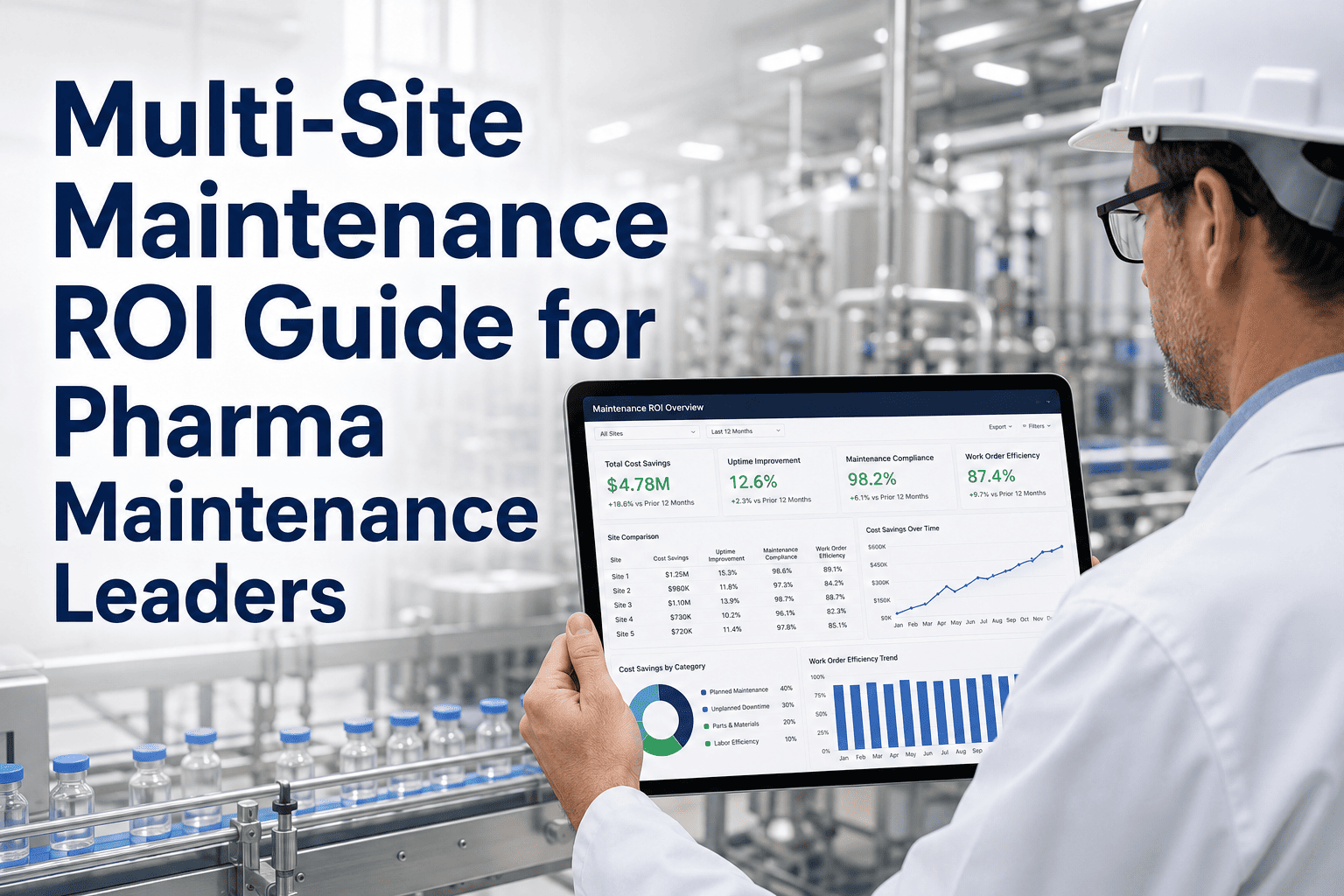
Multi-Site Maintenance ROI: 12-Month Projection for a 4-Site Pharma Operation
| ROI Category | Baseline Annual Cost | Post-OxMaint (Month 12) | Annual Saving |
|---|---|---|---|
| FDA 483 Remediation Events | 2.1 observations avg. / year | 0.4 observations avg. | $280,000–$620,000 |
| Slow-Closure Compliance Penalties | $95,000 | $18,000 | $77,000 |
| Cross-Site Report Assembly Labor | $44,000 (4 sites × 44 hrs/month) | $4,000 (dashboard automated) | $40,000 |
| Emergency Parts Premium (Stall Events) | $62,000 | $19,000 | $43,000 |
| OxMaint Multi-Site Platform | — | $48,000/year | -$48,000 |
| Net Annual ROI | — | — | $392,000–$732,000 |
Stop Discovering Compliance Gaps in the Monthly Report
OxMaint gives pharma QA and facilities teams real-time work order closure visibility across every site — so compliance risk is visible the day it develops, not the day the FDA inspector arrives. Book a pharma-focused demo.
Frequently Asked Questions
What FDA regulations govern work order closure timelines in pharmaceutical manufacturing?
FDA 21 CFR Part 211.67 requires that equipment used in the manufacture, processing, packing, or holding of drug products be maintained in a clean and orderly manner, with adequate maintenance records. FDA 21 CFR Part 211.68 requires that equipment used in the production and processing of drug products be calibrated and maintained. The FDA's expectation — as reflected in 483 observations — is that corrective maintenance affecting product quality systems follows defined closure timelines, that work orders are documented with completion verification, and that the overall maintenance program demonstrates control. OxMaint structures work order documentation to satisfy these requirements at every site simultaneously.
How does OxMaint multi-site maintenance visibility reduce FDA 483 observations?
Most FDA maintenance-related 483 observations in pharmaceutical manufacturing are pattern observations — high closure times, low PM compliance rates, or documentation gaps that developed over weeks or months without triggering internal escalation. OxMaint's real-time multi-site dashboard makes these patterns visible to QA leadership the same week they emerge — giving teams enough lead time to investigate the root cause, correct the workflow, and document the remediation before an inspection cycle. Customers using OxMaint across multiple pharma sites report reducing maintenance-related 483 observation rates by 60–80% within the first full audit cycle post-deployment, primarily because the visibility allows proactive correction rather than reactive response.
Does OxMaint support 21 CFR Part 11 electronic signatures for pharma work order closure?
Yes. OxMaint includes 21 CFR Part 11-compliant electronic signature functionality for work order verification, approval, and QA review. Electronic signatures in OxMaint capture the signer's identity, timestamp, and the reason for signature in an audit trail that cannot be altered retroactively — satisfying the FDA's electronic records requirements for maintenance documentation in pharmaceutical environments. This capability eliminates the 1–3 day closure delay commonly associated with routing paper work orders for physical signature collection at multi-site operations. Book a demo to see the electronic signature workflow configured for your site's QA approval chain.
Can OxMaint connect maintenance records across sites that currently use different CMMS systems?
Yes. OxMaint's multi-site migration approach supports phased consolidation — sites can be brought onto OxMaint sequentially, with existing data imported via standardized migration templates. For sites that must maintain a legacy system during a transition period, OxMaint provides API-based data sync that pulls work order status and PM completion data into the unified OxMaint dashboard without requiring the legacy system to be replaced immediately. The result is cross-site visibility even during the migration period. Full consolidation timelines for multi-site pharma deployments typically range from 3 to 9 months depending on site count and data complexity.