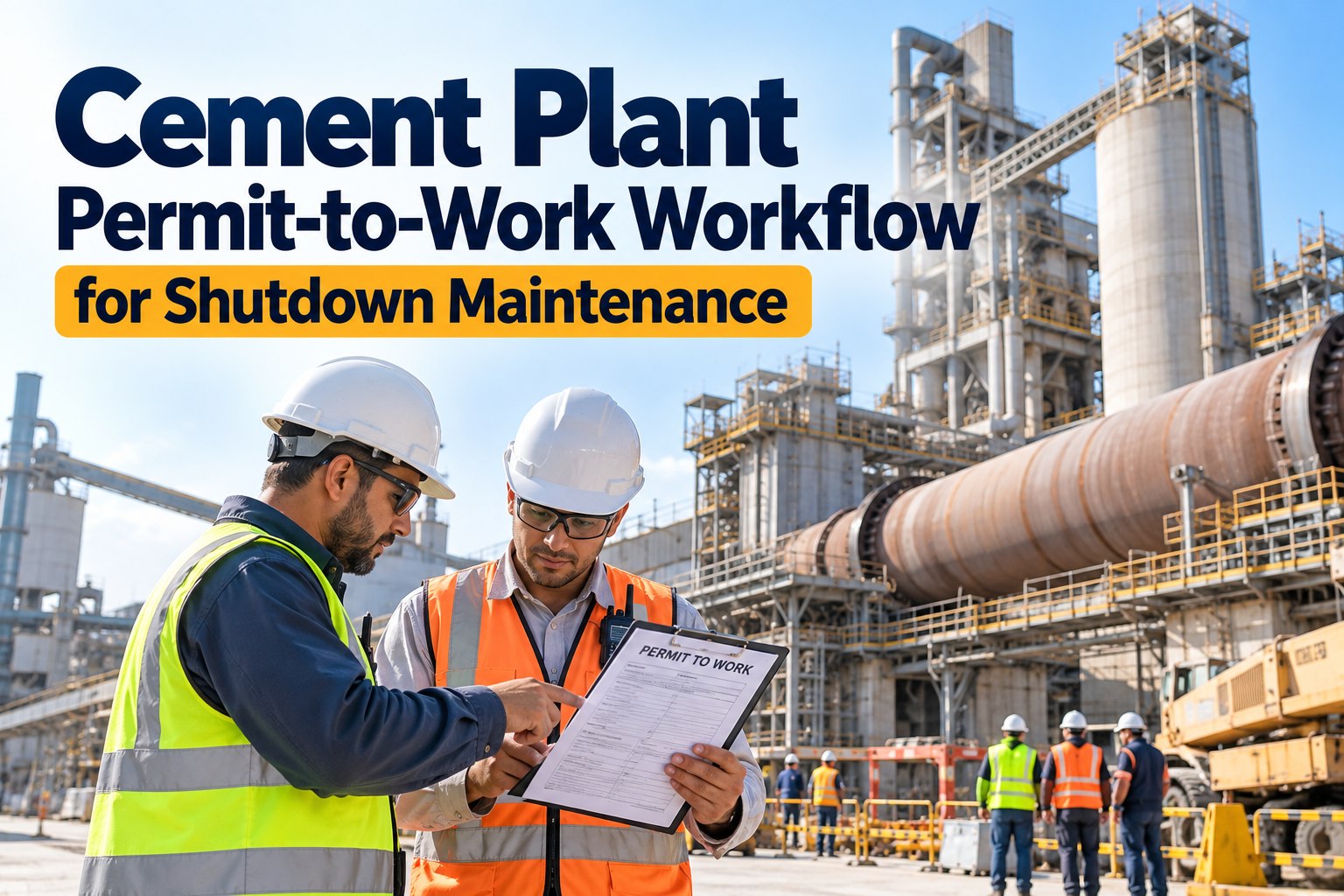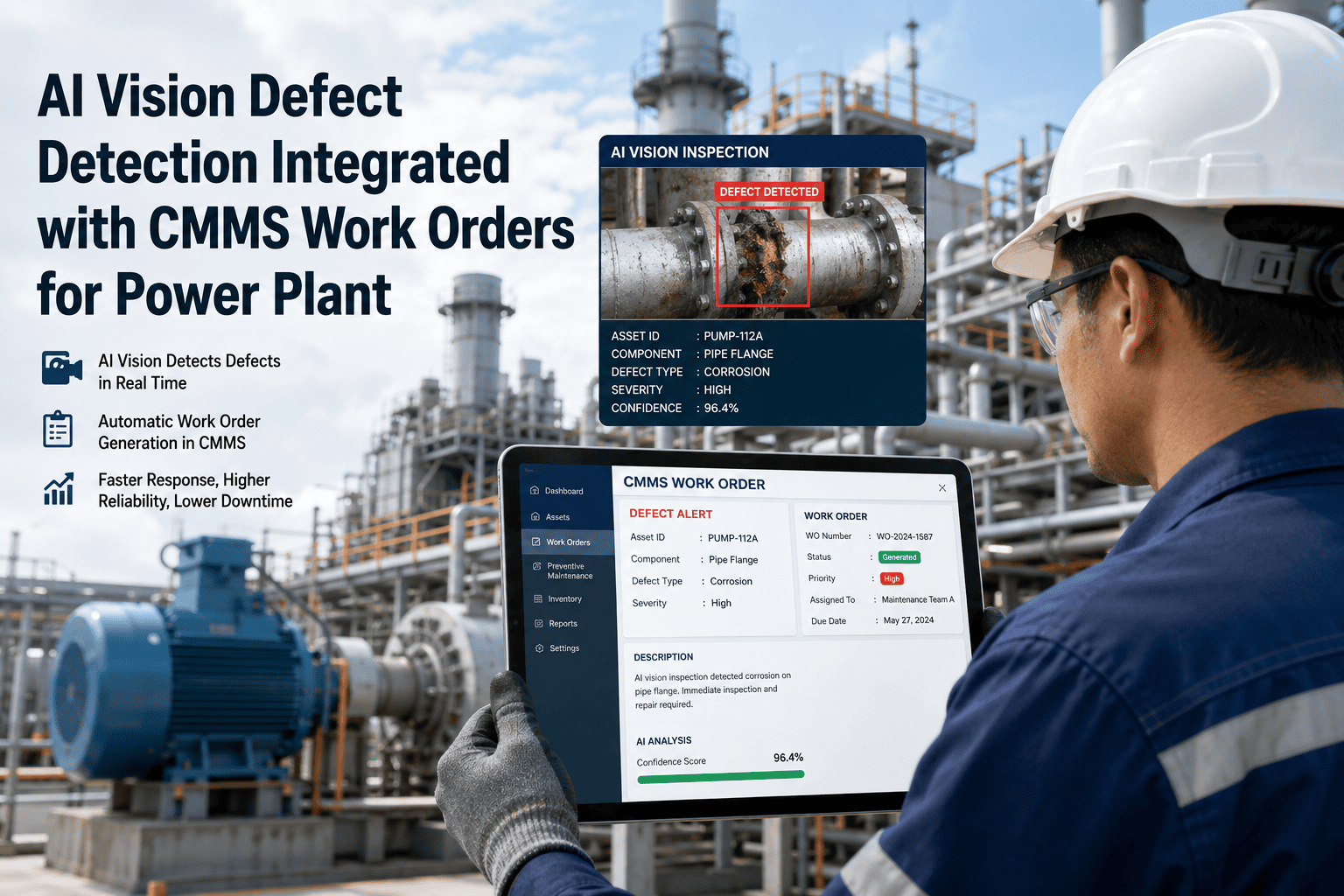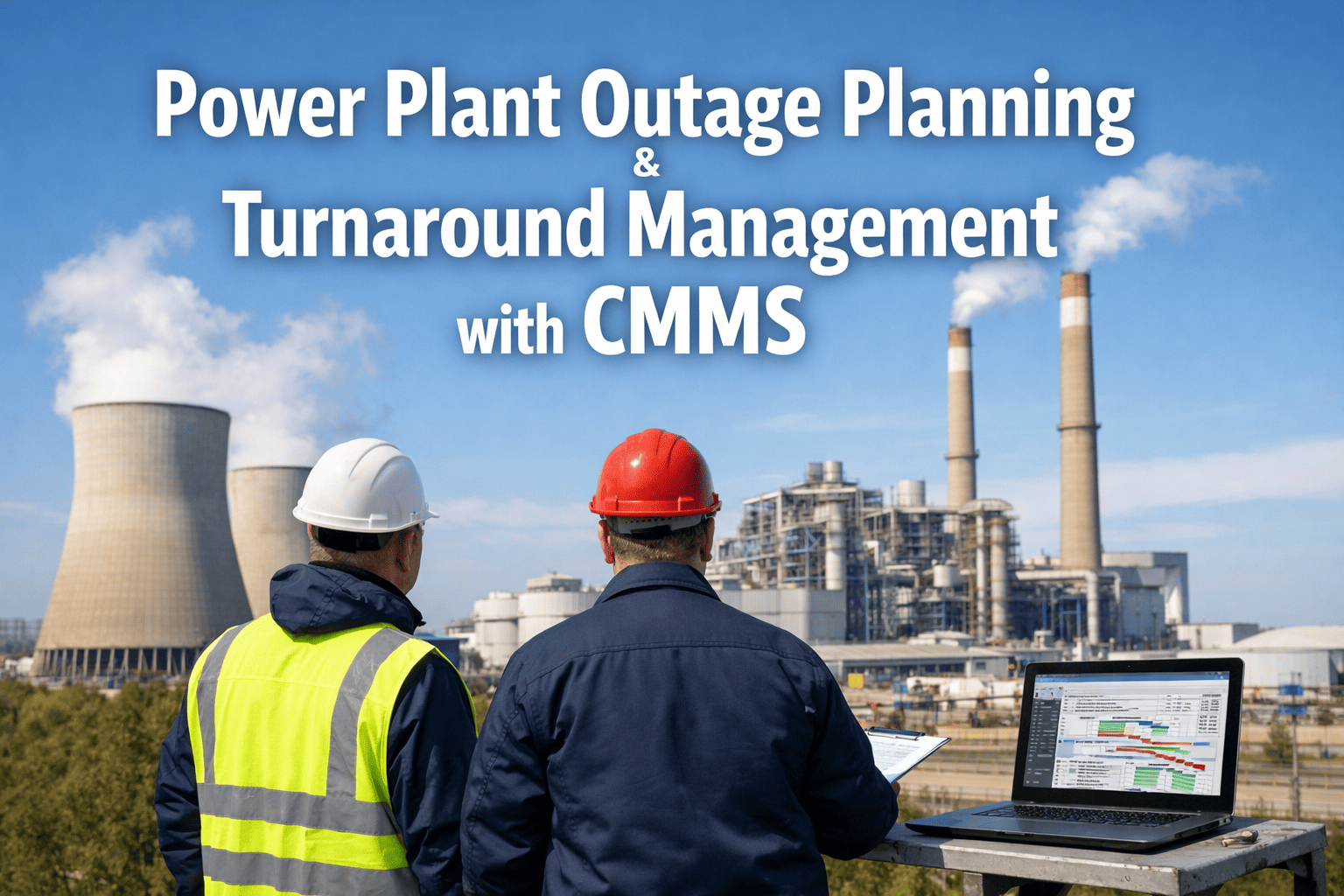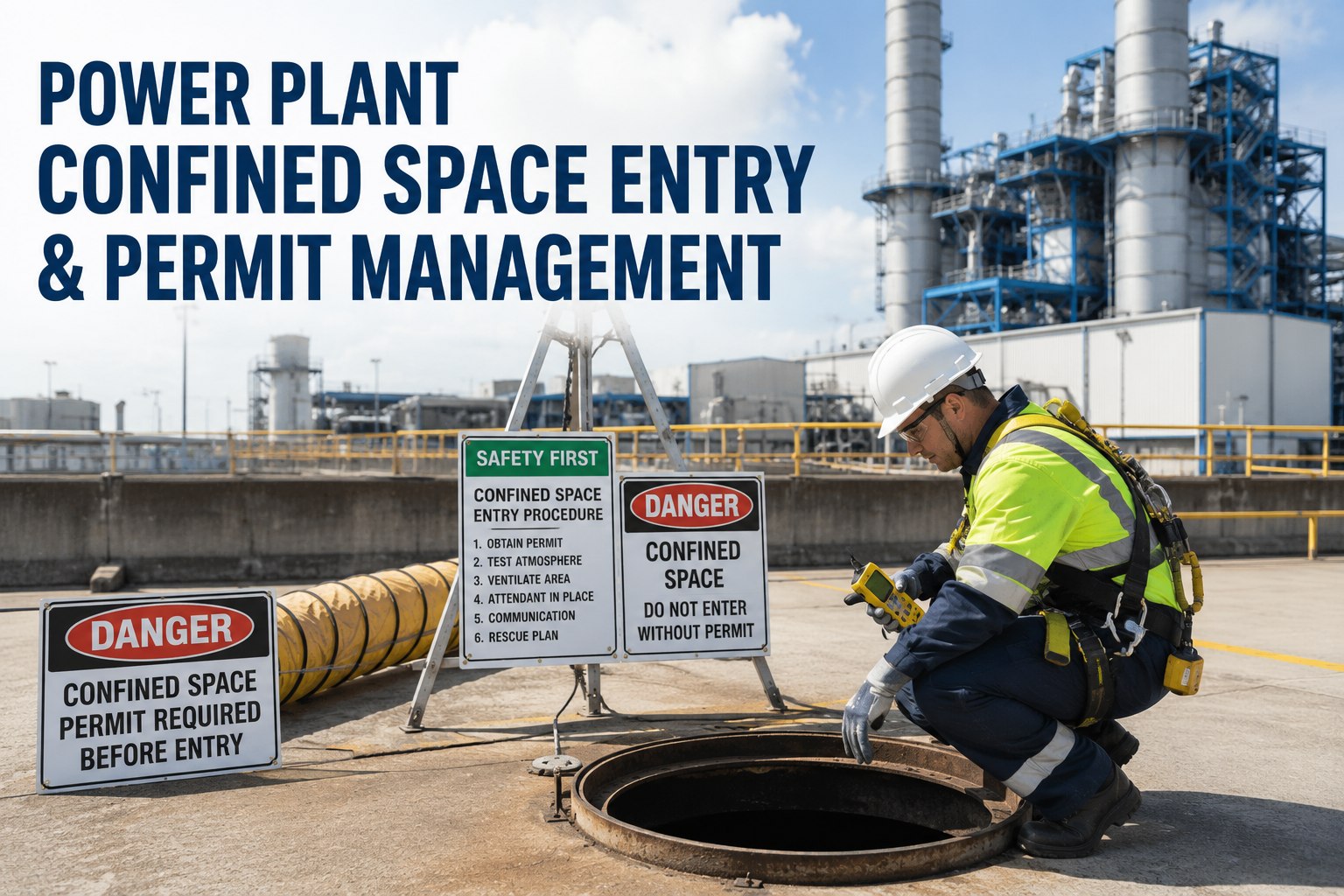
Roughly 90 workers die every year in confined spaces across US industry, and NIOSH data shows a disturbing pattern behind those numbers — more than 60% of the fatalities are would-be rescuers who entered without proper equipment or training after the first worker went down. Power plants are among the highest-density confined space environments in industry. A single generating station carries dozens of them — boiler drums, condensers, cooling tower basins, ash hoppers, precipitators, silos, tanks, sumps, and access tunnels. Every one of them qualifies as a permit-required confined space under OSHA 29 CFR 1910.146, and every entry demands atmospheric testing, a written permit, a dedicated attendant, a pre-arranged rescue service, and continuous monitoring. Paper permits scattered across a maintenance office cannot run this. Oxmaint is the CMMS software that digitizes the entire permit-to-work workflow — pre-entry checklists, atmospheric test logs, role assignment, rescue plan verification, and OSHA-ready audit records — for every permit at every plant. Start a free Oxmaint trial to run digital confined space permits at your power plant, or book a demo to see the permit-to-work software mapped to your facility.
Power Plant · Safety Program · Permit-to-Work Software
Power Plant Confined Space Entry & Permit Management — The 2026 Guide
Every space type, every atmospheric threshold, every entry role, every rescue tier — and the CMMS-based permit workflow that keeps power plant maintenance teams inside OSHA 1910.146 on every entry.
-
60%+
of confined space fatalities are would-be rescuers who entered without proper equipment (NIOSH)
-
$170K+
OSHA citations facilities face for confined space program violations under 1910.146
-
19.5–23.5%
acceptable oxygen range for permit-required confined space entry
-
Every Entry
atmospheric test required — yesterday's reading does not authorize today's entry
Why the Power Plant Is a Special Case
Why Power Plants Carry the Densest Confined Space Population in Industry
Under OSHA 1910.146, a confined space is any space that is large enough to enter, has limited entry or exit, and is not designed for continuous occupancy. A power plant contains dozens of them by design. A permit-required confined space adds any of four hazards — hazardous atmosphere, engulfment potential, internal configuration that could trap, or any other recognized serious hazard. Nearly every confined space in a power plant meets at least one. Understanding why the environment is so dense is the first step.
-
01
Combustion & Chemistry Everywhere
Boilers, precipitators, ash systems, cooling water treatment. Every one carries residual atmospheric hazards even after isolation — CO, oxygen depletion, chemical vapors.
-
02
Engulfment Materials on Site
Coal silos, ash hoppers, fuel oil tanks. Bulk material shifts unexpectedly. An entrant standing on stored coal is one unstable bridge away from being buried.
-
03
Multi-Level, Multi-Access Spaces
Boiler drums have manways, condensers have inspection ports, cooling towers have basin access. Restricted egress in every direction — vertical, horizontal, angled.
-
04
High-Frequency Entry Volume
Outage seasons drive hundreds of entries in a matter of weeks. Paper permit workflows collapse under that volume. Permit accuracy becomes the safety exposure.
The Space Catalogue
The Confined Spaces Every Power Plant Team Enters
A power plant permit program starts with a written catalogue of every confined space on the site — location, classification, dominant hazard, and pre-approved isolation procedure. Below is the working catalogue every generating station has to build. Oxmaint pre-loads these as asset records inside the CMMS with permit templates attached.
-
Boiler Drum & Water Wall Manways
Atmospheric · Thermal · Restricted egress
The primary outage entry point. Residual heat, oxygen depletion after purge, chemistry residues from cleaning.
-
Condenser Water Box
Atmospheric · Marine growth · Engulfment
Cooling water side inspection. Restricted access through tube-sheet manway. Biological growth and CO2 buildup.
-
Cooling Tower Basin
Chemical · Biological · Legionella
Water treatment chemicals, algae, Legionella risk. Slippery surfaces, drop hazards from fill material collapse.
-
Ash Hopper & Ash Silos
Engulfment · Fine dust · Elevated CO
Fly ash and bottom ash storage. Bridging material collapses unexpectedly. Fine dust ignition risk from static.
-
Precipitator (ESP) Fields
High voltage · Ash · Awkward access
Electrostatic precipitator internal fields. LOTO of high voltage rails critical. Confined vertical spacing between plates.
-
Coal Silos & Bunkers
Engulfment · Methane · Auto-ignition
Coal storage vessels. Methane released from stored coal. Spontaneous combustion history in pockets.
-
Sumps, Vaults, Tunnels
H2S · Oxygen depletion · Water
Circulating water sumps, cable tunnels, chemical vault access. H2S from decomposition, oxygen depletion in dead-end spaces.
-
Fuel Oil & Chemical Tanks
Flammable · Vapor · Toxic
Auxiliary fuel oil tanks, ammonia storage, boiler chemistry tanks. LEL and toxic vapor exposure risk.
Atmospheric Threshold Gauges
The Four Numbers Every Entry Supervisor Verifies Before Signing
OSHA 1910.146 specifies the atmospheric conditions that must exist inside the space before entry can be authorized. The test order is fixed: oxygen first, combustibles second, toxic gases third. If any of the four thresholds is outside the acceptable band, the permit cannot be signed. These are the numbers every power plant multi-gas detector reports and every Entry Supervisor confirms.
Oxygen (O2)
Below 19.5% is oxygen deficient. Above 23.5% is oxygen enriched — increased combustion risk. Test first every entry.
Test order: 1st
Combustibles (LEL)
Lower Explosive Limit reading below 10% of LFL. Above 10% signals flammable vapor concentration approaching ignition risk.
Test order: 2nd
Carbon Monoxide (CO)
OSHA PEL for CO is 50 ppm 8-hour TWA. Confined space entry threshold typically set at 25 ppm alarm and 35 ppm evacuation.
Test order: 3rd
Hydrogen Sulfide (H2S)
OSHA PEL is 20 ppm ceiling. Confined space thresholds typically set at 10 ppm alarm and 15 ppm evacuation. IDLH at 100 ppm.
Test order: 3rd
Continuous monitoring during the entire entry is required. If any alarm sounds, every entrant evacuates and does not return until a supervisor re-tests and re-authorizes.
The Four Entry Roles
Every Entry Requires Four Distinct Roles Filled by Trained Personnel
OSHA 1910.146 assigns specific responsibilities to specific roles — and no person may perform multiple roles at once. The attendant cannot be an entrant. The entry supervisor may not also be the attendant if that would leave the entry point unattended. The rescue team is a fourth pre-arranged capability. All four sit inside the Oxmaint permit workflow with certification records verified before the permit will sign.
-
R1
Authorized Entrant
Trained on space hazards, exposure signs and symptoms, communication protocol. Uses PPE and harness specified on permit. Exits immediately on attendant order, monitor alarm, or symptom onset.
Certification tracked in CMMS
-
R2
Attendant
Stationed outside the entry point for the full duration. Maintains continuous communication with entrants. Never enters the space to attempt rescue unless relieved by another trained attendant.
One attendant per entry point
-
R3
Entry Supervisor
Verifies all pre-entry conditions, tests, and controls. Signs the permit authorizing entry. Terminates entry if conditions deviate. Owns compliance with 1910.146 across the operation.
Only role authorized to sign
-
R4
Rescue Service
On-site rescue team or pre-arranged outside service. Trained as authorized entrants for the specific space types. Must practice at least once every 12 months on a representative space.
Confirmed before permit signs
The Rescue Reality
More Than 60% of Confined Space Deaths Are the Rescuers, Not the Original Entrant
Every one of those secondary fatalities happened because a colleague entered without atmospheric testing, without a harness, without a rescue plan — reacting to seeing another worker down. That is exactly what 1910.146 is designed to prevent, and it only works when the permit workflow makes the rescue capability a prerequisite for signing. Oxmaint blocks permit sign-off until every rescue element is confirmed.
The Permit Lifecycle
Five Stages Every Confined Space Permit Runs Through
A written entry permit is not a form — it is a workflow. Five stages, in order, every one gated by verification before the next can start. Oxmaint runs all five as digital stages inside the software, so a permit cannot skip from evaluation to authorization without the isolation and testing stages actually completing.
-
01
Space Evaluation & Hazard ID
Confirm permit-required status, identify all hazards, review previous permits for the same space, flag any changed conditions.
-
02
Isolation & LOTO
Energy sources locked out and tagged out. Lines blinded, capped or blanked. Ventilation established. Rescue equipment staged.
-
03
Pre-Entry Atmospheric Test
Oxygen, combustibles, toxic gases tested in that order with calibrated multi-gas detector. Readings within acceptable band. Tester signs.
-
04
Permit Authorization & Entry
Entry Supervisor signs the permit. Attendant on station. Continuous monitoring active. Entry proceeds under permit conditions.
-
05
Close-Out & Review
Work complete, all entrants accounted for, permit canceled. Any incidents documented. Permit archived for OSHA audit trail.
The Rescue Hierarchy
Every Rescue Plan Falls Into One of Three Tiers
A written rescue plan is required before any permit-required entry can be authorized. The plan must specify which of three tiers the rescue will use — with the safest tier preferred and entry rescue as the last resort. The tier chosen drives what equipment must be staged before the entrant crosses the portal.
Tier 1 · Preferred
Self-Rescue
The entrant recognizes the warning sign — alarm, symptom, attendant order — and exits under their own power before incapacitation. Fastest, safest, always the primary plan.
Requires: Trained entrant, functional monitor, clear escape path
Tier 2 · Standard
Non-Entry Rescue
Attendant extracts an incapacitated entrant using a retrieval system — full body harness, retrieval line, tripod hoist — without entering the space themselves.
Requires: Tripod, winch, harness pre-attached to lifeline
Tier 3 · Last Resort
Entry Rescue
Trained rescue team enters the space with SCBA and full PPE to physically extract the entrant. Highest risk, longest response, only when non-entry rescue is infeasible.
Requires: On-call trained team, quarterly practice, SCBA
Where Manual Permits Break
Four Failure Modes Every OSHA Inspector Finds First
-
01
Yesterday's Reading Signed for Today
Atmospheric conditions change with work activities, temperature, and material migration. A test from yesterday does not authorize today's entry. Paper permits routinely miss the re-test.
-
02
Rescue Service Not Actually Confirmed
The permit lists a rescue service. Nobody called to confirm they are available today. The permit signs anyway. Every OSHA inspection tests this exact gap.
-
03
Untrained Personnel Fill Roles
The trained attendant is on vacation. Someone else stands in. Their certification is not current. The permit signs. This is exactly how routine entries become fatalities.
-
04
Permits Cannot Be Found During Audit
Paper permits from the last twelve months live in filing cabinets across three buildings. Nobody can produce them under audit. OSHA reads this as no program at all.
Built for Power Plant Safety
How Oxmaint Software Runs the Full Permit-to-Work Workflow
-
Space Catalogue
Every Confined Space as Its Own Asset Record
Boiler drums, condensers, silos, sumps — each modelled in Oxmaint with hazard classification, isolation procedure, and permit template. Permits inherit the space configuration automatically.
-
Gated Workflow
Permit Cannot Sign Until Every Stage Verifies
Isolation, atmospheric test, role assignment, rescue confirmation. The Entry Supervisor cannot advance past any stage until the software validates completion.
-
Certification Check
Only Trained Personnel Can Fill Roles
Every entrant, attendant, supervisor, and rescuer carries a certification record. The software blocks role assignment to anyone without current training on file.
-
Live Monitoring
Atmospheric Readings Logged in Real Time
Multi-gas detector readings capture into Oxmaint at the interval the permit specifies. Alarm thresholds trigger evacuation notifications and re-authorization workflows automatically.
-
Rescue Confirmation
Rescue Service Confirmed Before Sign-Off
Standing rescue team availability or outside service on-call status verified inside the software. The permit cannot advance to authorization without a confirmed rescue capability.
-
Audit Package
Twelve-Month Permit History Exportable in One Click
OSHA inspection, insurance renewal, corporate safety audit. Every permit, every atmospheric reading, every role assignment, every close-out — pulled in one export.
Measured Outcomes
What Power Plants Gain With Oxmaint Running the Permit Program
-
Zero
Skipped Pre-Entry Steps
Gated workflow blocks permit sign-off until every stage verifies. No missed atmospheric test, no unconfirmed rescue capability.
-
100%
Certification Match
Role assignment blocked to anyone without current training. Attendant, entrant, and supervisor roles filled only by qualified personnel.
-
Minutes
OSHA Audit Prep Time
Twelve months of permit history in one export. What used to take a week of paper hunting is a single dashboard action.
-
Live
Alarm Response
Continuous atmospheric monitor integration triggers evacuation notification instantly if any threshold breach occurs during entry.
Frequently Asked
Confined Space Permit & CMMS Questions
Does OSHA require atmospheric testing before every entry?
Yes. OSHA 1910.146 requires atmospheric testing immediately before every entry. A test performed yesterday is not valid for today's entry because atmospheric conditions can change from work activities, temperature, or material migration. The only exception is continuous monitoring — if a monitor is installed and running, pre-entry testing can be replaced by verification the monitor shows safe readings. Sign up for Oxmaint to log atmospheric test results with automatic timestamp and tester verification.
Can one attendant cover multiple simultaneous entries?
No. OSHA 1910.146 requires one attendant per entry point. The attendant must be stationed at that entry, maintain continuous communication with all entrants, and be available for rescue coordination. An attendant cannot physically be at two entry points at once, and cannot fulfil rescue duties for two spaces simultaneously.
How often must the rescue team practice?
At least once every 12 months. The practice rescue must be from an actual permit space or a simulated space representative in size, configuration, and access of the spaces at the facility. Oxmaint tracks practice dates against every rescue team record and flags when the 12-month window is approaching. Book a demo to see rescue team certification tracking in Oxmaint.
What documentation does an OSHA inspector expect?
Written permit-required confined space program, list of every permit space with hazard classification, twelve months of signed permits with atmospheric readings, current training records for every entrant and attendant, and documented rescue team practices. Missing any of these carries $170,000+ citation potential. Sign up for Oxmaint to build the audit-ready program from day one.
Evaluate · Authorize · Rescue
Every Confined Space Fatality Started With a Permit That Should Not Have Signed
The atmospheric test that was not fresh. The attendant who was not trained. The rescue plan that was not confirmed. The signature that should not have happened. Oxmaint is the maintenance software that turns every one of those gates into a hard stop — no skipped verification, no unqualified role, no permit signed without the rescue capability confirmed and standing by.