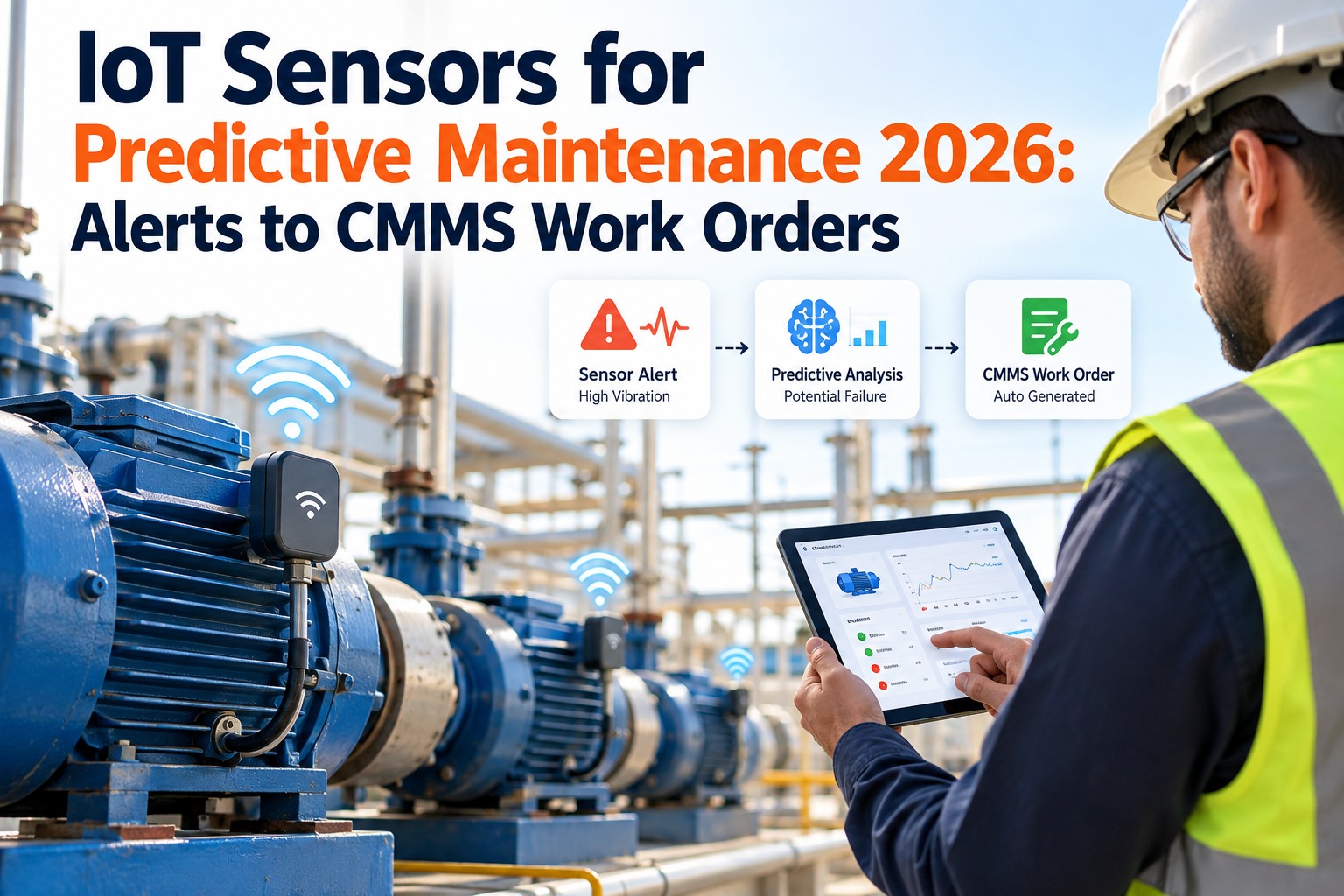
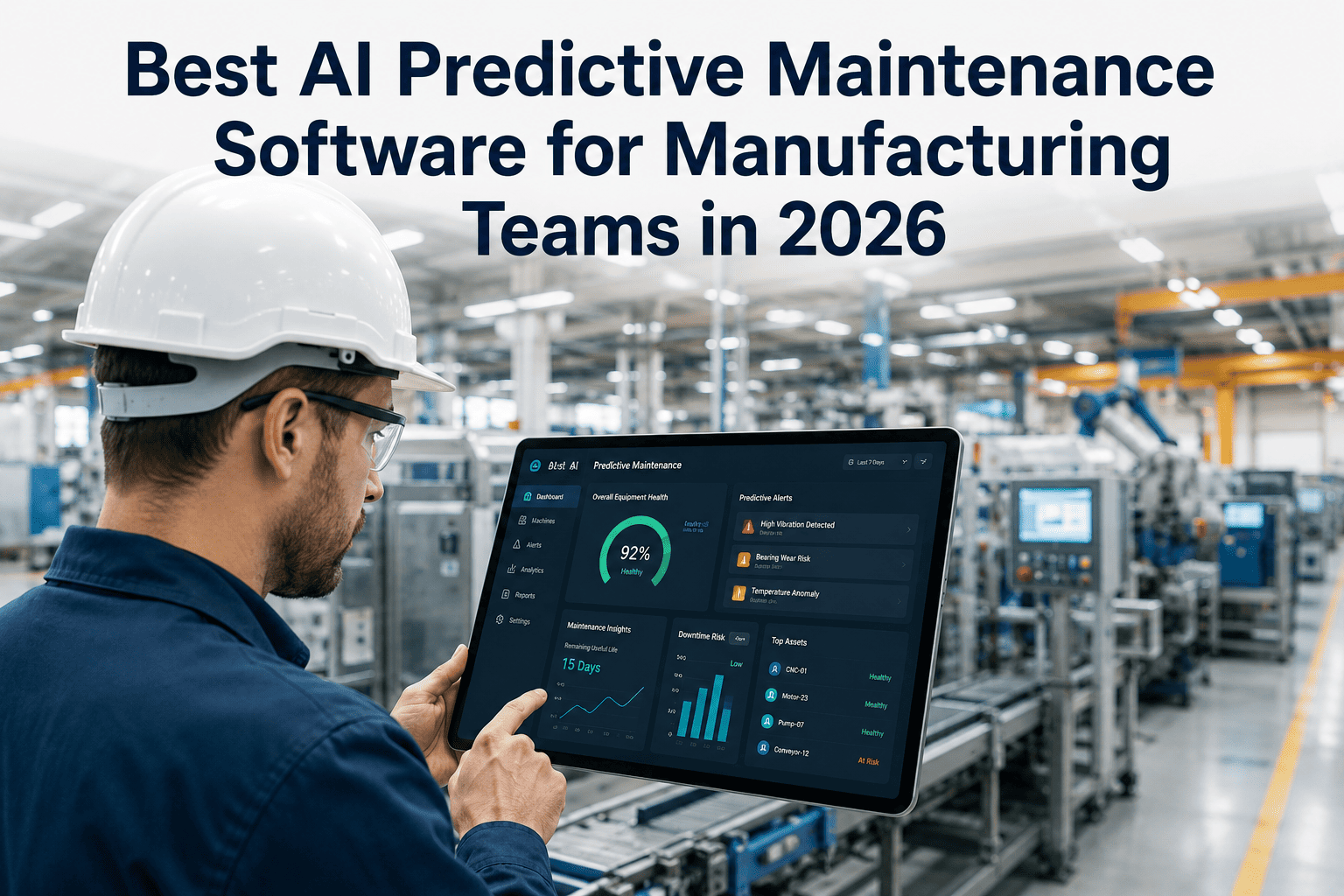
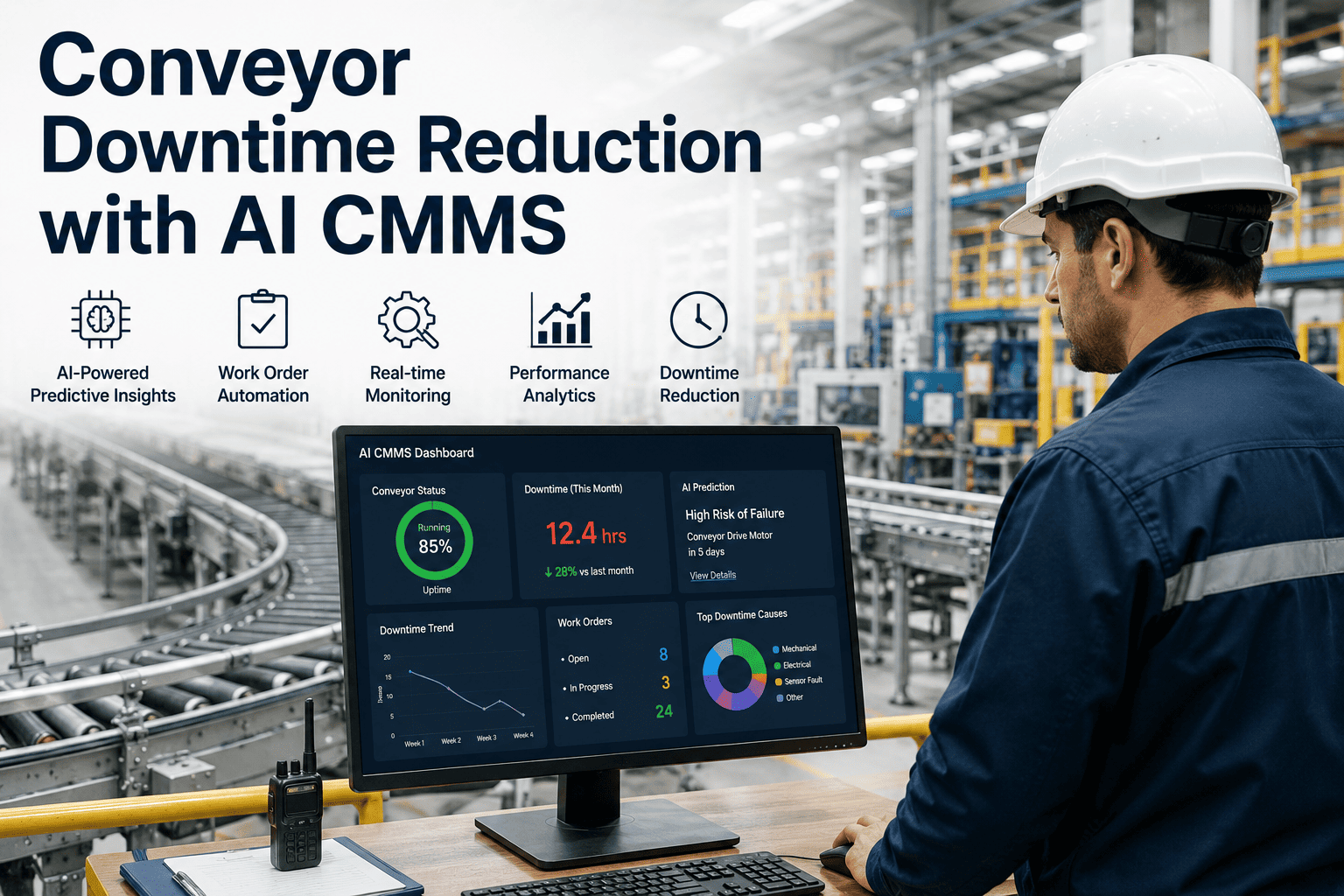
Predictive maintenance represents a revolutionary shift in equipment management strategies, transforming reactive breakdowns into proactive interventions that save companies an average of $12-15 lakhs per machine annually. Industry data reveals that 68% of manufacturing and industrial companies still operate with reactive or preventive maintenance approaches, missing critical opportunities for cost savings and operational efficiency. Predictive maintenance with advanced CMMS technology can reduce unplanned downtime by 75%, extend equipment life by 35%, and decrease maintenance costs by 40% while ensuring maximum asset utilization, and operational reliability.
The Evolution from Reactive to Predictive: Understanding the Maintenance Paradigm Shift
Modern industrial operations demand sophisticated maintenance strategies that go beyond traditional calendar-based schedules or emergency repairs. Predictive maintenance excellence leverages real-time data analytics, IoT sensors, and machine learning algorithms to identify potential failures before they impact operations, creating a proactive maintenance ecosystem that maximizes equipment reliability and operational efficiency.
Transform your maintenance operations with Oxmaint's predictive maintenance solutions
Getting Started Book a DemoData-Driven Insights
Predictive analytics process millions of data points from equipment sensors, identifying patterns that indicate developing problems 4-8 weeks before failure, enabling planned interventions.
Cost Optimization
Strategic maintenance scheduling based on actual equipment condition reduces parts inventory by 45% and labor costs by 35% while eliminating expensive emergency repairs.
Downtime Prevention
Real-time monitoring and predictive algorithms prevent 85% of unexpected breakdowns, ensuring continuous operations and protecting production schedules from disruption.
Resource Efficiency
Maintenance teams work proactively with clear priorities and schedules, improving technician productivity by 50% and reducing overtime expenses by 65%.
Asset Longevity
Condition-based maintenance extends equipment life by addressing issues early, achieving 35-45% longer operational lifespans compared to reactive maintenance approaches.
Precision Maintenance
Targeted interventions based on actual wear patterns and performance data ensure maintenance activities address real needs rather than arbitrary schedules.
The Hidden Costs of Traditional Maintenance Approaches
Before implementing predictive maintenance with Oxmaint, industrial operations experience significant inefficiencies that impact both operational performance and financial results:
- Unexpected equipment failures causing production losses averaging $25-40 lakhs per major breakdown
- Excessive maintenance spending with 30-40% of activities performed unnecessarily on healthy equipment
- Inventory inefficiencies with either excess parts tying up capital or stockouts causing delays
- Reactive firefighting culture where 70% of maintenance time addresses emergencies rather than optimization
- Knowledge gaps with critical equipment insights lost when experienced technicians retire or leave
Core Technologies: Building Blocks of Predictive Maintenance Excellence
Advanced predictive maintenance systems through Oxmaint integrate multiple technologies and data streams to create comprehensive equipment health monitoring capabilities that transform maintenance from guesswork into data-driven science.
Sensor Technologies and Data Collection Infrastructure
Modern predictive maintenance platforms leverage diverse sensor technologies to capture equipment health indicators, creating rich data streams that enable accurate failure prediction and condition assessment.
Vibration Analysis Systems
High-frequency accelerometers detect bearing wear, misalignment, imbalance, and looseness patterns that indicate developing mechanical problems weeks before failure.
Thermal Imaging Integration
Infrared cameras and temperature sensors identify hot spots, cooling inefficiencies, and electrical problems that signal component degradation or impending failure.
Oil Analysis Monitoring
Lubricant condition sensors detect contamination, wear particles, and chemical breakdown that reveal internal component wear before external symptoms appear.
Ultrasonic Detection Arrays
High-frequency sound analysis identifies compressed air leaks, electrical arcing, and mechanical friction that indicate efficiency losses and safety risks.
Advanced Analytics and Machine Learning Capabilities
Predictive Algorithms and Pattern Recognition
Machine learning within Oxmaint transforms raw sensor data into actionable maintenance insights, identifying complex failure patterns that human analysis might miss while continuously improving prediction accuracy through operational learning.
Anomaly Detection Engines
AI algorithms establish normal operating baselines for each equipment unit, instantly identifying deviations that indicate developing problems requiring attention.
Failure Mode Analysis
Pattern recognition systems match current equipment behavior against historical failure signatures, predicting specific failure modes and optimal intervention timing.
Remaining Useful Life Estimation
Advanced models calculate component degradation rates and predict remaining operational life, enabling optimal replacement scheduling and budget planning.
Multi-Variable Correlation
Complex algorithms analyze relationships between operating conditions, environmental factors, and equipment health to identify root causes and optimization opportunities.
Implementation Strategy: Roadmap to Predictive Maintenance Success
Phased Deployment Approach for Maximum Value Realization
Successful predictive maintenance implementation with Oxmaint follows a structured approach that minimizes disruption while maximizing value capture, ensuring sustainable transformation across maintenance operations.
Phase 1: Assessment & Planning
Critical equipment identification, failure history analysis, sensor requirement mapping, and ROI projections establish foundation for targeted predictive maintenance deployment.
Phase 2: Pilot Implementation
Select high-value equipment for initial deployment, install sensors, configure analytics, and validate prediction accuracy while building organizational confidence.
Phase 3: Expansion & Integration
Scale successful pilot across equipment fleet, integrate with existing systems, develop standard procedures, and establish performance monitoring frameworks.
Phase 4: Optimization & Evolution
Continuous improvement through algorithm refinement, expanded sensor deployment, advanced analytics adoption, and cross-functional integration for enterprise value.
Cultural Transformation and Change Management Excellence
Predictive maintenance success requires fundamental shifts in organizational culture, moving from reactive firefighting to proactive optimization mindsets across all levels.
Leadership Alignment
Executive sponsorship and visible support for predictive maintenance initiatives, with clear communication of strategic importance and expected outcomes.
Skills Development Programs
Comprehensive training for maintenance teams covering data interpretation, predictive technologies, and analytical thinking to maximize system utilization.
Performance Metrics Evolution
Shift KPIs from reactive metrics (MTTR) to predictive indicators (prediction accuracy, prevented failures) that reward proactive maintenance behaviors.
Cross-Functional Collaboration
Breaking silos between maintenance, operations, and engineering teams to create integrated predictive maintenance ecosystems maximizing organizational value.
Operational Benefits and Performance Improvements
Measurable Impacts Across Operational Dimensions
Predictive maintenance through Oxmaint CMMS delivers comprehensive benefits that extend beyond maintenance cost reduction to encompass entire operational ecosystems, creating competitive advantages through reliability excellence.
- Production reliability improvement with 95%+ equipment availability ensuring consistent output and customer satisfaction
- Quality enhancement through stable equipment performance reducing defects and rework by 30-40%
- Safety performance gains with 60% reduction in equipment-related incidents through early problem detection
- Energy efficiency optimization saving 15-25% on power consumption through proper equipment condition
- Environmental compliance with reduced emissions and waste through optimal equipment operation
Financial Returns and ROI Analysis
Comprehensive Value Creation Through Predictive Excellence
Financial benefits of predictive maintenance compound over time, creating sustainable value streams that transform maintenance from cost center to profit contributor through operational excellence.
Direct Cost Savings
Reduced emergency repairs, optimized parts usage, lower labor costs, and eliminated unnecessary maintenance deliver immediate financial benefits averaging $45 lakhs annually.
Indirect Value Creation
Improved production reliability, enhanced product quality, reduced warranty claims, and better customer satisfaction create revenue protection worth $65 lakhs yearly.
Strategic Advantages
Competitive differentiation through reliability, improved asset utilization, enhanced safety performance, and data-driven decision making create long-term market advantages.
Risk Mitigation Benefits
Prevented catastrophic failures, reduced insurance premiums, avoided regulatory penalties, and protected brand reputation deliver risk-adjusted returns exceeding $30 lakhs annually.
Industry-Specific Applications and Success Patterns
Predictive maintenance applications vary by industry, with Oxmaint's flexible platform adapting to specific operational requirements and equipment types across diverse sectors.
Manufacturing Excellence
Production line optimization through predictive monitoring of motors, bearings, conveyors, and automation systems achieves 98%+ OEE and 45% maintenance savings.
Energy & Utilities
Critical infrastructure monitoring for turbines, generators, transformers, and distribution equipment prevents outages while ensuring regulatory compliance and grid stability.
Transportation & Logistics
Fleet maintenance optimization through engine diagnostics, brake monitoring, and component tracking reduces breakdowns by 80% while extending vehicle life 40%.
Process Industries
Chemical plant and refinery equipment monitoring prevents dangerous failures while optimizing process efficiency and ensuring environmental compliance standards.
Healthcare Facilities
Medical equipment reliability through predictive maintenance ensures patient safety, regulatory compliance, and operational continuity with 99.9% uptime achievement.
Commercial Buildings
HVAC, elevator, and infrastructure monitoring reduces energy consumption 25% while preventing comfort complaints and extending equipment life significantly.
Advanced Features and Technological Innovations
Next-Generation Capabilities in Oxmaint Platform
Cutting-edge predictive maintenance features within Oxmaint leverage emerging technologies to deliver unprecedented maintenance intelligence and operational optimization capabilities.
Digital Twin Integration
Virtual equipment models simulate real-world behavior, enabling failure scenario testing and optimization strategies without risking actual equipment performance.
Augmented Reality Support
AR-guided maintenance procedures overlay predictive insights onto equipment views, enhancing technician effectiveness and reducing repair times by 45%.
Edge Computing Analytics
Local processing capabilities enable real-time decisions without cloud latency, ensuring critical alerts and responses even during network disruptions.
Blockchain Documentation
Immutable maintenance records and prediction histories create audit trails supporting warranty claims, compliance verification, and asset valuation.
Integration Ecosystem and Enterprise Connectivity
Enterprise-wide predictive maintenance requires seamless integration with existing business systems, creating unified operational intelligence platforms that maximize value across organizations.
ERP System Integration
Oxmaint connects with SAP, Oracle, and other ERP platforms to synchronize maintenance activities with financial planning and resource allocation.
SCADA/DCS Connectivity
Real-time data exchange with control systems enables immediate response to operational anomalies and automated maintenance triggering based on process conditions.
IoT Platform Integration
Seamless connectivity with industrial IoT platforms aggregates sensor data from diverse sources into unified predictive maintenance intelligence.
Business Intelligence Tools
Advanced analytics integration with Power BI, Tableau, and custom dashboards provides executive visibility into maintenance performance and value creation.
Best Practices for Sustainable Predictive Maintenance Excellence
Critical Success Factors and Implementation Guidelines
Long-term predictive maintenance success requires adherence to proven best practices that ensure sustainable value creation and continuous improvement.
- Start with critical equipment that has highest failure impact and clearest ROI to build momentum and demonstrate value
- Invest in quality sensors and data collection infrastructure to ensure accurate predictions and minimize false alarms
- Develop internal expertise through comprehensive training and certification programs creating sustainable capabilities
- Establish governance frameworks with clear roles, responsibilities, and decision rights for predictive maintenance activities
- Create feedback loops that capture lessons learned and continuously improve prediction algorithms and procedures
- Measure and communicate success through regular reporting of prevented failures, cost savings, and operational improvements
Future Trends and Evolution of Predictive Maintenance
The predictive maintenance landscape continues evolving rapidly with emerging technologies and methodologies that promise even greater operational benefits and maintenance optimization capabilities.
Quantum Computing Applications
Next-generation computing power will enable complex multi-variable analysis and pattern recognition currently impossible, achieving near-perfect failure prediction.
Autonomous Maintenance Systems
Self-healing equipment and automated maintenance robots will execute predictive maintenance tasks without human intervention, revolutionizing maintenance operations.
5G-Enabled Real-Time Analytics
Ultra-low latency connectivity will enable instantaneous data processing and response, preventing failures in real-time across distributed operations.
Cognitive Maintenance Advisors
AI-powered virtual assistants will guide maintenance decisions, provide expert recommendations, and continuously learn from global equipment populations.