Small and mid-sized businesses (SMBs) often view predictive maintenance as a luxury reserved for large enterprises with substantial budgets and dedicated IT teams. However, modern predictive maintenance solutions have become increasingly accessible, offering cost-effective pathways for SMBs to reduce operational costs by up to 60% while extending equipment lifespan by 40%. Forward-thinking small businesses implementing predictive maintenance strategies report average annual savings of $25,000-$75,000 per facility through reduced downtime, optimized maintenance schedules, and prevented equipment failures.
The competitive landscape for small businesses has intensified dramatically, making operational efficiency a critical factor for survival and growth. Traditional reactive maintenance approaches that wait for equipment failures create devastating financial impacts that many SMBs cannot afford. Equipment breakdowns cost small businesses an average of $50,000 per incident when considering lost production, emergency repairs, and customer satisfaction impacts. Oxmaint recognizes that predictive maintenance transforms these challenges into competitive advantages by enabling proactive equipment management that prevents failures before they occur.
Modern predictive maintenance technology has evolved beyond complex enterprise systems to include user-friendly, affordable solutions specifically designed for smaller operations. Cloud-based platforms, mobile applications, and simplified sensor technologies now make predictive maintenance accessible to businesses with limited technical resources and modest budgets. These solutions provide the same failure prediction accuracy and cost savings as enterprise systems while offering implementation timelines measured in weeks rather than months. Smart business owners are taking the first step toward transformation today to gain competitive advantages before their competitors do.
Ready to transform your maintenance approach from reactive to predictive? Discover how small businesses are saving thousands monthly while eliminating costly equipment breakdowns through intelligent maintenance strategies.
Start Free Assessment Schedule ConsultationWhy Small Businesses Need Predictive Maintenance More Than Ever
Small and mid-sized businesses operate with thinner margins and fewer resources than large enterprises, making equipment reliability absolutely critical for business continuity and profitability. A single major equipment failure can represent 2-5% of annual revenue for a typical SMB, while the same failure might represent only 0.1% of revenue for a large corporation. This financial vulnerability makes predictive maintenance not just beneficial but essential for small business survival and growth.
Limited Spare Equipment
Small businesses rarely maintain backup equipment, making every asset critical for operations. Equipment failures create immediate production stops and customer service disruptions.
Cash Flow Sensitivity
Unexpected repair costs and lost production revenue can severely impact cash flow, potentially threatening business viability during critical growth phases.
Customer Relationship Impact
Small businesses depend heavily on customer relationships. Equipment failures that delay deliveries or reduce service quality can damage these crucial relationships permanently.
Limited Technical Resources
SMBs typically lack dedicated maintenance teams, making it difficult to implement sophisticated maintenance strategies without external support and user-friendly technologies.
The High Cost of Reactive Maintenance for SMBs
Reactive maintenance creates a cycle of escalating costs and operational disruptions that disproportionately affects small businesses. Emergency repairs cost 3-5 times more than planned maintenance, emergency service calls command premium pricing, and unplanned downtime during peak periods can result in permanent customer losses that take months to recover. Business owners ready to break this costly cycle can explore predictive solutions in a personalized strategy discussion tailored to their specific operational challenges.
Emergency Repair Premiums
After-hours and weekend emergency repairs typically cost 200-400% more than scheduled maintenance, creating budget overruns that strain small business finances significantly.
Lost Production Revenue
Equipment downtime during peak production periods results in lost sales opportunities that cannot be recovered, directly impacting profitability and growth potential.
Customer Satisfaction Damage
Delivery delays and service interruptions caused by equipment failures damage customer relationships that small businesses depend on for referrals and repeat business.
Stress and Uncertainty
Unpredictable equipment failures create constant stress for business owners and employees, affecting decision-making and overall business performance.
Affordable Predictive Maintenance Solutions for Small Businesses
Modern Technology Makes Predictive Maintenance Accessible
Today's predictive maintenance solutions are specifically designed to meet the budget constraints and technical limitations of small businesses. Cloud-based platforms eliminate the need for expensive on-site servers, wireless sensors reduce installation costs, and mobile applications provide user-friendly interfaces that require minimal training. Oxmaint offers scalable solutions that start with basic condition monitoring and expand as businesses grow, ensuring affordable entry points and sustainable implementation paths.
Wireless Sensor Networks
Battery-powered wireless sensors that monitor vibration, temperature, and other critical parameters without expensive wiring or infrastructure modifications.
Cloud-Based Analytics
Powerful analytics platforms accessible through web browsers and mobile apps, eliminating the need for on-site servers and IT infrastructure investments.
Smartphone Integration
Mobile applications that enable equipment monitoring, alert management, and maintenance scheduling from anywhere, providing flexibility for busy business owners.
Scalable Implementation
Start with critical equipment and gradually expand coverage as ROI is demonstrated and budgets allow, ensuring manageable investment levels throughout growth.
Implementation Strategies Tailored for SMBs
Successful predictive maintenance implementation in small businesses requires phased approaches that demonstrate value quickly while building organizational confidence and expertise. Starting with the most critical 2-3 pieces of equipment allows SMBs to experience immediate benefits while developing internal capabilities. Organizations ready to explore their specific implementation roadmap can schedule a detailed strategy session to discuss their unique equipment challenges and develop customized deployment plans that fit their operational requirements and budget constraints.
Critical Asset Priority
Begin monitoring with equipment that would cause the most disruption if it failed, ensuring maximum impact from initial investment and demonstrating clear value.
Simple Setup Process
Modern solutions require minimal technical expertise for installation, with many sensors offering plug-and-play functionality that business owners can implement themselves.
Gradual Expansion
Add monitoring capabilities incrementally as budget allows and staff becomes comfortable with the technology, ensuring sustainable adoption and continuous improvement.
Training and Support
Comprehensive training programs and ongoing support ensure successful adoption even for businesses with limited technical resources or maintenance experience.
Proven Benefits and ROI for Small Businesses
Financial Impact That Transforms SMB Operations
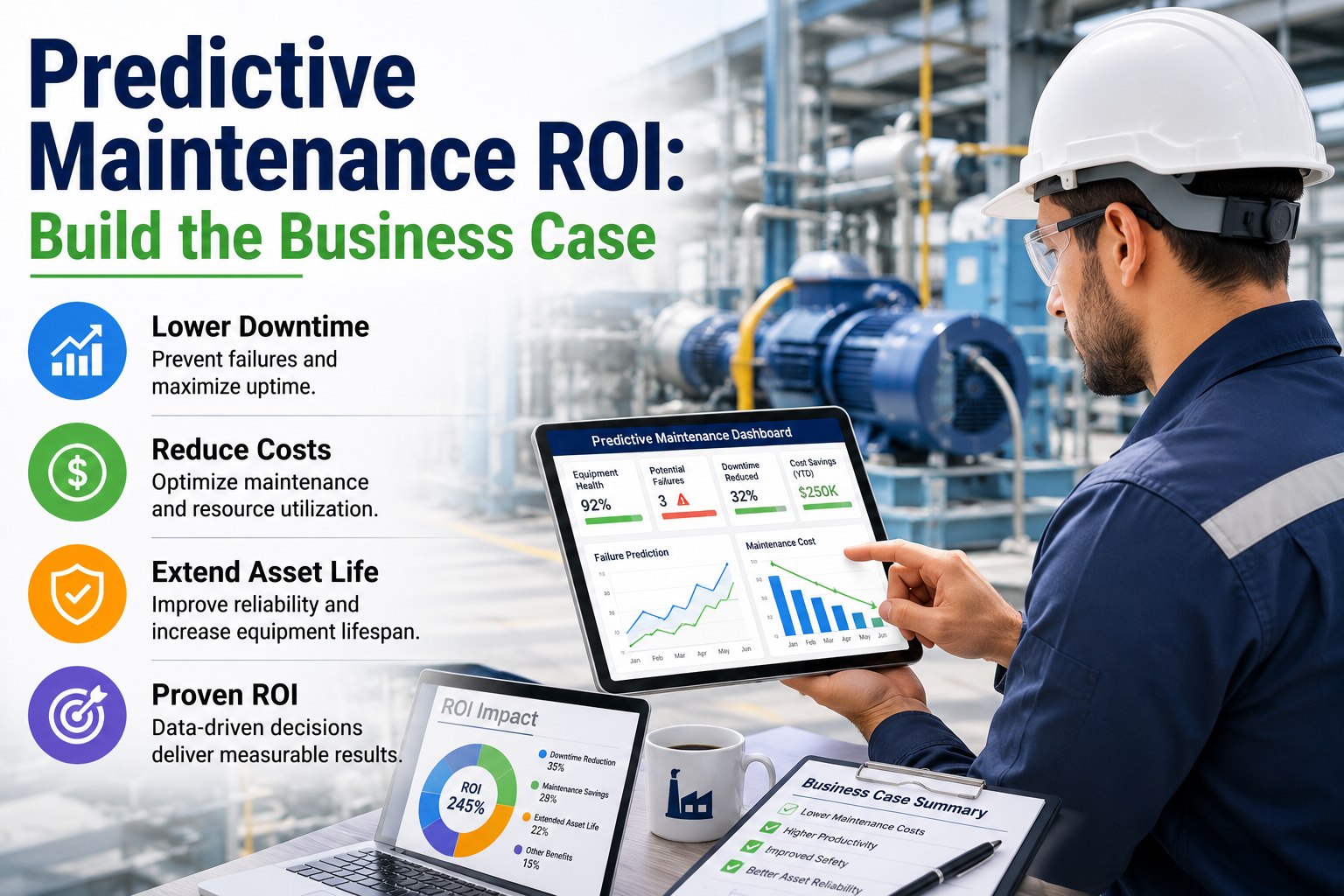
Small businesses implementing predictive maintenance consistently achieve ROI of 300-500% within the first year through multiple value streams that extend far beyond simple maintenance cost reduction. These benefits include prevented production losses, reduced emergency repair costs, extended equipment life, improved energy efficiency, and enhanced customer satisfaction through reliable service delivery. The cumulative impact often exceeds $50,000 annually for typical small manufacturing or service businesses. Smart entrepreneurs are beginning their predictive maintenance journey immediately to start capturing these substantial cost savings and operational improvements.
- Eliminate emergency repair costs that can consume 40-60% of maintenance budgets through accurate failure prediction and proactive intervention scheduling
- Prevent production losses worth thousands of dollars per incident through early warning systems that enable planned maintenance during scheduled downtime
- Extend equipment lifespan by 30-50% through optimal maintenance timing and condition-based interventions that prevent premature wear and damage
- Improve cash flow predictability by converting unpredictable emergency expenses into planned maintenance investments that can be budgeted and scheduled
- Enhance competitive positioning through improved reliability, faster delivery times, and consistent service quality that differentiates from competitors
Real-World Success Stories from Small Businesses
Small businesses across diverse industries are achieving remarkable transformations through predictive maintenance implementation, proving that these solutions deliver tangible results regardless of company size or technical sophistication. These success stories demonstrate the potential for similar results in your business, which is why forward-thinking owners are starting their transformation today to capture competitive advantages before their competitors discover these opportunities.
Local Manufacturing Shop
25-employee machine shop reduced downtime by 80% and saved $45,000 annually by implementing predictive maintenance on critical CNC equipment and hydraulic systems.
Restaurant Chain
Regional restaurant chain with 8 locations eliminated 90% of HVAC failures and reduced equipment-related customer complaints by 95% through intelligent monitoring systems.
Packaging Company
Small packaging business extended conveyor system life by 60% and improved on-time delivery rates to 99.5% through proactive maintenance scheduling and condition monitoring.
Automotive Service
Independent auto shop increased capacity by 30% and reduced equipment downtime by 75% through predictive maintenance on lifts, compressors, and diagnostic equipment.
Getting Started: Your Predictive Maintenance Journey
Simple Steps to Transform Your Maintenance Strategy
The path to predictive maintenance success begins with understanding your current equipment risks and identifying the highest-impact opportunities for immediate improvement. Many small business owners are surprised to discover how quickly and affordably they can begin experiencing the benefits of predictive maintenance. The key is starting with a focused approach that targets your most critical assets and builds success incrementally. Oxmaint provides comprehensive support throughout this journey, ensuring successful implementation and sustainable results for businesses of all sizes.
Equipment Assessment
Evaluate your current equipment to identify critical assets, maintenance challenges, and opportunities for immediate improvement through predictive monitoring.
Solution Design
Develop a customized implementation plan that fits your budget, technical capabilities, and business objectives while ensuring maximum ROI potential.
Pilot Implementation
Begin with 2-3 critical assets to demonstrate value, build confidence, and establish predictive maintenance capabilities within your organization.
Expansion and Optimization
Gradually expand monitoring coverage and refine processes based on experience, ensuring continuous improvement and sustained competitive advantage.
Your competitors may already be gaining advantages through predictive maintenance while you're still dealing with costly equipment failures and emergency repairs. Every day of delay represents lost savings and continued operational risks. The businesses that act decisively will capture market share while others struggle with outdated reactive approaches. Transform your maintenance strategy today.
Begin Your Assessment Schedule Strategy Call