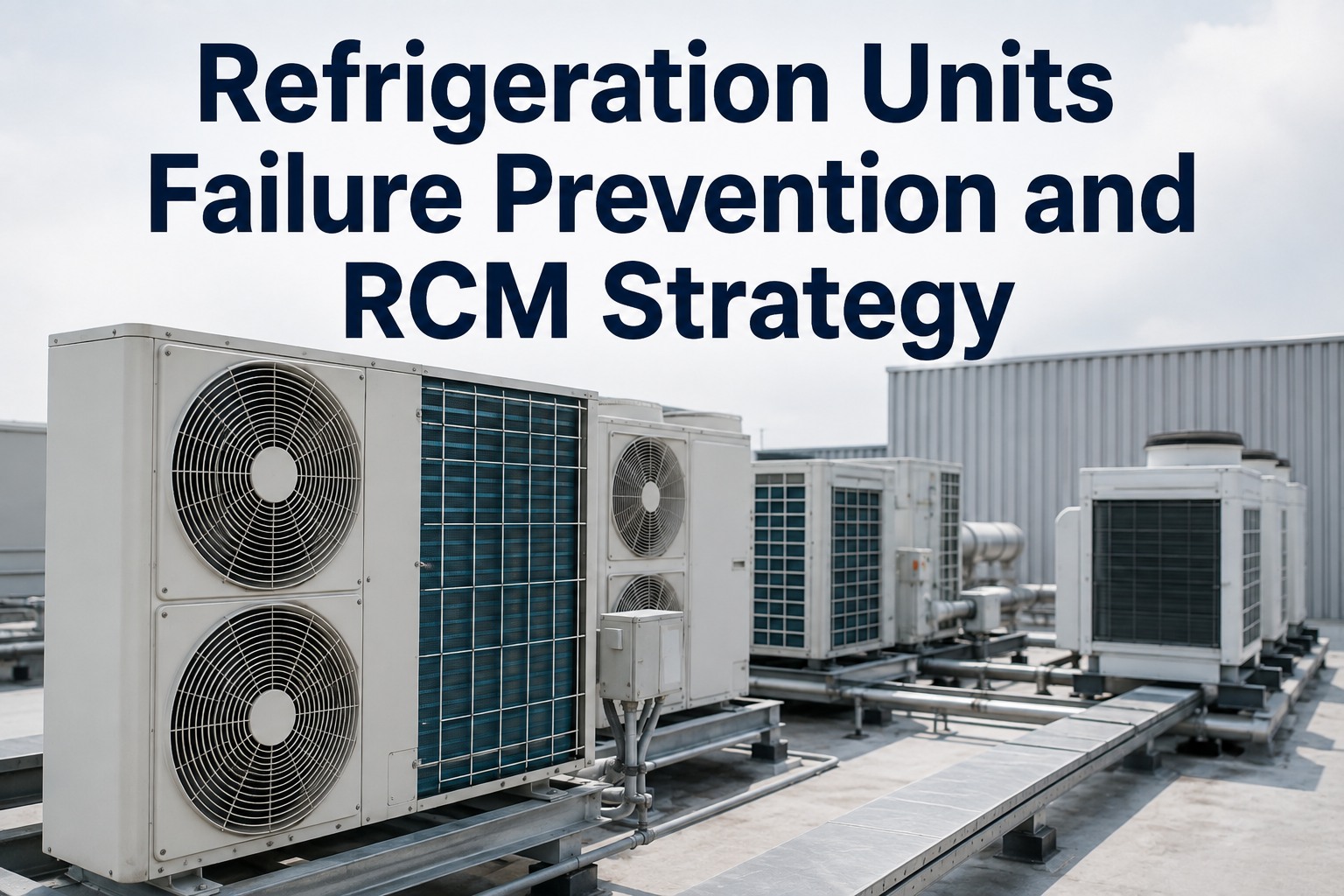
Reliability-Centered Maintenance (RCM) for cooling and refrigeration units in pharmaceutical manufacturing is the systematic process of identifying failure modes—like compressor degradation, refrigerant leaks, and evaporator icing—and implementing targeted condition monitoring and preventive maintenance schedules to prevent temperature excursions that can destroy entire product batches. In an industry governed by strict GMP and FDA 21 CFR Part 11 regulations, a single unmonitored temperature deviation can cost millions in lost inventory and trigger extended compliance audits. This guide breaks down the exact failure modes, inspection checklists, and RCM strategies pharmaceutical maintenance teams need to keep critical cooling assets running flawlessly. Ready to eliminate reactive firefighting? You can Start Free Trial of OxMaint or book a personalized demo to see the platform on your own asset hierarchy.
Is a Single Refrigeration Failure Putting Your Next Batch at Risk?
Unplanned downtime on pharmaceutical cooling and refrigeration units doesn't just halt production—it compromises product stability and invites regulatory scrutiny. Transition from reactive firefighting to a controlled, predictive RCM strategy that safeguards every asset, shift, and batch.
Common Failure Modes for Pharmaceutical Cooling & Refrigeration Units
Understanding how cooling & refrigeration units fail in pharmaceutical environments is the foundation of any effective RCM strategy. Over 70% of catastrophic refrigeration failures stem from six predictable degradation patterns that condition monitoring can detect weeks before a breakdown occurs.
Pharmaceutical Cooling & Refrigeration Units Condition Monitoring Best Practices
Effective condition monitoring for pharmaceutical cooling & refrigeration units moves maintenance from time-based guessing to condition-based certainty. Here is a comparison of the most effective monitoring techniques and their direct impact on reliability.
| Monitoring Technique | Target Failure Mode | Detection Lead Time | Implementation Cost | Reliability Impact |
|---|---|---|---|---|
| Vibration Analysis | Compressor bearing wear | 4–8 weeks | $1.2K–$3K per unit | Prevents 85% of mechanical seizures |
| Oil Analysis | Lubricant degradation & metal particles | 6–12 weeks | $300–$600 per sample | Extends compressor life by 30% |
| Infrared Thermography | Electrical hotspots, coil fouling | 2–4 weeks | $5K–$8K camera (portable) | Cuts electrical failure risk by 60% |
| Continuous IoT Telemetry | Temperature drift, pressure anomalies | Real-time (minutes) | $200–$500 per sensor | Eliminates silent excursions entirely |
| Superheat/Subcooling Tracking | Refrigerant leaks, charge levels | 2–6 weeks | Manual or $150/sensor | Maintains 98%+ cooling efficiency |
Cooling & Refrigeration Units RCM Checklist for Pharmaceutical Plants
A structured RCM checklist ensures no critical inspection point is missed. Use this tiered checklist to build your PM schedule—daily operational checks, weekly mechanical inspections, and monthly predictive analysis—directly inside your CMMS.
Stop Reactive Firefighting on Critical Cooling Assets
See how OxMaint automates your refrigeration RCM strategy—work orders, condition monitoring alerts, and audit-ready compliance logs in one platform.
How OxMaint Enables Pharmaceutical Cooling Reliability
OxMaint transforms your RCM strategy from static spreadsheets into a dynamic, AI-powered maintenance engine. By mapping specific platform capabilities to your refrigeration failure modes, maintenance teams cut unplanned downtime by 30–50% and ensure continuous GMP compliance.
AI-Driven Predictive Alerts
OxMaint ingests IoT sensor data from your refrigeration units and uses AI to detect vibration and temperature anomalies weeks before failure. Automated work orders trigger precisely when needed—eliminating both reactive breakdowns and unnecessary calendar-based maintenance.
GMP & FDA Compliance Logs
Every work order, calibration, and inspection is automatically logged with time-stamped, e-signature-compliant records. Generate audit-ready reports for FDA 21 CFR Part 11 and GMP inspections instantly, without chasing down paper logs or fragmented spreadsheets.
Mobile Technician App
Technicians receive RCM checklists, asset history, and spare parts availability directly on their mobile devices at the point of maintenance. Eliminate transcription errors and trips to the maintenance office—complete and close out PMs on the floor in real time.
Spare Parts & Inventory Automation
Automated min-max inventory tracking ensures critical refrigeration spares—like contactors, probes, and refrigerants—are always in stock without over-purchasing. OxMaint links parts directly to asset BOMs, cutting parts search time by 80% and preventing stockout-induced downtime.
A Real-World RCM Payback Scenario
Consider a pharmaceutical plant operating 180 cooling and refrigeration assets, spending $42K annually on reactive maintenance and experiencing 3–4 batch-threatening temperature excursions per year. Here is how migrating to an OxMaint-powered RCM strategy changes their economics within the first 12 months.
RCM for Pharmaceutical Cooling & Refrigeration Units
What is RCM for cooling & refrigeration units in pharmaceutical plants?
RCM (Reliability-Centered Maintenance) for pharmaceutical cooling units is a structured methodology that identifies specific failure modes—like compressor wear or refrigerant leaks—and applies the optimal maintenance strategy (predictive, preventive, or run-to-failure) based on the operational consequences and regulatory impact of each failure. It ensures critical assets receive condition-based monitoring to prevent batch-destroying temperature excursions while optimizing maintenance spend.
How often should pharmaceutical refrigeration units be inspected?
Pharmaceutical cooling & refrigeration units require daily operational checks (pressures, temperatures, alarms), weekly mechanical inspections (leaks, coils, lubrication), and monthly predictive analysis (vibration, thermography, oil sampling). You can automate and track this exact PM schedule inside OxMaint to ensure 100% schedule compliance.
What are the most critical failure modes for pharmaceutical cooling systems?
The most critical failure modes include compressor bearing wear, refrigerant micro-leaks, evaporator coil icing, condenser fouling, electrical contactor pitting, and temperature sensor drift. Each of these can silently degrade cooling capacity and cause GMP temperature excursions if not caught by a robust condition monitoring program.
How does condition monitoring prevent refrigeration failures?
Condition monitoring uses IoT sensors, vibration analysis, and thermography to detect degradation signatures weeks or months before a functional failure occurs. For example, tracking superheat and subcooling trends can identify a refrigerant leak early, allowing a planned 2-hour repair instead of a catastrophic 12-hour unplanned outage during a production run.
Can a CMMS help with FDA compliance for refrigeration maintenance?
Yes. An AI-powered CMMS like OxMaint enforces 21 CFR Part 11 compliant e-signatures, automatically time-stamps every maintenance action, and stores a complete, searchable asset history. This makes generating GMP audit reports instantaneous and eliminates the compliance gaps caused by lost paper work orders.
Deploy Your Pharmaceutical RCM Strategy with OxMaint
Join the maintenance teams using OxMaint to eliminate reactive refrigeration failures, ensure GMP compliance, and cut maintenance costs by up to 40%. Book a 30-minute demo today and see the platform configured for your exact assets.
Free 14-day trial · No credit card required



-optimizing-your-maintenance-strategy.png)