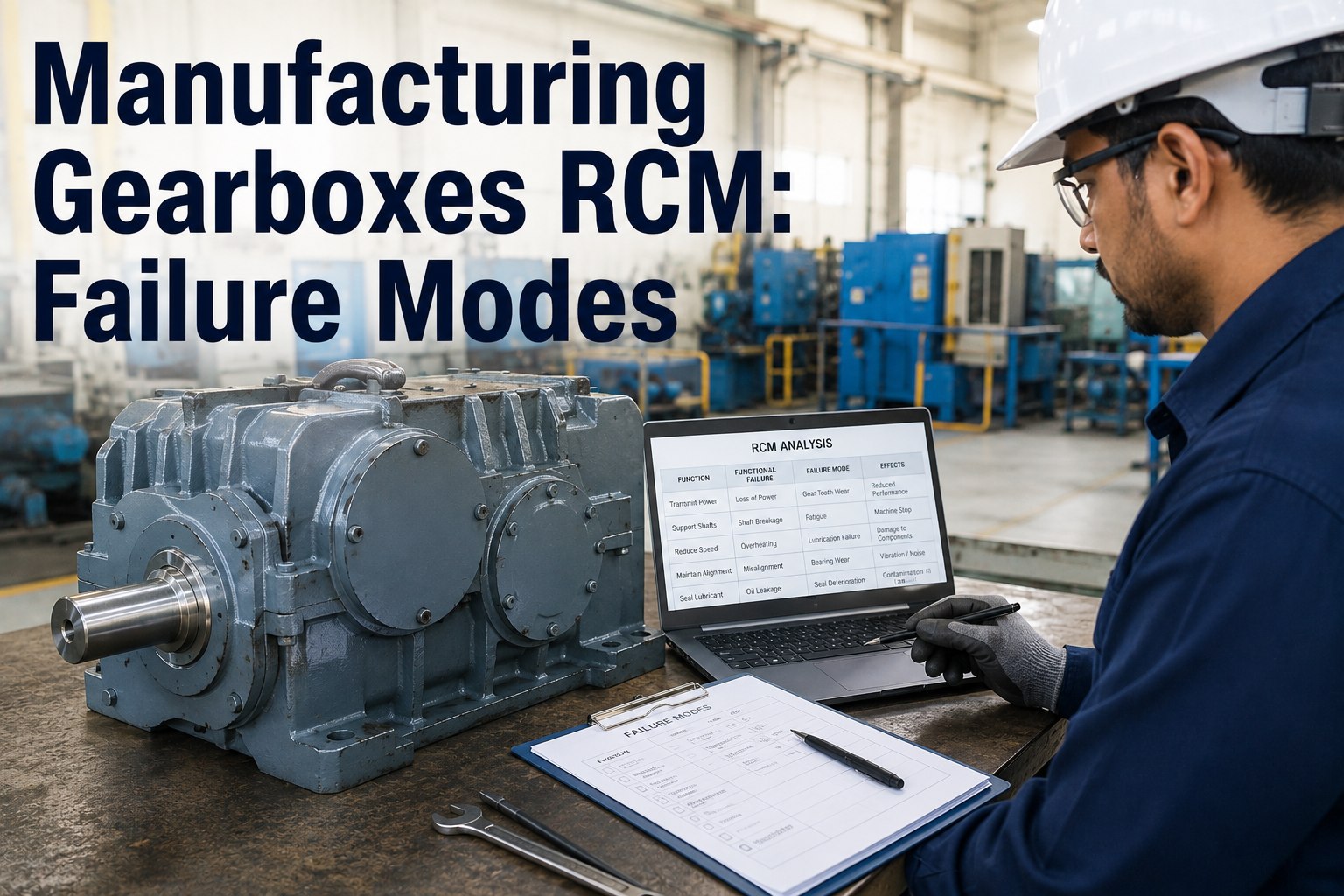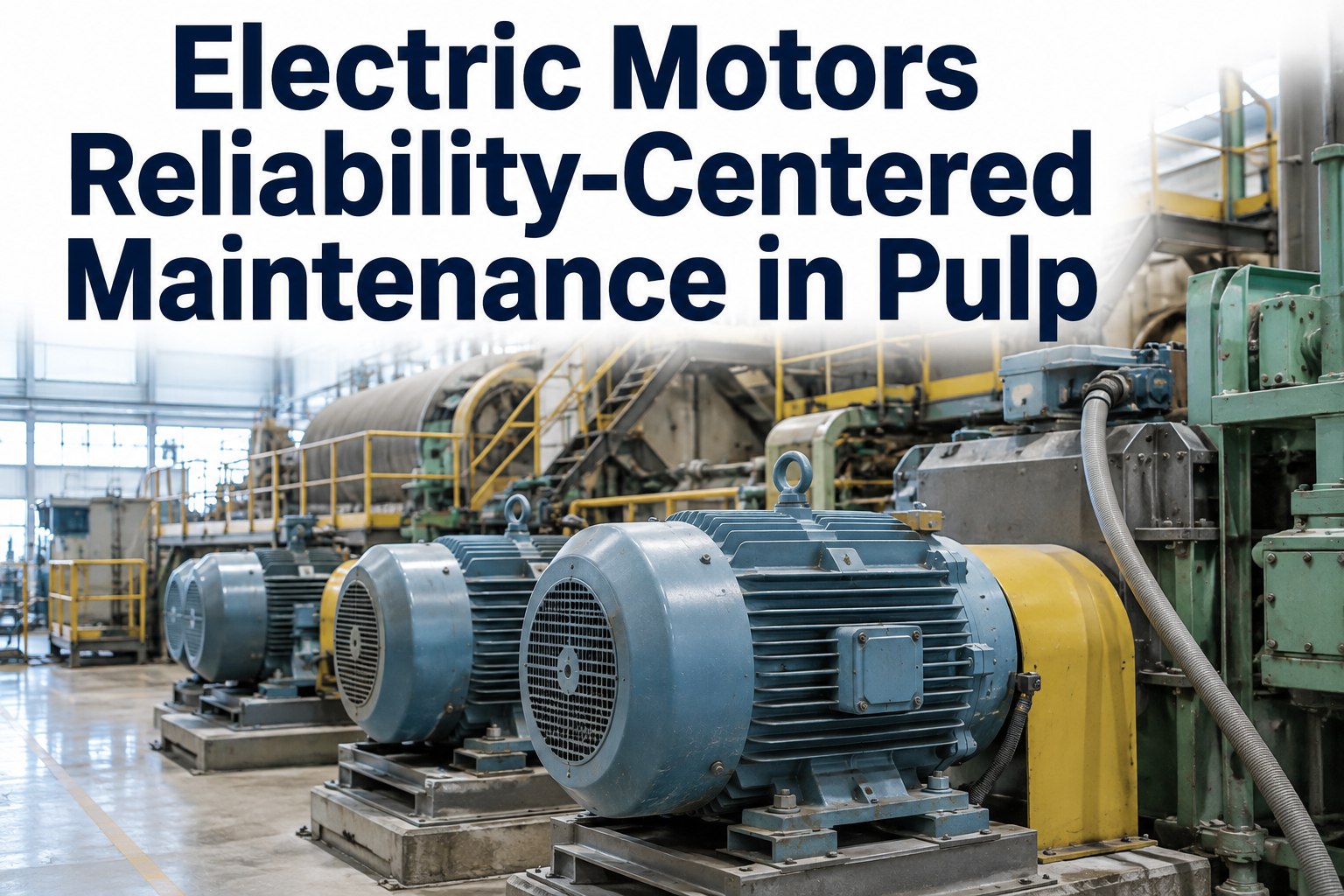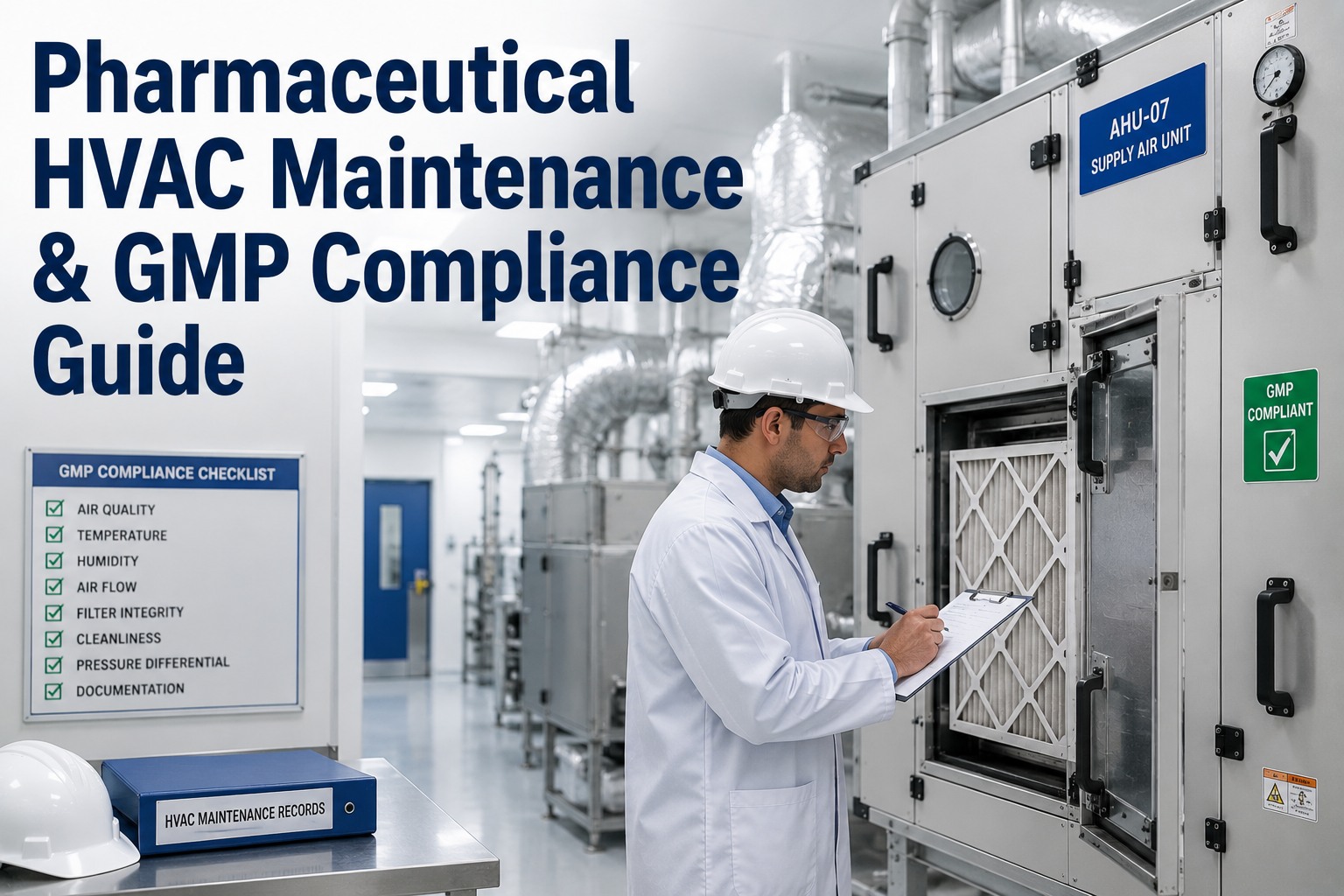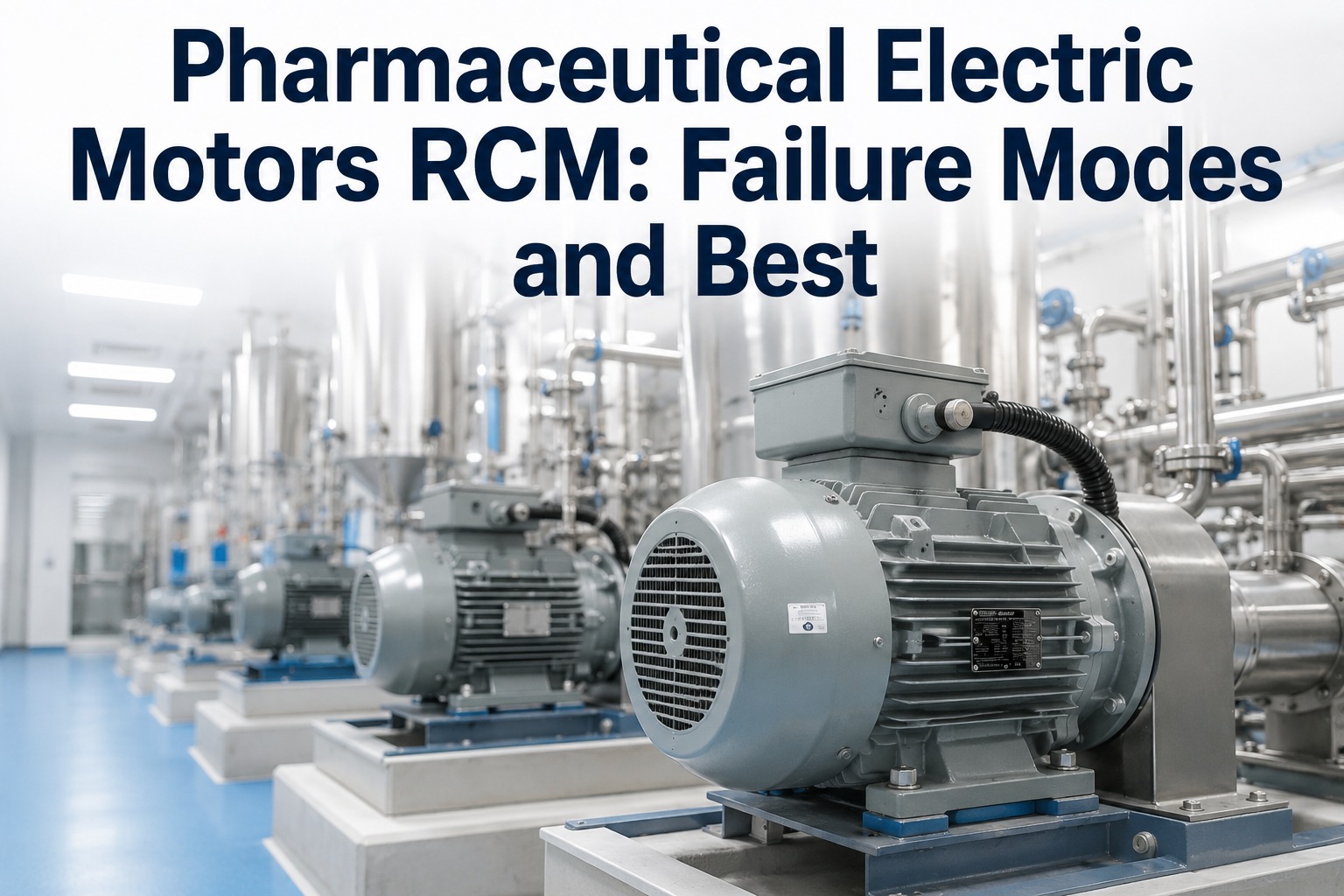
Reliability-Centered Maintenance (RCM) for electric motors in pharmaceutical manufacturing is the systematic framework that prevents catastrophic equipment failure, ensures regulatory compliance, and eliminates costly production downtime. Pharmaceutical electric motors drive critical processes—from HVAC and cleanroom air handling to centrifuges, mixers, and sterile packaging lines—where a single unexpected failure can halt batch production, compromise product quality, and trigger massive financial losses under strict FDA and GMP guidelines. By analyzing failure modes like bearing degradation, stator insulation breakdown, and rotor bar defects, maintenance teams can deploy targeted condition monitoring and predictive maintenance strategies instead of reactive firefighting. This guide breaks down the exact failure modes, inspection checklists, and RCM strategies you need to maximize electric motor reliability in pharmaceutical plants. Ready to modernize your maintenance operations? Start Free Trial with OxMaint today.
PHARMACEUTICAL MOTOR RELIABILITY
Is a Single Motor Failure Putting Your Batch Compliance at Risk?
In pharmaceutical manufacturing, an unplanned electric motor failure can destroy an entire production batch, cost over $50,000 per hour in lost OEE, and trigger FDA audit findings. RCM shifts your team from reactive firefighting to predictive precision.
FAILURE ANALYSIS
Electric Motors Failure Modes in Pharmaceutical Facilities
Understanding how and why pharmaceutical electric motors fail is the foundation of any effective RCM strategy. Industry studies show that 47% of motor failures are mechanical, 37% are electrical, and 16% are environmental or operational.
Bearing Wear & Lubrication Breakdown
47% of failures
Bearing degradation accounts for nearly half of all electric motor failures. In pharma environments, frequent washdowns and temperature fluctuations accelerate grease breakdown and contamination. Vibration analysis and ultrasonic monitoring can detect early-stage bearing defects up to 6 months before catastrophic failure.
Stator Winding Insulation Failure
37% of failures
Thermal stress, voltage transients, and moisture ingress in cleanroom-adjacent areas degrade winding insulation. Electrical Signature Analysis (ESA) and Infrared thermography identify hotspots and partial discharge, preventing short circuits that destroy motors and interrupt sterile processing.
Rotor Bar Cracking & Eccentricity
10% of failures
High-inertia loads like centrifuges and large mixers impose cyclic stress on rotor bars. Cracked bars cause torque pulsations and inefficiencies. Motor Current Signature Analysis (MCSA) detects sideband currents indicative of rotor faults long before vibration symptoms appear.
Operational & Environmental Stress
6% of failures
Pharmaceutical plants demand strict humidity and contamination control. Incorrect starting sequences, voltage imbalances, and seal washdown failures cause misalignment and overload. Implementing strict PM schedules and thermal monitoring mitigates these environmental risks.
STRATEGY & IMPLEMENTATION
Electric Motors RCM Strategy for Pharmaceutical Plants
Building an electric motors RCM strategy in a pharmaceutical plant requires mapping criticality, selecting the right maintenance tasks, and automating work order execution. Here is the proven 5-step implementation timeline.
Asset Criticality Ranking
Rank motors by GMP impact: Critical (sterile fill-finish, HVAC), Essential (utilities, water systems), and Non-essential. A typical pharma plant has 150-300 motors, with 20% classified as critical requiring predictive maintenance (PdM) coverage.
Failure Modes & Effects Analysis (FMEA)
Document how each critical motor can fail, the effect on batch quality, and the detection method. Assign RPN (Risk Priority Number) scores. Motors with RPN > 100 require immediate condition monitoring integration.
Select Condition Monitoring Techniques
Map monitoring to failure modes: Vibration analysis for bearings, MCSA for rotors, Thermography for windings, and Ultrasonics for lubrication. Avoid over-monitoring low-criticality motors to control PdM program costs.
Automate PM Schedules & Work Orders
Trigger work orders automatically based on runtime hours, condition thresholds, or calendar dates. Ensure lubrication routes, thermography inspections, and alignment checks are digitized—eliminating paper logs in GMP environments.
Continuous RCM Review & Optimization
Analyze Mean Time Between Failures (MTBF) and maintenance costs quarterly. Refine inspection intervals based on actual condition data. A mature RCM program typically reduces motor unplanned downtime by 30-50% within 18 months.
INSPECTION & MONITORING
Pharmaceutical Electric Motors Best Practices & Condition Monitoring
Effective electric motors maintenance in pharmaceutical environments blends manual inspection routes with continuous digital condition monitoring. Use this checklist to standardize your PM schedule.
Daily & Weekly Inspection
- Visual & audible inspection for abnormal noise or vibration
- Check operating temperature against baseline limits
- Verify cleanroom motor enclosure integrity and seals
- Inspect for lubricant leakage or grease purge condition
Monthly Condition Monitoring
- Vibration spectrum analysis (velocity & acceleration)
- Infrared thermography of motor housings & connections
- Ultrasound trending for bearing friction assessment
- MCSA data logging for stator & rotor health trending
Annual RCM Review
- Laser shaft alignment & soft foot verification
- Megger & polarization index testing for insulation
- Update FMEA & adjust PM intervals based on MTBF
- Calibrate sensors & verify condition monitoring tools
REAL-WORLD IMPACT
The Cost of Reactive vs. Proactive Motor Maintenance
A 200-asset pharmaceutical plant spending $48,000 annually on reactive motor repairs and batch-loss downtime can drastically shift its cost structure by implementing an RCM-driven CMMS.
| Maintenance Metric | Reactive Approach | RCM + OxMaint Approach |
|---|---|---|
| Unplanned Motor Downtime | 48 hours / month | 6 hours / month |
| Mean Time Between Failures (MTBF) | 8 months | 34 months |
| Annual Emergency Repair Cost | $42,000 | $9,500 |
| Batch Loss Incidents (per year) | 3 to 4 events | 0 events |
| GMP Audit Findings (Maintenance) | 2 minor / 1 major | 0 findings |
| Overall Maintenance ROI | 1.2x | 4.8x |
CMMS + EAM SOLUTION
How OxMaint Drives Pharmaceutical Electric Motors Reliability
Transitioning from spreadsheet-based tracking to an AI-powered CMMS is what turns RCM theory into daily execution. OxMaint centralizes asset hierarchies, automates work orders, and uses predictive analytics to stop failures before they start.
Predictive Maintenance AI
OxMaint ingests vibration, temperature, and current data from IoT sensors, using AI to predict bearing and winding failures weeks in advance. Teams cut unplanned downtime by 30-50% and replace motors during planned sterilization windows.
GMP-Compliant Work Orders
Digitize every PM, inspection, and corrective task with full electronic signatures and audit trails. Eliminate paper logs and ensure FDA/GMP compliance with automated task verification and digital history for every motor.
Spare Parts & Inventory Tracking
Automatically link critical motors to specific spare bearings, seals, and windings. OxMaint tracks stock levels in real-time and auto-generates purchase orders when inventory drops below safety stock, cutting parts procurement time by 40%.
Mobile Technician App
Technicians receive work orders, log condition readings, and upload thermal images directly from mobile devices—even in cleanroom-adjacent zones. This increases PM completion rates by 25% and eliminates manual data entry errors.
See OxMaint on Your Assets — Book a 30-Min Demo
Discover how an AI-powered CMMS can automate your electric motors RCM strategy, ensure GMP compliance, and eliminate unplanned batch downtime.
FAQ
Pharmaceutical Electric Motors RCM: Frequently Asked Questions
What is RCM for electric motors in the pharmaceutical industry?
RCM (Reliability-Centered Maintenance) for electric motors in pharma is a structured methodology that identifies critical motor failure modes—like bearing wear and insulation breakdown—and applies the optimal maintenance tasks (predictive, preventive, or run-to-failure) to mitigate them. It ensures motor reliability while satisfying strict GMP and FDA regulatory requirements.
What are the most common failure modes for pharmaceutical electric motors?
The most common failure modes are bearing degradation (47% of failures), stator winding insulation breakdown (37%), rotor bar cracking (10%), and environmental/operational stress (6%). These are triggered by washdowns, thermal stress, load fluctuations, and contamination. Condition monitoring techniques like vibration analysis and MCSA are essential for early detection.
How does condition monitoring improve electric motors reliability in pharmaceutical plants?
Condition monitoring uses IoT sensors to track vibration, temperature, and electrical signatures in real-time. This allows maintenance teams to detect anomalies months before failure, shifting from reactive repairs to planned interventions during scheduled downtime. You can see this in action by booking a demo at Book a Demo to explore OxMaint's predictive analytics.
What should be included in an electric motors PM schedule for pharmaceutical facilities?
A robust PM schedule includes daily visual and audible inspections, weekly temperature checks, monthly vibration and thermography routes, quarterly lubrication tasks, and annual megger testing with laser alignment. All tasks must be digitized in a CMMS like OxMaint to ensure compliance, track completion, and trend equipment health over time.
How does a CMMS support electric motors failure prevention in GMP environments?
A CMMS prevents motor failures by automating PM triggers, centralizing asset history, and integrating condition monitoring data for predictive alerts. It enforces GMP compliance through digital audit trails and electronic signatures. To modernize your maintenance operations, you can Start Free Trial and deploy OxMaint across your asset hierarchy today.
GET STARTED WITH OXMAINT
Transform Your Pharmaceutical Motor Reliability Today
Stop reacting to motor failures and start predicting them. Deploy OxMaint to automate work orders, track asset health, and secure GMP compliance across your entire facility.
Free 14-day trial · No credit card required