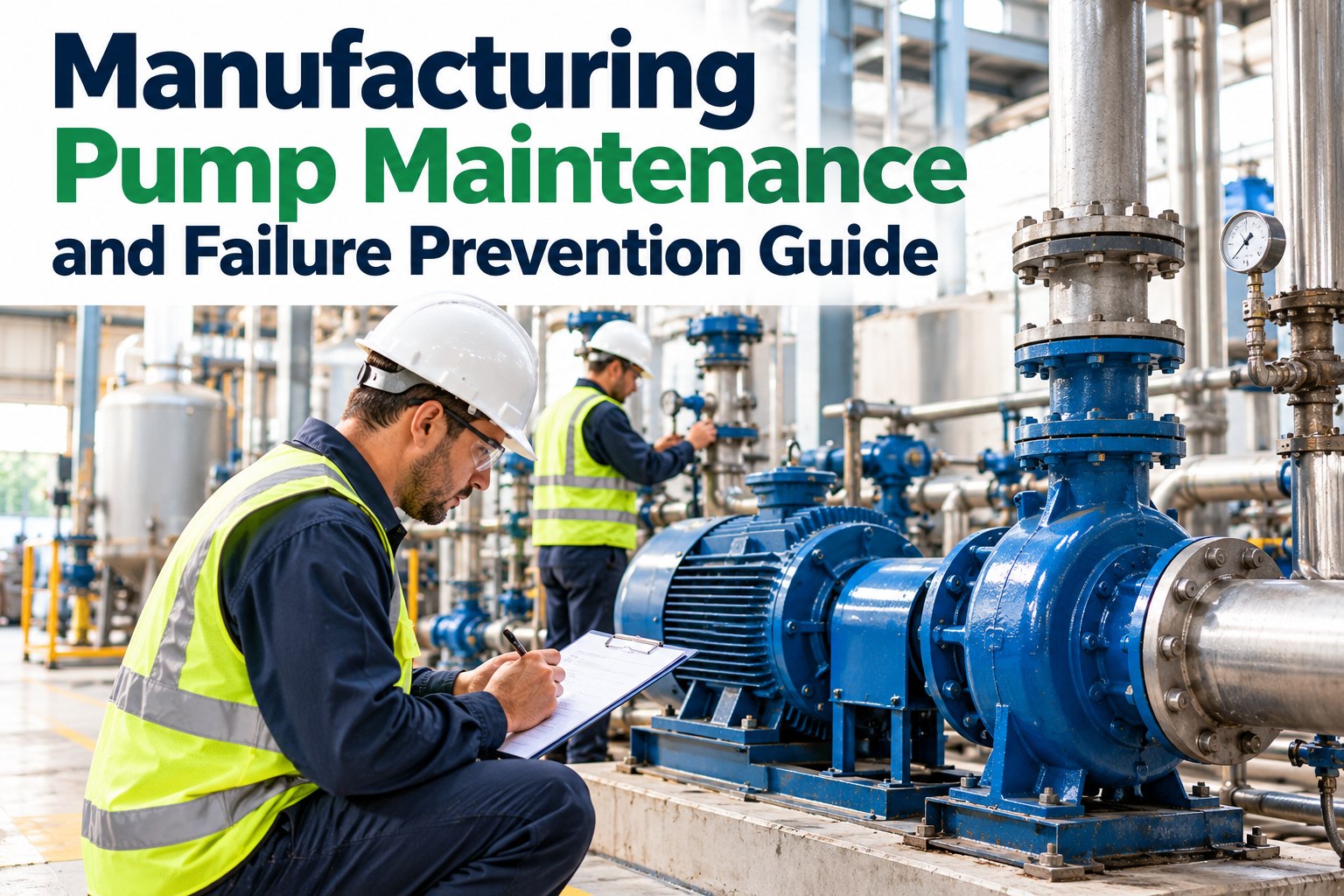
Manufacturing Pump Maintenance and Failure Prevention Guide
A pump almost never fails without warning. Cavitation rattles, a seal starts to weep, a bearing runs a few degrees hot — the signals show up days or weeks before the breakdown, for anyone watching the right ones. Failure prevention isn't about reacting faster; it's about catching the pump in that window, while the fix is still a maintenance task and not an emergency. OXMAINT AI is the AI-powered maintenance management software that watches those signals, turns an early warning into a work order, and tracks repeat offenders to their real root cause.
Pumps are the most common rotating asset in a plant — and one of the biggest sources of unplanned downtime when they're run to failure. OXMAINT AI, an AI-powered CMMS, moves pump care from reactive to predictive: condition monitoring to catch the early signal, work orders raised before the failure, and root-cause tracking so the same pump stops failing twice. Fewer surprises, longer runs, lower cost.
of pump failures show up at the mechanical seal — often a symptom, not the cause
~20%
of the world's electrical energy is consumed by pumps
2.5 yr
average MTBF for ANSI process pumps, against a 3.75-year target
Weeks
of warning condition monitoring can give before a pump fails
The Failure Modes Worth Knowing
Pumps fail in a handful of recognizable ways, and each one announces itself differently. Learn the signal each failure mode gives off, and you can catch it on the way down instead of after it stops.
Cavitation
Signal: rattling “gravel” noise, erratic flow
Vapor bubbles form and collapse, pitting the impeller. Usually a suction-side problem — low NPSH, a starved inlet or a clogged strainer.
Seal Failure
Signal: leakage, rising seal-chamber temp
The most common failure to show up — but the seal is usually the victim of dry running, misalignment or bad operation upstream of it.
Bearing Failure
Signal: vibration, heat, high-frequency noise
Lubrication breakdown, contamination or misalignment wear out the bearing — caught earliest of all by vibration analysis.
Misalignment & Imbalance
Signal: vibration at running speed, coupling wear
Shaft and driver out of line, or an unbalanced rotor, force every other part to work harder — and shorten seal and bearing life.
Dry Running
Signal: no flow, rapid temperature spike
Running without liquid destroys the seal faces in minutes. A deadheaded pump or a lost prime is a fast, expensive failure.
Impeller Wear & Erosion
Signal: falling head, higher power for same flow
Abrasives and recirculation wear the impeller and wear rings, so efficiency quietly bleeds away long before a hard failure.
Every developing failure travels the same path — from the first detectable sign of trouble to the point the pump actually stops. Reliability engineers call the gap between them the P-F interval, and it's the whole game: the earlier you detect, the longer the runway to plan a fix instead of scramble through a breakdown.
P — potential failure, first detectable← P-F interval: time to act →F — functional failure
The techniques line up along that curve by how early they see trouble: vibration and ultrasound first, then oil analysis, then thermography, and finally noise and heat you can feel — by which point the interval is almost gone. Book a demo to trend each pump along its own P-F curve in OxMaint.
Condition Monitoring: Which Tool Catches What
No single technique sees every failure mode. A good program layers a few, each tuned to the failures it catches earliest — and feeds them into one record so the trend, not a single reading, drives the decision.
From Detection to Prevention: Kill the Repeat Failure
Catching a pump early stops this breakdown. Preventing the next one means asking why it happened — because the pump that fails twice is a bad actor costing you far more than the repair. Prevention is a loop, not a one-time fix.
1
Monitor & detect early
Condition data flags the developing failure inside the P-F interval, before it stops the line.
→
2
Find the bad actors
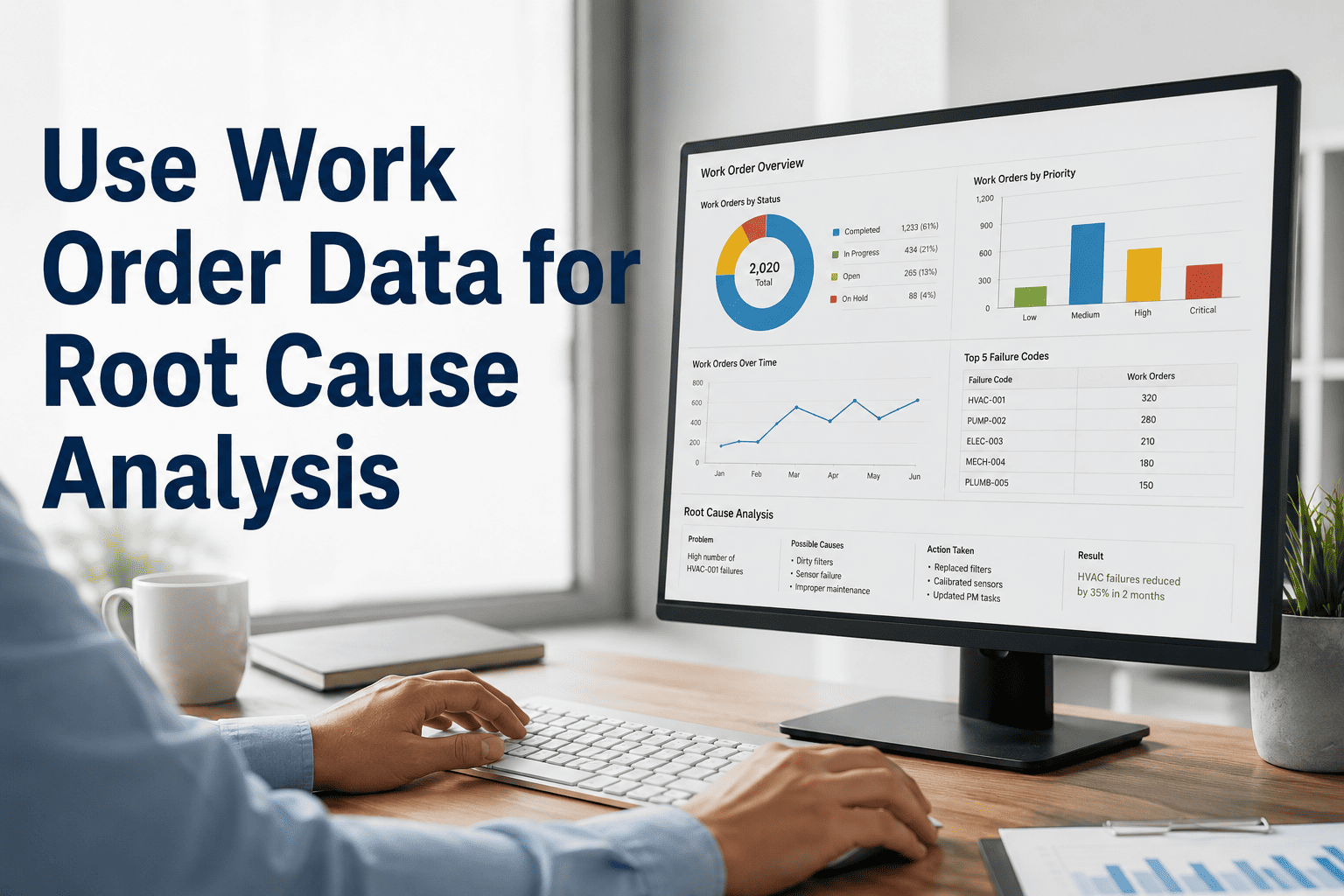
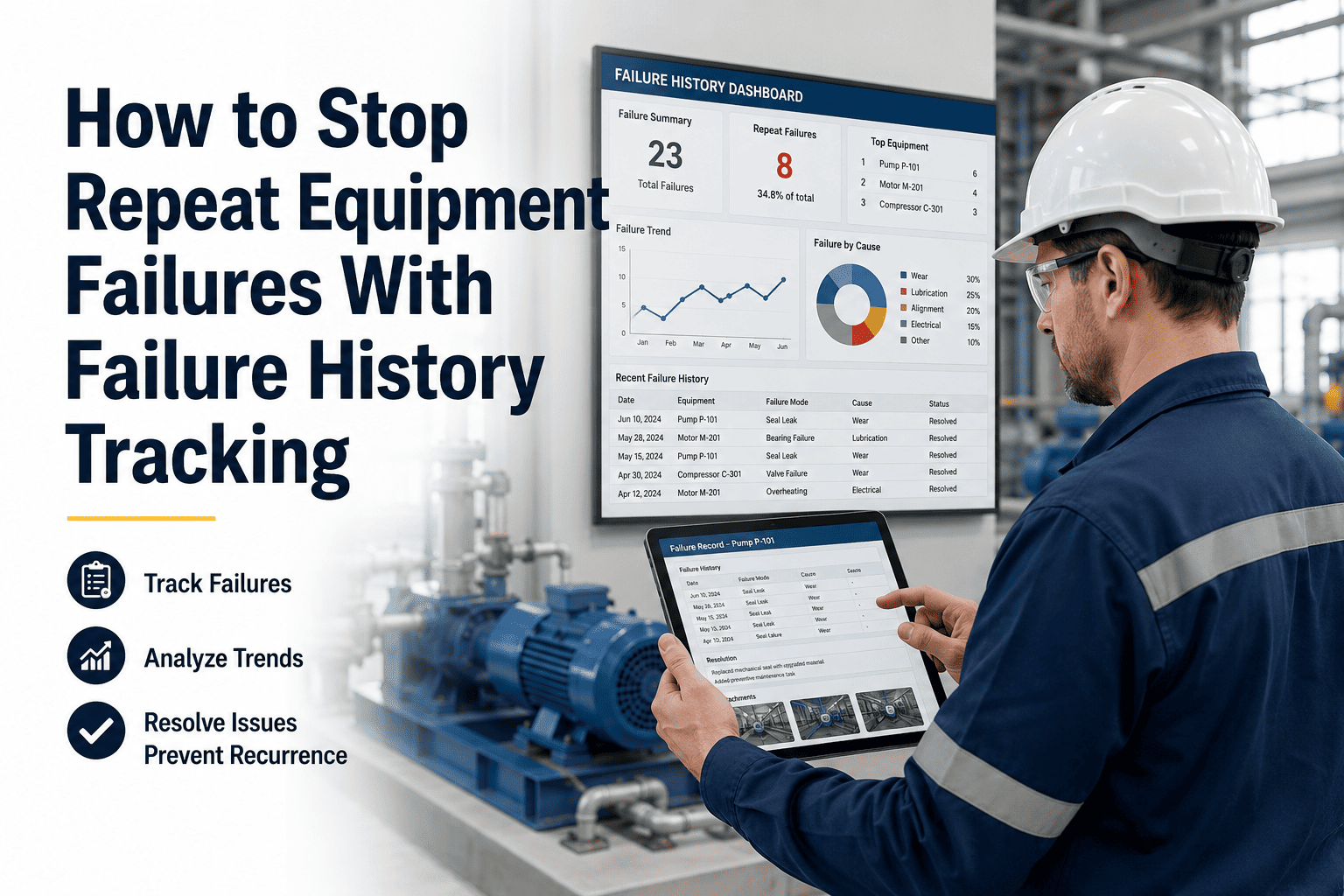
Failure history ranks the pumps that keep coming back — the few assets eating most of the budget.
→
3
Root-cause the real fault
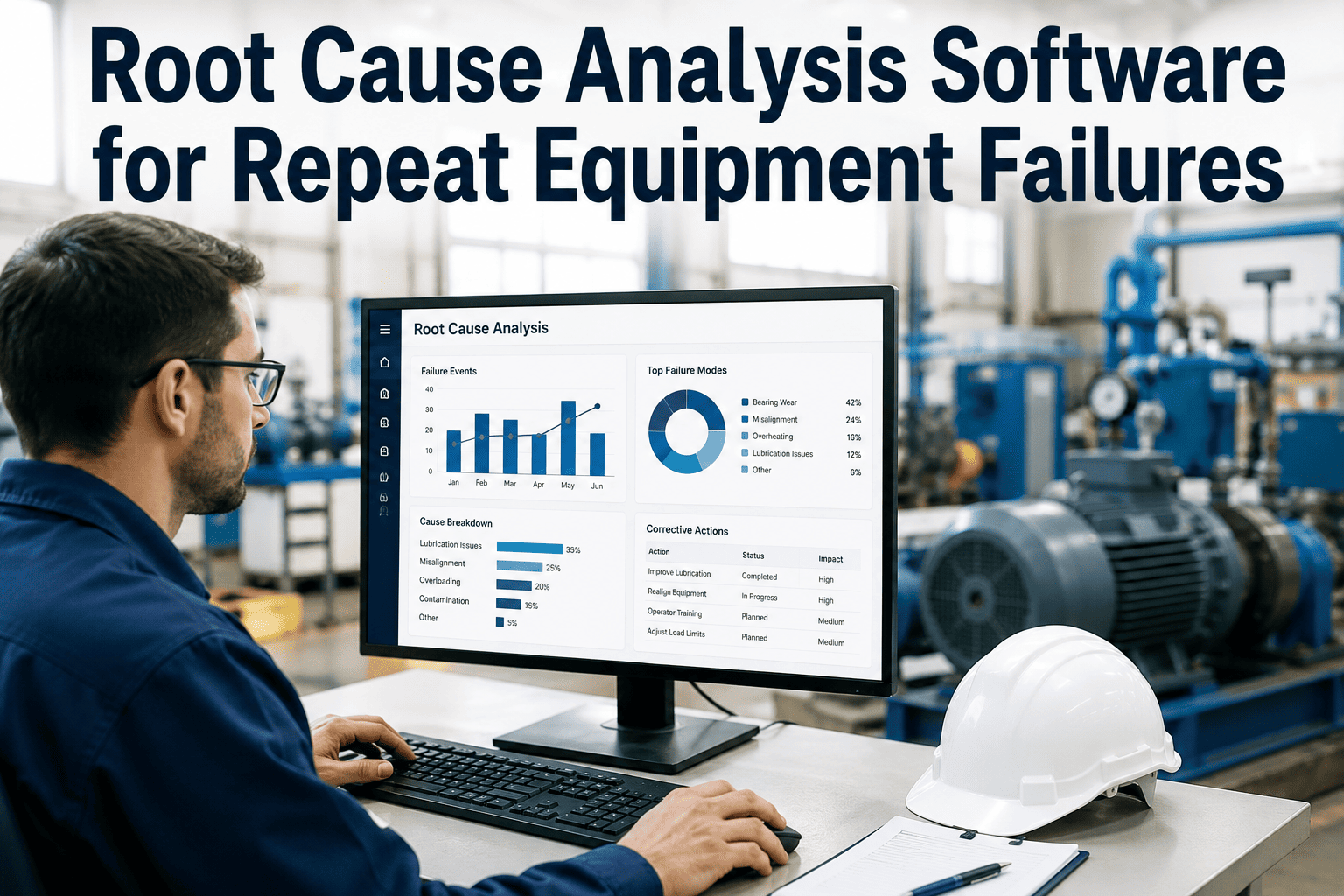
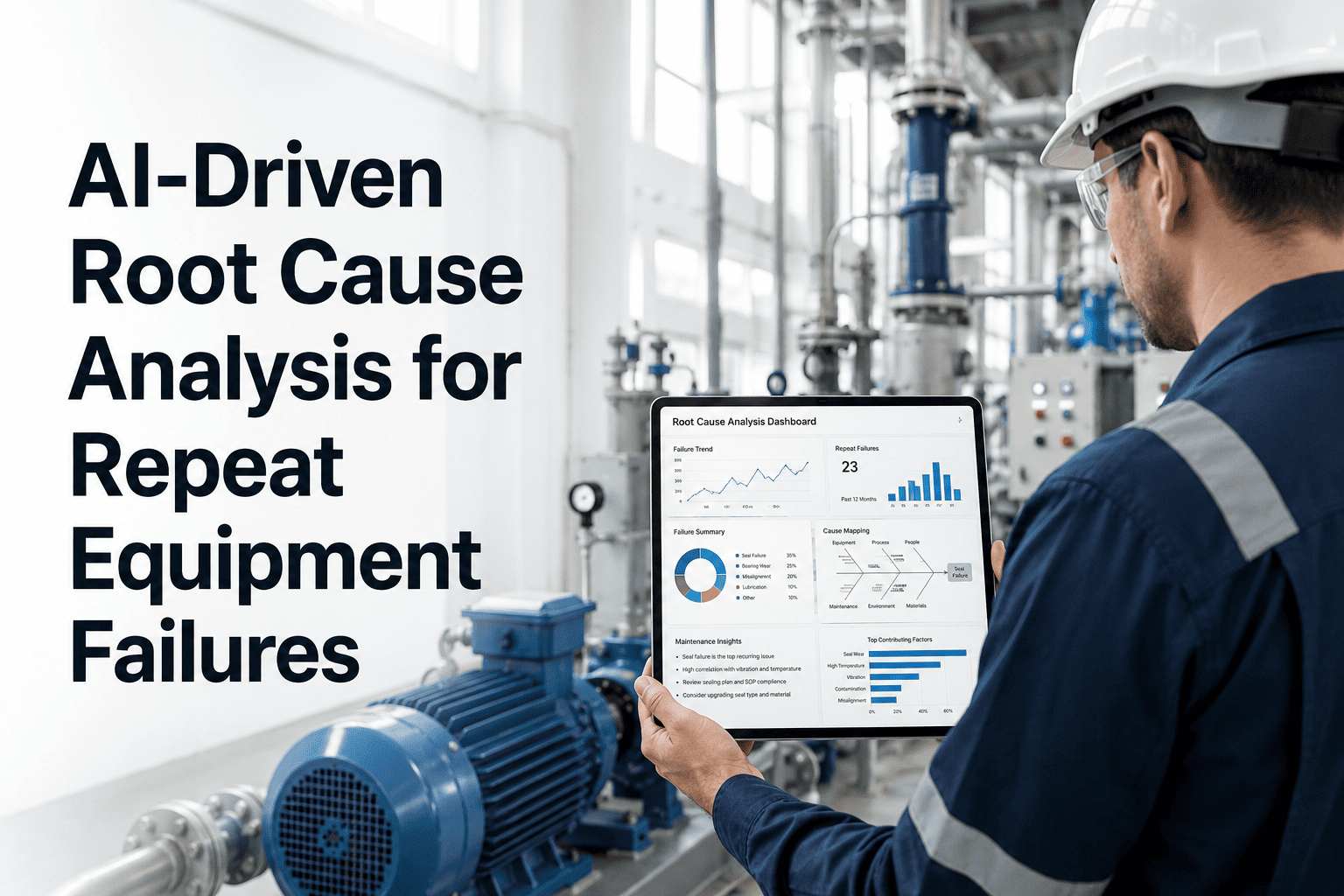
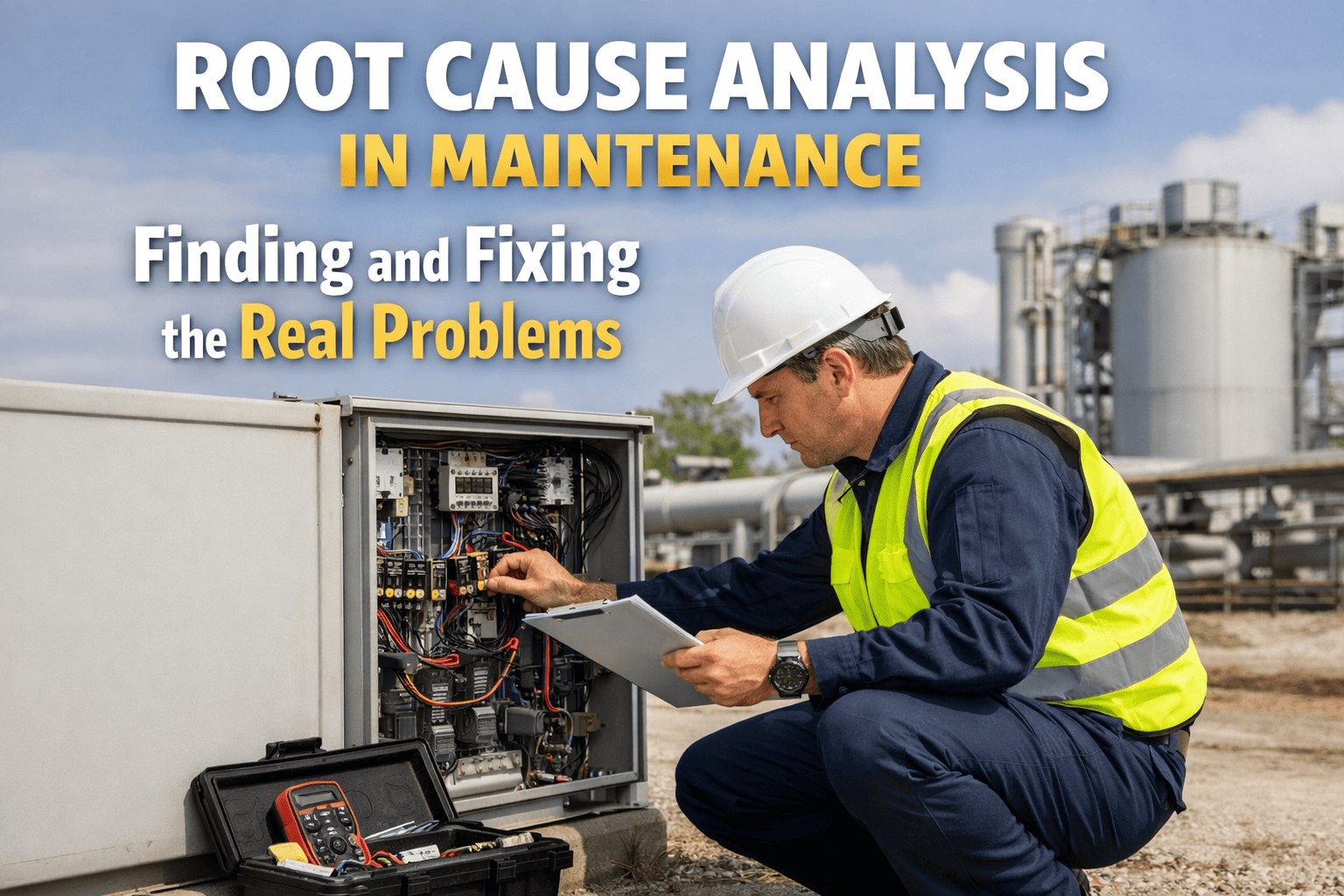
RCA looks past the failed seal to the misalignment, cavitation or operation that actually caused it.
→
4
Eliminate & refine the plan
Fix the cause and feed it back into the PM and monitoring plan, so that failure mode is retired.
The Pump That Fails Twice Was Never Really Fixed the First Time.
Replacing a seal that keeps failing is just buying the next failure on credit. OxMaint catches the early signal, raises the work order, and tracks the repeat offenders to the root cause — so your worst pumps get better instead of just getting repaired again.
Your reliability team does the analysis and the wrench work. OxMaint gives it the system underneath — the monitoring, the history, the work orders and the root-cause trail that turn effort into fewer failures.
Condition Trending
Vibration, temperature, oil and process readings logged per pump and trended, so a rising curve is obvious early.
Early-Warning Work Orders
When a reading crosses its threshold, a work order opens on its own, inside the P-F interval — not after the breakdown.
Per-Pump History
Every failure, repair and reading kept against the asset — the record that exposes a bad actor at a glance.
Bad-Actor Ranking
Sort pumps by failure frequency and cost, so reliability effort goes to the few assets that cause most of the pain.
Root-Cause Tracking
Link each failure to its real cause and the corrective action, so the fix is verified and the mode retired.
Adaptive PM Plans
Feed what you learn back into PM intervals and tasks, so the maintenance plan gets smarter with every failure.
Reviewed by OxMaint Reliability & Maintenance Operations
Content was checked against standard reliability engineering and condition-monitoring practice for rotating equipment, including P-F interval and RCM/RCA concepts. Failure-mode behavior, intervals and MTBF figures vary by pump type, service and plant — calibrate to your own assets.
Frequently Asked Questions
What causes most pump failures?
Mechanical seals account for the largest share of failures, but a failed seal is usually a symptom — of dry running, misalignment, cavitation or poor operation upstream of it. Fixing the symptom alone is why the pump fails again.
What is the P-F interval?
It's the window between the first detectable sign of a developing failure (P) and the point the pump actually fails (F). The whole aim of condition monitoring is to detect near P so you have the maximum time to act. Book a demo to see it on your pumps.
Which condition-monitoring technique should I start with?
Vibration analysis catches the widest set of pump faults the earliest — bearings, misalignment and imbalance. It's the usual first layer, with oil analysis, thermography and process data added around it.
What is a bad-actor pump?
A bad actor is an asset that fails repeatedly and consumes a disproportionate share of maintenance cost and downtime. Ranking them focuses root-cause effort where it pays back the most.
How is failure prevention different from preventive maintenance?
Preventive maintenance services a pump on a schedule; failure prevention watches its actual condition, acts inside the P-F interval, and eliminates the root cause of repeat failures — so the schedule itself keeps improving.
Stop Replacing Pumps. Start Preventing the Failure.
Put every pump on one platform with OXMAINT AI — condition readings trended along each pump's P-F curve, early-warning work orders raised inside the interval, bad actors ranked, and root causes tracked to a verified fix. Catch the failure while it's still a maintenance task, and retire the modes that keep coming back.

-optimizing-your-maintenance-strategy.png)