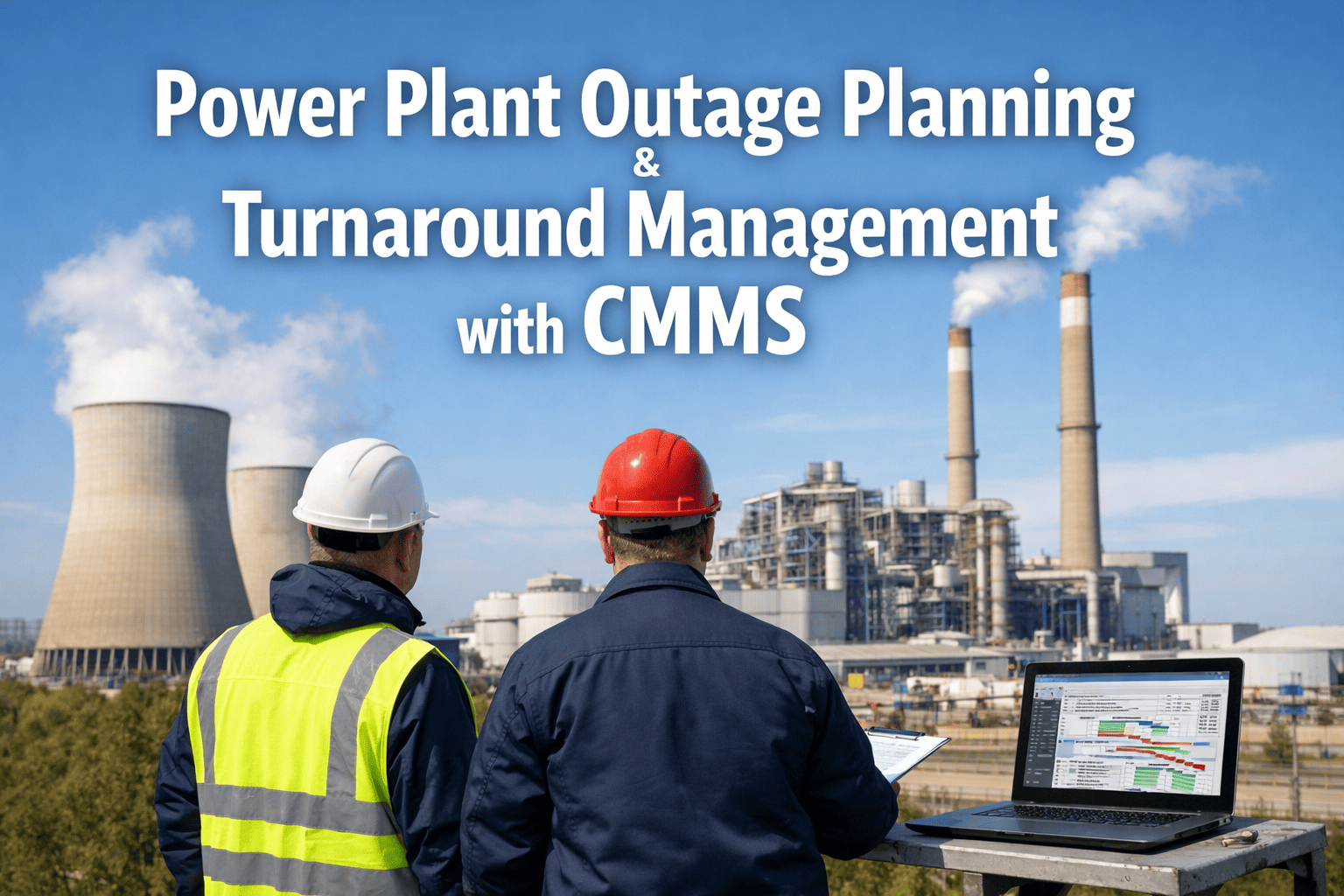
A steel plant annual shutdown is not a maintenance event — it is a production-critical project, compressed into a 5-21 day window, involving 2,000-8,000 individual work orders, 150-400 personnel working simultaneously across confined spaces and elevated structures, and $3-15 million in direct maintenance spend. And it comes with a merciless economic backdrop: every day the shutdown overruns costs the plant $800,000 to $2.5 million in lost production, plus overtime, plus expedited parts, plus contractor penalties. The single most sobering benchmark in the industry is that 70% of turnarounds globally still run over schedule and over budget. The plants that do not — the ones that consistently deliver 14-day shutdowns in 14 days — share one common trait: they treat the 5 months of pre-shutdown planning as the work that determines the outcome, and the 14 days on the floor as the disciplined execution of what was already decided. This guide walks through the pre-shutdown countdown, the scope discipline that separates on-time turnarounds from expensive ones, the execution phases, findings categorization, and spare-parts staging framework that mature planners use — and how OxMaint's turnaround module operationalizes every element as a single controlled system rather than the three-spreadsheet chaos that produces overruns. Book a free demo to see turnaround planning inside OxMaint.
T-20 wk
Scope initiation · findings review from last shutdown · initial budget draft
T-16 wk
Scope freeze · long-lead parts ordered · contractor bid packages issued
T-12 wk
Detailed job plans written · critical path draft · resource leveling begins
T-8 wk
Contractor mobilization scheduled · permit packages drafted · safety plan finalized
T-4 wk
Work packages 100% complete · material staging areas designated · pre-work sequences released
T-1 wk
Pre-fab work executed · scaffolding erected · contractor safety briefings · LOTO packages ready
Day 1
Ramp-down begins · isolation sequences executed · critical path clock starts
T+2 wk
Close-out review · lessons learned · findings entered as next-cycle scope inputs
Any scope added after the T-16 week freeze increases turnaround cost by an average of 40% · OxMaint enforces every milestone in the countdown as a tracked deliverable
$800K-$2.5M
lost production per day of shutdown overrun · compounds with contractor overtime and expedited parts
70%
of turnarounds globally still run over schedule and over budget — planning discipline is the differentiator
2,000-8,000
individual work orders in a typical 14-day blast furnace intermediate shutdown with 150-400 personnel on site
Front-Loading Is Everything — Why Planning Wins Turnarounds
The most consequential dynamic in turnaround management is the inverse relationship between when a decision is made and how much it can influence the outcome versus how much it costs to change. A scope decision made at T-16 weeks can be adjusted at almost no cost. The same decision made at T-4 weeks costs 5-10× more to change and locks in critical-path risk that compounds through execution. A change requested on Day 3 of a shutdown effectively cannot be accommodated without extending the entire timeline. This is the reason mature turnaround programs enforce a hard scope freeze — not to be inflexible, but because the economics of late changes are punishing.
The Influence-vs-Cost Inversion · Why Late Decisions Are Expensive
Ability to influence outcome
T-20 wk
T-16 wk
T-12 wk
T-8 wk
T-4 wk
Day 1
Day 7
Maximum influence at scope initiation · decays to near zero once execution begins
Cost of a change or addition
T-20 wk
T-16 wk
T-12 wk
T-8 wk
T-4 wk
Day 1
Day 7
Near zero at scope initiation · grows exponentially as the shutdown approaches and begins
The two curves cross around T-8 weeks · past that point, every change becomes a critical-path decision, not a planning decision · OxMaint's change control locks scope discipline into the workflow
The Five Phases of Turnaround Execution
Once Day 1 arrives, the turnaround runs through a defined sequence of execution phases. Each phase has its own dominant risk, its own critical checkpoints, and its own coordination discipline. Confusing which phase you are in — treating ramp-down like execution, or execution like commissioning — is one of the most common ways experienced planners still lose time. OxMaint's turnaround module tracks phase transitions and holds work orders against the correct sequence gate. The framework below reflects how mature turnaround programs actually structure the on-floor sequence.
Five Sequential Execution Phases
01
Ramp-Down & Cooldown
Hours 0-24
Controlled production stop · thermal cooldown · initial isolation preparation · safety perimeter established
02
Isolation & Lockout
Hours 24-72
Full LOTO applied · energy sources verified isolated · confined space permits opened · contractor access begins
03
Execution
Days 3-11 (bulk of shutdown)
Critical path work · parallel workstreams · daily coordination standups against OxMaint real-time view · scope discipline enforced through change control
04
Commissioning & Reinstatement
Days 11-13
Isolation reversal · pre-startup checks · function tests · punch list closure · restart readiness reviews
05
Startup & Handover
Days 13-14
Controlled restart · production ramp · handover to operations · shutdown declared complete when at target rate
Findings Categorization — The S1 Through S4 Discipline
Every shutdown produces findings — items discovered during the work that were not in the original scope. A gasket that looks worse than expected. A bearing showing early wear. A structural crack noticed on adjacent equipment. The single most important discipline separating on-time turnarounds from overruns is the S1-S4 findings categorization framework, applied instantly by the shutdown coordinator when a finding is discovered. Without it, every finding turns into scope creep and every scope addition compounds critical-path pressure.
Finding Severity Framework · Applied Instantly on Discovery
S1
Safety-Critical
Must fix now · non-negotiable · plant manager approves immediately
Impact: added to critical path · schedule extension likely
S2
Will Fail Before Next Shutdown
Fix now if it fits within existing float · plant manager approves within 4 hours
Impact: absorbed if float exists · deferred to S3 if not
S3
Defer to Next Shutdown
Document in CMMS · add to next-cycle scope list · monitor between shutdowns
Impact: zero to current shutdown timeline
S4
Nice-to-Have · Defer Indefinitely
Log for reference · no scheduled action · reassess at annual reliability review
Impact: zero · maintains scope discipline
Every finding logged in OxMaint with severity classification, rationale, and approving authority · no undocumented scope additions ever reach the critical path
Enforce Scope Discipline Through the Critical Path
OxMaint's turnaround module tracks every S1-S4 finding, calculates critical path impact instantly, and produces the change-control record leadership needs to say no to late scope. See it live against your next shutdown planning cycle.
The Spare Parts Staging Framework — 4 Tiers, 4 Lead Times
Parts availability is the single most common cause of critical-path delays during a turnaround. A missing gasket that costs $300 can extend a critical-path task by 6 hours and cost the plant $200,000 in lost production. Mature turnaround programs categorize parts into a four-tier staging framework where each tier has its own procurement lead time, storage discipline, and staging location. Every part in every tier is tracked against its assigned work order in OxMaint so shortage risk is visible weeks before the shutdown begins — not discovered when a technician arrives at the storeroom mid-shift.
Four-Tier Spare Parts Staging Framework
Tier 1
Long-Lead Critical Parts
12+ months
Blast furnace refractory · large gear boxes · custom castings · major bearings · specialty valves
Tier 2
Planned Replacement Parts
6-9 months
Motors · pumps · standard bearings · hydraulic cylinders · instrumentation · sub-assemblies
Tier 3
Consumables & Standard Stock
2-3 months
Gaskets · fasteners · seals · lubricants · welding rod · filter elements
Tier 4
Contingency Buffer
In-stock
Emergency spares for high-consequence failure modes · overnight-air stock buffer
Every part linked to its assigned work order · every shortage visible before Day 1 · every staging area designated by turnaround week
Expert Perspective · The Difference Between 14 Days and 17 Days
I have coordinated 31 major shutdowns over the past 24 years, and the single most important lesson from that experience is that execution is just the last 14 days. The shutdown was won or lost during the 5 months of planning that preceded it. The plants that consistently finish on Day 14 are not spending more money and they are not staffing differently — they are enforcing scope freeze at T-16 weeks with zero exceptions, they are treating findings categorization as a discipline rather than a negotiation, they have every part staged and every work package validated before Day 1, and they run their morning standups looking at the same critical-path data everyone in the room has access to on the same platform. The plants that consistently finish on Day 17 are running three spreadsheets, taking scope changes from the plant manager during the shutdown, discovering parts shortages mid-shift, and improvising contractor coordination on the fly. The difference between the two outcomes is $2.4 to $7.5 million in avoidable lost production per turnaround. That is the entire business case for a connected shutdown platform in a single number.
Scope Freeze Is Sacred
OxMaint enforces T-16 week scope discipline through change control — protecting the critical path from late-cycle scope creep.
Parts Visibility Before Day 1
Every part linked to its work order · every shortage visible weeks before mobilization begins.
One Source of Critical Path Truth
Morning standups against a shared real-time view · not against three spreadsheets that disagree with each other.
Deliver Your Next Turnaround On Schedule
If your last shutdown ran over — and if it did, you are in the 70% majority — the operational cause was not effort or engineering. It was scope, parts, and coordination information living in disconnected tools. See what OxMaint — a maintenance management platform built for steel plant turnaround execution — looks like against your next shutdown cycle.
Frequently Asked Questions
How long does steel plant shutdown planning take?
Effective planning starts 20 weeks before Day 1 for a typical intermediate shutdown and 12-18 months for major turnarounds involving blast furnace relining or converter replacement. Scope freeze should occur at T-16 weeks minimum, with detailed job planning complete by T-12 weeks, contractor mobilization scheduled by T-8 weeks, and pre-work executed in the final week. Any scope added after the freeze increases turnaround cost by an average of 40%.
What is the S1-S4 findings categorization framework?
The S1-S4 framework is a severity classification applied instantly when a finding is discovered during a shutdown. S1 (safety-critical) must be fixed immediately with plant manager approval; S2 (will fail before next shutdown) is fixed if it fits within critical path float; S3 is deferred to the next shutdown as documented scope; S4 is nice-to-have and logged for reference only. Applying this framework consistently prevents scope creep from silently extending the critical path.
Why do 70% of turnarounds run over schedule?
Turnaround overruns are almost never caused by a single failure. They compound from planning gaps that surface during execution: scope creep from ungoverned findings, parts shortages discovered mid-shift, contractor coordination breakdowns, and the absence of a shared critical-path view. Petrochemical industry data shows overrun events like the widely-cited 11-day overrun that cost $4.7M in lost production plus $880K in contractor overtime — caused not by engineering, but by coordination information living in three separate spreadsheets.
How should spare parts be staged for a steel plant shutdown?
Parts should be staged in four tiers by procurement lead time: Tier 1 long-lead critical parts (12+ months out, including refractory, large gearboxes, custom castings); Tier 2 planned replacement parts (6-9 months out, motors, pumps, standard bearings); Tier 3 consumables and standard stock (2-3 months out); Tier 4 contingency buffer maintained in-stock for high-consequence emergency needs. Every part must be linked to its assigned work order in the CMMS so shortage risk becomes visible weeks before the shutdown begins.
How many work orders does a typical blast furnace shutdown involve?
A typical 14-day blast furnace intermediate shutdown involves 2,000-8,000 individual work orders, 150-400 maintenance personnel working simultaneously across confined spaces and elevated structures, $3-15 million in direct maintenance spend, and 6-8 parallel activity chains — of which only one is on the critical path that determines the restart date. This scale is why coordination via radio, whiteboard, and paper log packages consistently produces overrun outcomes.
What is the ROI of a CMMS for turnaround management?
Every hour of shutdown saved recovers $40,000-$200,000 in avoided lost production. Every hour of planning discipline eliminates 3-5 hours of execution time. A typical steel plant that reduces its annual shutdown duration from 17 days to 14 days through disciplined CMMS-driven planning recovers $2.4-$7.5 million in a single turnaround — an investment payback measured in one shutdown cycle, not multiple years. OxMaint's turnaround module is built specifically for this economics.