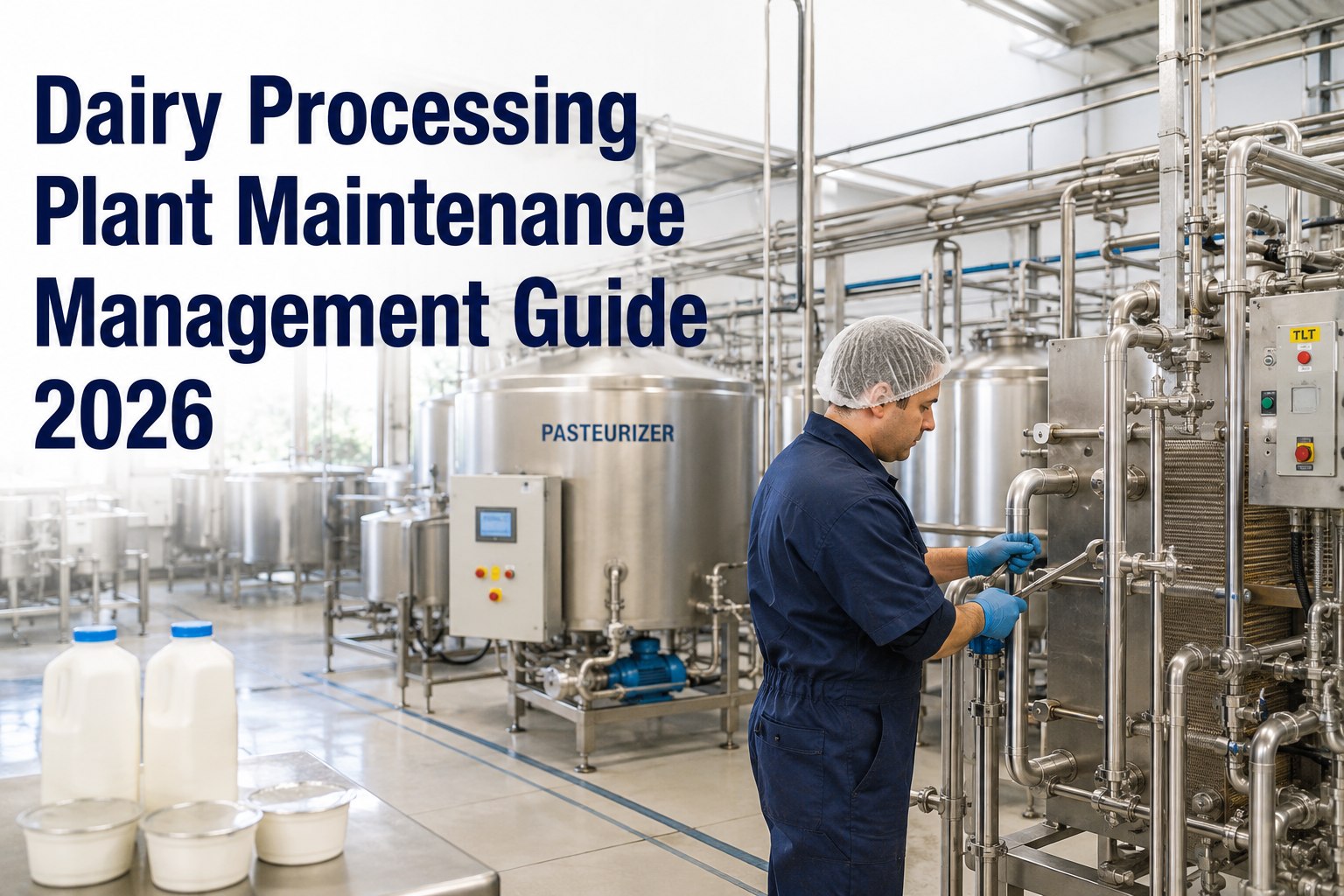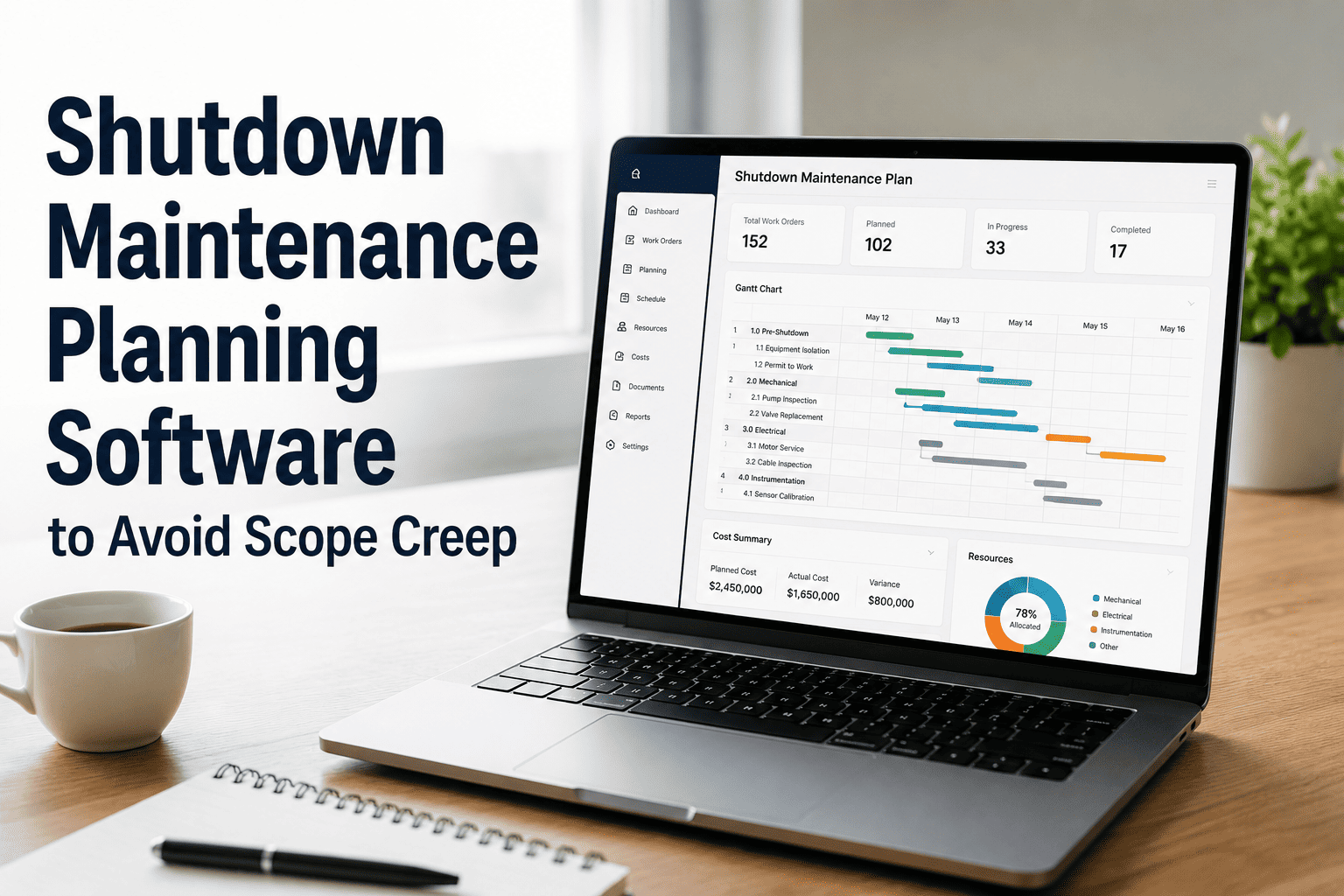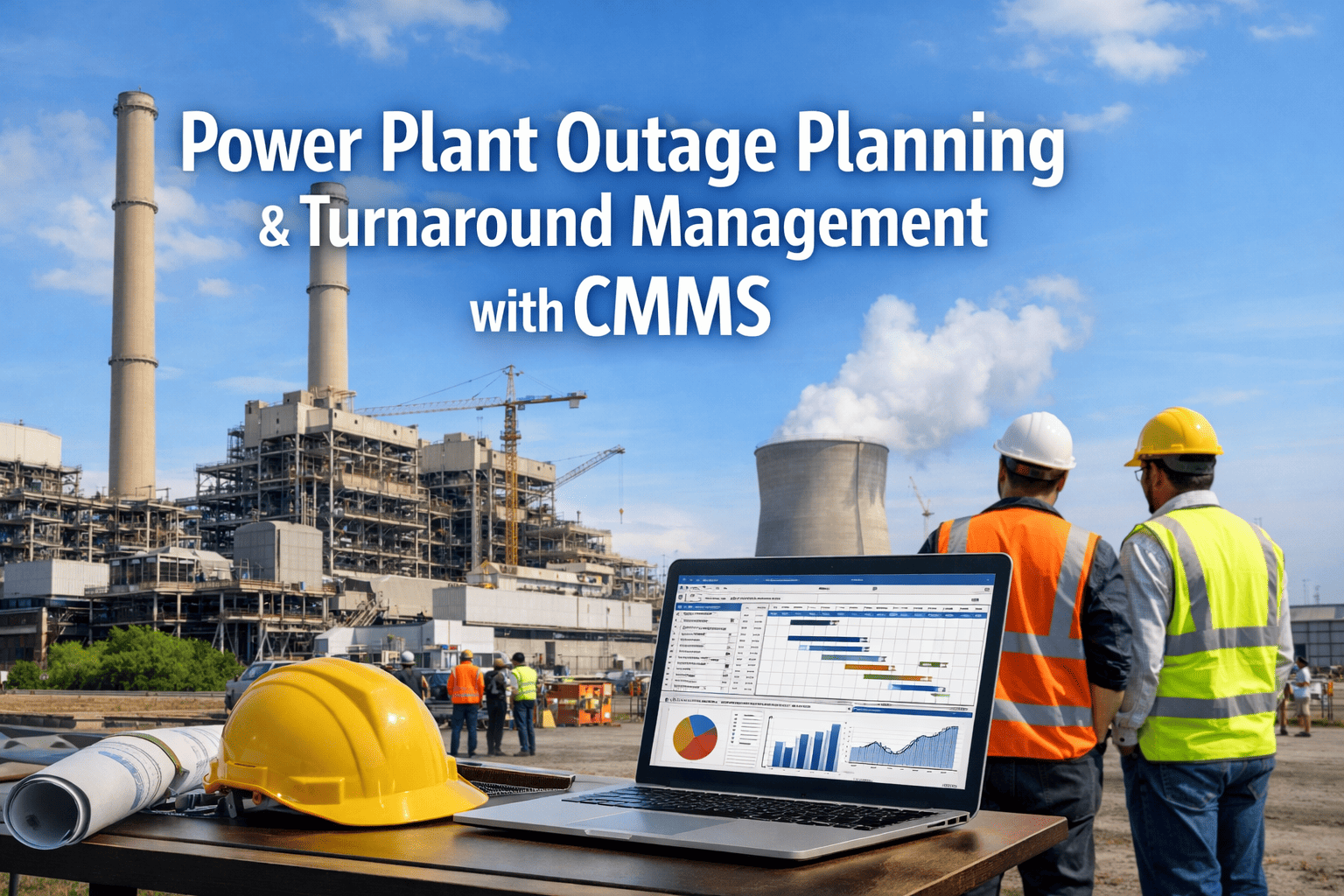
Chemical plant shutdown planning is the single highest-stakes maintenance event on a reliability team's calendar — a turnaround can consume 50–80% of an annual maintenance budget in just 3–6 weeks, and every day of schedule over-run costs a mid-sized facility $500K–$2M in lost production. A well-executed chemical plant turnaround ties scope development, contractor safety management, equipment isolation, critical-path scheduling and CMMS work order management into one defensible plan. OxMaint gives turnaround teams the AI-powered CMMS backbone to build structured work packages, coordinate contractors, enforce PSM mechanical integrity, and keep process plant overhauls on schedule and on budget — you can Start Free Trial or book a tailored walkthrough to see it on your assets.
Will your next chemical plant shutdown finish on schedule — or become a budget and safety disaster?
Most chemical plant turnarounds overrun by 10–30% and blow past budget. OxMaint helps you execute defensibly — structured work packages, PSM mechanical integrity integration, contractor coordination, and the CMMS backbone that keeps outages on the critical path.
Why chemical plant shutdown planning makes or breaks the year
A chemical plant turnaround condenses a full year of deferred maintenance, inspections and regulatory compliance work into a 14–45 day window. When that window is poorly scoped or poorly scheduled, the consequences cascade: extended downtime, contractor idle time, premium expediting fees, and — worst of all — process safety incidents during rushed reassembly.
A 180-asset specialty chemical plant spending $4.2M per turnaround
Consider a 180-asset specialty chemical plant running a 21-day turnaround with 12 contractors and 140 additional temporary workers. Without a CMMS backbone, the team manages 900+ work orders across spreadsheets, clipboards and email — scope creep adds 40 emergent work orders mid-shutdown, 6 isolation permits get mismatched to the wrong equipment tags, and the critical path slips by 4 days. At $750K/day lost production, that's a $3M over-run plus $620K in contractor idle time and expediting fees. OxMaint's turnaround module structures those 900 work orders, links every permit to a tagged asset, and flags critical-path slippage in real time — the same shutdown finishes in 19 days at $3.6M.
How to plan a chemical plant turnaround: phase-by-phase
Best-in-class process plant turnaround planning begins 12–18 months before the outage and follows a disciplined phase-gate model. Each phase has deliverables, gate reviews and cost checkpoints — skipping early phases is the #1 driver of late-stage scope chaos.
Scope Development & Long-Lead Procurement
Define the turnaround scope from historical failure data, inspection reports (API 510/570/653), regulatory requirements and reliability-centered maintenance (RCM) findings. Identify long-lead items — special alloys, large valves, catalyst beds — and commit purchase orders 12+ months out. OxMaint's asset history and predictive analytics surface the equipment most likely to need work, so scope is data-driven, not guesswork.
Detailed Planning & Work Package Assembly
Build detailed work packages for every job: step-by-step procedures, parts lists, special tools, permits, isolation points, and estimated labor hours by craft. Run a 60%, 90% and 100% scope freeze review. OxMaint structures each work package as a parent work order with child sub-tasks, linked BOMs and attached procedures — ready for execution with zero re-keying.
Scheduling, Contractor Onboarding & Safety Review
Develop the critical-path schedule (typically in Primavera P6, synced to OxMaint). Onboard contractors: verify OQ qualifications, safety orientations, and site-specific PSM training. Conduct a HAZOP review of non-routine tasks and confirm LOTO procedures for every isolation point. Each contractor work order in OxMaint carries the assigned permit, isolation checklist and JSA — nothing starts without it.
Execution Readiness & Dry Runs
Freeze the schedule, validate parts availability (spare-parts inventory in OxMaint reconciled against work package BOMs), and run a tabletop execution drill. Confirm shift coverage, communication protocols and daily turnaround meeting cadence. Pre-stage materials at the warehouse or laydown yard and tag them to their work orders.
Shutdown, Execution & Start-Up
Execute the plant outage: isolate and de-energize, perform maintenance and inspections, manage emergent work through a formal MOC process, and reassemble. Daily 6 AM and 6 PM turnaround meetings review progress against the critical path in OxMaint dashboards — slippage is flagged within hours, not days. Post-work testing and mechanical completion sign-offs are captured in the CMMS before restart.
Closeout, Lessons Learned & Cost Reconciliation
Reconcile actual vs. planned cost and hours, capture lessons learned, update asset records and baseline preventive maintenance schedules for the next cycle. OxMaint's analytics module compares planned vs. actual work order duration, labor hours and cost — feeding continuous improvement into the next turnaround scope.
Plant shutdown checklist for chemical facilities: the 30 must-verify items
Use this checklist as your gate-review validation at T-30 days. Every item not closed at gate review is a risk that will surface during execution — when it costs 10–50x more to fix.
Scope & Work Packages
- 100% scope freeze signed off by plant manager and reliability engineer
- Every work order has a complete work package (procedure, parts, tools, permits)
- Long-lead items verified in stock or on PO with confirmed delivery date
- Emergent work contingency budget set at 10–15% of total turnaround cost
- Asset hierarchy in CMMS matches P&ID and isotope-traced equipment tags
- QA/QC hold points and witness points defined for every inspection job
- RCM and RBI recommendations from last cycle incorporated into scope
Safety, Permits & Isolation
- LOTO isolation list complete for every energy source on every tagged asset
- Blind list verified — location, size, rating, installer and date for each blind
- Confined space permits pre-staged with gas test plans and rescue procedures
- Hot work permits mapped to work orders with fire-watch assignments
- PSM mechanical integrity data current for all pressure vessels and piping
- Contractor OQ verifications complete — no expired qualifications
- Emergency response plan updated for shutdown-specific hazards
Schedule, Contractors & Logistics
- Critical-path schedule validated and loaded into CMMS with work order links
- Contractor shift schedules and craft mix aligned to work package sequence
- Laydown yard and warehouse staging plan finalized — parts kitted by work order
- Crane access, rigging plans and heavy-haul routes confirmed for oversized items
- Spare-parts inventory reconciled — min/max levels verified for post-startup spares
- Daily turnaround meeting cadence set — 6 AM planning, 6 PM progress review
- Communication tree and escalation matrix distributed to all supervisors
Cost & Compliance
- Turnaround budget baselined with contingency — committed vs. uncommitted tracked
- Regulatory inspection requirements (OSHA, EPA, state) mapped to specific work orders
- API 510/570/653 inspection records current and ready for update during execution
- MOC process pre-staged for any design changes discovered during execution
- Pre-startup safety review (PSSR) checklist prepared and assigned
- Environmental permits for flaring, venting and waste disposal secured
- Insurance and underwriter notifications filed for extended shutdown period
Chemical turnaround cost: what drives overrun and how to control it
Turnaround cost control is a function of scope discipline, schedule accuracy and real-time visibility. The formula below is the industry-standard model for estimating total turnaround cost — and it shows exactly where CMMS-driven planning pays for itself.
The largest lever is O (lost-production opportunity cost) — typically 3–5x all other costs combined. Cutting 2 days off a 21-day shutdown at $750K/day saves $1.5M, which dwarfs the CMMS subscription cost by 30–50x.
| Cost Driver | Typical % of Total | Common Overrun Cause | CMMS Mitigation |
|---|---|---|---|
| Contractor Labor (Lc) | 25–35% | Idle time from poor scheduling, scope gaps, misassigned work orders | Real-time work order dispatch; critical-path visibility in OxMaint |
| Materials & Spares (M) | 20–30% | Missing parts discovered mid-execution; expedited freight premiums | BOM-to-work-order linking; inventory reconciliation at T-30 |
| Lost Production (O) | 3–5x all other costs | Critical-path slippage; emergent work; restart delays | Daily progress dashboards; early-warning slippage alerts |
| Engineering & Inspection (E) | 10–15% | Duplicate inspections; lost prior-cycle data; re-work | Asset history and inspection records centralized in OxMaint |
| Contingency (C) | 10–15% | Consumed by unmanaged emergent scope; no formal MOC process | Structured emergent-work workflow with approval gates |
How OxMaint helps chemical plant turnaround teams execute defensibly
OxMaint is an AI-powered CMMS and EAM platform built for maintenance and reliability teams. For chemical plant turnarounds, it provides the structured work-order backbone, contractor coordination, PSM mechanical integrity integration and real-time analytics that keep shutdowns on schedule, on budget and process-safety-defensible.
Structured Work Package Management
Build every turnaround job as a parent work order with child sub-tasks, linked BOMs, attached procedures, permits and JSAs. Contractors execute against a single source of truth — no clipboards, no re-keying, no lost paperwork.
Cuts work-order execution time by 20–30% and eliminates missing-document errorsContractor Coordination & Safety
Onboard contractors with verified OQ qualifications, site-specific orientations and permit-to-work records. Every contractor work order carries the assigned permit, isolation checklist and JSA — work cannot start without complete safety documentation.
Reduces permit-related delays by 40% and creates a defensible audit trailPSM Mechanical Integrity Integration
Link inspection records (API 510/570/653), RBI data and mechanical integrity findings directly to asset records and work orders. During execution, inspection results update the asset history in real time — no post-turnaround data entry backlog.
Eliminates 80+ hours of post-turnaround data entry and ensures compliance readinessReal-Time Critical-Path Analytics
OxMaint dashboards show planned vs. actual progress on every work order and every contractor — updated in real time. Critical-path slippage is flagged within hours, not at the next day's meeting, giving you the chance to re-sequence before the cost compounds.
Shrinks schedule overruns by 2–4 days on a typical 21-day turnaroundChemical turnaround CMMS vs. spreadsheet planning: what changes
Most chemical plants still plan turnarounds in spreadsheets, email and clipboards. The gap between that and a purpose-built CMMS is the gap between a controlled shutdown and a fire-drill.
| Capability | Spreadsheets & Paper | OxMaint CMMS |
|---|---|---|
| Work package structure | Scattered across files and folders; versions conflict | Parent/child work orders with linked BOMs, permits, procedures |
| Permit-to-work tracking | Paper permits; mismatched to equipment tags | Digital permits linked to tagged assets; auto-block start if incomplete |
| Critical-path visibility | End-of-day manual rollups; slippage seen too late | Real-time dashboards; alerts within hours of slippage |
| Spare-parts reconciliation | Manual stock counts; parts missing mid-execution | Automated BOM-to-inventory check; shortages flagged at T-30 |
| Contractor coordination | Shift cards and email; OQ gaps surface during execution | Digital dispatch; OQ verification required before work order release |
| Post-turnaround data entry | 80–120 hours of manual record entry; data quality degrades | Captured in real time during execution; zero post-TA backlog |
| Audit trail & PSM compliance | Reconstructed after the fact from paper records | Every action time-stamped, user-attributed and exportable for audit |
See OxMaint on your assets — book a 30-min turnaround demo
Walk through a chemical plant turnaround scenario on your equipment hierarchy. See how structured work packages, contractor permits and critical-path dashboards change your next shutdown.
Chemical plant shutdown & turnaround planning: frequently asked questions
How early should chemical plant turnaround planning begin?
Best-in-class chemical plant turnaround planning begins 12–18 months before the outage date. The first 6 months focus on scope development from inspection data, RCM findings and regulatory requirements, plus long-lead procurement. Months 6–12 cover detailed work package assembly, scheduling and contractor onboarding. The final 2 months are execution readiness, dry runs and parts staging. Starting later than 12 months out is the single biggest predictor of schedule overrun and cost blowout.
What is the difference between a plant shutdown and a turnaround?
A plant shutdown is the act of taking equipment or a unit offline — it can be planned (for maintenance) or unplanned (due to failure). A turnaround is a large-scale, planned shutdown event that typically involves the entire plant or a major unit, executed on a multi-year cycle (every 2–6 years), with hundreds to thousands of work orders, multiple contractors and a dedicated 14–45 day execution window. All turnarounds involve shutdowns, but not all shutdowns are turnarounds.
How much does a chemical plant turnaround cost?
A chemical plant turnaround at a mid-sized facility typically costs $3M–$15M, with large complexes reaching $50M+. The breakdown is roughly 25–35% contractor labor, 20–30% materials and spares, 10–15% engineering and inspection, 10–15% contingency, and the remainder in isolation, permitting, restart and logistics. The largest cost — 3–5x all others combined — is lost-production opportunity cost, which is why schedule compression has the highest ROI of any improvement initiative.
What should a plant shutdown checklist for chemical facilities include?
A chemical plant shutdown checklist should cover four domains: scope and work packages (100% scope freeze, complete work packages, long-lead items verified, contingency set); safety and permits (LOTO isolation lists, blind lists, confined-space and hot-work permits, PSM mechanical integrity data, contractor OQ verifications); schedule and logistics (critical-path validation, contractor shift alignment, laydown and staging, spare-parts reconciliation); and cost and compliance (baselined budget, regulatory requirements mapped to work orders, MOC process staged, PSSR checklist prepared).
How does a CMMS improve chemical plant turnaround execution?
A CMMS improves turnaround execution by providing a single source of truth for work orders, permits, parts and progress. It structures work packages as parent/child work orders with linked BOMs and procedures, tracks contractor qualifications and permits, reconciles spare-parts inventory against work package requirements, and gives real-time critical-path visibility via dashboards. Plants using a CMMS for turnaround management typically cut schedule overruns by 2–4 days, reduce permit-related delays by 40% and eliminate 80+ hours of post-turnaround data entry. Start a free trial to see the workflow on your assets.
Your next chemical plant turnaround starts with the right CMMS
Join the maintenance and reliability teams using OxMaint to plan defensible shutdowns — structured work packages, contractor coordination, PSM integration and real-time critical-path analytics in one AI-powered platform.
Free 14-day trial · No credit card