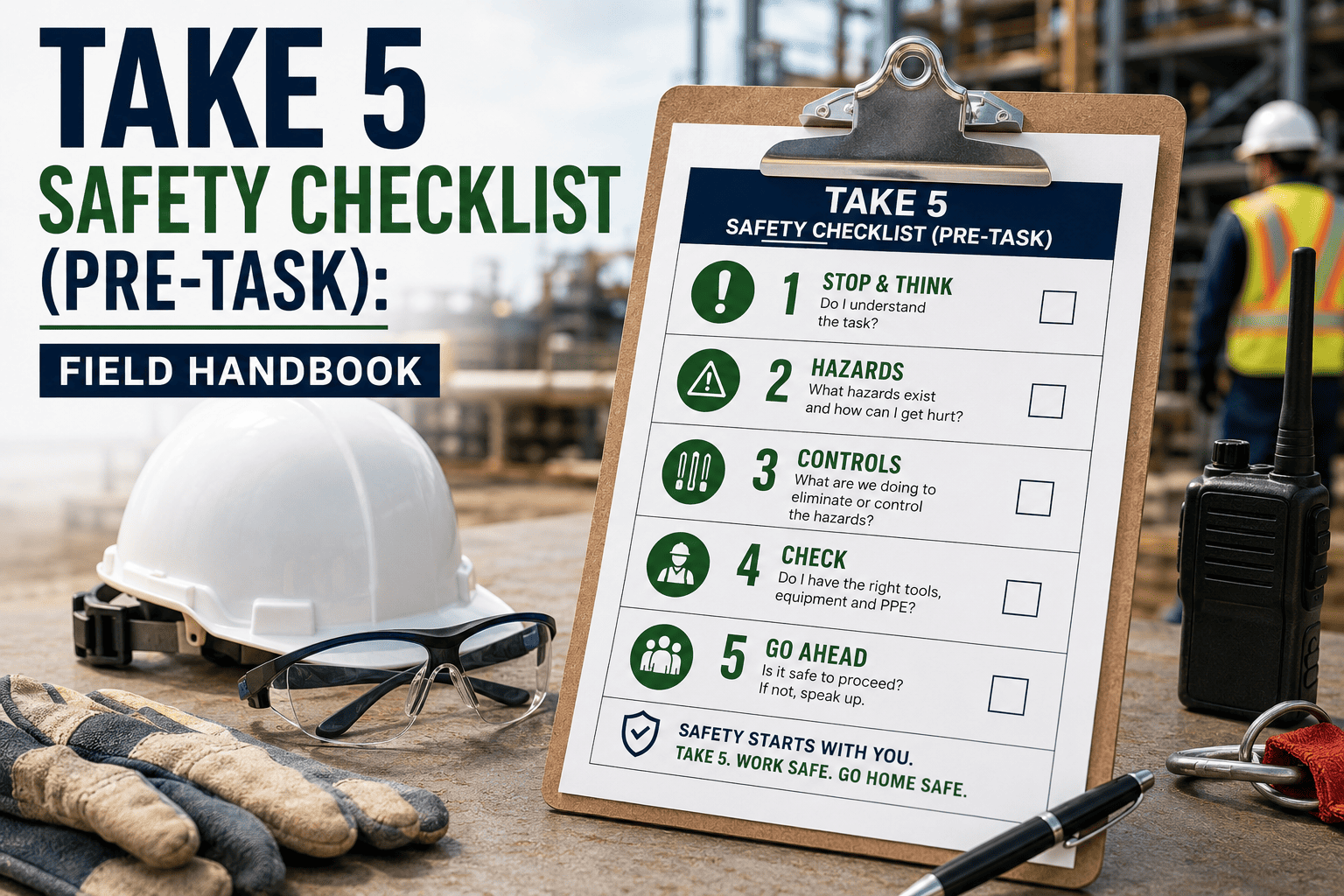
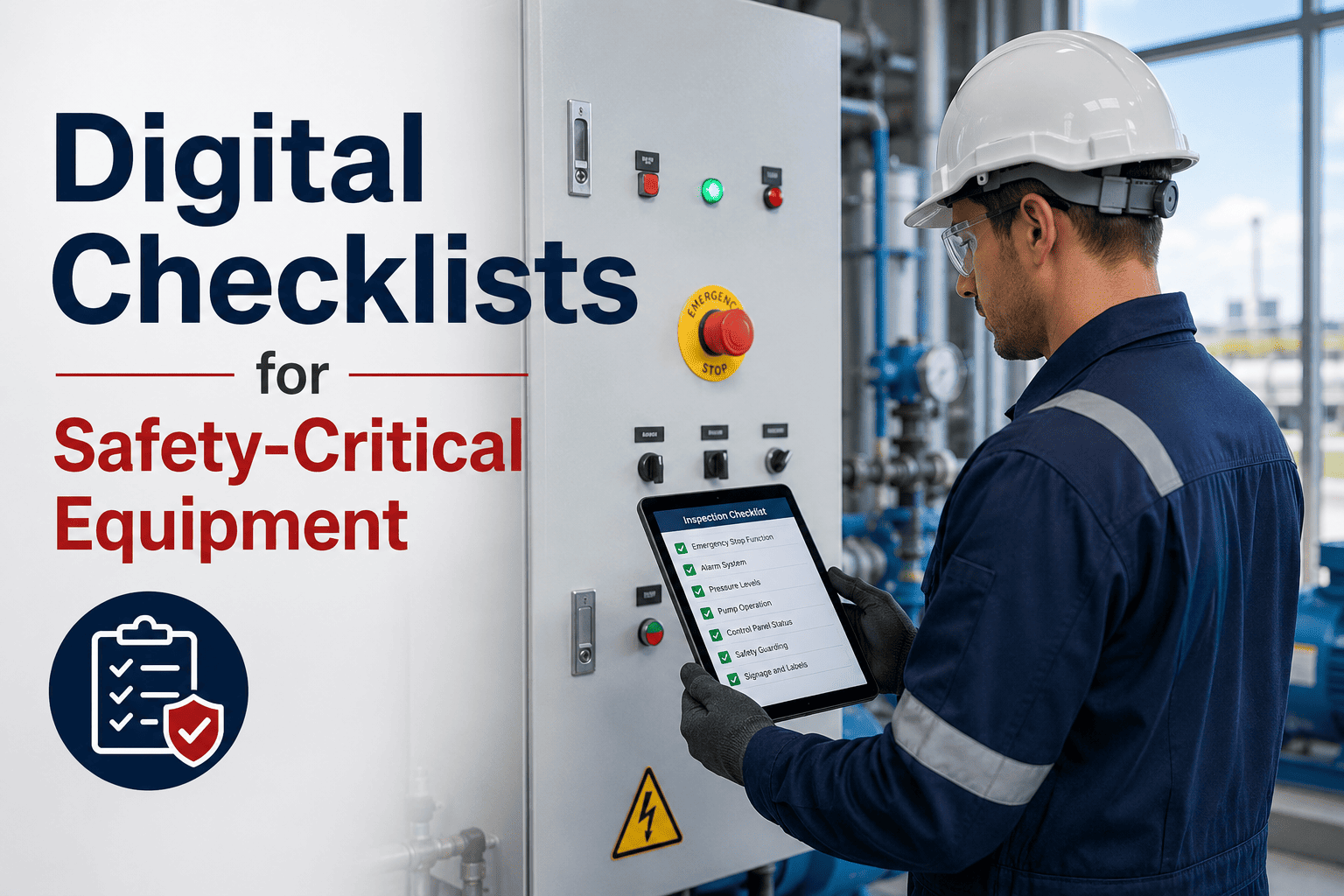
Most incidents don't happen because nobody knew the hazard existed. They happen because nobody paused long enough to notice it before starting the task. A Take 5 Safety Checklist is that pause — five minutes, five questions, before the work begins, not after something goes wrong. Sign up to give every worker a guided digital Take 5 they can actually complete from the job site.
Why It Exists
A Take 5 works because it's short enough to actually happen before every task, not just at shift start. It forces a deliberate pause between arriving at a job and starting it, catching the hazards that formal risk assessments miss simply because conditions changed since the last one was written.
The Five Steps, In Order
Stop Before You Start
Pause at the job site before touching tools or equipment, even if the task feels routine
Look Around The Work Area
Scan for anything that's changed since the last time this task was done here
Identify The Hazards Present
Name each hazard specifically rather than a general sense that something might be off
Assess The Risk Honestly
Weigh how likely and how severe each identified hazard actually is before deciding what to do
5
Control The Risk, Then Proceed
Apply a control for each hazard found, and only start the task once it's actually in place
When A New Take 5 Is Required
A New Task Begins
Every distinct task gets its own check, not one blanket check for the whole day
Conditions Change
Weather, lighting, nearby equipment, or noise shifting mid-task all warrant a fresh look
A Handover Happens
A new person taking over mid-task needs their own read on the hazards present
Something Feels Off
Instinct counts — a worker's hesitation is reason enough to stop and reassess
Make Every Task Start With A Take 5
OxMaint puts a guided Take 5 in every worker's pocket, with hazard prompts, photo capture, and a digital record tied to the task and asset. Sign up for a free trial to roll it out across your team, or book a demo to see it running on a live safety program.
Take 5 vs A Formal Risk Assessment
| Factor |
Take 5 |
Formal Risk Assessment |
| Who completes it |
The worker, right at the job site |
An EHS lead or trained assessor, in advance |
| Time required |
A few minutes, before every task |
Longer review, done periodically or per project |
| Catches what |
Conditions that changed since the last check |
Systemic hazards built into the task itself |
| Where it lives |
Logged per task, tied to the moment of work |
Filed once and referenced across many tasks |
The Payoff
The value of a Take 5 isn't the form — it's the pause it forces. A team that actually stops for five minutes before every task catches the hazard a formal assessment, written weeks earlier, could never have accounted for.
Frequently Asked Questions
Q
Does a Take 5 replace a formal risk assessment?
No. A Take 5 is a quick, task-level check done by the worker, while a formal risk assessment is a deeper review of a task's systemic hazards. High-risk work needs both, not one instead of the other.
Q
How many times a day should a worker complete a Take 5?
As many times as there are distinct tasks or condition changes — not once per shift. A worker moving between three different jobs completes three separate Take 5 checks.
Q
What should happen if the Take 5 finds a hazard that can't be controlled on the spot?
The task should not start. The hazard gets escalated to a supervisor, and work only proceeds once a proper control is in place and confirmed.
Turn Every Pre-Task Pause Into A Documented Record
OxMaint links mandatory safety checks, digital LOTO and permit workflows, photo evidence, and e-signatures directly to asset records, so every Take 5 comes with a defensible, real-time audit trail. Sign up for a free trial to roll out a digital Take 5 across your team, or book a demo to see it working on live safety data.