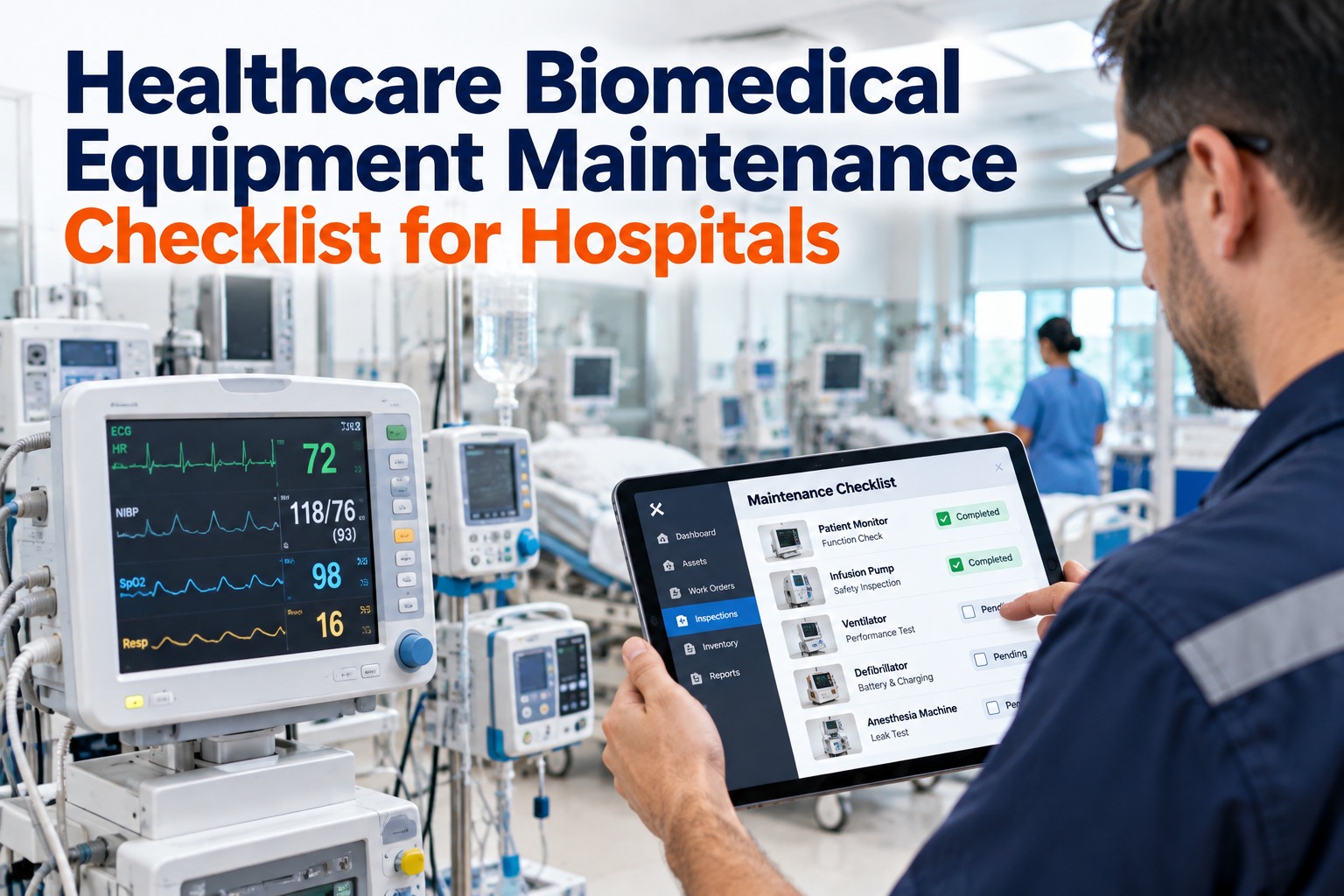
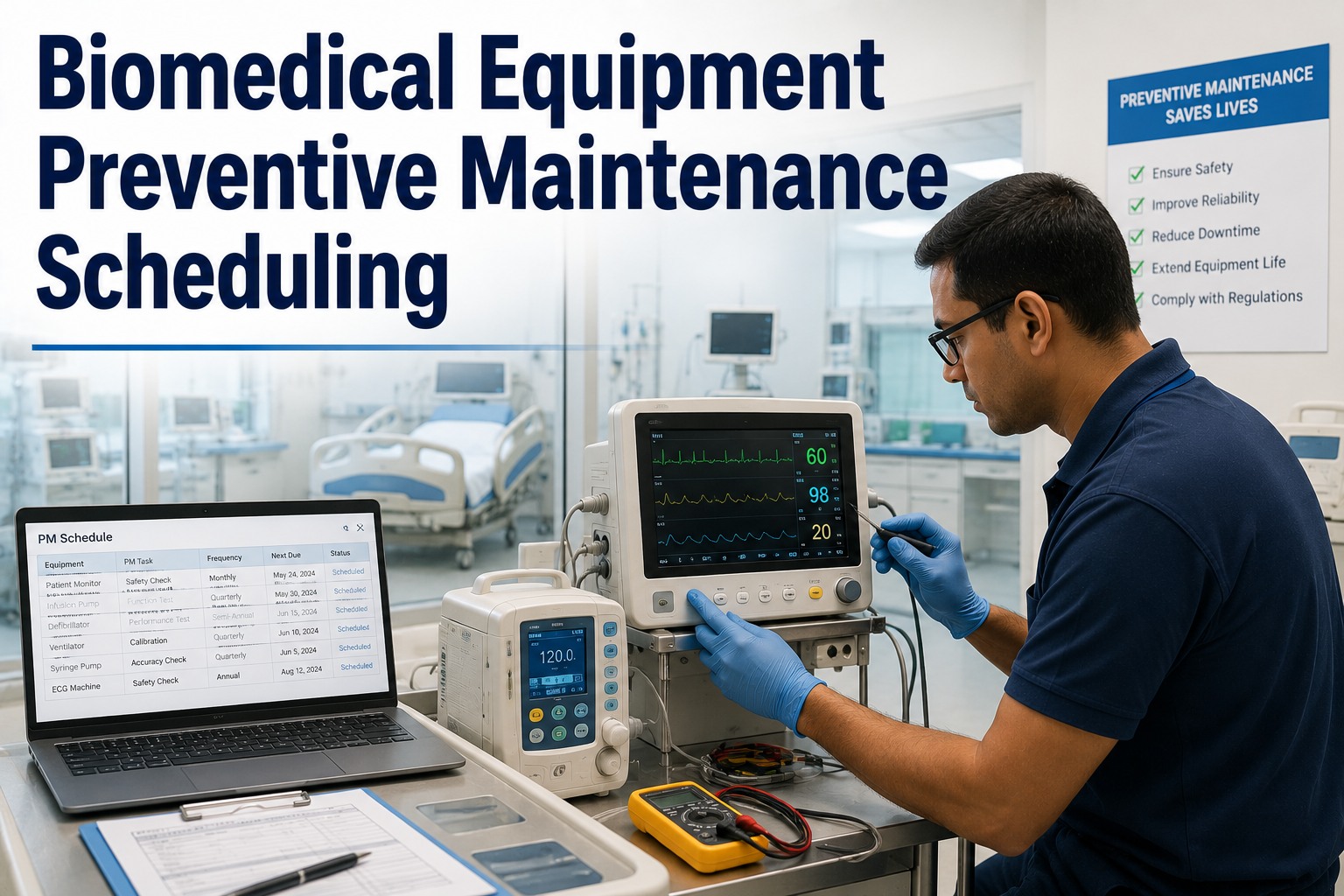
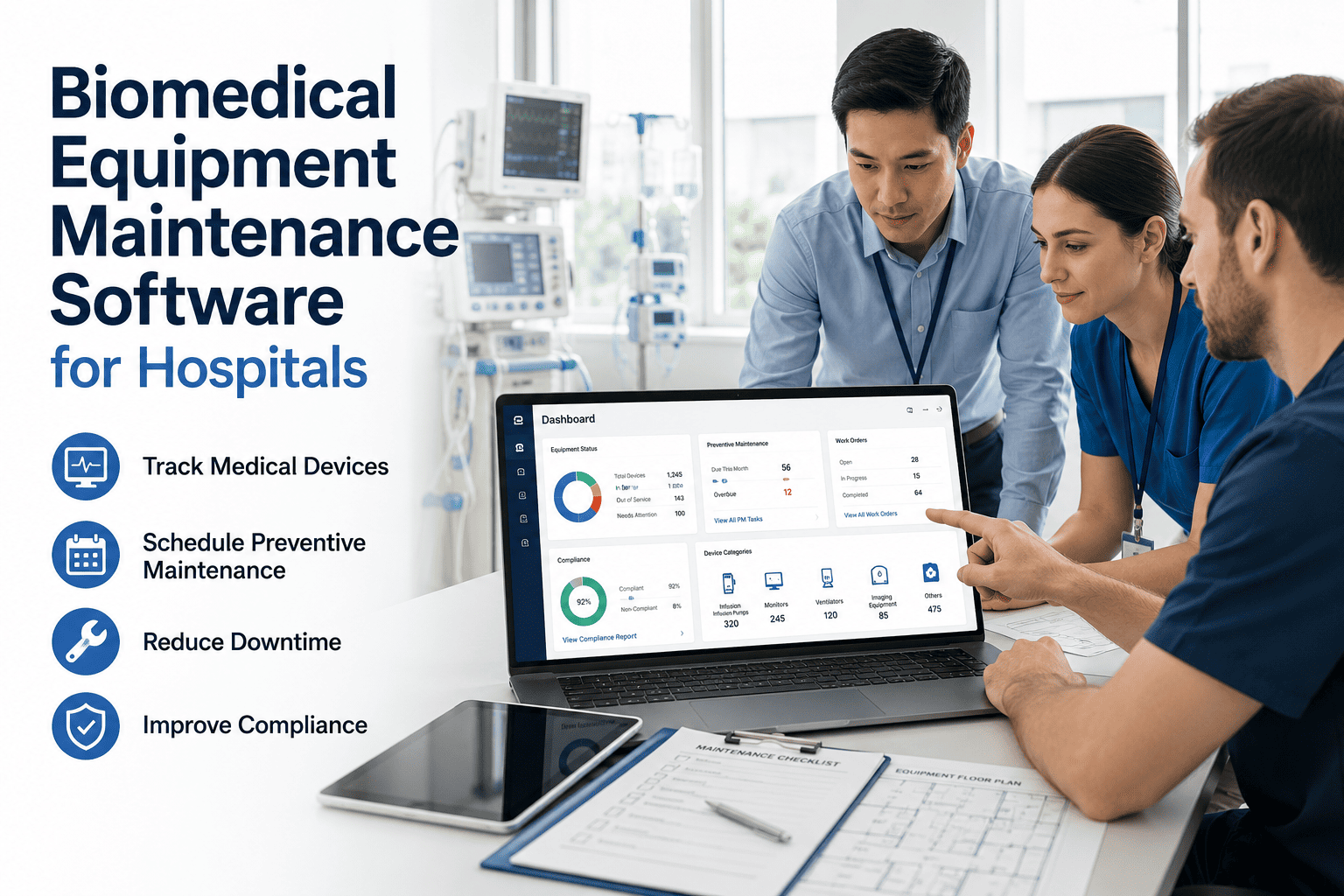
How a 750-Bed Hospital Achieved 100% Joint Commission Compliance with Digital CMMS
In March 2021, St. Carver Regional Medical Center — a 750-bed academic medical center in the Southeast — received a Joint Commission survey finding that no healthcare organization wants: a Pattern finding in the Environment of Care standard, citing 23 instances of overdue preventive maintenance on biomedical and life safety equipment across six clinical departments. The finding did not result from neglect. It resulted from a maintenance programme that was being managed through a legacy CMMS that had not been updated in seven years, a spreadsheet overlay that a single senior engineer maintained, and a PM scheduling system that had no escalation when work orders were not completed on time. The hospital had 4,200 maintainable assets, 14 biomedical technicians, and zero visibility into which equipment was overdue on any given day without a manual report that took three hours to generate. Eighteen months after deploying OxMaint as their primary healthcare CMMS, St. Carver's follow-up Joint Commission survey produced zero Environment of Care findings for the first time in eight years. OxMaint's healthcare CMMS is built for Joint Commission, DNV, and CMS compliance — from biomedical equipment PM to life safety system testing. Book a demo to see how your facility's compliance posture maps to OxMaint.
Joint Commission Compliance · Biomedical PM · Life Safety — One Platform
Joint Commission Environment of Care compliance achieved at St. Carver Regional — zero findings in first post-OxMaint survey after 8 consecutive years with findings
35%
Reduction in critical medical equipment downtime events in the 12 months following OxMaint deployment — from 94 downtime events to 61 across all biomedical assets
$1.2M
Documented Year 1 savings from reduced emergency service calls, avoided regulatory penalties, and equipment downtime cost avoidance — against $148,000 OxMaint investment
The 6 Compliance Gaps OxMaint Closed at St. Carver Regional
The 23 Joint Commission findings at St. Carver traced back to six systemic gaps in their maintenance programme — all of which were addressable without additional staff, through structured CMMS configuration. OxMaint closes all six from initial configuration.
1
No PM Completion Escalation
Root cause of 14 of the 23 Joint Commission findings
PM work orders that were not completed on time simply remained open — no alert, no escalation, no record that the due date had passed. OxMaint escalates every overdue PM automatically: technician alert at due date, supervisor alert at 48 hours overdue, department director alert at 5 days. No PM ages past 5 days without management awareness.
2
Incomplete Asset Inventory
The programme cannot be compliant if the asset register is incomplete
St. Carver's legacy CMMS had 2,840 assets registered against a physical count of 4,200+ biomedical and facility assets — 1,360 assets were receiving no scheduled maintenance because they didn't exist in the system. OxMaint's deployment team conducted a complete asset census, registered every device with make, model, serial number, and NFPA/TJC equipment category classification.
3
Life Safety Testing Not Linked to Compliance Evidence
NFPA 99, NFPA 72, and NFPA 25 require documented test results — not just completion
Fire alarm, sprinkler, emergency generator, and medical gas alarm tests were being completed but documented on paper test forms that were filed in a cabinet. OxMaint captures test results digitally — pass/fail per test point, technician signature, and photo evidence — creating the structured documentation that survives a Joint Commission document review without a cabinet search.
4
No PM Compliance Dashboard for Leadership
The Environment of Care committee was receiving data 3 weeks late — by then, findings were baked in
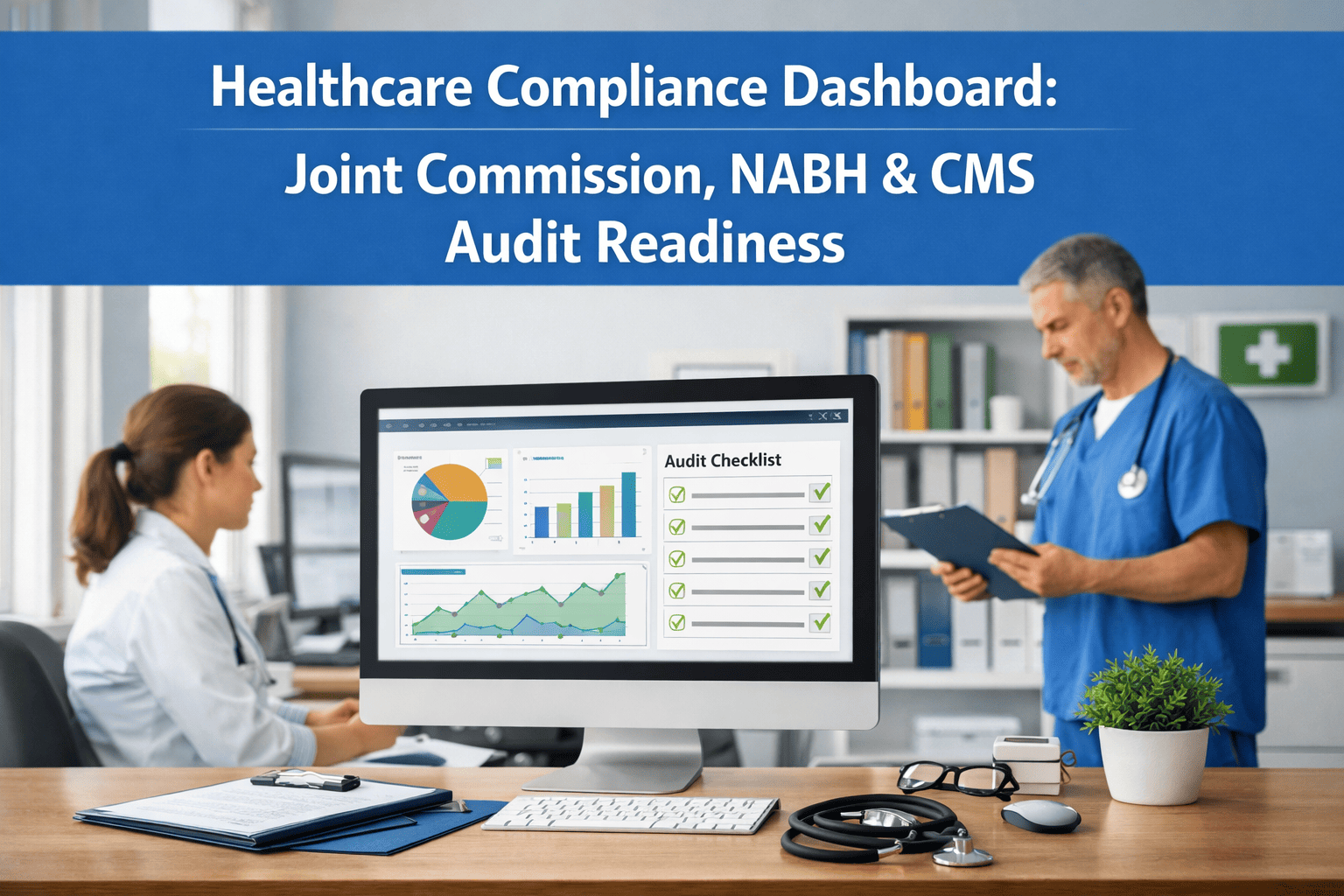
OxMaint's real-time compliance dashboard gives the Environment of Care committee a live view of PM compliance percentage by department, equipment category, and technician — updated every 24 hours. The committee can see a developing compliance gap 30 days before a survey, not after a finding. Monthly EC committee reports are generated in 12 minutes from OxMaint data.
5
No Medical Equipment Risk-Based PM Classification
TJC EC.02.04.01 requires a risk-based maintenance programme with documented classification
OxMaint assigns ASHE/ANSI/AAMI risk scores to every biomedical asset — classifying equipment by function, physical risk, and required maintenance interval. Life-critical ventilators, infusion pumps, and defibrillators receive highest-frequency PM; low-risk general purpose equipment receives appropriate reduced-frequency maintenance. The risk classification is documented and defensible.
6
No AEM Programme Documentation
Alternative Equipment Maintenance requires documented basis — not just reduced intervals
St. Carver was applying AEM intervals to some equipment categories without the documented risk assessment that TJC requires to justify alternative intervals. OxMaint maintains the AEM programme documentation per equipment category — the clinical risk assessment, the interval justification, and the outcome monitoring data that TJC surveyors require to accept AEM as a valid programme.
Healthcare CMMS — OxMaint
From 23 Findings to Zero — The Same Compliance Journey, Available to Your Hospital.
OxMaint is configured for Joint Commission, DNV, and CMS compliance requirements from day one — real-time compliance dashboard, automated PM escalation, and survey-ready documentation packages.
The Implementation — 18 Months from 23 Findings to Zero
St. Carver's transformation from a Pattern finding to zero findings did not require new staff, capital equipment, or a programme overhaul. It required structured CMMS configuration and discipline in executing the programme OxMaint made visible. The same implementation is available to your hospital in 90 days.
Days 1–30
Asset Census & Registration
Complete physical asset census — 4,200 biomedical and facility assets registered in OxMaint with make, model, serial number, location, NFPA/TJC category, and risk classification. Legacy data imported; gap assets identified and added
Days 31–60
PM Programme Configuration
PM intervals configured per equipment category — TJC EC.02.04.01 requirements, NFPA testing schedules, and AEM programme documentation completed. Escalation rules configured: 48-hour supervisor alert, 5-day director alert
Days 61–90
Live Operations Launch
14 biomedical technicians trained on OxMaint mobile — all PM work orders issued from OxMaint, all completions documented with technician signature and test results. EC committee dashboard live with real-time compliance percentage
Months 4–6
Compliance Stabilization
PM compliance rate climbed from 61% to 94% — driven by escalation alerts that surfaced backlogs before they became survey exposure. Highest-risk departments (ICU, OR, ED) achieved 98%+ compliance first
Months 7–12
Equipment Reliability Improvement
Structured PM programme began delivering equipment reliability improvement — critical equipment downtime events fell 35%. $1.2M in Year 1 savings documented: $340K emergency service call reduction, $580K equipment downtime avoidance, $280K avoided regulatory penalties
Month 18
Joint Commission Survey — Zero Findings
TJC survey of Environment of Care produced zero findings for the first time in eight years. Survey documentation package generated from OxMaint in 2 hours — 4,200 asset records, PM compliance history, life safety test results, and AEM programme documentation
Results Summary — Before and After OxMaint
The numbers below represent St. Carver Regional Medical Center's documented outcomes — 18-month comparison of pre-OxMaint baseline against post-implementation performance across five measurement dimensions.
Metric
Pre-OxMaint Baseline
Post-OxMaint (18 Mo)
Improvement
Dollar Impact
PM Compliance Rate
61% (spot check)
96% (all assets)
+35 percentage points
TJC finding avoidance
Joint Commission Findings
23 findings (Pattern)
0 findings
100% reduction
$280K penalty avoidance
Critical Equipment Downtime
94 events/year
61 events/year
35% reduction
$580K downtime savings
Emergency Service Calls
$420K/year
$80K/year
81% reduction
$340K saved
Survey Documentation Prep
3 weeks manual
2 hours from OxMaint
97% time reduction
Staff hours recovered
Assets in Maintenance Programme
2,840 assets
4,200+ assets
48% more assets covered
Compliance gap closed
Financial Summary — $1.2M Year 1 ROI on $148K Investment
St. Carver's CFO required a documented ROI case before approving the OxMaint deployment. The numbers below reflect the formal post-implementation financial analysis submitted to the board at month 18.
Investment
Year 1 total cost
OxMaint annual licence (750 beds)
$96,000
Asset census and data migration
$32,000
Staff training and implementation
$20,000
Integration (BMS + legacy EHR)
Included
Total Year 1 Investment
$148,000
Year 1 Returns
Documented savings
Emergency service call reduction
$340,000
Critical equipment downtime avoidance
$580,000
Regulatory penalty avoidance
$280,000
Staff time recovered (survey prep)
$48,000
Total Year 1 Return
$1,248,000
ROI Summary
18-month outcome
Net Year 1 financial benefit
$1,100,000
Return on investment
743%
Payback period
7.1 weeks
Joint Commission findings
0 (from 23)
Year 2 projected savings
$1.4M+
The day after our zero-findings survey, our Chief Nursing Officer sent me the nicest email I have received in 22 years in healthcare facilities management. She said she had never felt more confident that the equipment her nurses were using had been properly maintained. That's what OxMaint actually delivers — not just compliance, but the confidence that clinical staff and patients deserve. The $1.2 million just pays for the conversation.
— Director of Facilities and Biomedical Engineering, St. Carver Regional Medical Center, 750 beds, Southeast US
Technology Stack — What Powered St. Carver's Transformation
St. Carver's compliance transformation ran on four integrated technology layers — OxMaint CMMS as the operational hub, connected to biomedical device data, building systems, and clinical operations. The same integration architecture is available to your hospital.
Biomedical Device Integration
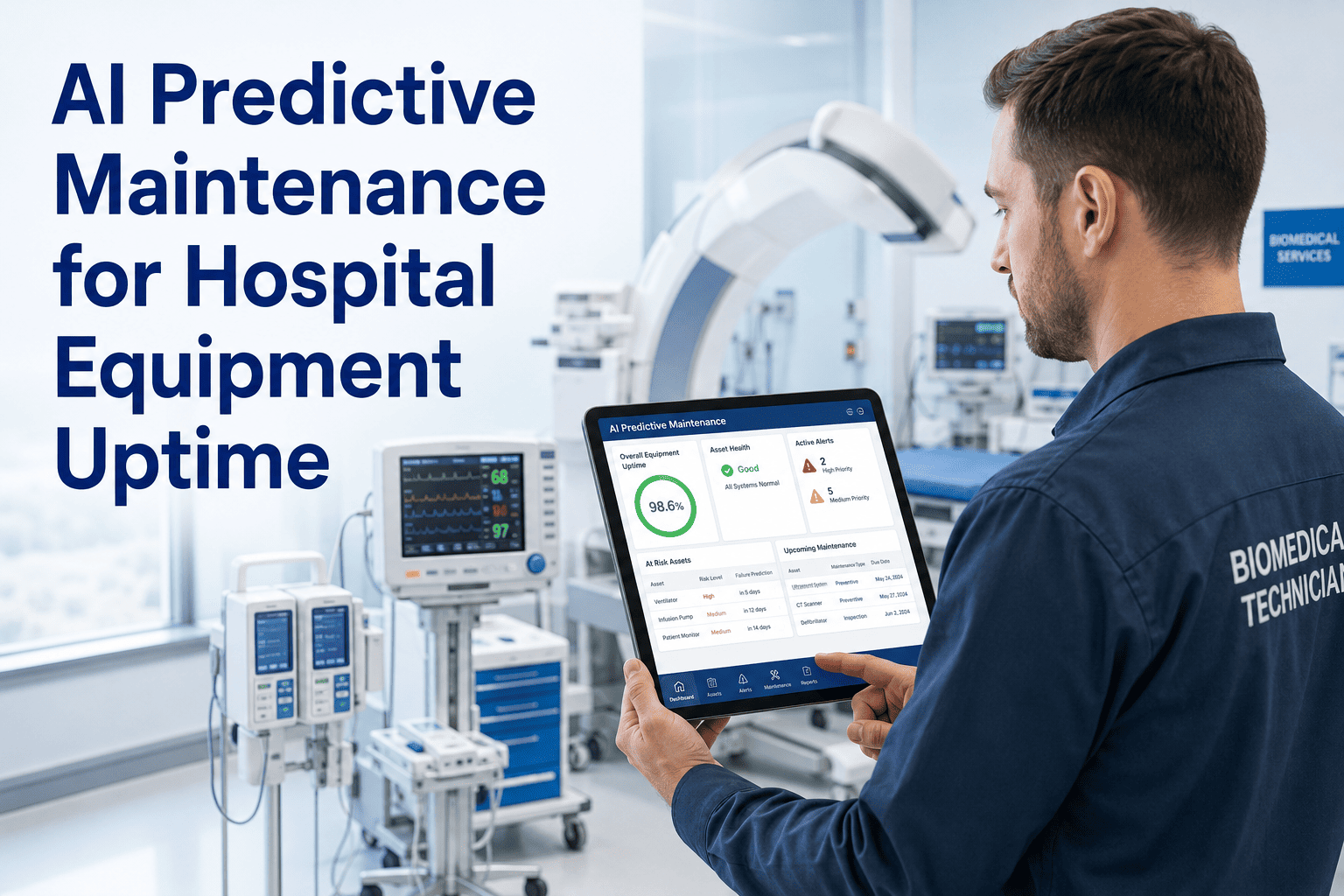
Critical medical equipment — ventilators, infusion pumps, patient monitors, defibrillators — sends runtime hours and alarm data to OxMaint, triggering PM work orders at actual usage thresholds rather than calendar intervals. Usage-based PM is more clinically appropriate and more TJC-defensible than fixed calendar scheduling.
BMS / Life Safety Integration
Building Management System alarms — HVAC anomalies, electrical fault codes, fire system alerts — auto-generate prioritised work orders in OxMaint within minutes of detection. Life safety system test results captured digitally with photo evidence, eliminating the paper-form-to-cabinet workflow that produces TJC documentation findings.
AI Digital Twin
Each critical asset has a digital twin in OxMaint — modelling degradation curves from PM history, usage data, and failure events. The twin predicts the probability of failure for life-critical equipment 30–90 days ahead, enabling proactive intervention before equipment downtime creates clinical risk or TJC finding exposure.
SAP / ERP Integration
OxMaint maintenance data feeds SAP for consolidated capital and operating budget management — biomedical equipment replacement recommendations from OxMaint generate SAP capital appropriation requests automatically, with supporting condition data and remaining useful life estimates attached.
Frequently Asked Questions
How quickly can OxMaint be configured for Joint Commission readiness?
Most hospitals complete the core compliance configuration — asset registration, PM programme setup, escalation rules, and EC committee dashboard — within 90 days. TJC-defensible PM compliance data starts accumulating from Day 1. A full survey-ready documentation package is available within one complete PM cycle after go-live.
Does OxMaint support Alternative Equipment Maintenance (AEM) programme documentation?
Yes — OxMaint maintains the complete AEM programme documentation per equipment category: clinical risk assessment, interval justification, outcome monitoring data, and annual programme review record. The documentation satisfies TJC EC.02.04.01 requirements and is exportable in survey-ready format on demand.
Can OxMaint generate a TJC survey documentation package on short notice?
Yes — OxMaint generates a complete Environment of Care documentation package in 2 hours: all asset records, PM compliance history, life safety test results, AEM documentation, and corrective action records — formatted for TJC surveyor review. St. Carver's 4,200-asset package was generated in 2 hours for the survey that produced zero findings.
How does OxMaint handle the PM compliance escalation that St. Carver found most impactful?
OxMaint's escalation configuration is fully customizable: technician alert at due date, supervisor alert at 48 hours overdue, department director at 5 days, and VP/CNO at 10 days if still open. Every overdue PM generates a documented escalation record — showing when each alert was sent, who received it, and when the work order was ultimately completed.
Does OxMaint work for DNV and CMS compliance as well as Joint Commission?
Yes — OxMaint's healthcare compliance module is configured for TJC, DNV GL, and CMS Conditions of Participation. The underlying PM programme, documentation standards, and audit trail requirements are common across all three accreditation frameworks. Hospitals accredited by DNV or using CMS swing-bed certification use the same OxMaint platform with framework-specific report templates.
Healthcare CMMS — OxMaint
Zero Findings. $1.2M Saved. Your Hospital Is Next.