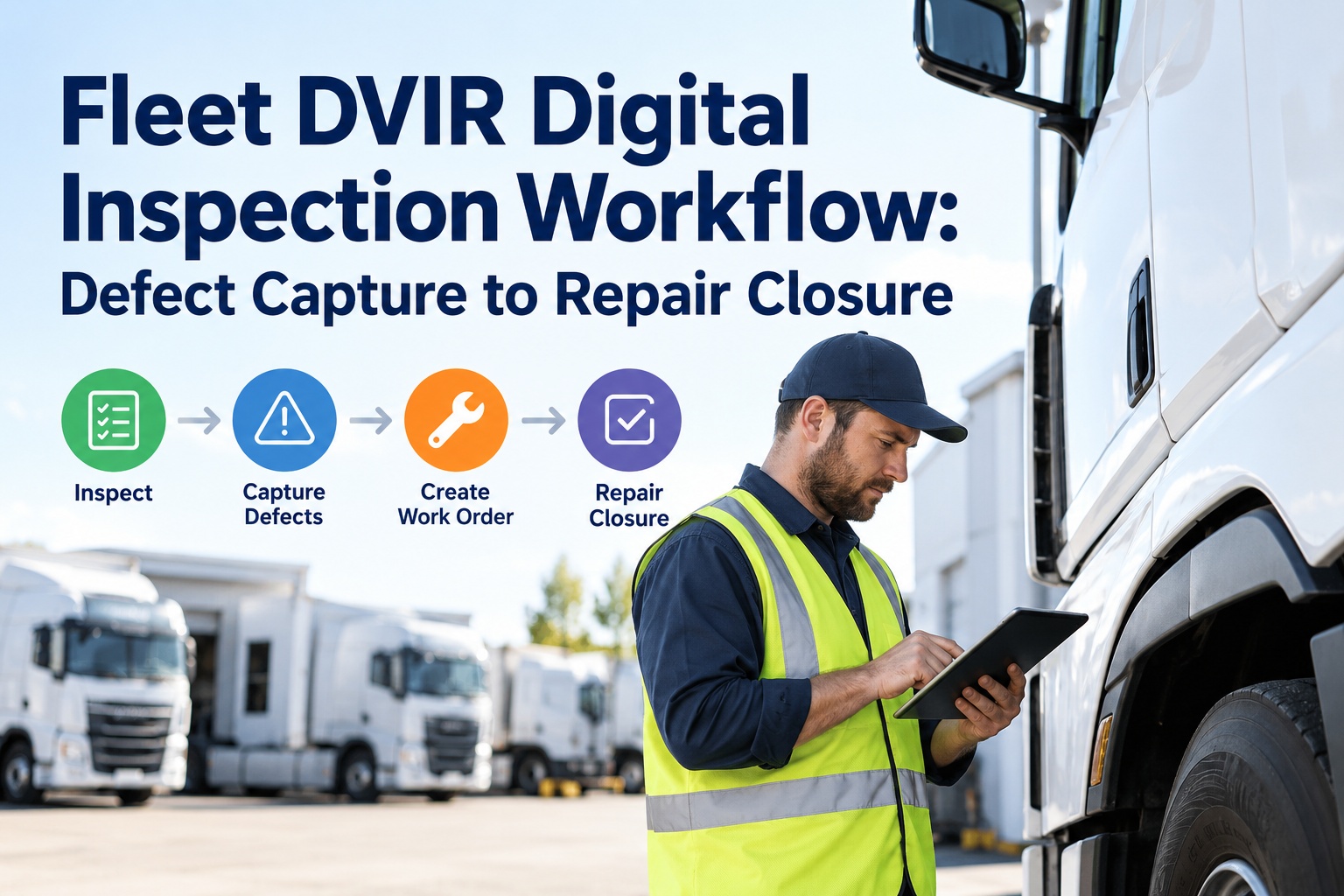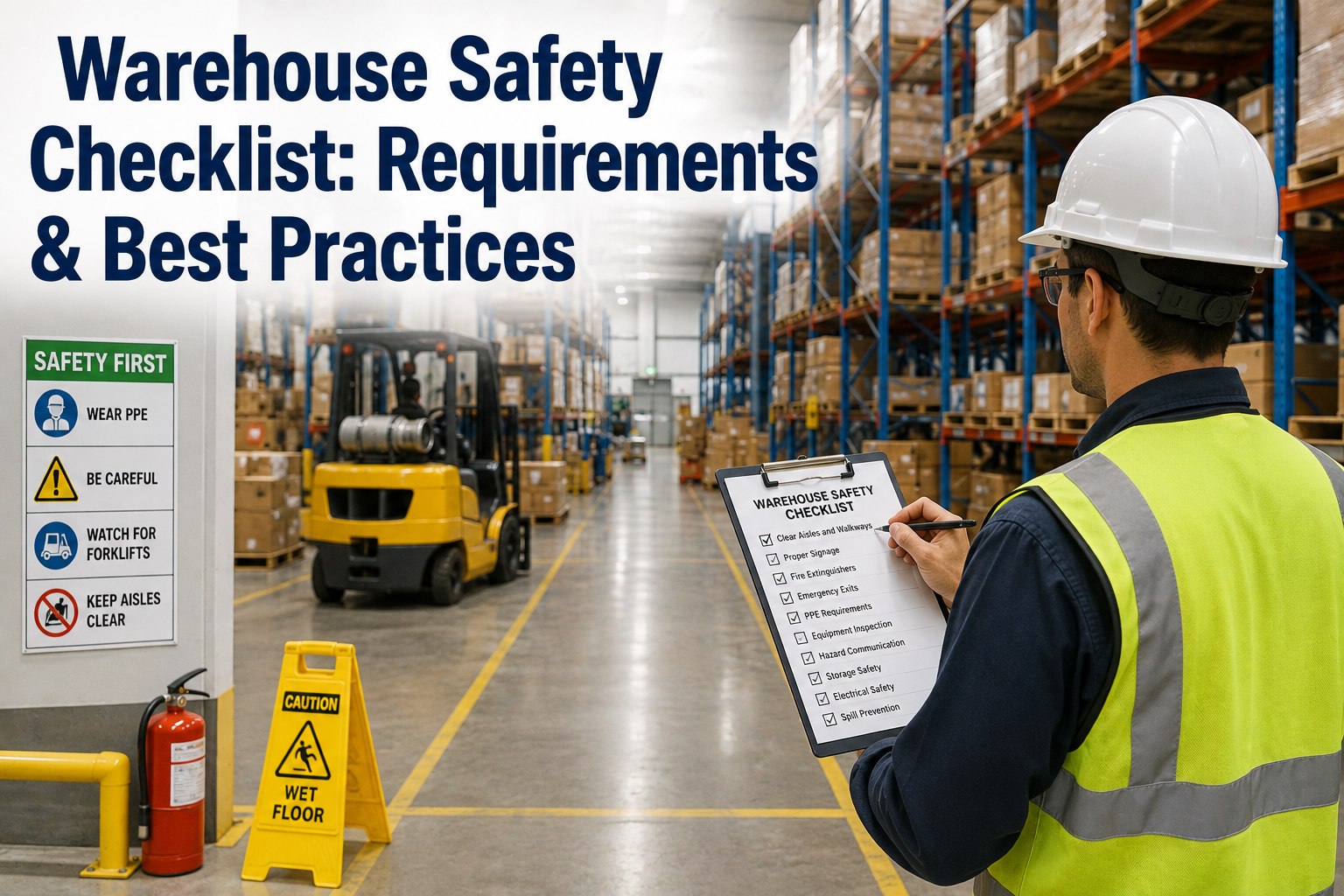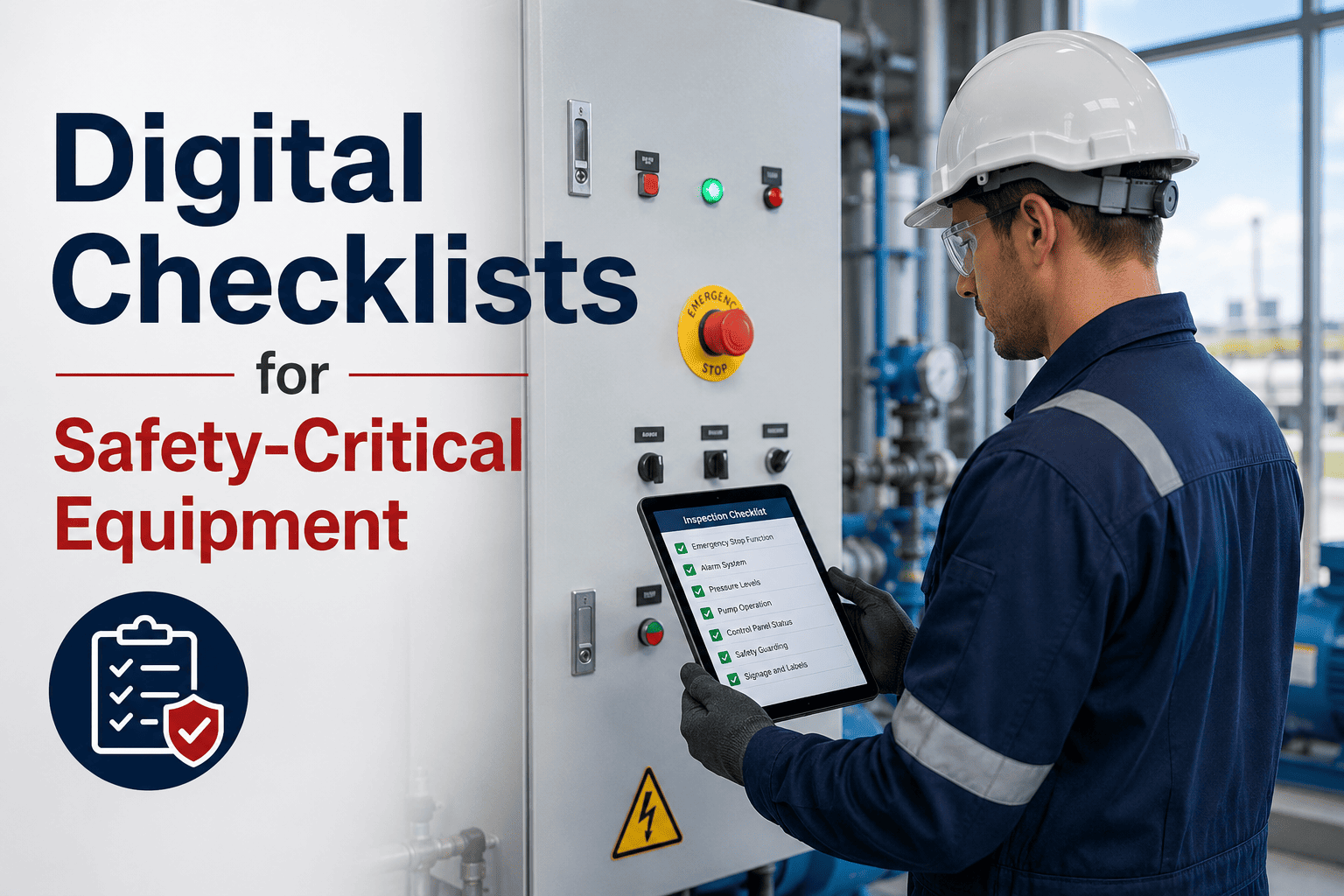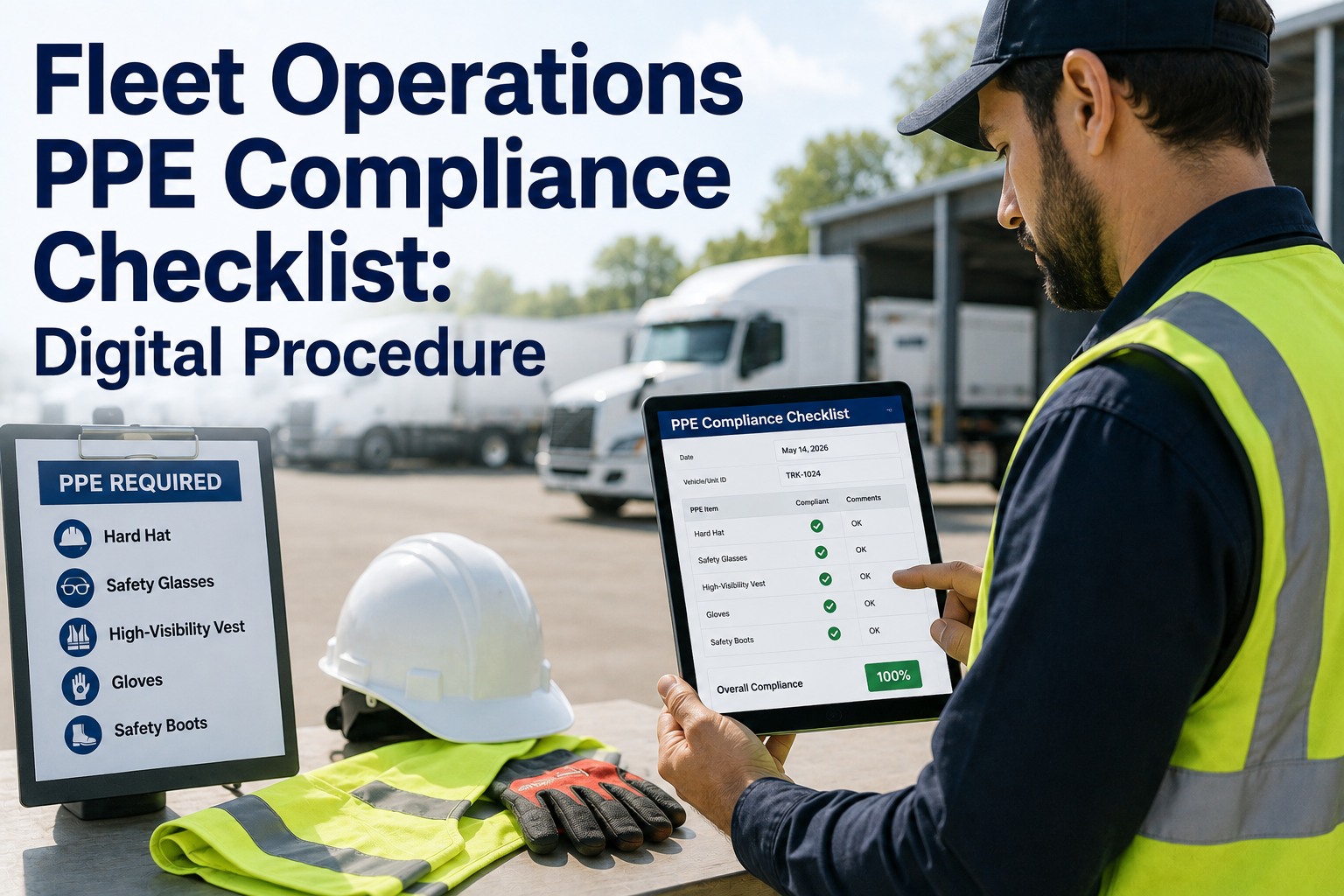
A fleet operations PPE compliance checklist is the documented, step-by-step procedure your technicians follow to verify that every piece of personal protective equipment — hard hats, hi-vis vests, gloves, eye protection, steel-toe boots, respirators and fall protection — is present, inspected, correctly rated and replaced on schedule, as required by OSHA 1910.132. Done on paper or from memory, it fails audits and leaves technicians exposed; done digitally, it becomes proof of compliance with photo evidence, timestamps and e-signatures on every inspection. This guide gives you the complete OSHA-aligned procedure, the replacement thresholds that decide whether PPE stays in service, and the audit trail regulators and insurers expect to see. It also shows how OxMaint turns the checklist into auto-scheduled work orders with mobile capture, so nothing gets missed between yard checks, DVIR walkarounds and shop visits. You can Start Free Trial and run your first digital PPE inspection today — free forever plan, no credit card.
Is your fleet's PPE compliance audit-proof — or just a clipboard in the break room?
OSHA's PPE standard requires a written hazard assessment, documented training and verified fit for every exposed worker. Fleets that can't produce records on demand face citations averaging $16,131 per serious violation — and far more after an injury. Here's the digital procedure that closes the gap.
Why paper PPE checklists fail fleet safety audits
OSHA 1910.132(d) requires a written certification of hazard assessment — and 1910.132(f) requires documented training verification for every PPE user. A photocopied form with a pencil tick can't prove either. When a compliance officer or insurance auditor asks for records, fleets relying on paper typically produce gaps: missing dates, illegible signatures, no evidence the defect was fixed.
A regional fleet running 60 technicians across three depots recently failed a customer-mandated EHS audit because PPE inspection records existed for only 11 of the previous 26 weeks. The contract penalty — $18,500 — dwarfed what a digital procedure would have cost. The fix wasn't more discipline; it was a system where the checklist can't be skipped, because the work order won't close without photo evidence and an e-signature.
Fleet operations PPE compliance checklist: the 6-zone inspection procedure
Run this procedure per technician at shift start, and per vehicle during DVIR walkarounds. Each zone has pass/fail criteria and a replacement threshold — anything failed triggers a replacement work order before the technician starts work.
- Hard hat shell free of cracks, dents, UV chalking
- Suspension intact; manufacture date under 5 years
- Safety glasses ANSI Z87.1 marked, lenses unscratched
- Face shield available for grinding/battery work
- Vest meets ANSI/ISEA 107 Class 2 or 3 for yard work
- Retroreflective tape intact, not faded or peeling
- FR clothing rated for fueling/welding tasks (NFPA 2112)
- No tears, fuel saturation or missing closures
- Cut-resistant gloves (ANSI A4+) for sharp metal/glass
- Chemical gloves (nitrile/neoprene) for fluids & solvents
- Insulated gloves rated for electrical work (ASTM D120)
- No holes, hardening or chemical degradation
- Boots ASTM F2413 marked (impact + compression)
- Soles not worn smooth; no exposed toe cap
- EH rating verified for electrical tasks
- Metatarsal guards where heavy parts are handled
- Respirator fit-test current (within 12 months, 1910.134)
- Cartridges within service-life schedule, sealed storage
- Hearing protection NRR matched to measured dB levels
- Spare plugs/muffs stocked at each depot
- Harness webbing free of cuts, frays, chemical damage
- Lanyard shock absorber not deployed; labels legible
- Harness within manufacturer service life (typically 5 yr)
- Task-specific PPE per written hazard assessment
When PPE stays in service — and when it's pulled
The difference between a checklist and a compliance program is a defined threshold. These are the pass/fail lines your digital form should enforce — a failed item shouldn't just be noted, it should block sign-off until replaced.
| PPE Item | Inspection Trigger | Replace / Pull From Service When | Standard |
|---|---|---|---|
| Hard hat shell | Every shift | Any crack, dent, penetration, or 5 years from manufacture date | ANSI Z89.1 |
| Hard hat suspension | Every shift | Cracked cradle, torn straps, or 12 months of service | ANSI Z89.1 |
| Hi-vis vest | Weekly | Faded background fabric, damaged retroreflective tape, or ~6 months daily use | ANSI/ISEA 107 |
| Safety footwear | Monthly | Exposed toe cap, sole separation, or worn-through tread | ASTM F2413 |
| Respirator | Each use + fit test | Failed seal check, cracked facepiece, or fit test over 12 months old | OSHA 1910.134 |
| Fall harness | Each use + annual competent-person inspection | Any fall arrest event, frayed webbing, or manufacturer service-life limit | OSHA 1910.140 / ANSI Z359 |
| Electrical gloves | Each use + lab test | Failed air test, puncture, or electrical test over 6 months old | ASTM D120 / F496 |
In OxMaint, each threshold becomes a mandatory field with a pass/fail toggle — a "fail" automatically generates a replacement work order, reserves the item from spare-parts inventory, and notifies the supervisor. The technician can't close the inspection with an unresolved fail, which is exactly the control auditors look for.
Digital fleet operations PPE compliance checklist vs paper forms
Fleets that digitize safety inspections typically cut audit prep from days to minutes and close the loop on defects the same shift instead of the same month.
- Forms filled from memory at end of shift — or not at all
- No photo proof; signatures illegible or missing
- Failed PPE noted on paper, replaced "when someone remembers"
- Audit prep = digging through filing cabinets, 2–3 days
- No visibility across depots until a quarterly review
- Mobile checklist with mandatory fields — can't skip steps
- Photo evidence + e-signature captured at point of inspection
- Fail auto-creates replacement work order + parts reservation
- Audit-ready history exported in minutes, per employee or asset
- Live compliance dashboard across every depot and shift
See your fleet's PPE compliance live — in 30 minutes
Book a demo and we'll build your exact PPE checklist into OxMaint: mobile capture, auto work orders, audit-ready records. Bring your toughest audit question.
How OxMaint turns this checklist into a compliance program
A checklist on its own is a document. OxMaint makes it a system — scheduled, enforced, evidenced and measured — the same way it runs preventive maintenance for your vehicles and shop equipment.
Your 6-zone PPE procedure runs on any phone or tablet. Required pass/fail toggles, photo capture and e-signature mean the work order physically cannot close with skipped steps — eliminating pencil-whipping and missed inspections across shifts.
Set PPE checks per shift, weekly vest inspections, monthly footwear audits and annual harness competent-person reviews once — OxMaint generates the work orders on interval forever. Fleets using PM scheduling cut missed inspections by 90%+ in the first quarter.
Track gloves, vests, cartridges and harnesses like any spare part — min/max levels per depot, auto-reorder alerts, and instant reservation when a failed inspection triggers a replacement. No technician waits days for compliant PPE.
Dashboards show completion rate, failure trends and repeat offenders by depot, shift or individual. When OSHA, FMCSA or a customer EHS audit arrives, export the full certified history — hazard assessments, training records, inspection evidence — in minutes, not days.
From paper to audit-proof in 4 weeks
Most fleets digitize their PPE procedure faster than they expect — the checklist content already exists, it just needs enforcing. A typical single-depot rollout:
Import your 6-zone procedure into OxMaint, set mandatory fields, photo requirements and pass/fail thresholds per item. Load your PPE stock into inventory with min/max levels.
Create recurring work orders: per-shift checks, weekly vest audits, monthly footwear reviews, annual harness inspections. Assign by role so every technician sees their queue on mobile.
One 45-minute toolbox session per shift. Technicians run their first digital inspections; supervisors verify the fail-to-work-order loop with a live test item.
Review the compliance dashboard: completion rate, failure hotspots, stock-outs. Adjust intervals and reorder points. You now hold 30 days of audit-ready, certified records.
"We went from scrambling before every customer audit to exporting a full year of PPE records in one click. Our insurer cut our premium review short — the documentation answered everything."
Fleet operations PPE compliance checklist: common questions
Three things: a written workplace hazard assessment certifying which PPE each task requires (1910.132(d)), verification that each employee received and understood PPE training (1910.132(f)), and evidence that PPE is maintained in sanitary, serviceable condition. A digital checklist with timestamps, photos and e-signatures satisfies all three on demand.
Daily-use items (hard hats, glasses, gloves, hi-vis) get a visual check every shift; footwear monthly; respirators before each use plus an annual fit test; fall harnesses before each use plus a documented competent-person inspection at least annually. Electrical gloves need lab testing every 6 months under ASTM F496.
Yes — that's the advantage of running both in one CMMS. OxMaint schedules vehicle DVIRs, fleet PM intervals and PPE inspections side by side, so a technician's daily queue shows everything due. Book a Demo to see a combined fleet safety workflow on real data.
In OxMaint, a failed item blocks inspection sign-off and automatically creates a replacement work order, reserves stock from the depot's PPE inventory and notifies the supervisor. The loop closes only when new PPE is issued and confirmed — so no one works unprotected while a form sits in a tray.
Yes. OxMaint's free-forever plan includes mobile checklists, work orders and asset records — enough to run this entire procedure for a depot. Start Free Trial and import the 6-zone checklist above; most fleets are live within a week, no credit card required.
Make your next PPE audit the easiest one you've ever passed
Digitize this fleet operations PPE compliance checklist in OxMaint — auto-scheduled inspections, photo evidence, instant replacement work orders and audit-ready records for every technician, vehicle and depot.