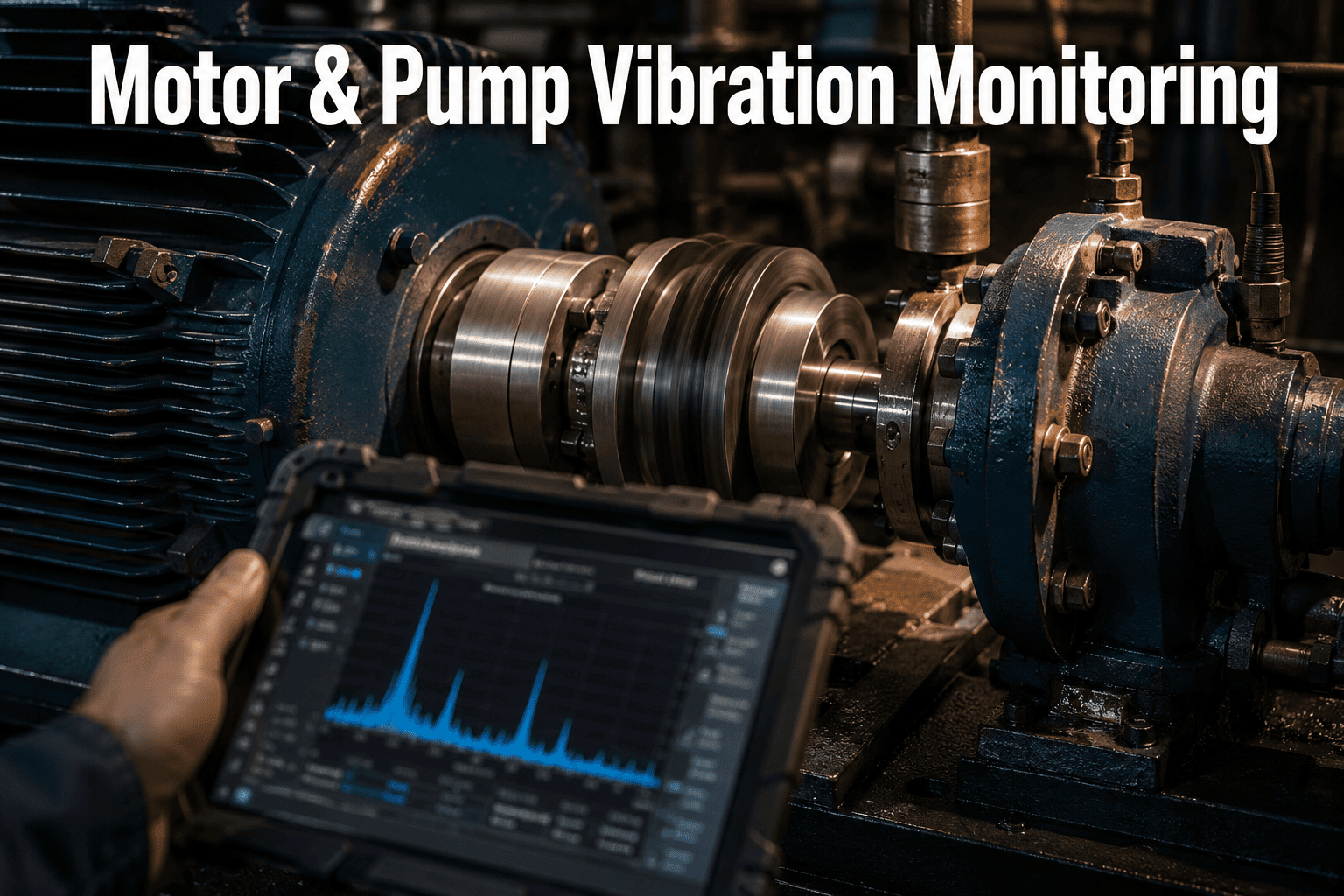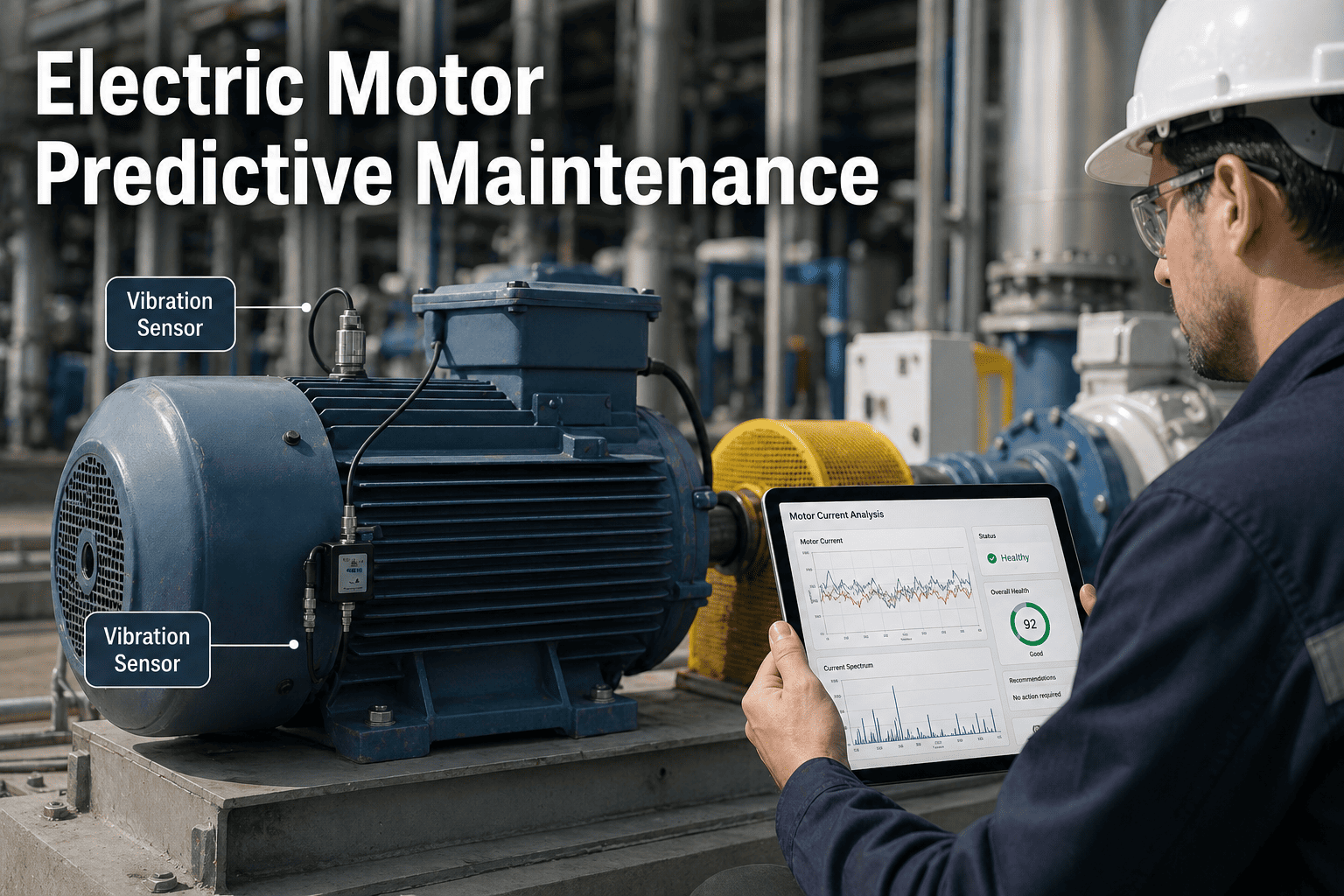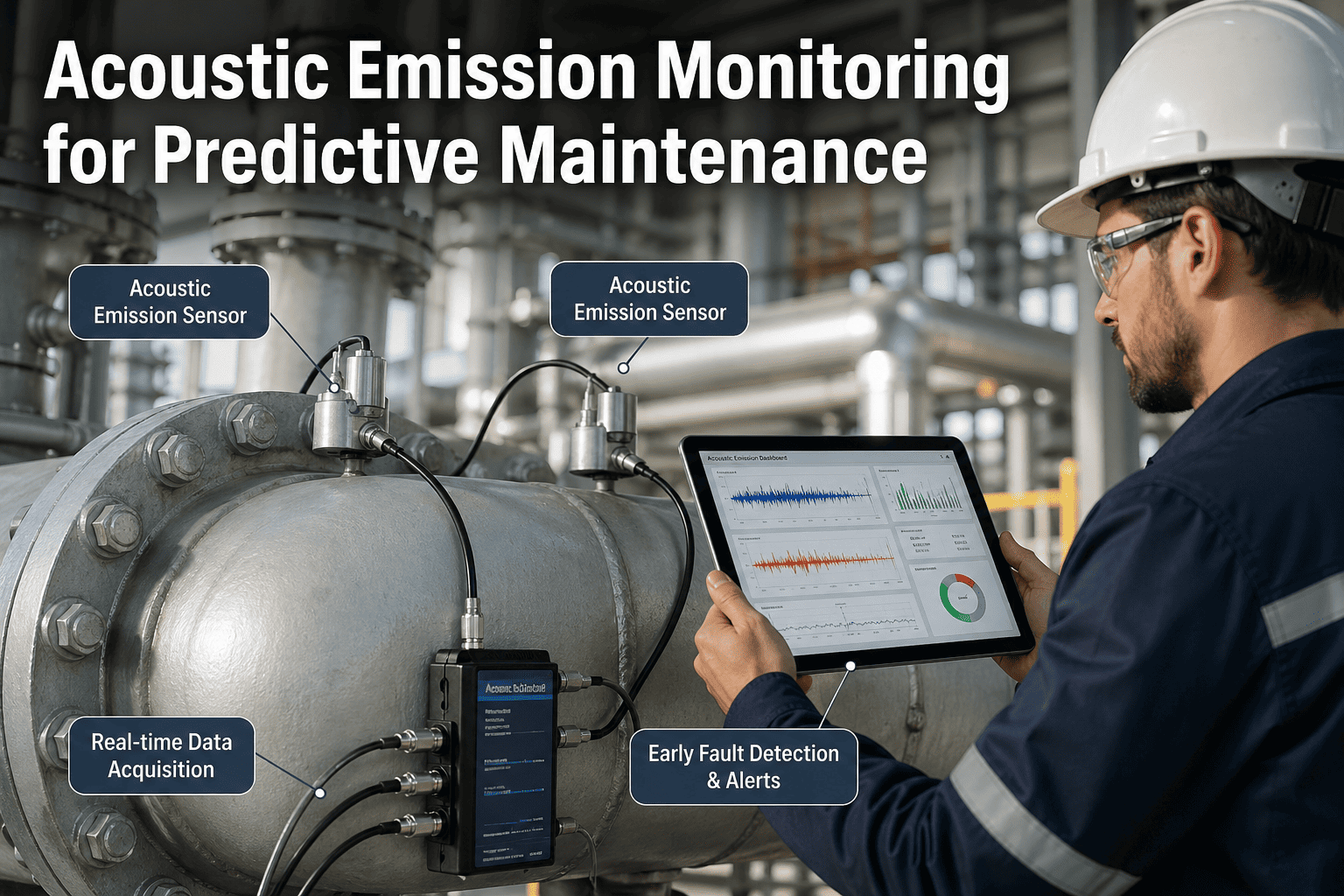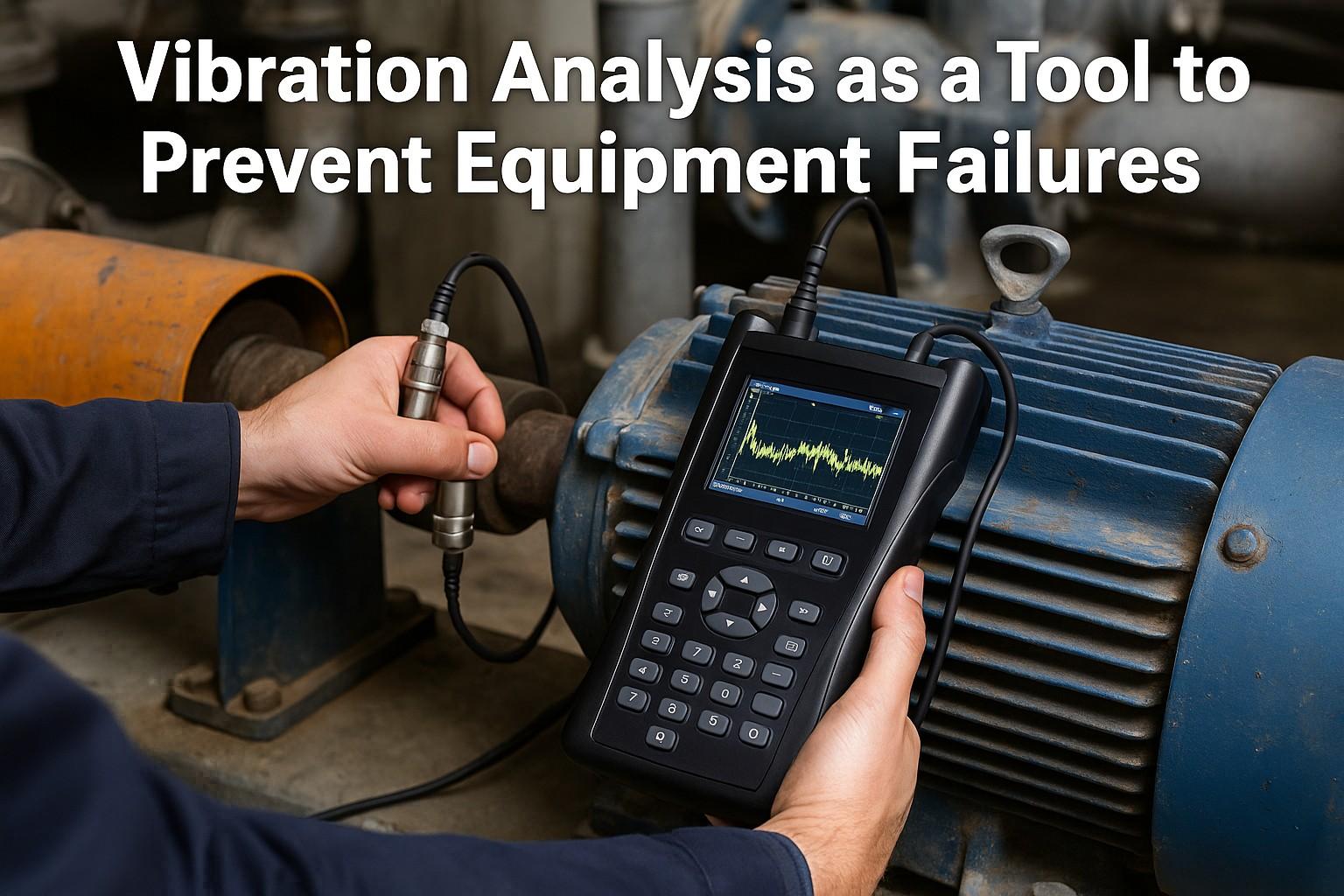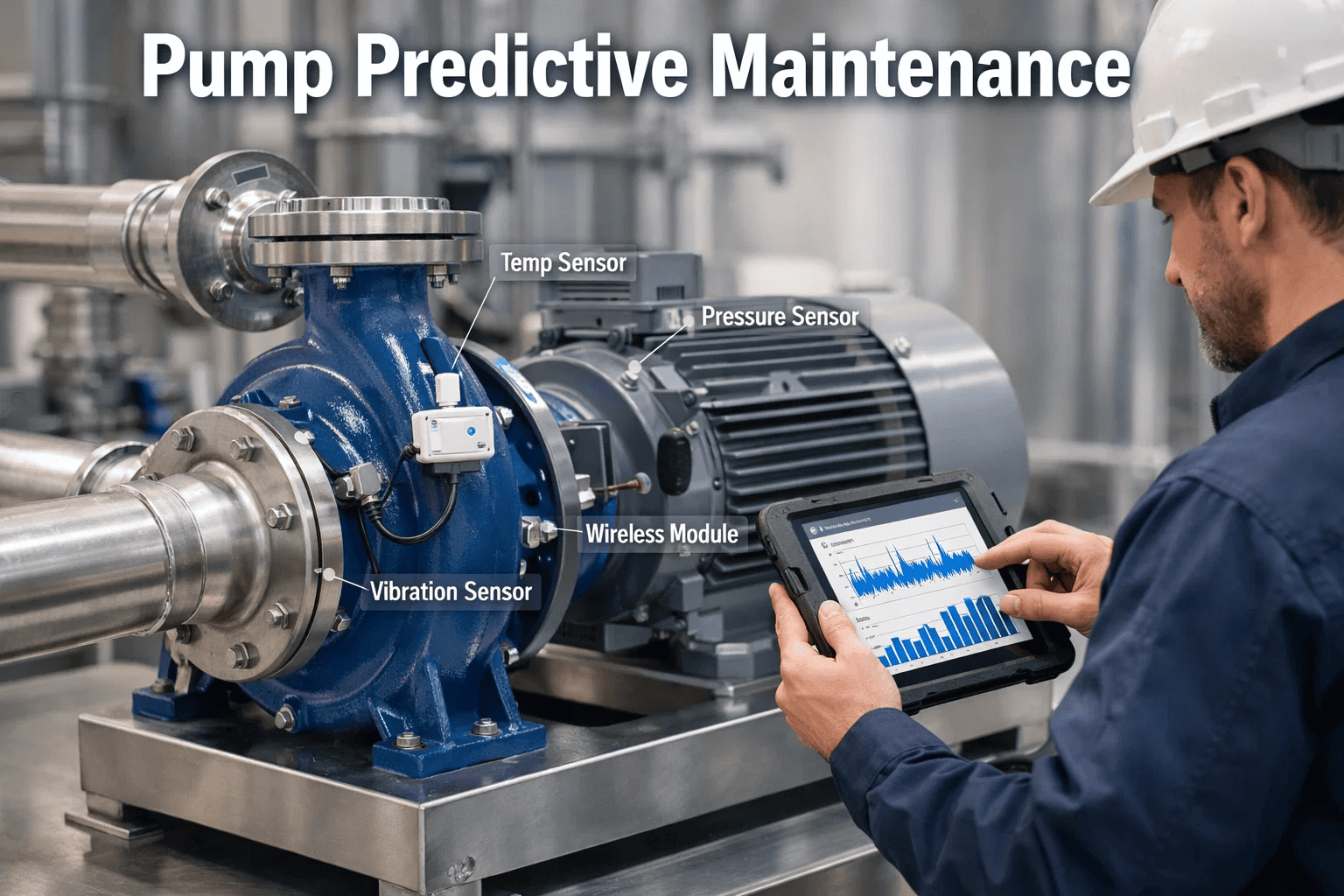
The average industrial pump operates 6,200 hours per year carrying coolant, process fluid, or utility water — and when it fails, the downstream cost is rarely the pump itself. A 75 kW centrifugal pump that seizes on a Tuesday afternoon typically takes a $4,800 seal-and-bearing repair and turns it into a $62,000 event once you add the lost production hours, the emergency callout, the spilled process fluid, and the expedited shipping on replacement parts. Predictive maintenance flips that equation — vibration, temperature, pressure, and current signatures are shouting about cavitation, seal degradation, and bearing wear weeks before catastrophic failure, but only if someone is listening. Want to hear what your pumps are saying right now? start a free trial or book a demo to see live sensor dashboards on typical pump fleets.
Detect Pump Failures 3–8 Weeks Before They Happen
A sensor-driven framework for catching cavitation, seal leaks, bearing wear, and impeller damage early — using IoT, CMMS-integrated analytics, and the failure signatures your pumps are already producing.
See your actual cavitation, vibration, and bearing signatures on a live OxMaint dashboard
Our pump reliability engineers will pull sample sensor data from a comparable pump fleet and show you exactly which failure signatures look like on the dashboard, how work orders auto-trigger from threshold breaches, and what your ROI looks like over a 12-month window.
The Six Pump Failure Modes — And What Each One Sounds Like to a Sensor
Pumps fail in predictable ways, and each mode has a distinct signature across vibration, temperature, pressure, and motor current. The work of predictive maintenance isn't mystical — it's knowing which sensor channel shifts first for each failure mode, and setting thresholds that catch the shift weeks before operators would notice a problem. Ready to map these signatures to your fleet? book a demo and we'll run your pump list through our failure-mode library.
Cavitation
Vapor bubbles collapse violently on impeller surfaces, eroding the vane edges and creating a distinctive "gravel through the pump" acoustic signature. Left unchecked, cavitation destroys an impeller in 4–8 weeks.
Bearing Wear
Rolling element or race surface damage creates distinct frequency peaks proportional to shaft speed. Bearing temperature climbs 8–15°C above baseline as the condition progresses.
Mechanical Seal Leak
Face wear and elastomer degradation reduce seal pressure integrity. Flush flow rate rises, collection pans fill faster, and eventually process fluid escapes to the drain.
Impeller Imbalance
Wear, erosion, or material buildup shifts the impeller's center of mass. Vibration rises at exactly shaft-rotation frequency — a clean, textbook pattern easy to detect automatically.
Shaft Misalignment
Coupling misalignment after foundation settling or thermal growth creates 2x peaks and a 4–9% motor current draw increase. Accelerates bearing and seal degradation downstream.
Motor Winding Degradation
Insulation breakdown, rotor bar cracks, or stator faults produce abnormal harmonic signatures in motor current. Thermal imaging confirms hot spots on windings.
What Predictive Maintenance Actually Requires — The Four-Layer Stack
Predictive maintenance is not a single product you buy — it's a four-layer architecture. Miss any layer and the system generates either noise (too many false alarms) or silence (missed failures). Here is the minimum viable stack for pump monitoring, with OxMaint handling layers 2 through 4 natively.
Threshold breaches auto-generate corrective work orders with failure mode, criticality, parts list, and procedure attached — so technicians act within the warning window instead of scrolling through dashboards.
Baseline learning per asset, frequency-band analysis, trend detection, and failure-mode pattern matching. Adaptive thresholds eliminate the false alarms that static limits always produce on variable-duty pumps.
Gateway or edge device pushes sensor readings every 1–60 seconds to a historian or cloud store. OxMaint ingests via MQTT, OPC-UA, or REST and correlates to asset tag automatically.
Triaxial vibration accelerometers on bearing housings, RTDs on seal chambers, pressure transducers on suction and discharge, current transformers on motor leads. Wireless or wired depending on site.
The Pain of Doing This Without Predictive Maintenance
Teams still running time-based PM on pumps — "replace bearings every 18 months, seals every 24 months" — absorb a set of compounding costs that are invisible on the monthly P&L until they aren't. These are the four that show up most consistently in root-cause analyses.
Industry studies find 29% of time-based PM work is performed on equipment that didn't need intervention. That's labor, parts, and production window consumed with no reliability gain — often introducing defects through intrusive maintenance.
A pump on an 18-month PM schedule can develop cavitation at month 4 and fail catastrophically at month 11 — the PM calendar isn't listening. These "between interval" failures account for 61% of reactive pump work orders in plants without sensor monitoring.
A failed seal that runs for 36 hours before detection contaminates the process fluid, ruins the bearing downstream, and sometimes damages the impeller. One late-detection seal failure can multiply the repair cost by 5–9x.
When a pump fails and there's no sensor history, the RCA is guesswork. Teams replace parts they don't need to replace, miss the real cause, and the next failure happens the same way. Sensor-backed RCA closes 73% more findings correctly on first attempt.
How OxMaint Operationalizes Pump Predictive Maintenance
Many CMMS platforms offer "IoT integration" as a checkbox feature. OxMaint treats predictive maintenance as a full workflow: sensor data becomes a threshold breach, which becomes a work order, which becomes a scheduled repair with parts staged and procedures attached — all before the failure event. Want to see it running end-to-end? start a free trial and connect your first sensor in under 20 minutes.
OxMaint accepts vibration, temperature, pressure, and current readings from any standard gateway. Readings are tagged to the asset automatically through the hierarchy: Portfolio > Property > System > Pump > Component.
The system learns normal operating ranges per pump, per duty cycle. Adaptive thresholds replace static alarm limits, cutting false alarms by 82% versus fixed-threshold systems.
Cavitation, bearing wear, misalignment, and seal degradation signatures are detected from frequency-band trends. The dashboard shows not just "alarm" but "probable cause: bearing inner race damage, est. 9–14 days to failure."
A threshold breach creates a corrective WO with failure mode, recommended parts from inventory, estimated labor hours, criticality score, and procedure link. Planners see ready-to-schedule work, not raw alerts.
Because the warning window is weeks, not hours, the work is scheduled — not reacted to. Parts are staged, permits are pulled, and the repair slots into a production window rather than interrupting one.
Sensors confirm the repair restored baseline. MTBF, MTTR, and cost-per-repair metrics update automatically. The failure event joins the reliability history feeding the next prediction.
Reactive vs. Time-Based vs. Predictive — The Economics Compared
The three maintenance strategies produce very different cost curves over a 5-year window. This comparison uses industry-average cost data for a mid-sized pump fleet (80 pumps, 25–150 kW each) and reflects what OxMaint customers typically see in their first 24 months.
| Cost Component | Reactive (Run-to-Failure) | Time-Based PM | Predictive (OxMaint) |
|---|---|---|---|
| Annual MRO Parts Spend | $412K | $298K | $204K |
| Annual Maintenance Labor | $680K | $520K | $390K |
| Emergency Callout Premium | $184K | $72K | $18K |
| Production Downtime Loss | $1.12M | $480K | $140K |
| Collateral Damage Events | 14/year | 5/year | 1/year |
| Total Annual Cost | $2.40M | $1.37M | $752K |
| 5-Year Cost Projection | $12.0M | $6.85M | $3.76M |
| Pump MTBF (hours) | 3,800 | 6,200 | 11,400 |
Results From OxMaint Pump Predictive Rollouts
These figures are drawn from OxMaint customer performance reviews across chemical processing, food & beverage, water utilities, and manufacturing plants within the first 18 months of sensor-integrated rollout.
Frequently Asked Questions
Do I need to instrument every pump, or can I start with the critical ones?
Start with Tier 1 and Tier 2 pumps — the ones whose failure stops production or creates a safety event. Most plants see 80% of the ROI from instrumenting 20–25% of the fleet. OxMaint's asset hierarchy makes it easy to mark which pumps are monitored and scale up over 6–12 months as the value becomes obvious. Non-critical pumps can stay on a condition-based PM schedule with periodic route-based vibration readings.
How accurate are the failure predictions in practice?
Accuracy varies by failure mode. Cavitation and bearing wear are detected with 87–92% precision in production environments because their signatures are strong and distinctive. Impeller imbalance sits around 85%, and seal leak detection — which relies on pressure and flow sensors rather than vibration alone — runs 78–84%. False alarm rates drop rapidly after the 14–21 day baseline learning period. The practical outcome: almost all catastrophic failures are predicted, with a small residual rate of false alarms that decreases as the baseline matures.
What's the minimum sensor configuration for meaningful predictive maintenance?
For a standard centrifugal pump, the minimum viable configuration is one triaxial vibration sensor on the drive-end bearing housing plus an RTD for bearing temperature. That combination catches 70–75% of common failure modes. Adding suction and discharge pressure transducers brings you to 85%+, and motor current monitoring covers the remaining motor-side failures. OxMaint works with any combination — you can start minimal and expand later.
How does OxMaint handle pumps with highly variable duty cycles?
OxMaint's adaptive baseline learns normal vibration and temperature ranges per operating state — a pump running at 40% speed has different normal ranges than the same pump at 90%. The system automatically segments data by duty condition and applies condition-appropriate thresholds. This is the difference between predictive maintenance that works on variable-duty pumps and systems that generate nothing but false alarms on them.
Your Pumps Are Already Telling You When They'll Fail. OxMaint Translates the Signal.
Vibration, temperature, pressure, and current data turn into auto-generated work orders with failure mode identified, parts staged, and procedures attached — so your team schedules repairs in planning windows instead of firefighting at 2 AM. Median customer payback is 4.2 months.