Boiler Feed Pump Maintenance: Failure Modes, PM & Predictive Monitoring

Connect with Industry Experts, Share Solutions, and Grow Together!

Join Discussion Forum
boiler-feed-pump-maintenance-monitoring

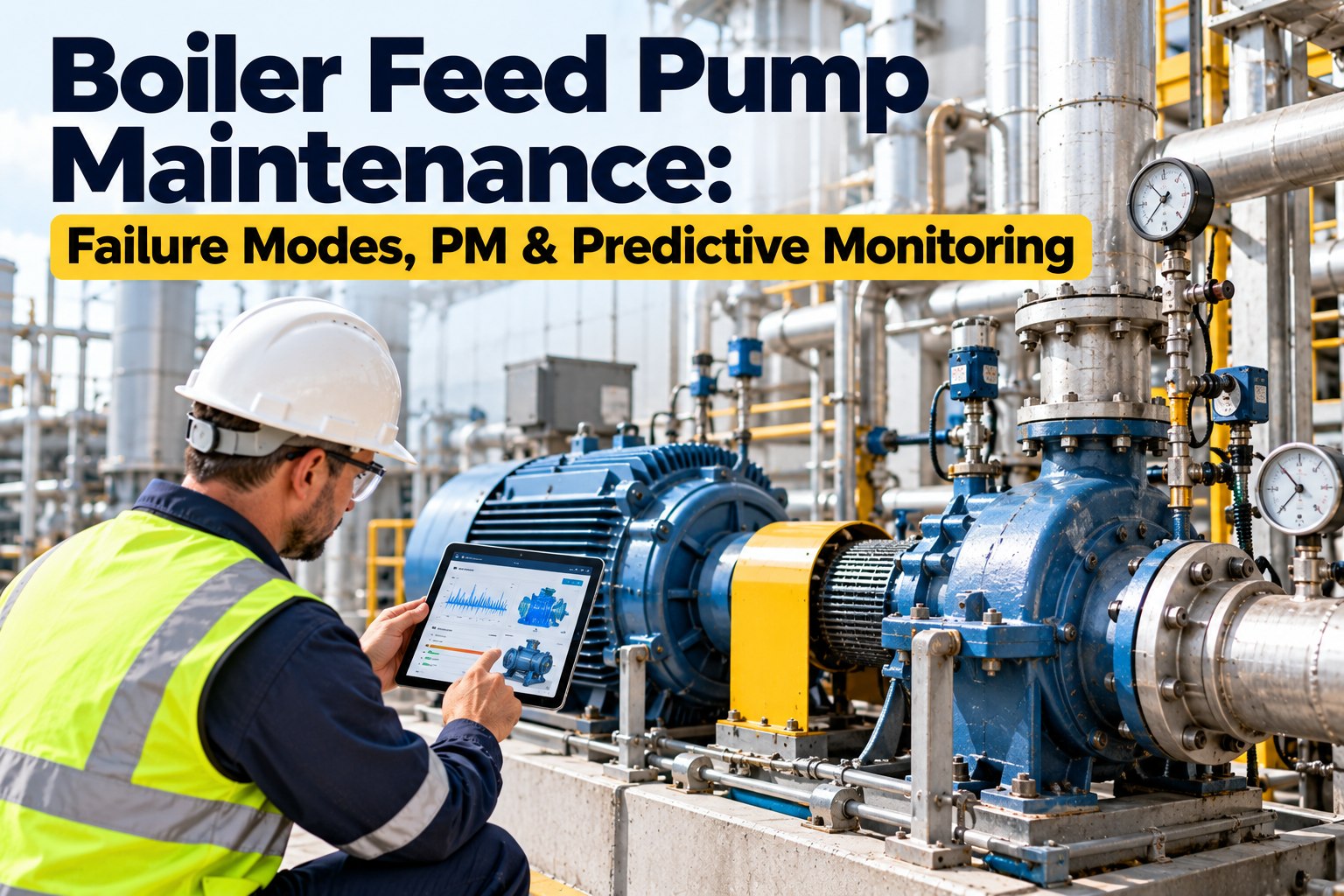
A boiler feed pump is one of the hardest-working and least-forgiving machines in the plant  and when a thrust bearing degrades, a balance disc wears, or a mechanical seal starts to weep, the warning signs appear weeks before the pump lets go. Miss them and you're looking at a seized bearing, a seal blowout, and a forced outage on a critical BOP asset. This guide maps the real failure modes of boiler feed pumps to the monitoring that catches each one early, and shows how OXMAINT AI, the AI-powered power-plant CMMS, ties vibration, lubrication, seals and runtime into one predictive workflow.

Power Generation · Balance of Plant · Critical BOP Equipment · 2026

Boiler Feed Pump Maintenance: Failure Modes, PM & Predictive Monitoring

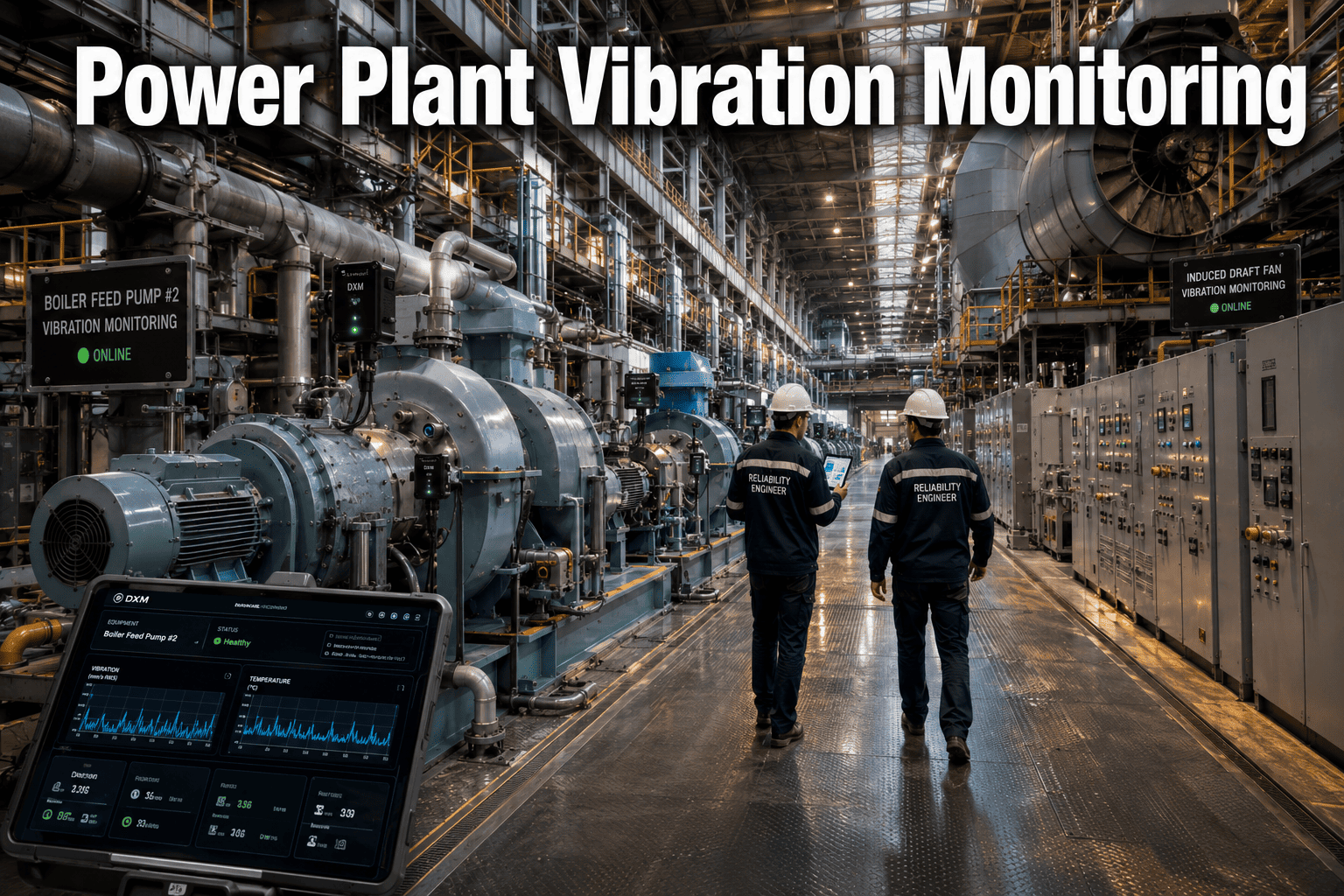
Rising bearing vibration, a weeping seal, an efficiency slide no one's trending — on a boiler feed pump those are the hours-to-weeks warning before a forced outage. OXMAINT AI, the AI-powered CMMS and maintenance management software, runs the full pump workflow: watch vibration, temperature, seal and performance trends, raise the work order the moment a threshold drifts, and trigger runtime-based PM before failure — so a critical BOP pump is caught early, not after it seizes.

1Monitor → 2Detect Drift → 3Work Order → 4Runtime PM
LIVE PUMP TRENDS
Vibration velocity
Bearing temp Δ
Seal flush flow
Efficiency vs design
Threshold drift raises the work order automatically
6
condition-monitoring methods tracked on every pump
4
degradation stages from early wear to failure
1–10 kHz
high-frequency band that flags cavitation inception
500 hr
runtime interval for vibration analysis & trending

The Failure Modes That Take Feed Pumps Down

Boiler feed pumps rarely fail without warning — they fail in known patterns, each with a signature you can watch for. Thrust bearing degradation, balance disc wear and seal leaks lead the list on feed pumps specifically, and each maps to a monitoring method that catches it early. Book a demo to see pump monitoring in OXMAINT AI.

Failure modeWhat’s happeningHow it’s caught
Bearing wear Surface fatigue, then rising defect-frequency vibration at bearing locations Vibration spectral analysis + bearing temperature differential
Thrust bearing / balance disc Axial-thrust wear on the balance device — a leading feed-pump failure Vibration signature + temperature at drive / non-drive end
Seal deterioration Mechanical seal face wear and progressive leakage Seal flush flow, quench pressure, seal-pot level trending
Cavitation Insufficient suction head collapsing vapor bubbles against surfaces High-frequency vibration analysis in the 1–10 kHz band
Misalignment / looseness Coupling misalignment and mechanical looseness loading the bearings Overall vibration levels + alignment verification
Performance degradation Efficiency decline and hydraulic imbalance against the design curve Head / flow / power trended vs design; efficiency-decline trigger

Six Ways to Watch a Feed Pump

Predictive maintenance on a feed pump isn't one sensor — it's six complementary signals, each revealing a different failure path. OXMAINT AI trends all six against baseline and design, so a single drifting parameter surfaces before it compounds. Start free and trend every signal in OXMAINT AI.

Vibration signatures
Overall levels and spectral analysis across bearing locations — detecting imbalance, misalignment, looseness and bearing defect frequencies.
Bearing temperature
Continuous monitoring at drive-end and non-drive-end; a rising temperature differential signals lubrication breakdown.
Seal condition & leakage
Mechanical seal flush flow, quench pressure and seal-pot level trended to catch seal faces weeping early.
Cavitation detection
High-frequency vibration analysis in the 1–10 kHz range to identify cavitation inception before damage accrues.
Performance-curve trending
Head, flow and power compared against the design curve — an efficiency decline past baseline raises a work order.
Discharge pressure & flow
Continuous comparison of the actual operating point against design, exposing hydraulic imbalance as it develops.

How a Feed Pump Fails — in Four Stages

Catastrophic pump failure is the end of a progression, not a sudden event. Each stage leaves a measurable fingerprint, and the earlier you intervene, the cheaper and more planned the fix. OXMAINT AI watches for the Stage 1 fingerprint, when there's still weeks of runway. Book a demo to see early-stage detection in OXMAINT AI.

STAGE 1
4–8 weeks before failure
Microscopic bearing-surface wear begins; vibration at bearing defect frequencies starts to rise. The quietest signal — and the best moment to plan.
→
STAGE 2
2–4 weeks before failure
Seal faces begin to weep; bearing-housing temperature climbs above baseline. The fault is now visible on two independent signals.
→
STAGE 3
Days before failure
Efficiency falls and cavitation noise becomes audible. The window for a planned intervention is closing fast.
→
STAGE 4
Failure
Catastrophic bearing seizure or seal blowout — the forced outage a predictive program exists to prevent.

Stage 1 Is Weeks of Runway. Stage 4 Is a Forced Outage.

The difference between a planned seal change and a seized pump is whether anyone was watching the Stage 1 signal. OXMAINT AI trends vibration, temperature, seal and performance data continuously and raises the work order the moment a parameter drifts — turning a catastrophic failure into a scheduled job.

Runtime-Based PM: The Right Task at the Right Hour

Condition monitoring catches the unexpected; runtime-based PM handles the predictable. OXMAINT AI triggers each task at its own runtime milestone, with multiple independent triggers on the same pump, and generates the work order automatically when a threshold is reached. Start free and schedule runtime PM in OXMAINT AI.

500 hr
Vibration analysis and trending across all pump types
1,000 hr
Bearing temperature and oil analysis on feedwater & condensate pumps
2,000 hr
Mechanical seal leakage inspection
4,000 hr
Coupling alignment verification
8–12k hr
Mechanical seal replacement
12,000 hr
Wear ring clearance measurement
15,000 hr
Motor insulation resistance testing
25–30k hr
Complete pump overhaul for critical pumps

From Sensor to Work Order

A predictive program is only as good as what happens after an alert. OXMAINT AI closes the loop from the asset register through live data to the field technician's device. Book a demo to walk the full loop in OXMAINT AI.

01
Asset registry
Build each pump's record with nameplate data and design curves — the baseline every trend is measured against.
↓
02
Connect condition data
Vibration transmitters, temperature sensors, flow meters and pressure transducers feed in through IoT gateway integration.
↓
03
Set intelligent thresholds
Alerts fire when a parameter drifts from baseline — a bearing temperature rise or a vibration-velocity crossing, for example.
↓
04
Execute field work orders
Technicians work from mobile devices with inspection checklists, and every job logs into the pump's failure history.

Built to Fit the Plant’s Data

A feed-pump program has to plug into what the plant already runs, not replace it. OXMAINT AI integrates with the historian and controls, and keeps the history that makes the next failure easier to see. Start free and connect your plant data in OXMAINT AI.

◉
Historian & SCADA Integration
Connects to plant historian and SCADA through standard OPC-UA, MQTT and REST API interfaces — no rip-and-replace.
◉
Multi-Trigger PM Scheduling
Independent runtime triggers on the same pump, so vibration, seal and overhaul tasks each fire at their own milestone.
◉
Design-Curve Baselines
Every pump carries its nameplate data and design curves, so performance drift is measured against where it should be.
◉
Efficiency-Decline Triggers
A measured efficiency decline against baseline raises a work order on its own — before degradation becomes damage.
◉
Mobile Field Execution
Technicians complete inspections and log readings from mobile devices, keeping the pump's data current and complete.
◉
Failure-History Logging
Every work order feeds the pump's failure history — turning repeat patterns into earlier, more confident calls.
“

Our feed pumps used to fail the expensive way — a seized bearing or a blown seal that took the unit down with no warning we'd acted on. The change wasn't buying more sensors; it was finally trending vibration and bearing temperature together against a baseline, so the slow rise four to six weeks out actually raised a work order. Now the seal changes and bearing jobs are planned shutdowns, and the failure history on each pump tells us which ones to watch hardest.

Rotating Equipment Reliability Engineer · Thermal Power Plant

Frequently Asked Questions

What are the leading failure modes on boiler feed pumps?
On feed pumps specifically, thrust bearing degradation, balance disc wear and seal leaks lead the list, alongside general bearing wear, cavitation from insufficient suction head, misalignment and performance degradation. Each maps to a monitoring method that catches it early. Book a demo to see the failure-mode mapping in OXMAINT AI.
How is cavitation detected before it causes damage?
Cavitation inception shows up as high-frequency vibration, so it's caught through vibration analysis in the 1–10 kHz band — well before the noise becomes audible or the impeller erodes.
How much warning does predictive monitoring give?
Pump failure progresses through four stages. The earliest — microscopic bearing wear with a slow rise in defect-frequency vibration — typically appears four to eight weeks before failure, which is the window a predictive program is built to catch.
What PM tasks run on a feed pump, and when?
Runtime-based: vibration trending at 500 hours, bearing temperature and oil analysis at 1,000, seal leakage inspection at 2,000, alignment verification at 4,000, seal replacement at 8,000–12,000, wear-ring measurement at 12,000, motor insulation testing at 15,000, and a full overhaul at 25,000–30,000 for critical pumps.
Does it work with our existing plant systems?
Yes. OXMAINT AI connects to the plant historian and SCADA through standard OPC-UA, MQTT and REST API interfaces, and brings sensor data in via IoT gateway integration — working with the instrumentation you already have. Start free and connect your systems in OXMAINT AI.

Catch the Feed Pump Before It Catches You.

Run boiler feed pump maintenance on the OXMAINT AI maintenance management software — six condition-monitoring signals trended against baseline, four-stage degradation caught early, runtime-based PM triggered automatically, and a failure history that sharpens every future call. Plan the seal change instead of surviving the seizure.
By William Jerry

✨

Experience
Oxmaint's
Power

Take a personalized tour with our product expert to see how OXmaint can help you streamline your maintenance operations and minimize downtime.

Book a Tour

Share This Story, Choose Your Platform!

Connect all your field staff and maintenance teams in real time.

Report, track and coordinate repairs. Awesome for asset, equipment & asset repair management.

Schedule a demo or start your free trial right away.

iphone

Get Oxmaint App
Most Affordable Maintenance Management Software

Download Our App