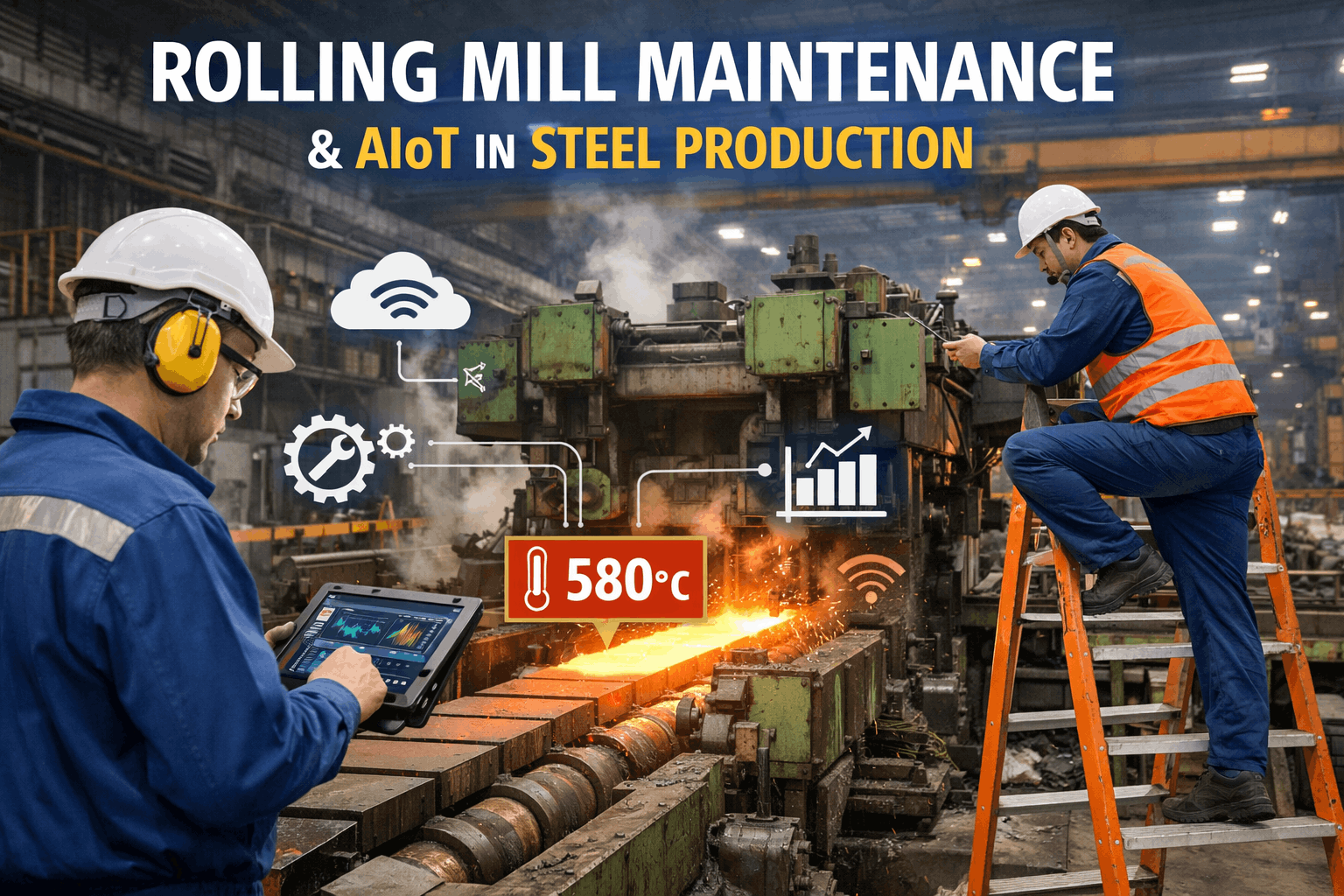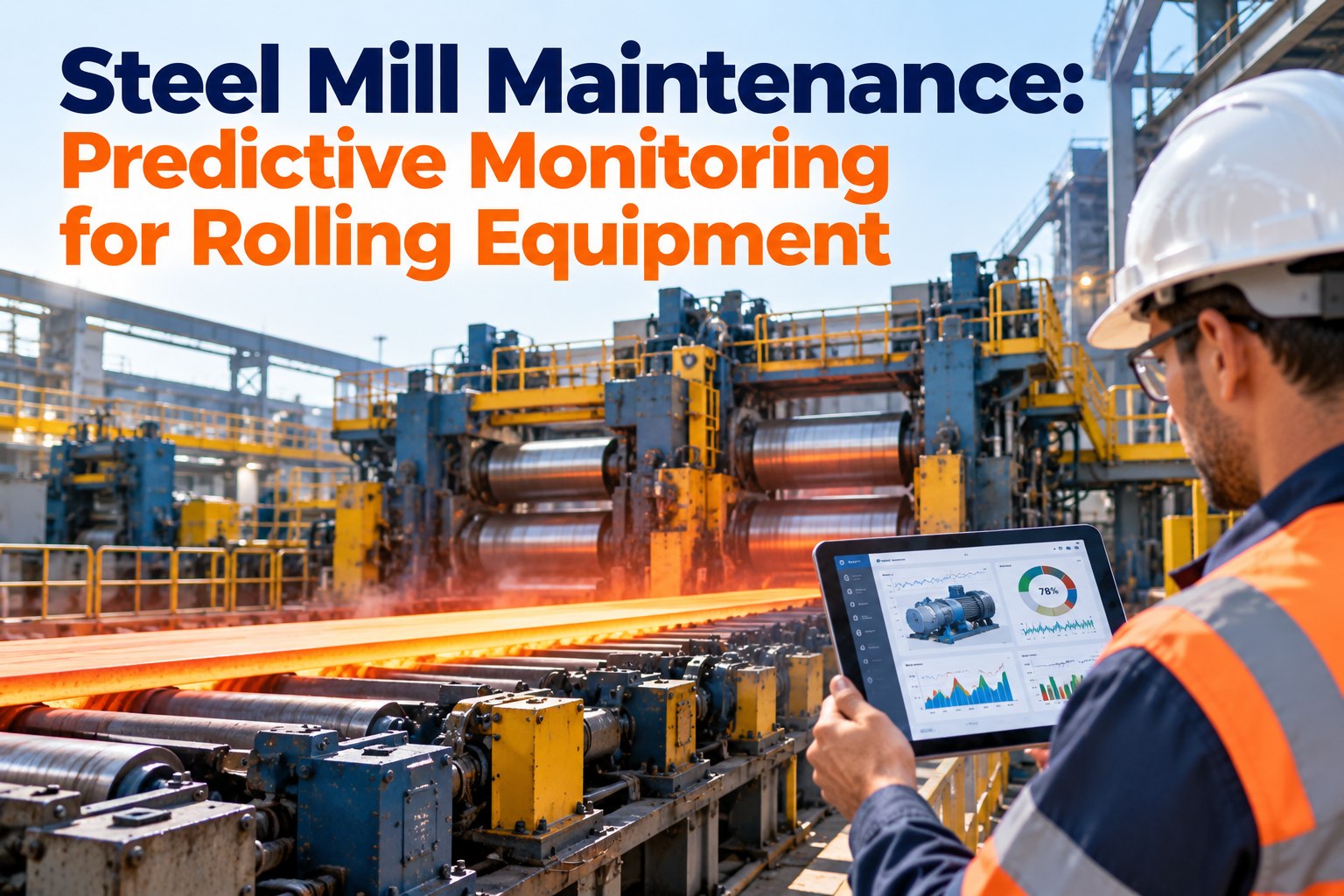
In a rolling mill, a bearing that starts to run hot or a gearbox that begins to vibrate rarely stays a small problem. Rolling lines run tight schedules, and an unplanned stop on one stand can hold up the entire line behind it. The warning signs are usually there days or weeks earlier — in vibration, temperature, oil condition and drive behavior — but they are only useful if someone sees them and turns them into planned work. This guide walks through predictive monitoring for rolling equipment, stand by stand, and shows how OXMAINT AI, the AI-powered CMMS, connects condition findings to inspections, work orders and PM.
Catch Rolling Equipment Problems Before the Line Stops.
Vibration readings in one tool, oil reports in another, and roll shop notes on paper — so a developing fault is easy to miss and slow to act on. OXMAINT AI links the workflow in one maintenance platform: inspections and condition findings raise issues, issues become work orders, and PM schedules and alerts keep rolling equipment on a planned footing.
Follow the Line: What to Monitor, Zone by Zone
Predictive monitoring works best when it follows the product through the mill. Each zone has its own critical assets and its own early-warning signals. Book a demo to map your own mill line in OXMAINT AI.
Reading the Signals: What Changes and What It May Mean
| Signal | May point to | Typical work order action |
|---|---|---|
| Rising bearing vibration | Bearing wear, misalignment, looseness | Inspect, confirm with trending, plan bearing replacement |
| Chock or bearing temperature climb | Lubrication or cooling problem, bearing damage | Check lube supply and cooling, inspect chock |
| Metal particles in gearbox oil | Gear or bearing wear | Resample, inspect gear mesh, plan repair |
| Hydraulic pressure or response drift | Seal wear, valve issues, contamination | Check filters, valves and cylinder condition |
| Motor current unusual | Mechanical load change or electrical fault | Inspect drive train and electrical connections |
| Chatter or surface marks on product | Roll, bearing or drive-train issue | Review roll records, inspect stand components |
Don't Forget the Roll Shop Loop
Rolls are the one asset that travels between the mill and the shop. Tracking the full cycle gives you better wear data and fewer surprises. Start free and track roll history in OXMAINT AI.
An Alert Nobody Owns Is Just Noise.
Monitoring only pays off when every finding lands with an owner, a work order and a due date. Keep the stand, the asset, the evidence and the fix in one record, and your team stops chasing information and starts fixing causes.
Three Alert Levels, Three Clear Responses
Rolling Mill Monitoring Checklist
Frequently Asked Questions
Keep the Mill Rolling on Your Schedule.
Bring inspections, condition findings, roll history, work orders and PM into one platform with OXMAINT AI. Try it free, or book a demo and see the workflow on your own rolling equipment.