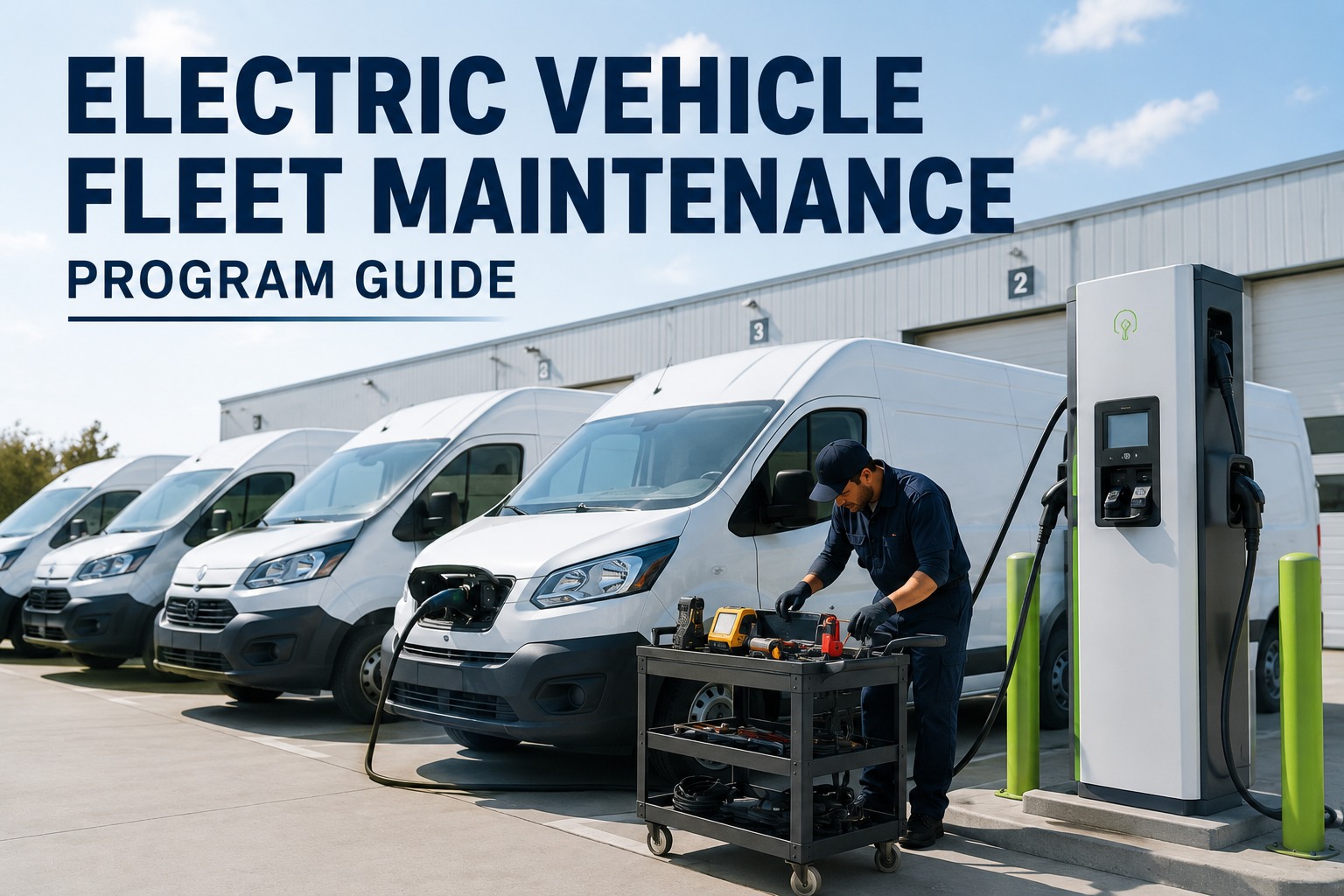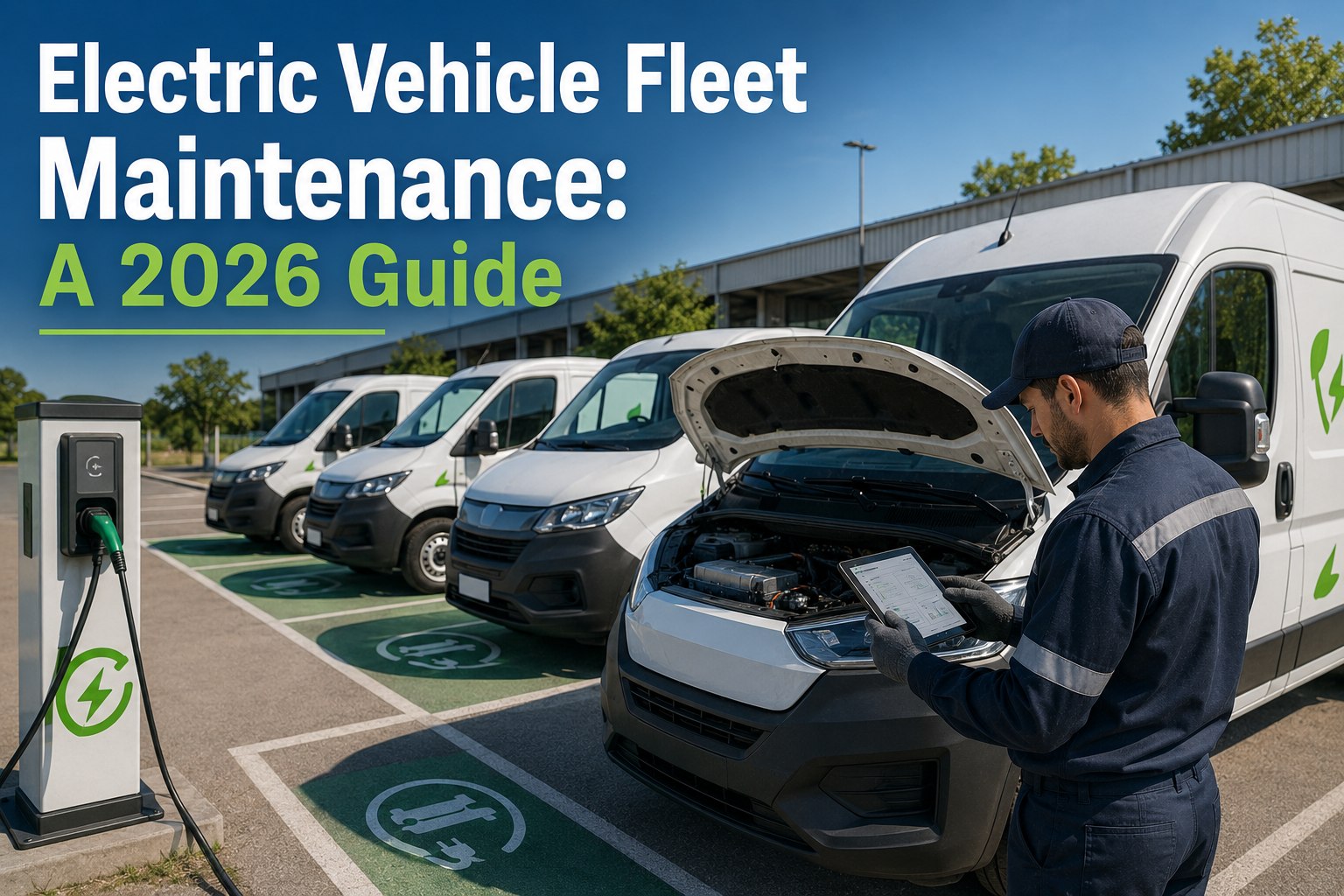
Electric vehicle fleet maintenance in 2026 is a fundamentally different discipline from maintaining internal-combustion engines — fewer moving parts and no oil changes, but complex high-voltage battery systems, regenerative braking calibration, and charging infrastructure that demand specialized preventive maintenance schedules. Fleet managers transitioning to electric vehicle maintenance need CMMS software that tracks battery state-of-health, manages EV-specific work orders, and structures preventive maintenance for mixed ICE-and-EV fleets. OxMaint provides AI-powered EV fleet maintenance management with battery health tracking, EV PM libraries, and charging infrastructure maintenance — you can Start Free Trial to see how it works on your assets today.
Are your EV maintenance costs actually lower — or just hiding in your battery pack?
Electric vehicles eliminate oil changes and cut brake wear by up to 70%, but battery degradation, thermal management faults, and charging infrastructure failures can erase those savings fast. Without EV-specific preventive maintenance tracking, a 50-vehicle electric fleet can lose $180K+ annually in unplanned downtime and premature battery replacement.
What changes when you shift from ICE to electric fleet maintenance
A typical Class 6 ICE truck requires 25–35 scheduled maintenance events per year across oil, filters, belts, and fluids. A comparable electric truck needs roughly 60% fewer touchpoints — but each one carries higher complexity and higher diagnostic cost when missed.
A 120-vehicle delivery fleet in Texas electrified 40% of its trucks in 2025 expecting 50% lower maintenance costs. Without EV-specific PM tracking, battery thermal faults went undetected on 14 vehicles, charging depot connectors degraded without inspection schedules, and regen-brake caliper corrosion spiked because technicians assumed "EVs don't need brake service." Net result: $220K in unplanned maintenance and 340 hours of downtime in the first year — erasing the fuel savings entirely. A CMMS with EV-specific PM libraries, battery health monitoring, and charging infrastructure maintenance would have caught every issue at a fraction of the cost.
Electric vehicle maintenance vs ICE fleet maintenance: what actually changes
The maintenance schedule shift from ICE to EV isn't just "fewer oil changes." Entire maintenance categories disappear while new high-stakes categories emerge. Here's what fleet managers must plan for.
| Maintenance Category | ICE Fleet | Electric Fleet | CMMS Impact |
|---|---|---|---|
| Engine Oil & Fluids | 25–35 events/yr per vehicle | Eliminated (thermal fluid only) | Remove from PM schedule; track coolant instead |
| Brake System | Pads/rotors every 40–60K mi | 70% less wear — but caliper corrosion risk rises | Extend PM interval; add quarterly caliper inspection |
| Battery System | N/A | State-of-health monitoring every 30 days | New PM trigger: capacity degradation thresholds |
| High-Voltage System | N/A | Insulation & isolation test quarterly | Certified-tech assignment + lockout/tagout |
| Charging Infrastructure | N/A | Connector + firmware checks monthly | Treat chargers as maintenance assets in CMMS |
| Tire Wear | Standard rotation schedule | 20% faster wear from instant torque + weight | Shorten rotation interval; track tread depth per axle |
| Diagnostic Complexity | OBD-II + mechanical | BMS firmware, HV isolation, thermal loops | Requires specialized work-order templates |
Building an EV maintenance schedule: the 2026 preventive maintenance checklist
A defensible electric vehicle maintenance schedule must cover battery health, high-voltage safety, regenerative braking, thermal management, and charging infrastructure — not just replicate ICE intervals with fewer line items. Here's what belongs in your CMMS for every EV in the fleet.
Battery & Energy Storage
- State-of-health (SoH) logging every 30 days — alert below 80%
- State-of-charge (SoC) baseline calibration quarterly
- Cell balance check and BMS firmware update per OEM cycle
- Thermal management coolant level & pH every 15K miles
- Battery pack enclosure inspection for moisture ingress
High-Voltage System
- HV insulation resistance test quarterly
- Isolation fault diagnostic every 25K miles
- Inverter & motor cooling loop inspection
- HV cable connector torque verification semi-annually
- Lockout/tagout compliance audit per work order
Regenerative Braking
- Regen calibration & blending test every 20K miles
- Brake pad inspection — extend interval but don't skip
- Caliper slide-pin lubrication quarterly (prevent corrosion)
- Brake fluid moisture content test semi-annually
- Parking brake actuator function test
Charging Infrastructure
- DC fast-charger connector wear inspection monthly
- Charger firmware update & fault-log review
- Ground fault & insulation test on charging circuits
- Cooling system check on high-power dispensers
- Uptime tracking — target 97%+ availability per charger
Drivetrain & Chassis
- Reduction gearbox fluid check every 30K miles
- Tire rotation every 5K–7K miles (20% faster EV wear)
- Wheel alignment quarterly — EV torque demands precision
- Suspension bushing inspection (battery weight adds stress)
- Cabin air filter & HVAC heat-pump service
Compliance & Safety
- HV-certified technician assignment for all EV work orders
- DOT/FMCSA inspection adaptation for electric drivetrains
- Thermal event response plan documentation
- PPE inventory & dielectric glove certification tracking
- Audit-ready maintenance history per vehicle VIN
How much does EV fleet maintenance actually cost? The 2026 breakdown
Industry data shows electric vehicle maintenance costs 40–60% less than comparable ICE vehicles over the first 100,000 miles — but only when preventive maintenance is executed on schedule. When PM is deferred or mismanaged, EV repair costs can exceed ICE equivalents due to battery and HV system complexity.
| Cost Category | ICE Per Mile | EV Per Mile | Annual Delta (50 vehicles, 80K mi) |
|---|---|---|---|
| Scheduled PM & Fluids | $0.05 | $0.02 | −$120,000 |
| Brake System | $0.02 | $0.006 | −$56,000 |
| Battery Degradation Reserve | $0.00 | $0.015 | +$60,000 |
| Charging Infrastructure PM | $0.00 | $0.004 | +$16,000 |
| Tire Replacement | $0.015 | $0.022 | +$28,000 |
| Unplanned Repairs | $0.04 | $0.025 | −$60,000 |
| Total Maintenance Cost | $0.125/mi | $0.092/mi | −$132,000/yr |
A 50-vehicle electric fleet saves roughly $132,000 per year in maintenance versus ICE equivalents. But without a CMMS that tracks battery health, schedules charging infrastructure PM, and manages EV-specific work orders, those savings evaporate into unplanned HV repairs, premature battery replacement, and charger downtime. OxMaint captures every cost line so fleet managers can prove the ROI of electrification to leadership.
See how OxMaint structures your EV maintenance — before battery failures cost you five figures
Book a 30-minute demo and we'll map your electric fleet's PM schedule, battery health triggers, and charging infrastructure maintenance into a live CMMS workspace built for your operation.
How OxMaint powers EV fleet maintenance management
OxMaint is an AI-powered CMMS and EAM platform built to handle the full complexity of electric fleet O&M — from battery state-of-health triggers to charging depot uptime. Here's how maintenance & reliability teams use OxMaint to run mixed and pure-EV fleets without spreadsheets, paper work orders, or missed PM intervals.
EV-Specific PM Libraries
Pre-built preventive maintenance templates for battery health checks, HV insulation tests, regenerative brake calibration, thermal management, and charging connector inspection — assignable by vehicle make, model, and battery chemistry.
Battery Health Tracking & Predictive Alerts
Log state-of-health, state-of-charge, and capacity degradation per VIN. AI-driven predictive maintenance flags batteries trending toward failure before they hit the 70% threshold — triggering work orders automatically.
Charging Infrastructure as Maintenance Assets
Register every DC fast charger and Level 2 unit as a tracked asset with its own PM schedule, fault-log history, and uptime KPI. Monitor connector wear, firmware updates, and ground-fault tests in the same system as your vehicles.
Mixed-Fleet Work Order Management
Run ICE and EV work orders side by side with vehicle-specific templates, certified-tech assignment rules, lockout/tagout compliance, and digital work-order completion — no paper, no spreadsheets, full audit trail for FMCSA and DOT.
Transitioning to electric fleet maintenance: a 12-month rollout plan
Fleet electrification isn't a switch — it's a phased migration that demands new PM templates, technician training, and CMMS configuration at each stage. Here's how maintenance teams should sequence the transition across a 12-month horizon.
Audit & CMMS Configuration
Catalog every EV asset and charging unit in OxMaint. Build EV-specific PM libraries, set battery health thresholds, and create work-order templates for HV isolation tests, regen calibration, and thermal management. Train at least 2 technicians to HV certification.
Run First 10–15 EVs on the New Schedule
Deploy PM schedules on the first EV batch. Log battery SoH baselines, establish charger uptime benchmarks, and validate that regen-brake PM intervals match real-world wear patterns. Use OxMaint analytics to compare EV vs ICE cost-per-mile on identical routes.
Expand to 40–60% of Fleet
Roll EV PM schedules across the majority of the electric fleet. Activate predictive battery alerts, integrate charging infrastructure PM, and begin phase-out of obsolete ICE PM templates. Cross-train remaining technicians on HV safety and OxMaint mobile work orders.
AI-Driven Predictive Maintenance
Leverage 9–12 months of battery and charging data to let OxMaint's AI optimize PM intervals, predict battery failures 60–90 days out, and auto-trigger work orders. Report fleet-wide maintenance cost-per-mile, charger uptime, and compliance status to leadership in real time.
Electric vehicle fleet maintenance: frequently asked questions
Do electric vehicles need less maintenance than gas vehicles?
Yes — EVs require roughly 40–60% fewer scheduled maintenance events than ICE vehicles because they eliminate oil changes, transmission fluid, spark plugs, and most filter replacements. However, EVs introduce new maintenance requirements: battery state-of-health monitoring, high-voltage insulation testing, thermal management, and charging infrastructure PM. A CMMS like OxMaint helps fleet managers capture the savings while ensuring no EV-specific PM interval is missed. Book a Demo to see the EV PM templates in action.
How often should EV batteries be inspected in a fleet?
Fleet EV batteries should have state-of-health (SoH) and state-of-charge (SoC) data logged every 30 days, with a full diagnostic inspection — including cell balance, BMS firmware, and thermal management coolant — every 15,000 miles or quarterly, whichever comes first. OxMaint automates these intervals and triggers work orders automatically when battery capacity drops below configurable thresholds like 80% or 70%.
What is regenerative braking maintenance and why does it matter?
Regenerative braking uses the electric motor to slow the vehicle and recover energy, reducing brake pad wear by up to 70%. However, because the friction brakes are used less, calipers can corrode and seize from underuse — especially in wet or salt-road environments. Regenerative braking maintenance includes quarterly caliper slide-pin lubrication, brake fluid moisture testing, and regen blending calibration every 20,000 miles to ensure the system transitions smoothly between regen and friction braking.
How much does EV fleet maintenance cost compared to ICE?
A well-managed electric fleet typically costs $0.04–$0.06 per mile in maintenance versus $0.10–$0.13 per mile for ICE vehicles — a 40–60% reduction. However, if EV preventive maintenance is deferred, costs can rise to $0.12–$0.15 per mile due to premature battery replacement ($12K–$20K per pack), charging infrastructure failures, and unplanned HV repairs. Tracking every cost line in a CMMS like OxMaint ensures the savings are realized and provable to leadership.
Can one CMMS manage both ICE and electric fleet maintenance?
Yes — OxMaint is designed to manage mixed fleets with vehicle-specific PM templates, certified-technician assignment rules, and separate work-order workflows for ICE and EV assets. You can run oil-change schedules on diesel trucks alongside battery-health tracking on electric trucks in the same system, with unified analytics for cost-per-mile, downtime, and compliance reporting. Start Free Trial to configure your mixed-fleet PM schedules today.
Your electric fleet's maintenance starts here
Deploy OxMaint's AI-powered CMMS to track battery health, automate EV-specific PM, manage charging infrastructure, and prove your electrification ROI — all in one platform built for maintenance & reliability teams.
Free 14-day trial · No credit card