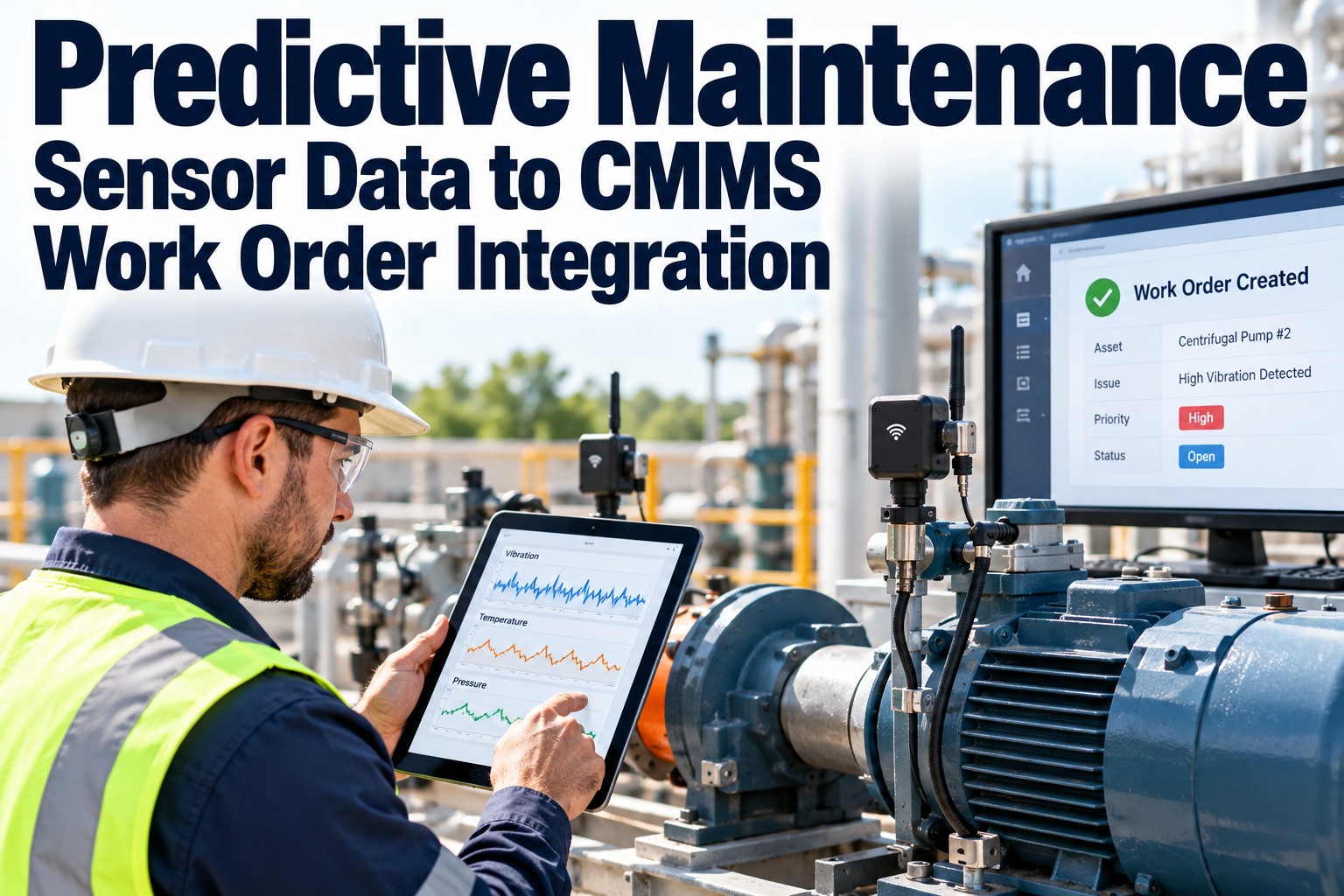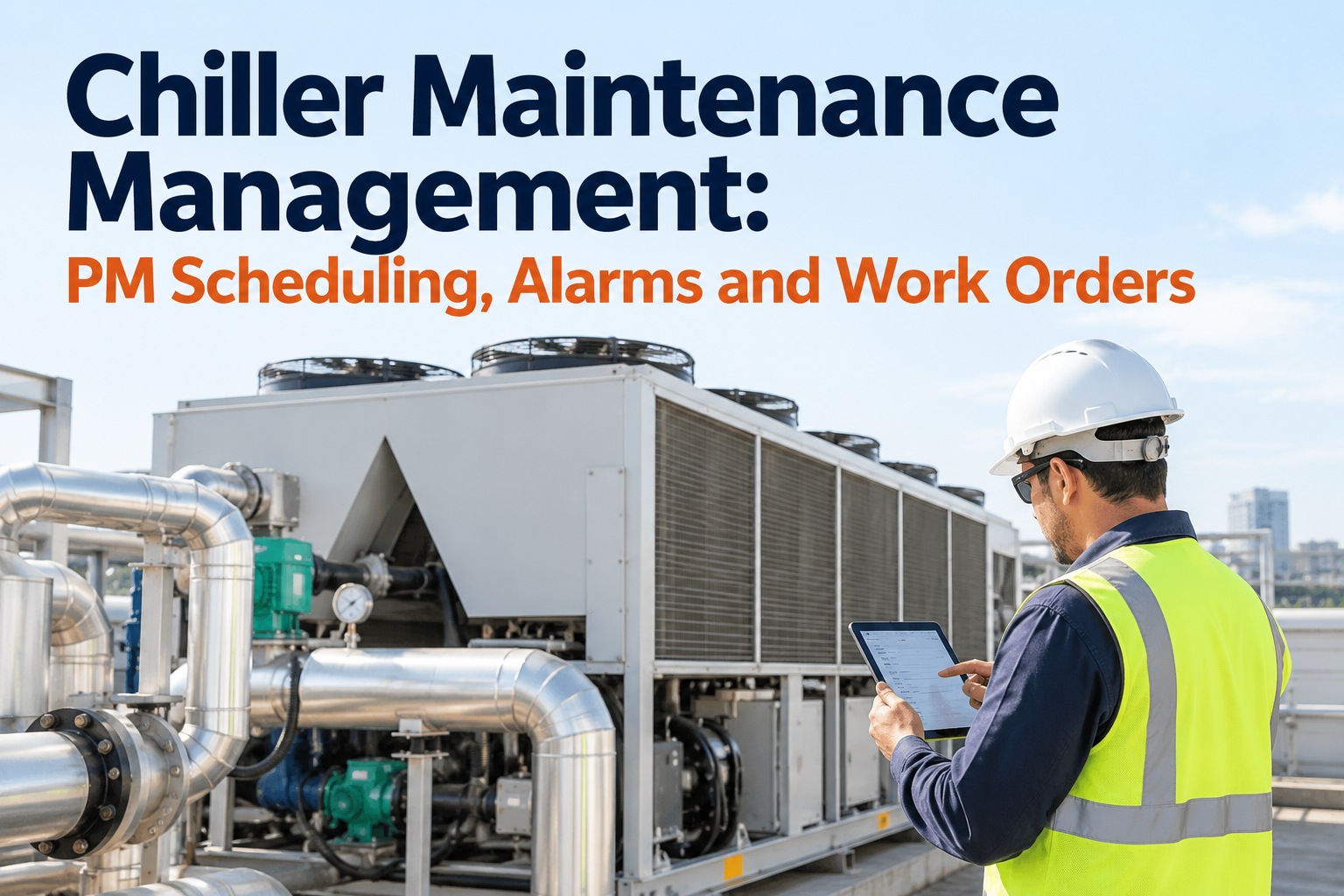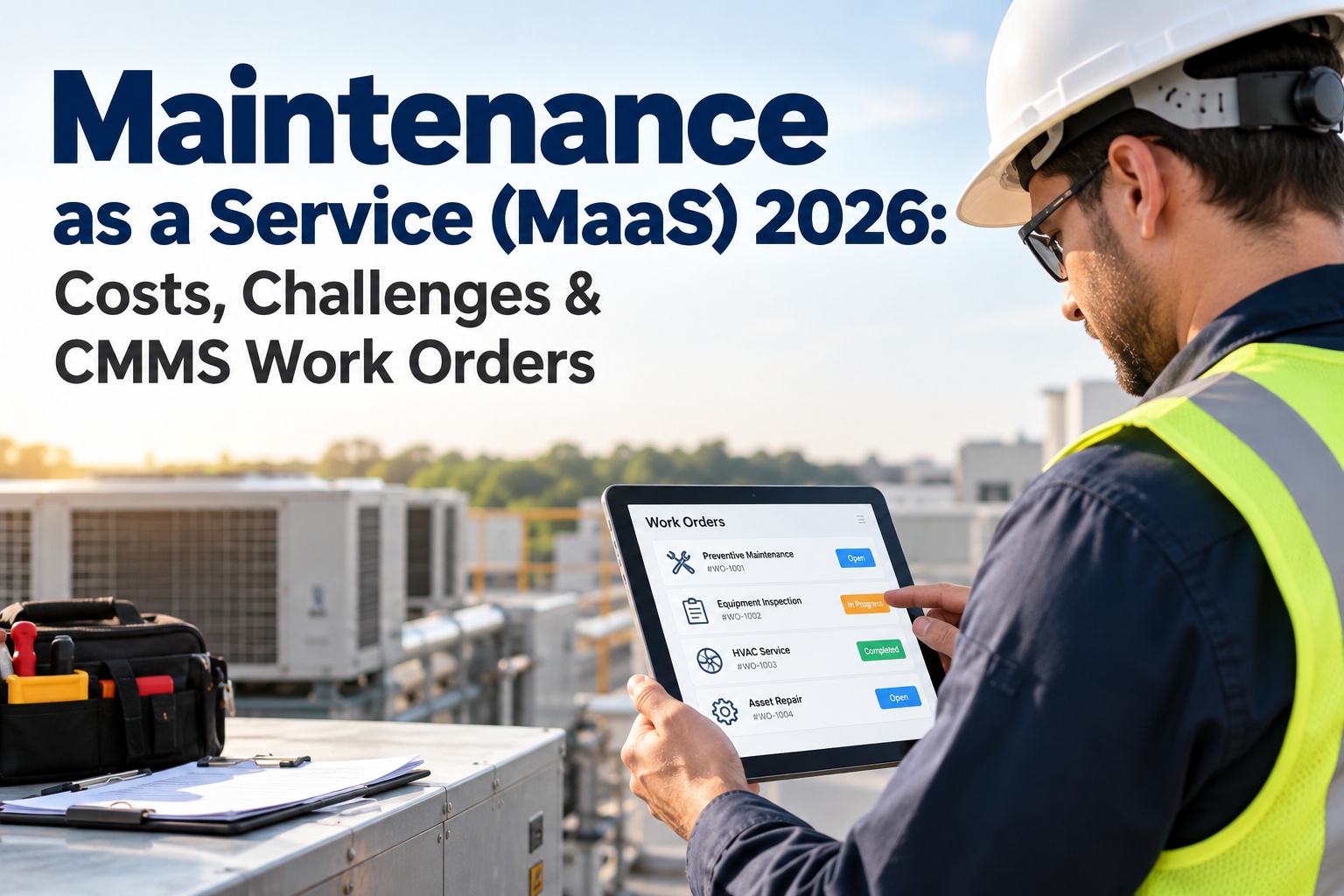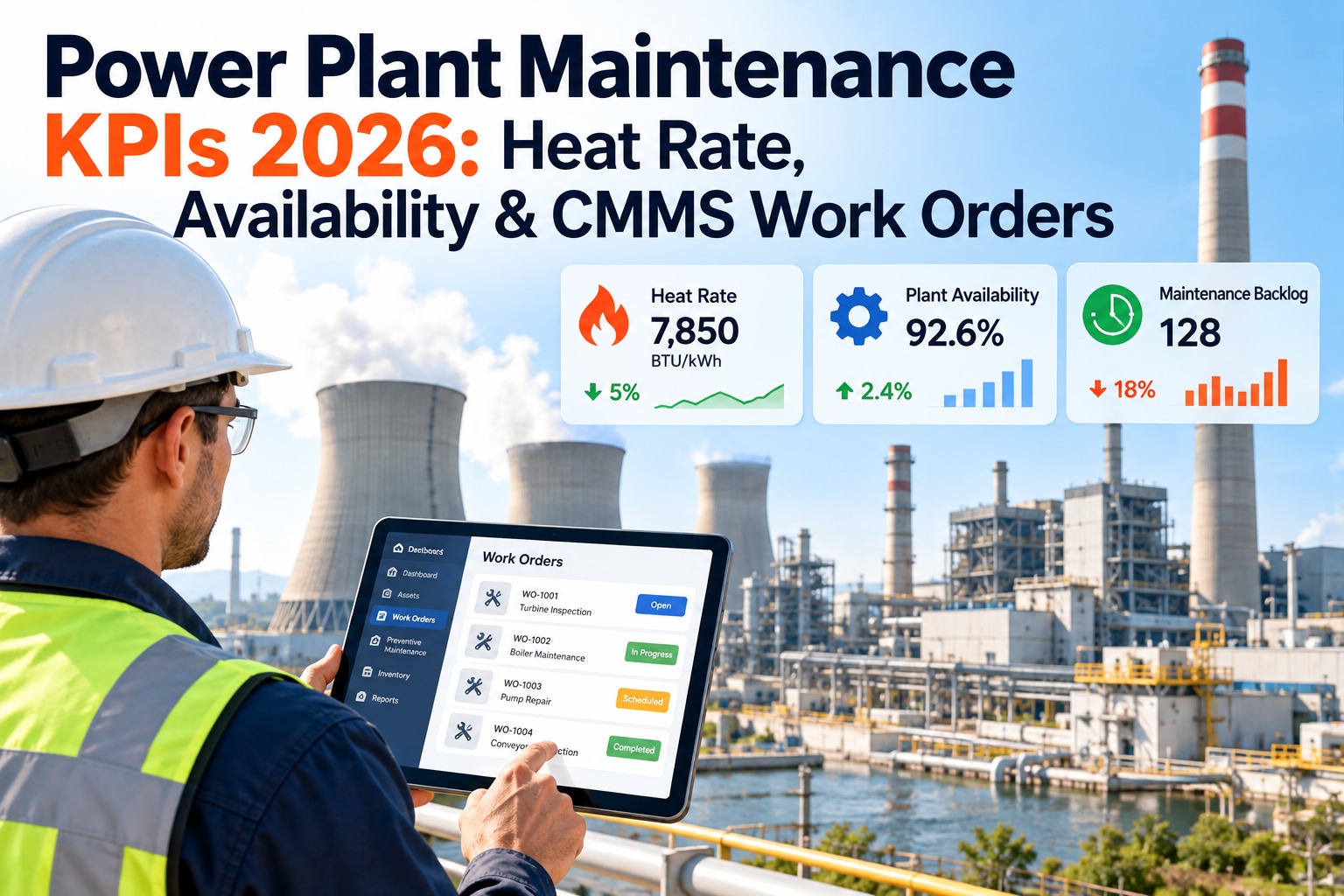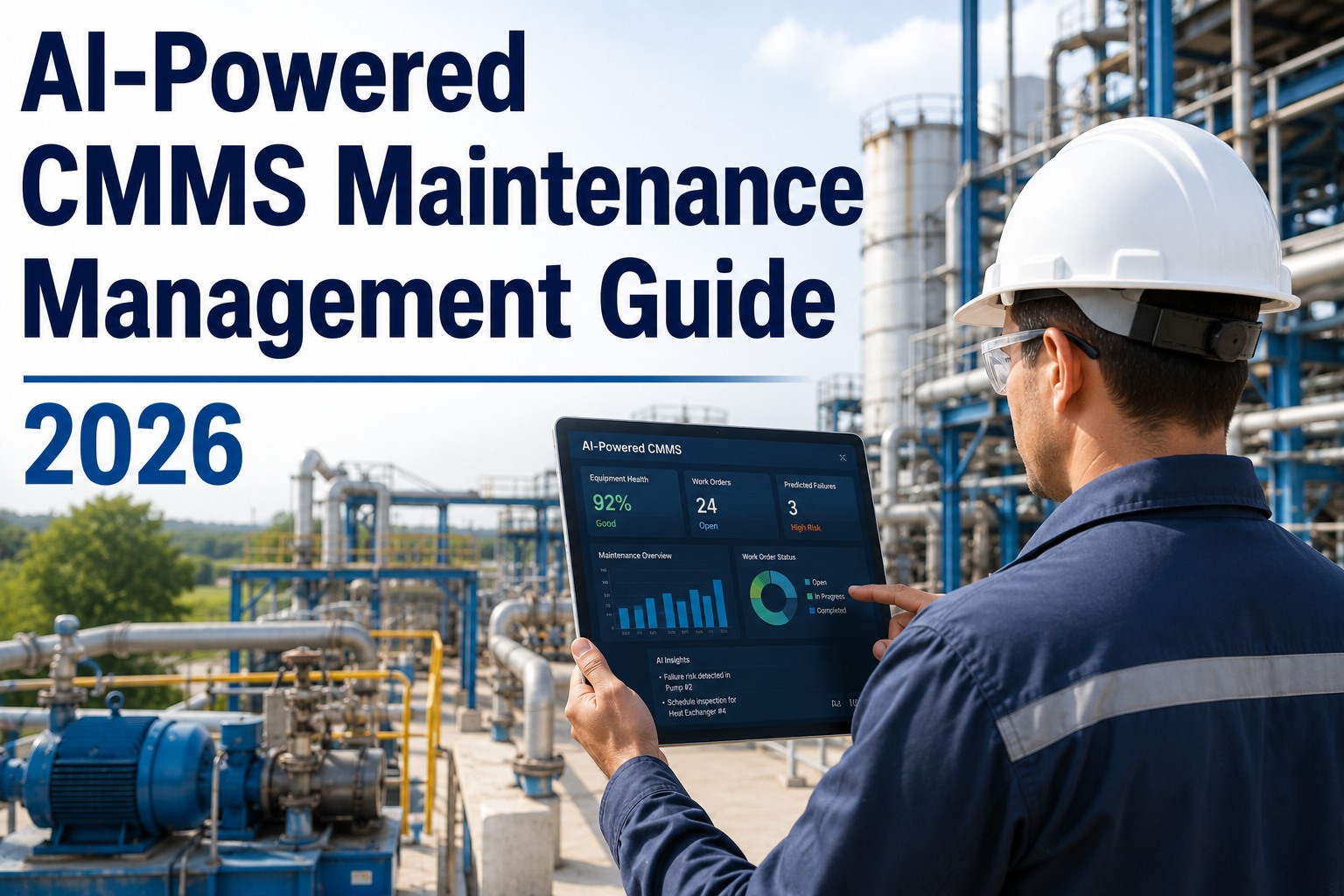
AI-powered CMMS maintenance management in 2026 is no longer experimental — it is delivering documented reliability gains across plants, fleets, and facilities of every size. Modern AI maintenance software combines machine learning predictive analytics with traditional work-order automation to detect equipment failures two to four weeks before they happen, cutting unplanned downtime by 30–50% and reducing false alarms by up to 94%. This guide breaks down what an intelligent CMMS actually does, how it pays back, and what to look for when evaluating an AI maintenance platform — then shows how OxMaint turns those capabilities into daily operational value. Ready to see it on your assets? Start Free Trial or read on.
AI-Powered CMMS Guide · 2026
Is your maintenance team still reacting to failures instead of predicting them?
AI-driven maintenance management shifts teams from firefighting to foresight — detecting bearing wear, thermal drift, and pressure anomalies weeks before breakdown. OxMaint's intelligent CMMS turns sensor data and work-order history into prioritized, actionable recommendations your technicians can trust.
Why AI Changes the Game
What AI predictive maintenance actually delivers in 2026
The gap between traditional CMMS and AI-powered maintenance management is measurable. Below are the documented outcomes reliability leaders are reporting after deploying machine-learning CMMS capabilities across asset-intensive operations.
Predictive models flag degradation 2–4 weeks early, letting teams schedule repairs before failure cascades.
ML-trained anomaly detection eliminates the noisy alerts that destroy technician trust in condition monitoring.
Unplanned outages cost industrial firms an estimated $50B/year; AI maintenance platforms recover a significant share.
Enterprise-scale asset tracking with sub-second search across plants, fleets, and facilities.
Worked Example
The real cost of staying reactive — and the payoff of switching
Consider a 180-asset manufacturing plant spending $42,000/year on unplanned repairs, overtime, and expedited spares. Here is how the math shifts when that plant moves from spreadsheet-driven reactive maintenance to an AI-powered CMMS.
Reactive cost (status quo)
$42,000/yr unplanned + $18,000/yr overtime + $9,500/yr expedited spares = $69,500/yr
With OxMaint AI maintenance platform
$69,500 × 40% downtime reduction × 25% overtime cut × 15% spares savings = $31,275/yr recovered
| Metric | Before OxMaint | After OxMaint (12 mo) | Improvement |
|---|---|---|---|
| Unplanned downtime hours/mo | 38 hrs | 17 hrs | -55% |
| Mean time to repair (MTTR) | 6.2 hrs | 3.1 hrs | -50% |
| Work-order backlog | 47 open WOs | 12 open WOs | -74% |
| PM compliance rate | 61% | 94% | +33 pts |
| Schedule compliance | 52% | 88% | +36 pts |
How OxMaint Helps
How OxMaint's AI maintenance platform solves the problem
OxMaint pairs a full CMMS and EAM foundation with AI capabilities that are practical, transparent, and immediately usable by maintenance and reliability teams. Here are four concrete capabilities and the outcomes they deliver.
Predictive failure detection
ML models trained on vibration, temperature, and oil-analysis data flag asset degradation 2–4 weeks before failure — so you schedule repairs, not emergencies. Outcome: 30–50% less unplanned downtime.
AI-driven work order prioritization
Every work order is auto-ranked by risk, asset criticality, and downtime cost — so technicians always tackle the highest-impact job first. Outcome: 74% reduction in work-order backlog within 90 days.
Natural-language work order intake
Operators describe issues in plain English; OxMaint's NLP auto-extracts asset, symptom, priority, and suggested fix — no more misrouted or incomplete tickets. Outcome: 60% faster work-order creation and dispatch.
Spare-parts inventory optimization
AI forecasts parts demand based on asset usage patterns and failure predictions, auto-triggering reorders at the right stock level. Outcome: 15–25% lower spares carrying cost with zero stock-out risk on critical items.
Feature Comparison
Traditional CMMS vs AI-powered CMMS: what's different?
If you are evaluating maintenance AI software, the comparison below isolates the capabilities that genuinely move the needle — from reactive logging to predictive, prescriptive maintenance management.
| Capability | Traditional CMMS | AI-Powered CMMS (OxMaint) |
|---|---|---|
| Work order generation | Manual entry or time-based trigger | NLP intake + AI auto-prioritization by risk |
| Failure prediction | None — logs failures after they occur | ML models predict 2–4 weeks ahead, 94% fewer false alarms |
| Preventive maintenance scheduling | Fixed calendar intervals | Usage + condition-based dynamic PM scheduling |
| Spare-parts forecasting | Min/max reorder points | AI demand forecasting tied to asset degradation signals |
| Maintenance analytics | Static reports, manual export | Real-time OEE, MTBF, MTTR dashboards with trend AI insights |
| Compliance & audit readiness | Manual evidence collection | Auto-logged audit trail aligned to ISO 55000 & FMCSA |
See OxMaint's AI predictive maintenance on your assets
Book a 30-minute demo and we will walk you through failure prediction, AI work-order prioritization, and inventory optimization — configured for your operation.
Frequently Asked Questions
AI CMMS and intelligent maintenance — answered
What is an AI-powered CMMS?
An AI-powered CMMS is a computerized maintenance management system that uses machine learning and natural-language processing to automate and optimize maintenance tasks — predicting equipment failures, auto-prioritizing work orders, and forecasting spare-parts demand. Unlike a traditional CMMS that merely logs and schedules, an intelligent CMMS like OxMaint actively recommends actions based on asset data, work-order history, and condition-monitoring signals.
How does AI predictive maintenance detect failures early?
AI predictive maintenance analyzes patterns in vibration, temperature, pressure, and oil-analysis data using trained ML models that recognize the early signatures of bearing wear, misalignment, thermal drift, and lubrication breakdown. These models typically identify anomalies 2–4 weeks before functional failure, reducing false alarms by up to 94% compared to simple threshold-based condition monitoring. You can see this in action — book a demo and we will show you live prediction models.
How much does an AI maintenance platform cost?
Most AI CMMS platforms, including OxMaint, price per asset or per user per month, with enterprise tiers for multi-site deployments. The more important question is payback: a typical 180-asset plant recovers $25,000–$35,000/year in avoided downtime, overtime, and expedited spares — meaning most implementations pay for themselves within 4–6 months. A 14-day free trial lets you validate the math on your own asset data before committing.
Can I switch from spreadsheets or a legacy CMMS to an AI-driven system?
Yes — switching is faster than most teams expect. OxMaint imports existing asset registers, work-order history, and PM schedules from spreadsheets or legacy CMMS databases in a guided migration, typically completed in 1–2 weeks. Natural-language work-order intake means technicians need minimal training, and the AI models begin generating predictions as soon as 60–90 days of operational data are loaded.
Is AI maintenance management compliant with ISO 55000 and regulatory standards?
An intelligent maintenance system like OxMaint supports ISO 55000 asset-management principles by maintaining a complete, time-stamped audit trail of every work order, inspection, and parts transaction — evidence that auditors expect. For fleet and transport operations, the platform also aligns with FMCSA and DOT preventive-maintenance documentation requirements, auto-generating compliance reports on demand.
Stop reacting. Start predicting with OxMaint.
Join the maintenance leaders using AI-powered CMMS to cut unplanned downtime 30–50%, eliminate paper work orders, and predict failures before they happen. Start your free trial today or book a personalized demo with our team.
Free 14-day trial · No credit card required