A cargo van running 100-plus stops a day through city traffic is not the same maintenance case as a van running highway miles between two warehouses — yet most fleets service both on the same odometer-based schedule, and that single mistake is why last-mile vans break down mid-route. The problem is duty cycle. Dense urban delivery accumulates wear that mileage never captures: brakes cycle dozens of times per mile, sliding doors open and slam hundreds of times a shift, and engines on short hops never reach full operating temperature, so oil degrades roughly 40% faster from moisture and contamination. Delivery vans in urban last-mile operation also rack up mileage 40–60% faster than passenger vehicles on top of that. A flat mileage rule under-services every one of these wear paths, and the consequence is brutal: a single breakdown on a 30-stop route does not delay one package, it collapses the whole route — 15 to 20 SLA misses at once, reactive rerouting, and a clock that never pauses. This guide covers how to maintain a last-mile fleet on duty cycle, not distance. Start a free Oxmaint trial and trigger PM by stop count and engine hours, not just miles, or book a demo to see driver DVIRs auto-generate work orders.
Fleet Management · Last-Mile Delivery · Urban Duty Cycle
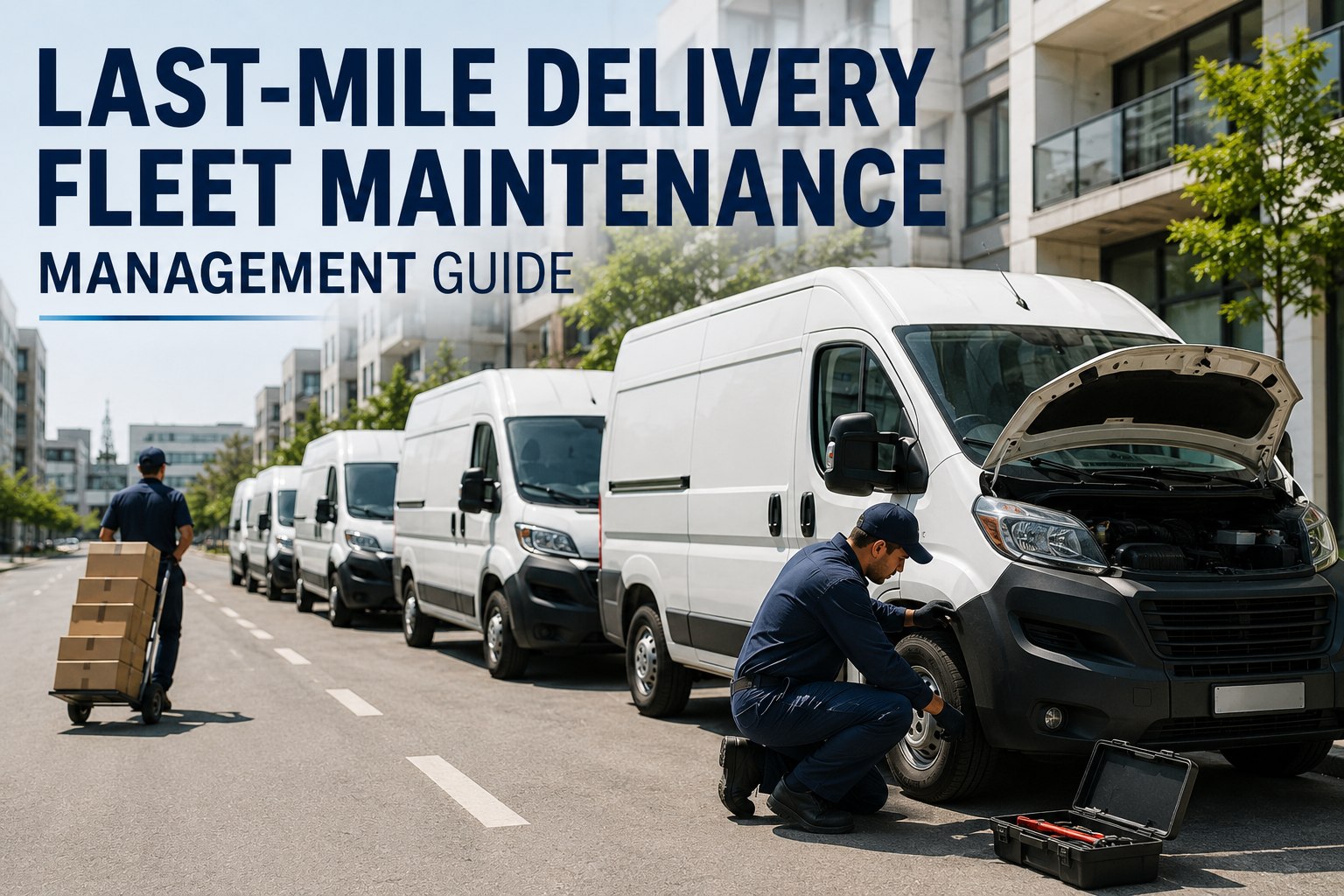
Last-Mile Delivery Fleet Maintenance Management Guide
High-cycle urban wear patterns, cargo-van PM schedules, and mobile CMMS for driver defect reporting and DOT compliance — how last-mile fleets service vans by duty cycle instead of odometer, and stop one breakdown from collapsing an entire route.
-
15–20
SLA misses from one breakdown on a 30-stop route
-
40–60%
faster mileage accumulation than passenger vehicles
-
65%
fewer brake failures with structured service scheduling
-
$760
average cost of unplanned downtime per vehicle per day
Duty Cycle, Not Odometer
Where Urban Routes Wear Vans Faster
High-cycle city delivery accelerates specific wear paths in ways a mileage schedule misses entirely. These patterns are predictable enough to plan around — but only if the PM plan is built on duty cycle. Here is what wears faster, and by how much.
- Brakes 60–80% faster Constant stop-and-go cycling wears pads far faster than highway use. Pads rated for 90,000 miles can be gone in 30,000–55,000 on a 100-stop route — inspect at every oil change, not every 20,000 miles.
- Doors & hinges dozens of cycles/shift Sliding and rear doors opened hundreds of times a day wear hinges, rollers, and seals far faster than passenger use — a wear path that deserves its own inspection line, not a general visual check.
- Engine oil degrades 40% faster Short hops rarely let the engine reach full temperature, leaving unburned moisture and contaminants in the oil — so 3,000–5,000-mile intervals apply regardless of extended-life OEM recommendations.
- Idle hours hidden engine wear Vans left running during multi-stop deliveries accumulate engine wear without adding a single mile — wear a distance-only schedule cannot see, which is why engine-hour triggers matter as much as odometer.
Tires, starters, and batteries follow the same pattern — dozens of daily starts and stops age them faster than steady highway miles. Book a demo to see PM triggered by stop count, brake events, and idle hours.
The Cargo-Van PM Rhythm
A Service Schedule Built for Delivery Duty
Last-mile PM runs on two triggers — mileage and calendar — whichever comes first, at intervals tighter than OEM schedules designed for average use. Each tier catches the wear that generates the most breakdowns before it strands a driver.
| Tier | Interval | Focus |
|---|---|---|
| Pre-trip DVIR | Every shift | Brakes, tires, lights, leaks, cargo securing |
| Oil & safety | 3,000–5,000 mi | Oil/filter, fluids, lights, tire pressure, battery |
| Brake & tire | Quarterly | Pad measurement, tread depth, alignment, suspension |
| Drivetrain | 30,000 mi | Transmission fluid, belts, full load test |
| Milestone | Major mileage | Transmission service, timing belt/chain |
Structured scheduling cuts brake-system failures 65%, tire breakdowns 58%, and prevents the drivetrain invoices — a $6,000 transmission rebuild — that a missed fluid change guarantees. Sign up for Oxmaint to run per-vehicle-class PM templates for vans and box trucks.
The Defect-to-Repair Loop
Every Driver, Every Day, an Early-Warning Sensor
The driver is the fleet's first line of detection. A structured mobile DVIR turns each pre-trip and post-trip walk-around into timestamped condition data that feeds maintenance directly — closing the loop from a defect spotted at the curb to a work order in the shop, with no paper form lost in a door pocket. Four steps, minutes each.
- 1 Driver inspects on mobile Pre- and post-trip DVIR on the phone with mandatory photo fields for tires, brakes, lights, and cargo area — GPS-stamped and timestamped, done in 3–4 minutes.
- 2 Defect auto-classifies Category A faults — brake failure, active leaks, steering — ground the van immediately; Category B lets it finish the run but flags repair before next dispatch.
- 3 Work order fires instantly Any reported defect auto-generates a prioritized work order visible to the shop the moment it is submitted — no email delay, no lost paper.
- 4 Tracked to resolution, on record Each item is tracked to close and retained as an auditable record — satisfying FMCSA 49 CFR 396.11 and building an early-warning data stream.
A 5–10 minute structured pre-trip is the only reliable way to catch a fault before it strands a driver mid-route or triggers a roadside enforcement action. Book a demo to see the DVIR-to-work-order loop close in real time.
One Breakdown, One Collapsed Route
The SLA Clock Does Not Pause for a Roadside Repair
In last-mile, a vehicle failure is never a single late delivery. When a van dies mid-shift, every downstream stop is now late, rerouting is reactive, and the SLA clock keeps running — one breakdown on a 30-stop route generates 15 to 20 SLA misses simultaneously, and mid-route breakdowns account for roughly a quarter of all last-mile failures. At an average of $760 per vehicle per day in downtime, plus the failed-delivery and penalty costs stacked on top, reactive maintenance is the most expensive way to run a fleet. Predictive alerts that catch degradation 4–7 days out let the van be serviced in a depot window instead of on the shoulder during peak hour — turning route-collapsing failures into planned, zero-disruption interventions.
Oxmaint for Last-Mile Fleets
How Oxmaint Runs Delivery Fleet Maintenance
-
Duty-Cycle PM
Triggered by Real Wear
Fire PM by miles, engine hours, brake events, and stop count — so a 350-stops-a-week urban van is serviced when its wear profile demands, not when a flat calendar date arrives that treats it like a suburban run.
-
Mobile DVIR
Defects to Work Orders
Drivers complete photo-backed pre- and post-trip inspections on their phones; any defect auto-generates a prioritized shop work order and a retained FMCSA 396.11 record — no paper, no inbox delay.
-
Telematics
Live Odometer, Exact Triggers
Integrations with Geotab, Samsara, Verizon Connect, and OBD-II pull live odometer and fault-code data, so PM triggers are exact rather than estimated and degradation surfaces days before a driver notices.
-
Per-Class Templates
Van, Sprinter, Box Truck
Service templates configured per vehicle class with advance service-due alerts 7 and 14 days out — letting maintenance land on low-volume days instead of peak, and keeping every yard to one inspection standard.
-
Parts & Vendors
One Log Across Yards
Parts and outside-vendor invoices logged in one system with auto-reorder on high-frequency items — so the fleet sees which brands hold up under delivery duty and gets true lifecycle cost per van, not just repair cost.
-
Compliance
DOT-Ready Every Day
Digital DVIR retention, inspection tracking, and a per-vehicle document folder for VINs, insurance, and every repair invoice — the audit-ready trail that keeps vans out of roadside out-of-service orders.
Frequently Asked
Last-Mile Fleet Maintenance Questions
Why can't I service delivery vans on a standard mileage schedule?
Because urban last-mile duty wears vehicles by cycle, not distance. A van doing 100+ stops a day wears brakes 60–80% faster from constant stop-and-go, degrades oil about 40% faster on short trips that never reach full temperature, and accumulates idle engine hours that add wear without adding miles. A flat mileage rule under-services all of these. Duty-cycle scheduling — triggering on stop count, brake events, and engine hours alongside miles — matches service to real wear. Sign up for Oxmaint to schedule PM by duty cycle.
How does one van breakdown affect a whole route?
A mid-route failure collapses the entire route, not just one stop. Every downstream delivery is instantly late, rerouting is reactive, and the SLA clock keeps running — a single breakdown on a 30-stop route generates 15 to 20 SLA misses at once. Mid-route breakdowns account for roughly a quarter of all last-mile failures, which is why preventing them with duty-cycle PM and predictive alerts protects the whole day's deliveries, not just one vehicle.
How does mobile DVIR keep a delivery fleet compliant?
Drivers complete pre- and post-trip inspections on a phone in 3–4 minutes with mandatory photos, and any reported defect auto-generates a prioritized work order routed straight to the shop. Defects are classified by severity — Category A grounds the van, Category B allows the current run but flags repair before next dispatch — and every item is tracked to resolution and retained as an auditable record under FMCSA 49 CFR 396.11. That eliminates paper forms and creates a daily early-warning stream. Book a demo to see digital DVIR compliance in action.
What does last-mile van maintenance actually cost?
High-utilization last-mile duty pushes annual per-van maintenance well above moderate-use figures once tires, brakes, and unplanned repairs are counted, and unplanned downtime alone averages about $760 per vehicle per day. The upside is equally concrete: fleets running structured, CMMS-driven PM with predictive alerts cut maintenance spend 15–25% in the first year and reduce downtime by up to 22%, because degradation is caught days ahead and serviced in a depot window instead of as an emergency. Sign up for Oxmaint to cut last-mile maintenance cost and downtime.
Duty Cycle · Inspect · Auto-Dispatch · Comply
Service the Van the Way the City Wears It
Every mileage-only schedule under-services a high-cycle van, and every mid-route breakdown collapses a full route of deliveries. Oxmaint gives last-mile fleets one platform to trigger PM by stop count, brake events, and engine hours, turn every driver's DVIR into an instant work order, integrate telematics for exact triggers, standardize service across yards, and keep DOT-ready records — so vans get serviced on their real wear and stay on the road through the shift.