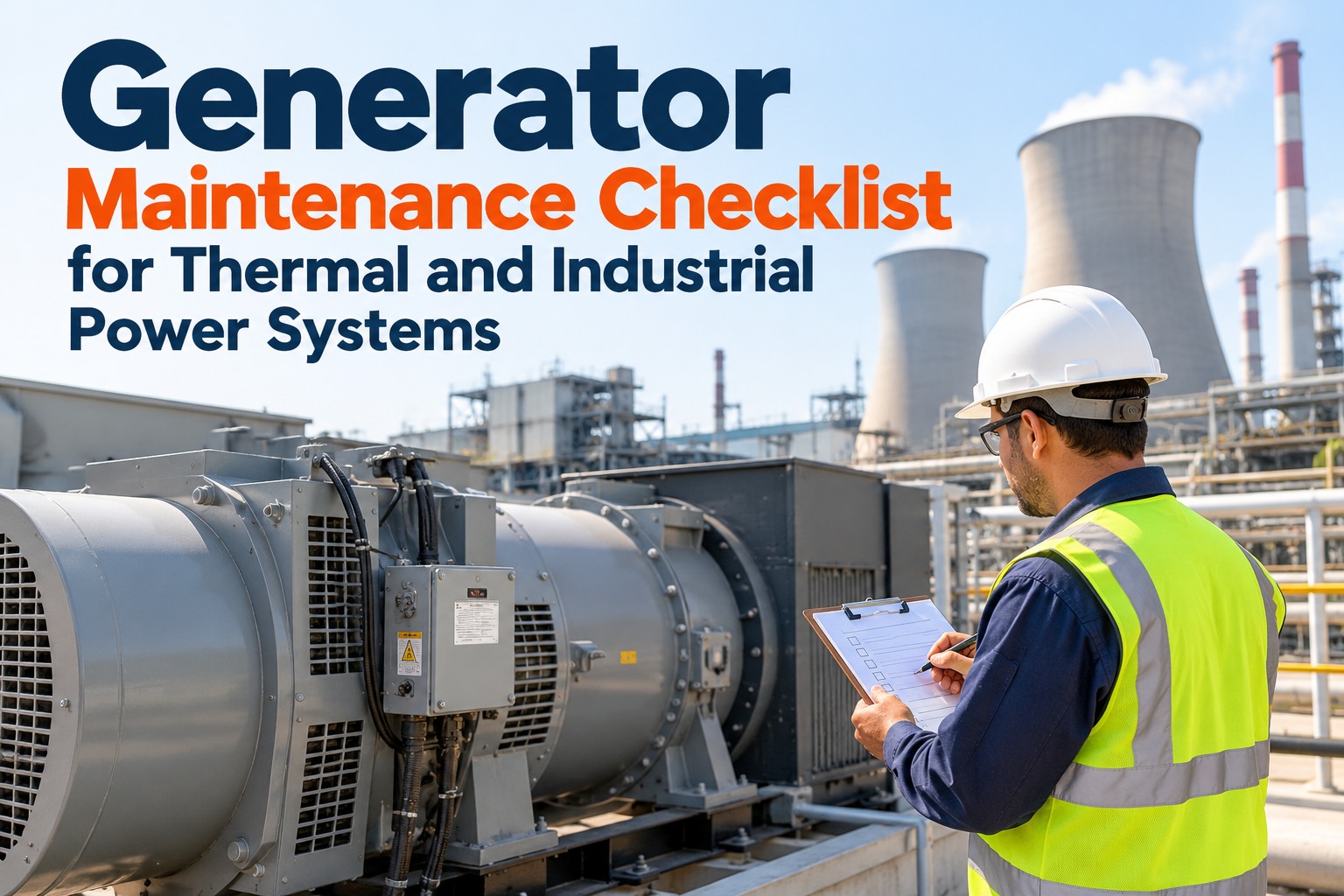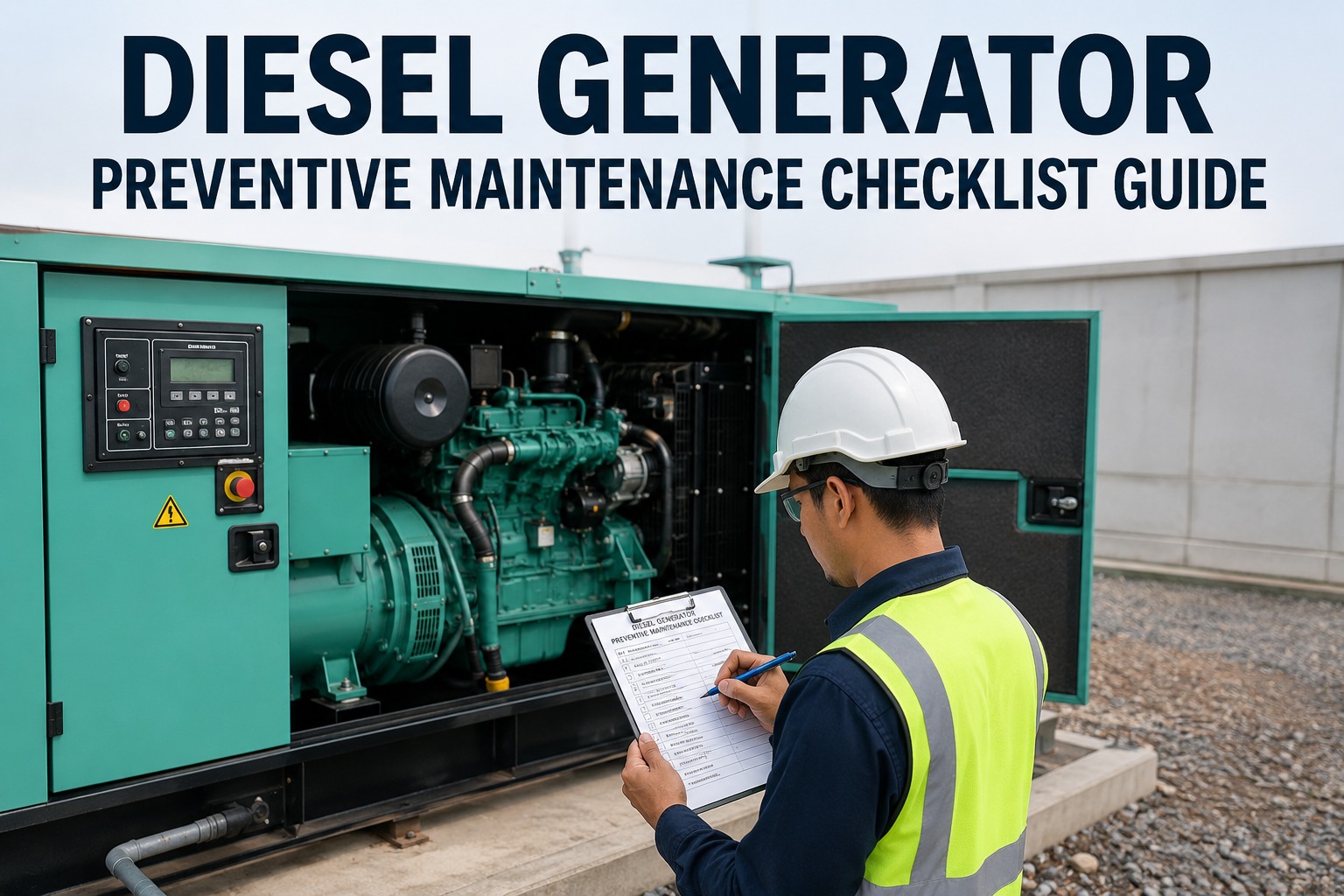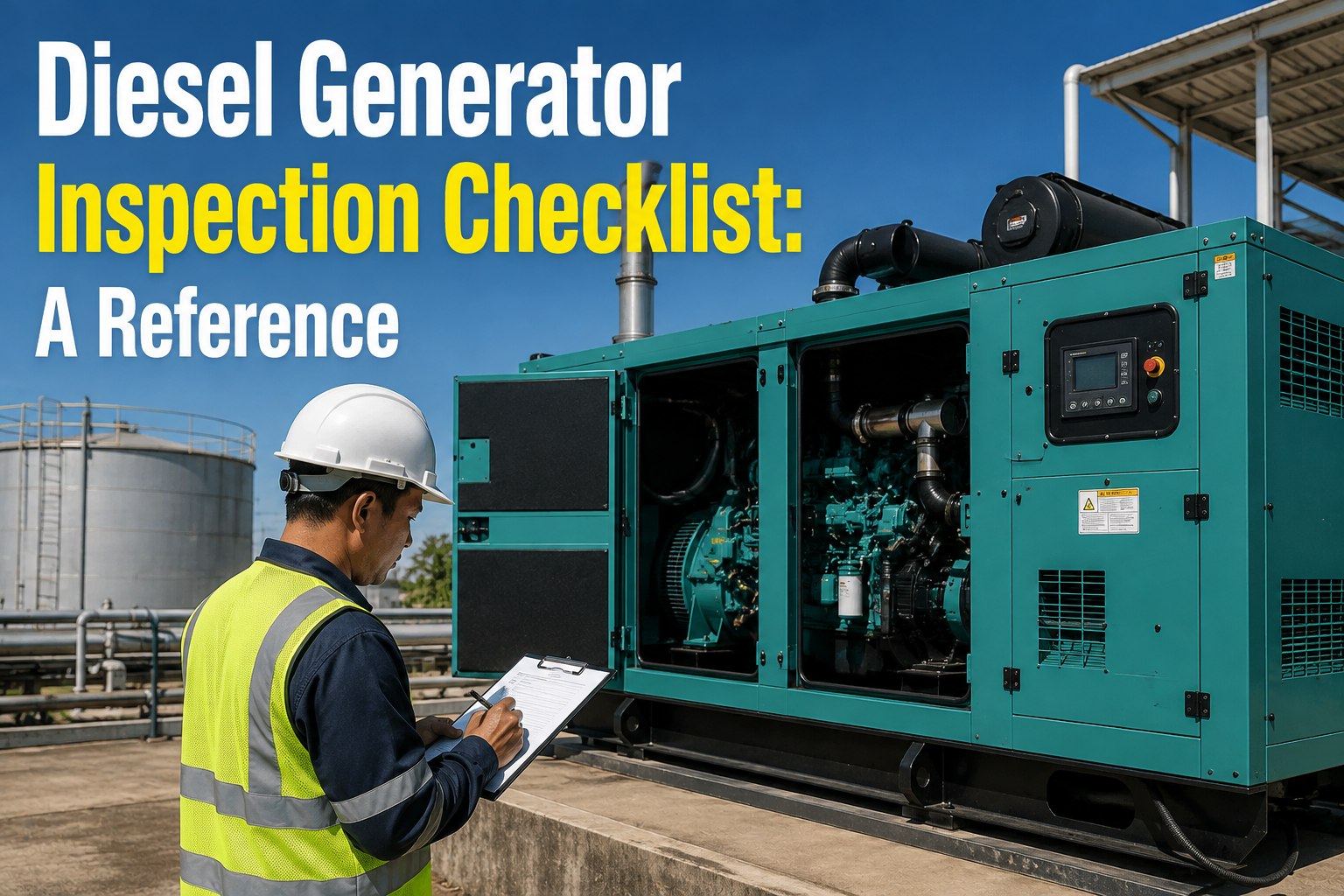
Generator stator and rotor maintenance is the highest-consequence electrical asset PM in any power plant — a single winding failure on a 500 MW hydrogen-cooled unit can exceed $5M in repair costs plus lost generation revenue, yet disciplined insulation testing, air gap measurement, and cooling-system monitoring can extend overhaul intervals by 30–40%. This guide covers the full inspection scope for large generator maintenance, from stator winding insulation resistance and partial discharge trending to rotor wedge tightness and hydrogen seal-oil system checks, along with how a generator CMMS structures every test result, interval, and life-data point so your team never misses a condition-critical deadline. If you want to put this entire workflow on autopilot with predictive analytics and automated PM scheduling, you can Start Free Trial of OxMaint today.
Generator Reliability Playbook
Is your next stator winding failure already in the data — and will you catch it in time?
Over 60% of large generator forced outages trace back to insulation degradation that was detectable months in advance. OxMaint turns every IR, PI, partial discharge, and air-gap reading into a trended asset-health score — so your team acts before the fault, not after.
$5M+
Average cost of a single large generator stator winding failure — repair + lost generation
Inspection Scope
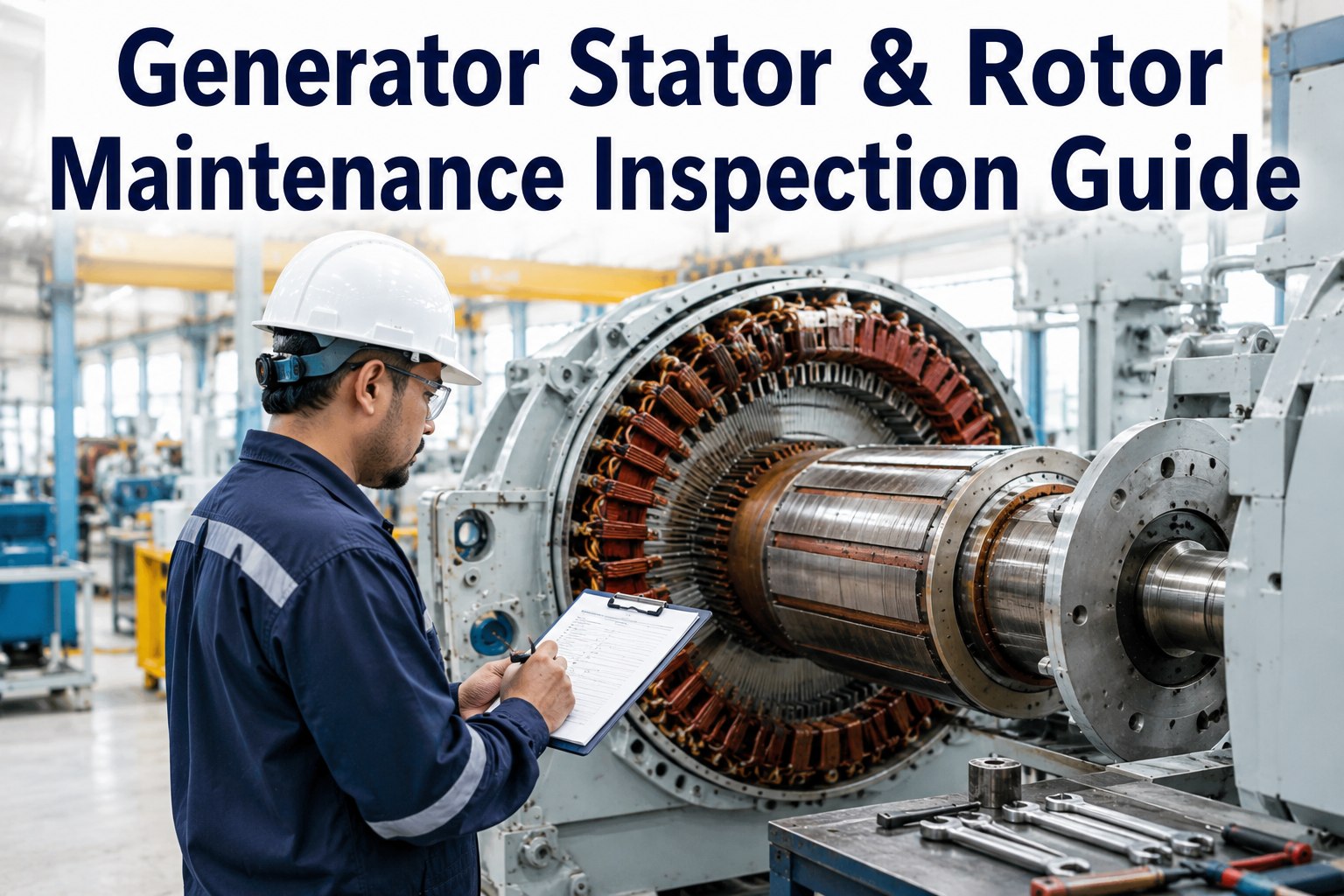
Stator Winding Maintenance Checklist: Insulation, Tightness & Discharge Testing
Stator winding failures account for roughly 35–40% of generator forced outages. The following tiered checklist maps every test to its standard interval, acceptance criterion, and what OxMaint tracks automatically.
Insulation Resistance & Polarization Index
Measure IR at 1 min and 10 min; PI = IR10/IR1. Acceptance: PI ≥ 2.0 for Class F systems above 1 kV. Trend year-over-year — a 25% drop flags moisture ingress or contamination.
Partial Discharge (PD) Survey
Online PD detection on stator bars identifies slot discharge, end-winding corona, and delamination before insulation puncture. Alert thresholds: > 5,000 pC on bars rated ≥ 13.8 kV.
Wedge Tightness & End-Winding Vibration
Loose stator wedges cause bar vibration and insulation wear. Tap-test 100% of slots; tighten or re-wedge any slot with > 30% looseness. Fiber-optic vibration sensors flag end-winding movement above 50 µm peak.
Dielectric Absorption & DC Leakage
During a generator overhaul, perform step-voltage DC leakage on each phase. Nonlinear current increase above 0.5 µA/kV indicates ground-wall insulation weakness requiring rewinding or resin treatment.
Rotor Inspection
Generator Rotor Inspection: Wedges, Balancing & Air Gap Measurement
Rotor ground faults, lost wedges, and eccentric air gaps are responsible for roughly 25% of high-severity generator events. A disciplined rotor inspection regime catches mechanical and electrical degradation before vibration trips the unit.
| Inspection Task | Interval | Method / Standard | Acceptance Criterion |
|---|---|---|---|
| Rotor winding IR & PI | Annual | IEEE 43 · 500 V–1 kV megger | IR > 100 MΩ · PI ≥ 2.0 |
| Field ground fault detection | Continuous (online) | Ground fault relay / injection | < 1 kΩ alarm · < 100 Ω trip |
| Retaining-ring NDE / FEA | Every 8–10 years | UT + dye penetrant · EPRI 1013363 | No crack indications > 1 mm |
| Slot wedge tightness (tap test) | Major overhaul | Manual tap / electronic wedge mapper | < 10% loose wedges per slot |
| Air gap measurement | Overhaul + online monitor | Capacitive / inductive sensor sweep | ±10% of nominal gap, max eccentricity 5% |
| High-speed balance | After rewind / major repair | ISO 1940-1 · Balance grade G 2.5 | Residual unbalance within tolerance at rated speed |
An air gap deviating more than 10% from nominal on a 2-pole 3,600 RPM machine generates unbalanced magnetic pull exceeding 20% of rotor weight — accelerating bearing wear and risking a rotor-to-stator rub that destroys both windings. OxMaint logs every gap reading against the asset baseline so deviation trends are visible before they become trips.
Hydrogen Cooling System
Hydrogen-Cooled Generator Maintenance: Seal Oil, Gas Purity & Leak Detection
Hydrogen-cooled generators operate at 4–6 bar gauge pressure with gas purity above 97%. A single seal-oil system upset or gas leak can force an immediate unit trip — and hydrogen-air mixtures above 4% are explosive.
Seal Oil Differential Pressure
Maintain seal-oil pressure 0.3–0.5 bar above hydrogen casing pressure. Low differential allows H₂ escape along the shaft; high differential pushes oil into the generator, contaminating windings. OxMaint tracks real-time DCS tags and triggers alarms on deviation.
Hydrogen Purity & Dew Point
Online purity analyzers must read ≥ 97% H₂; dew point ≤ -10°C prevents condensation inside the machine. A purity drop below 90% triggers CO₂ purge. OxMaint logs purity hourly and flags any 7-day downward trend.
H₂ Leak Detection & Gas Consumption
Normal makeup: 5–15 m³/day for a 500 MW unit. Consumption above 30 m³/day signals a seal, flange, or cooler leak. OxMaint logs daily makeup volume and auto-creates an inspection work order when the 7-day average exceeds site threshold.
Stator Cooling Water System
For water-cooled stator bars, monitor conductivity (< 0.5 µS/cm), flow rate per bar, and inlet/outlet temperature differential. Plugged strands cause bar overheating within minutes. OxMaint integrates flow and temperature data for predictive alerts.
PM Strategy & CMMS
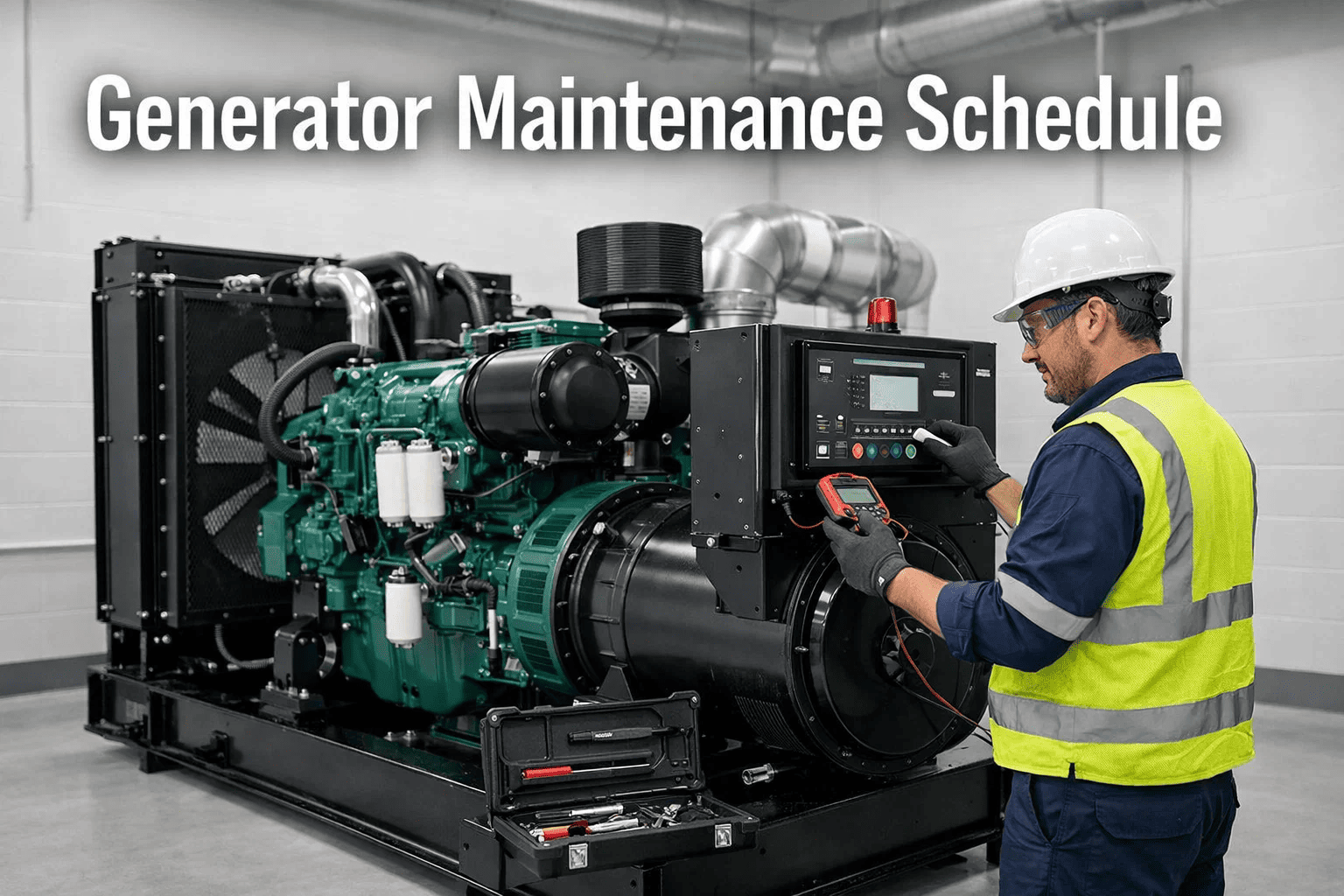
Generator Maintenance Schedule: Building the Right PM Structure in Your CMMS
A well-structured generator maintenance schedule isn't a spreadsheet — it's a living, condition-driven plan that adjusts intervals based on operating hours, starts/stops, and diagnostic trends. Here's how a generator CMMS should organize the full lifecycle.
Continuous Condition Monitoring
Bearing vibration, stator temperature, H₂ purity, seal-oil differential, field ground fault detector, and partial discharge. OxMaint ingests DCS/SCADA tags every 60 seconds and evaluates against asset-specific baselines.
Visual & Operational Checks
Bearing oil level and sample, slip-ring/brush inspection (for brushed rotors), collector ring cleanliness, exciter cooling air filter, hydrogen dryer desiccant condition, and alarm log review. OxMaint auto-generates and routes these work orders.
Electrical Diagnostic Testing
Stator IR/PI, rotor IR, bearing insulation resistance, over-speed trip test, governor/motor-operated valve functional checks, and protection relay calibration. Results trended against previous years inside each asset's OxMaint profile.
Minor Inspection (Boroscope)
Boroscope rotor and stator via inspection ports: wedge condition, end-winding support ties, fan blade integrity, gas baffles, and retaining ring surfaces. OxMaint stores photos, findings, and corrective work orders in a single record.
Major Overhaul (Full Outage)
Full rotor removal: EL-CID test for inter-turn shorts, retaining-ring NDE, wedge mapping, stator wedge tap test, core loop test (El CID), full re-wedging if needed, high-speed balance, and reassembly. OxMaint overhaul templates include 200+ checklist items with labor-hour estimates.
Worked Example
A 450 MW combined-cycle plant operating two hydrogen-cooled generators spent $42K/year managing PMs on spreadsheets and shared drives. After implementing OxMaint, the reliability team tied real-time PD and vibration data to condition-based work order generation — catching a stator end-winding vibration trend 14 weeks before it would have caused a forced outage. The avoided failure cost: $3.8M in repair plus $1.2M in lost generation. The plant's unplanned generator downtime dropped 62% in the first 12 months, and the CMMS paid for itself before the first annual renewal.
How OxMaint Helps
How OxMaint CMMS Powers Generator Reliability & Predictive Maintenance
OxMaint is built for maintenance and reliability teams managing capital-intensive, condition-critical assets. For generators specifically, it replaces fragmented spreadsheets, paper work orders, and siloed diagnostic tools with a single AI-powered platform.
Condition-Based PM Triggers
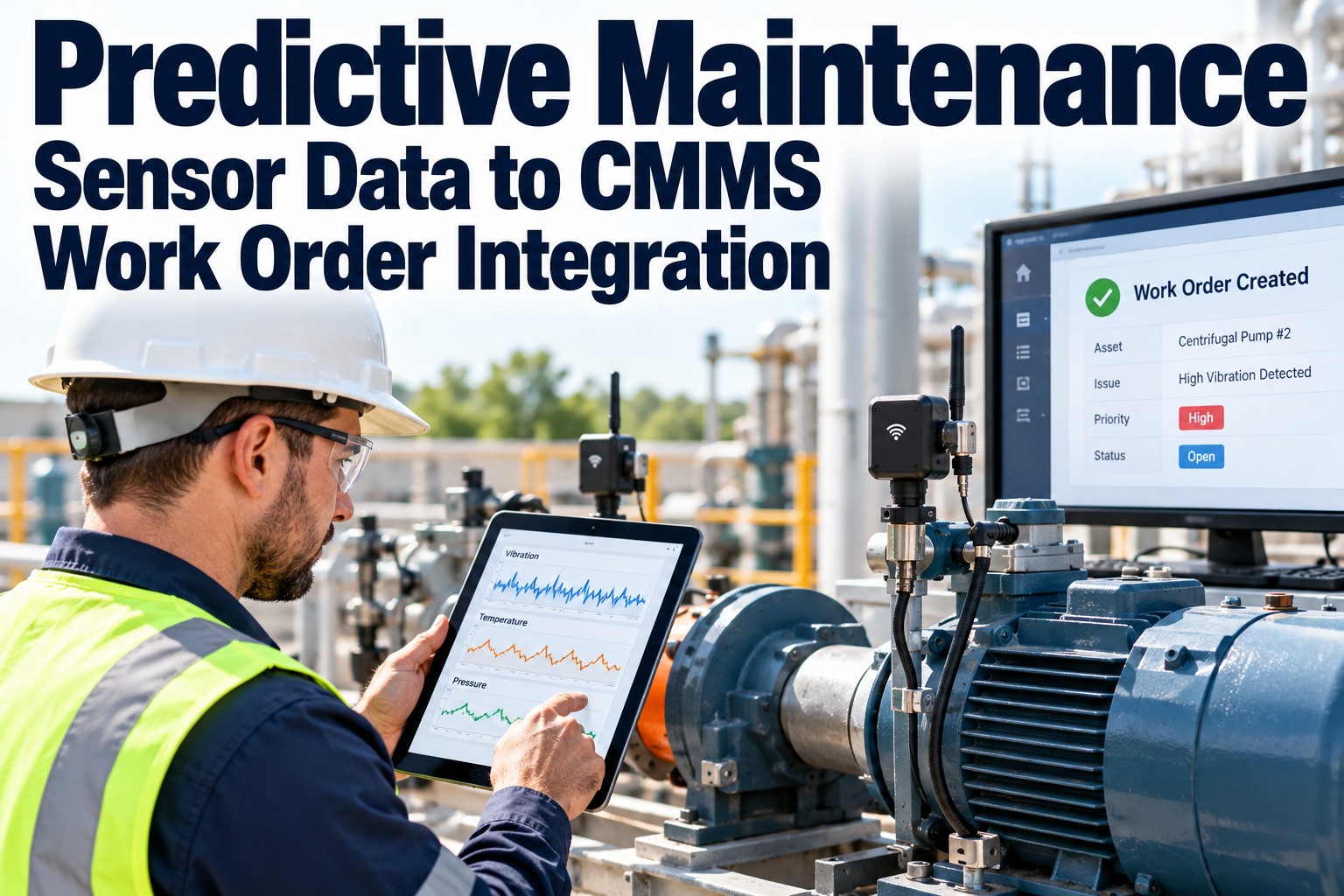
OxMaint ingests DCS/SCADA tags — vibration, temperature, PD, H₂ purity, air gap — and automatically generates inspection work orders when readings deviate from baseline. No more calendar-only PMs on equipment that runs variably.
Outcome: Cut unplanned generator downtime 30–50%
Asset Lifecycle & Life-Data Tracking
Every test result, photo, repair, and running hour is stored on the generator's permanent asset profile. Build a complete history from commissioning through each overhaul — audit-ready for ISO 55000 and insurance reviews.
Outcome: Eliminate lost inspection records & audit gaps
AI-Powered Failure Prediction
Machine-learning models trained on generator failure modes analyze your trended data — IR decay curves, PD patterns, vibration spectra — to predict remaining useful life and flag high-risk assets weeks or months before failure.
Outcome: Act 8–12 weeks earlier than reactive maintenance
Spare Parts & Outage Planning
Track critical spares — retaining rings, stator bars, seal-oil pumps, hydrogen cooler bundles — with min/max levels and lead-time alerts. OxMaint's overhaul templates auto-populate labor, parts, and duration estimates so outages finish on schedule.
Outcome: Cut outage overruns & eliminate emergency parts scrambles
See OxMaint on your generators — book a 30-min demo
Watch how condition-based PMs, predictive alerts, and full life-data tracking work for your specific fleet. We'll show you your assets inside the platform.
FAQ
Generator Maintenance FAQs
How often should generator stator insulation resistance be tested?
Stator insulation resistance and polarization index should be tested annually per IEEE 43, with additional tests after any significant event (fault, trip, water ingress) and before return-to-service after an outage. For high-voltage machines above 13.8 kV, supplement annual IR/PI with semi-annual partial discharge surveys to detect slot discharge and delamination early. OxMaint auto-schedules these tests and trends results year over year on each asset's profile — book a demo to see the trending dashboards.
What is the acceptable air gap tolerance for a large generator?
The air gap on a large cylindrical-rotor generator should be within ±10% of the nominal design value at any point around the circumference, and the maximum eccentricity (difference between max and min gap) should not exceed 5% of nominal. Exceeding these limits causes unbalanced magnetic pull, vibration, and potential rotor-to-stator rub. Measure during overhaul with a feeler or capacitive sweep, and monitor online with fixed sensors on critical units.
How is a hydrogen-cooled generator maintained differently?
Hydrogen-cooled generators require additional maintenance for the gas and seal-oil systems: continuous monitoring of H₂ purity (≥ 97%), dew point (≤ -10°C), seal-oil differential pressure (0.3–0.5 bar above casing pressure), and daily makeup gas consumption (typically 5–15 m³/day for a 500 MW unit). You also need CO₂ purging procedures for safe gas exchange during outages. OxMaint integrates all these parameters as tracked asset tags with automated alarm and work-order generation.
What does a large generator major overhaul include?
A major generator overhaul — typically every 8–12 years depending on operating hours and starts — includes full rotor removal, EL-CID inter-turn short test, retaining-ring nondestructive examination, slot wedge mapping and re-wedging as needed, stator core loop or EL-CID test, end-winding support inspection, bearing inspection, high-speed rotor balance, and full reassembly with post-overhaul commissioning tests. A typical major overhaul on a 500 MW unit spans 25–40 days and requires 200+ checklist items.
Can a CMMS improve generator predictive maintenance?
Yes — a CMMS like OxMaint improves generator predictive maintenance by ingesting real-time sensor data (vibration, PD, temperature, H₂ purity, air gap), trending it against asset-specific baselines, and automatically generating inspection work orders when deviations occur. AI models analyze the trended data to predict remaining useful life and flag high-risk assets weeks or months before failure, shifting maintenance from reactive to condition-based and reducing unplanned downtime by 30–50%. You can Start Free Trial to test the workflow on your assets.
Stop managing generator PMs on spreadsheets — switch to OxMaint
Join reliability teams using OxMaint to predict failures, automate condition-based PMs, and keep every generator inspection, test result, and overhaul record in one auditable platform.
Free 14-day trial · No credit card