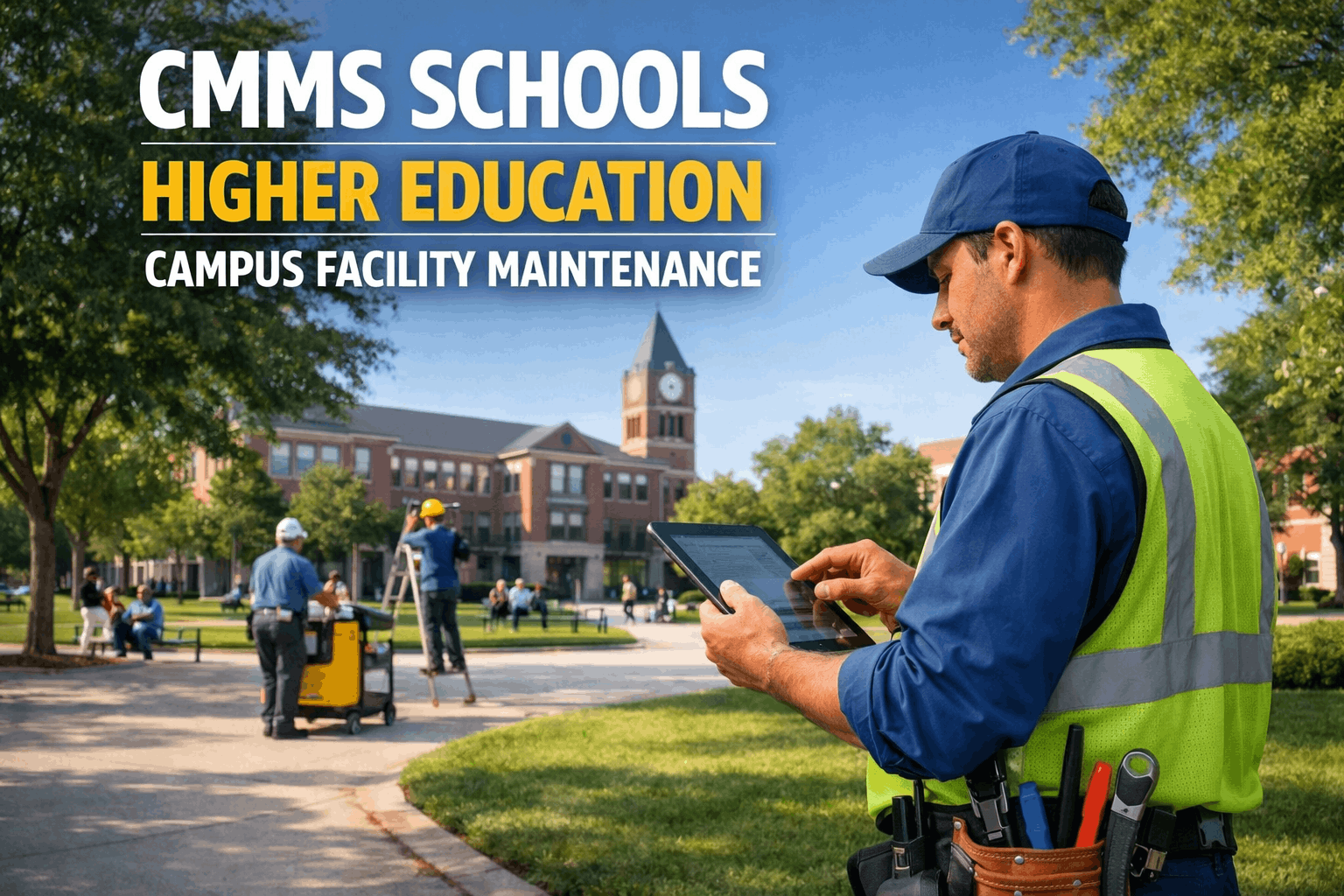
Government facilities and public-facing hospitality operations live or die on visible maintenance response. A 4-hour delay on a guest-area light fixture, a 24-hour wait on a public lobby HVAC complaint, or a citizen-reported sidewalk hazard left untouched for 48 hours produces direct reputational damage that no operational excuse repairs. Industry benchmarking shows structured CMMS-driven response programs cut public-facing maintenance response time by 67 percent, close the 3X gap between government and private hospitality service levels, and drop repeat complaints 48 percent within the first year. Facility directors building structured public-response programs start a free trial on the highest-visibility location first and validate the SLA model before extending it across the portfolio.
PUBLIC-FACING MAINTENANCE RESPONSE
Government and Hospitality Service-Level Discipline
Convert citizen complaints, guest tickets, and inspection findings into structured SLA-bound work orders with documented escalation, mobile dispatch, and audit-ready closure on every event.
SLA Tier Reference
15 min
Life-safety hazard, evacuation route block, water main
45 min
Guest-facing HVAC, lobby lighting, restroom out of service
4 hr
Citizen complaint, public sidewalk, signage and wayfinding
24 hr
Routine reactive, cosmetic finish, non-critical fixture
67%faster response cycle on CMMS-driven SLA programs
3Xgap between government and private hospitality levels
48%drop in repeat complaints within first year
15 minlife-safety achievable response window
Why Public-Facing Maintenance Response Defines Reputation
Public maintenance response is the single most visible operational metric a government facility or hospitality property carries. Every citizen who reports a sidewalk hazard and waits 36 hours for resolution tells the story to neighbors. Every hotel guest who logs an HVAC complaint at 9 PM and shivers through the night writes a review that costs the property the next twelve bookings. The work itself is rarely difficult. The response model is what fails.
The structured CMMS that holds the SLA tier, the escalation chain, the mobile dispatch route, and the closure documentation in one workflow converts public-facing maintenance from a reputation risk into a competitive advantage. Facility directors ready to install the discipline book a demo and walk through the SLA model on the highest-visibility location first.
Public-facing maintenance is decided in the first 45 minutes — and the structured response system is what carries it.
01
Citizen and Guest Intake Channel Discipline
Every public report — citizen call, kiosk complaint, mobile app submission, guest text, front-desk ticket, inspection citation — funnels into one CMMS intake. No more parallel spreadsheets, no more lost voicemails, no more guest complaints stuck in a manager's inbox.
02
SLA Tier Auto-Classification
Intake classifies against four SLA tiers — 15 minute life-safety, 45 minute guest-facing, 4 hour citizen-facing, 24 hour routine. Priority applies at creation, escalation chain attaches, and dispatch starts within seconds of the report landing.
03
Mobile-First Technician Dispatch
Crews receive the work order on the phone with location, asset history, photo evidence from the citizen or guest, and the response playbook attached. Arrival happens briefed, and discovery time on site drops to near zero.
04
Escalation and Executive Visibility
SLA breach windows fire automatic escalation to supervisors, facility directors, and executive contacts. The mayor, the GM, the asset owner never learns about a public-facing failure from a citizen — the system surfaces the breach before reputation damage compounds.
05
Closure Documentation and Citizen Follow-Up
Resolution captures photo evidence, technician sign-off, and citizen or guest confirmation. The originating report closes with documented response time, root cause tag, and audit trail ready for council review or guest service follow-up.
06
Repeat-Complaint Pattern Surfacing
Three reports against the same asset within 90 days flag automatically. Root cause review opens, the underlying issue closes once, and the repeat-complaint volume drops 48 percent within the first year of structured operations.
Run all six on one CMMS and the public-facing maintenance program moves from reputation risk to managed operational advantage. Facility directors ready to install the discipline start a free trial on the highest-visibility location first.
Where Public Maintenance Response Fails Without Structure
The reasons public-facing maintenance fails are predictable and consistent across municipalities, federal facilities, hotels, resorts, and convention centers. Six structural gaps account for the majority of reputation incidents and SLA breaches.
A
Citizen Intake Channels Run Parallel and Lose Reports
Calls go to one person, emails to another, the mobile app routes to a third inbox. Reports get lost in the gaps between channels and surface only when the citizen calls back angrier.
B
SLA Tier Lives in a Supervisor's Head
No system rule, no automatic classification. The supervisor on duty decides what is urgent based on memory and intuition. Two reports of the same severity get treated differently because two supervisors decide differently.
C
Technicians Arrive Without Briefing
Crew shows up at the affected location with no photo, no prior service history, no part list. The first hour goes to discovery on top of the response time the SLA already consumed.
D
Escalation Never Fires Automatically
The SLA breaches at 4 hours, the supervisor was supposed to call the facility director, the call never happens, and the facility director learns about the breach when the council member asks at the public meeting.
E
Documentation Reconstructed for FOIA or Inspection
The freedom of information request lands or the guest service auditor arrives. The team spends two weeks reconstructing response times from email threads and paper notes that were never structured for review.
F
No Repeat-Complaint Detection
The same sidewalk has been reported five times in eight months. Each call was handled as a fresh incident. The underlying root cause never opened, and the citizen calls a sixth time furious.
All six failures collapse when the public-response program runs against a structured CMMS — and the facility directors ready to remove them book a demo and walk through the response audit on their own intake channel volume.
A 4-hour delay on a single citizen complaint can produce more reputation damage than ten successful resolutions ever recover.
How OxMaint Runs Public-Facing Maintenance Response
OxMaint loads every public intake channel, every SLA tier, every escalation rule, and every reporting requirement into one structured workflow. Citizen complaints, guest tickets, and inspection findings convert to work orders with SLA bound, crews dispatched on mobile, escalation firing automatically, and closure documented for audit.
F1
Unified Intake Channel
Calls, emails, mobile app, kiosk, and inspection citations all funnel into one CMMS queue with channel source tagged on every record.
F2
SLA Tier Auto-Classification
Four-tier SLA model applies at intake against keyword, asset class, and channel source rules with priority and escalation chain attached.
F3
Mobile-First Dispatch
Crews receive work orders on phone with full context, location, photo evidence, and response playbook attached at dispatch time.
F4
Automatic Escalation Engine
SLA breach windows fire escalation to supervisor, director, and executive layers based on tier and elapsed time without human intervention.
F5
Closure Documentation Engine
Photos, sign-offs, citizen and guest confirmations capture at closeout. FOIA and audit packs assemble in seconds, not weeks.
F6
Repeat-Complaint Detection
Recurring reports against the same asset within configurable windows flag for root cause review automatically.
For directors managing public-facing operations in the USA under municipal and federal accountability requirements, in Canada under provincial freedom of information standards, in the UK under the Building Safety Act and HSE, in the UAE under Vision 2030 citizen service modernization, in Australia under public sector service charters, or in Germany under public administration transparency law — the response model is the same and the audit trail travels across regulators. Start a free trial on the highest-visibility location.
Reactive Response Versus Structured SLA Operation
The gap between reactive public maintenance and structured CMMS operation shows up in the same eight places every quarter. The table below maps where reputation risk lives and where structured response removes it.
| Response Discipline | Reactive Operation | Structured CMMS Operation |
|---|
| Intake channel | Parallel channels with reports lost in gaps | Unified intake with channel source tagged |
| SLA classification | Decided by supervisor intuition | Auto-classification at intake by rule |
| Crew briefing | Discovery on arrival, first hour lost | Briefed dispatch with photo and history |
| Escalation | Manual chase, breaches go unnoticed | Automatic time-windowed escalation |
| Closure documentation | Reconstructed for FOIA or audit weeks later | Captured live, exportable in seconds |
| Repeat detection | Pattern surfaces after sixth complaint | Three reports in 90 days flag automatically |
| Executive visibility | Director learns from council or guest review | Breach dashboards visible before damage compounds |
| Reputation outcome | Reactive damage control, recurring incidents | Managed advantage, falling complaint volume |
Facility directors moving the response program from the left column to the right book a demo and walk through the SLA model on their own intake.
Outcomes Reported on Structured Public Response Programs
These are the outcomes facility directors report after a full year on CMMS-driven public-facing maintenance. Variance comes from starting condition and channel volume, but direction is consistent across municipal, federal, and hospitality operations.
67%
faster response cycle on CMMS-driven SLA programs across municipal and hospitality portfolios
48%
drop in repeat complaints within the first year of structured response operations
3X
closure of the gap between government and private hospitality service-level performance
15 min
life-safety achievable first-response window on structured CMMS operations
90%
reduction in FOIA and audit pack assembly hours through continuous documentation
5 mo
typical payback period on CMMS public-response investment for mid-size facilities
Facility directors stacking these returns across multi-property government and hospitality portfolios start a free trial on the highest-visibility location and use first-year results to fund the wider rollout.
Frequently Asked Questions on Public-Facing Maintenance Response
How does OxMaint unify intake from citizen and guest channels
Calls, emails, mobile app submissions, kiosk complaints, front-desk tickets, and inspection citations all route into one CMMS queue with the channel source tagged on every record. No more parallel spreadsheets, no more reports stuck in one supervisor's inbox. The intake channel volume reports against single source of truth, and the SLA tier applies at intake regardless of the channel that brought the report in.
Can the four-tier SLA model be customized to local requirements
Yes. The four-tier reference is a starting framework. Municipal charters, hospitality brand standards, and federal accountability rules vary, and the SLA tier definitions, breach windows, escalation chains, and severity rules configure against the local accountability framework. The structure stays consistent, the values adjust.
Does the system support FOIA and audit pack export
Yes. Every record carries channel source, SLA tier, classification timestamp, dispatch time, response time, closure documentation, and audit trail. FOIA requests, council reviews, guest service audits, and inspection reviews export in seconds rather than reconstruction weeks. Documentation is continuously audit-ready by design.
How quickly does a public-facing operation see SLA improvements
Most operations see measurable SLA improvement within 30 to 60 days of CMMS go-live. The fastest wins come from automatic SLA classification and escalation engine deployment — both can deploy within the first 30 days and start producing measurable response time gains immediately.
From Reputation Risk to Operational Advantage
Run Public Maintenance Response Against an SLA-Bound CMMS
Citizen complaints, guest tickets, and inspection findings convert to structured work orders with SLA tier auto-classification, escalation engine, mobile dispatch, and audit-ready closure on every event. Facility directors see the response model in production within 30 days.
Unified intake across calls, emails, mobile app, kiosk, and inspection sources
Four-tier SLA model with automatic classification and escalation
FOIA and audit pack export in seconds, not reconstruction weeks
Live in days, not months
FOIA-ready by design
Used across municipal and hospitality portfolios
No channel migration required