A mid-size city manages 340 miles of roads, 127 bridges, 14 water treatment facilities, 86 public buildings, and 2,400 fleet vehicles — all funded by taxpayers who expect every dollar spent on maintenance to be accountable, auditable, and effective. The reality in most municipalities: 38% of maintenance spending is reactive emergency work that costs 3–5× more than planned repairs, infrastructure condition data lives in disconnected spreadsheets across 6 departments, and the annual capital budget request is built on estimates rather than asset condition evidence. Government maintenance is not a facilities problem. It is a public trust problem where every deferred repair compounds into higher costs, lower service levels, and eroded citizen confidence. Schedule a demo to see government CMMS tracking running on public infrastructure asset data.
Taxpayer-Funded Asset Management.
Full Accountability.
Zero Deferred Maintenance.
Public works departments manage billions in infrastructure with shrinking budgets and growing citizen expectations. OxMaint gives municipal teams the asset visibility, compliance documentation, and capital planning intelligence to defend every maintenance dollar.
Why Public Infrastructure Maintenance Fails
Government asset management operates under constraints that private industry does not face: fixed budgets, political cycles, multi-department coordination, public records requirements, and citizen accountability for every dollar spent.
The Deferred Maintenance Crisis
The American Society of Civil Engineers estimates $2.6 trillion in deferred US infrastructure maintenance. Every year of deferral increases eventual repair cost by 15–20%. A $50K road repair deferred 5 years becomes a $180K reconstruction.
Siloed Department Data
Roads, water, buildings, fleet, and parks each track assets differently — spreadsheets, paper logs, or department-specific software that cannot share data. Leadership has no unified view of total infrastructure condition or spending.
Budget Justification Gap
Capital requests based on estimates get cut. Requests backed by asset condition data, failure history, and lifecycle cost projections get funded. Most municipalities lack the data infrastructure to build evidence-based budget requests.
Six Public Asset Categories That Demand CMMS Tracking
Each category carries unique regulatory requirements, lifecycle expectations, and citizen-impact consequences when maintenance fails.
Roads, Bridges, and Transportation
Pavement condition indexing, bridge inspection scheduling per FHWA requirements, traffic signal maintenance, and stormwater drainage. Bridge inspection deferrals create federal funding risk and public safety liability.
Water and Wastewater Systems
Treatment plants, distribution networks, pump stations, and collection systems. EPA Clean Water Act and Safe Drinking Water Act compliance requires documented maintenance records for every regulated asset.
Public Buildings and Facilities
City halls, courthouses, libraries, recreation centers, fire stations, and public safety buildings. ADA compliance, OSHA safety requirements, and energy efficiency mandates apply across the portfolio.
Fleet, Parks, and Utility Systems
Municipal fleet (police, fire, public works vehicles), parks and recreation grounds, and electric/gas utility infrastructure. Fleet DOT compliance, playground safety inspections, and utility reliability standards each require systematic tracking.
The Government Maintenance Accountability Stack
Public works maintenance requires documentation that private industry does not — because every maintenance dollar is a taxpayer dollar subject to audit, FOIA requests, and public scrutiny. Sign up free to see audit-ready documentation from your first closed work order.
From Reactive Crisis to Proactive Asset Management
Annual Value for a Mid-Size Municipality
Documented outcomes at cities managing 50–200K population with $5M–$25M annual maintenance budgets.
90-Day Government CMMS Deployment
Phased rollout designed for multi-department municipal operations with union workforce considerations. Start your free trial and have your asset registry loaded within the first week.
Asset Registry and Department Onboarding
Import infrastructure assets across all departments. Apply condition ratings and risk classifications. Configure role-based access for public works, water, fleet, buildings, and parks.
Work Order Automation and Mobile Deployment
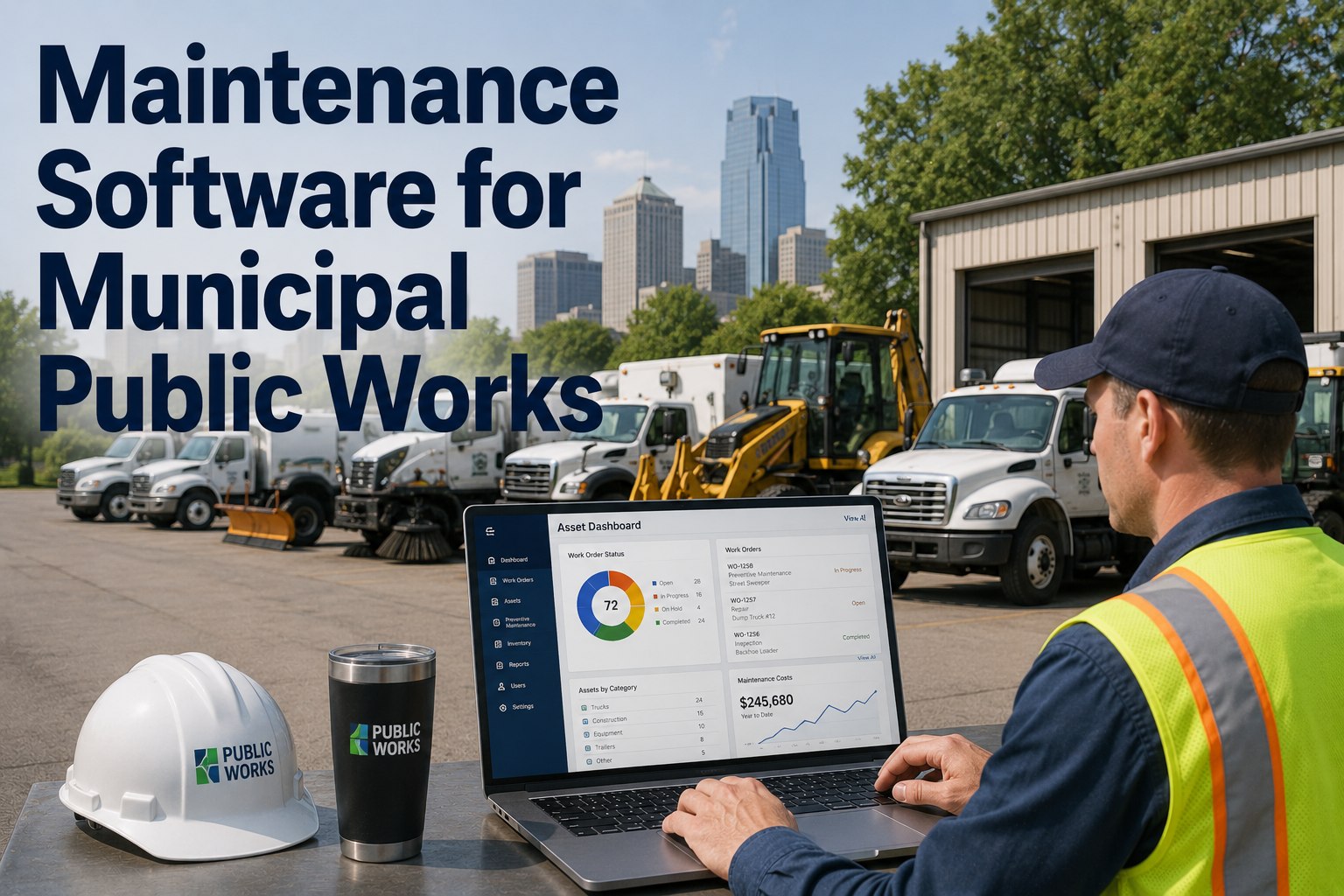
Enable citizen request portal, AI work order classification, and mobile dispatch. Deploy field app to maintenance crews with GPS check-in and photo documentation.
PM Scheduling and Compliance Integration
Activate preventive maintenance schedules for regulated assets. Configure EPA, DOT, and OSHA compliance tagging. Enable automated inspection reminders with escalation rules.
Capital Planning and Reporting Dashboards
Deploy executive dashboards for city manager and council. Activate capital planning intelligence from asset condition data. Generate first evidence-based budget request package.
Connecting Citizens to Public Works
OxMaint bridges the gap between citizen expectations and municipal maintenance operations. Book a demo to see the citizen request portal configured for your municipality.
Citizen Request Portal
Residents submit maintenance requests via web or mobile with location, photo, and description. Requests auto-classify and route to the correct department without manual triage.
Status Transparency
Citizens track their request from submission through completion with automatic status notifications. Eliminates repeated calls to public works asking "when will this be fixed?"
Council Reporting
Elected officials receive real-time dashboards showing response times, completion rates, spending by ward, and infrastructure condition trends — replacing anecdotal briefings with data.
Every Taxpayer Dollar. Tracked. Justified. Optimized.
OxMaint gives municipal teams the asset visibility, compliance documentation, and capital planning intelligence to manage public infrastructure with the same rigor as private industry — with full transparency for citizens, councils, and auditors.
Government Maintenance Management FAQ
Can OxMaint handle multi-department municipal operations?
Yes. Role-based access controls allow roads, water, buildings, fleet, and parks departments to manage their own assets while leadership sees a unified portfolio view. Each department maintains operational independence with shared reporting for budget and capital planning.
How does the system handle citizen maintenance requests?
Citizens submit requests via web portal or mobile app with location, photo, and description. AI auto-classifies and routes to the correct department. Status notifications push at each milestone. The citizen never needs to call public works — they track their request like a package delivery.
Does OxMaint meet government procurement and data security requirements?
OxMaint supports government procurement compliance including competitive bid documentation and sole-source justification. Data is encrypted at rest and in transit. The platform supports CJIS-compatible access controls for public safety facilities and meets public records retention requirements.
How does CMMS data help with capital budget requests?
Asset condition data, failure history, maintenance cost trending, and remaining useful life projections generate evidence-based capital requests that council members and budget committees can evaluate objectively. Municipalities using CMMS data report 25–40% higher capital budget approval rates vs. estimate-based requests.
What is the realistic ROI for a municipality deploying government CMMS?
ROI is visible within 90 days from emergency reduction ($200K–$500K annually), labor productivity gains (12–18 hrs/week recovered), and compliance penalty avoidance. A mid-size city typically documents $2M–$4M in annual value. Platform starts free with no procurement delay. Start your free government CMMS trial today.