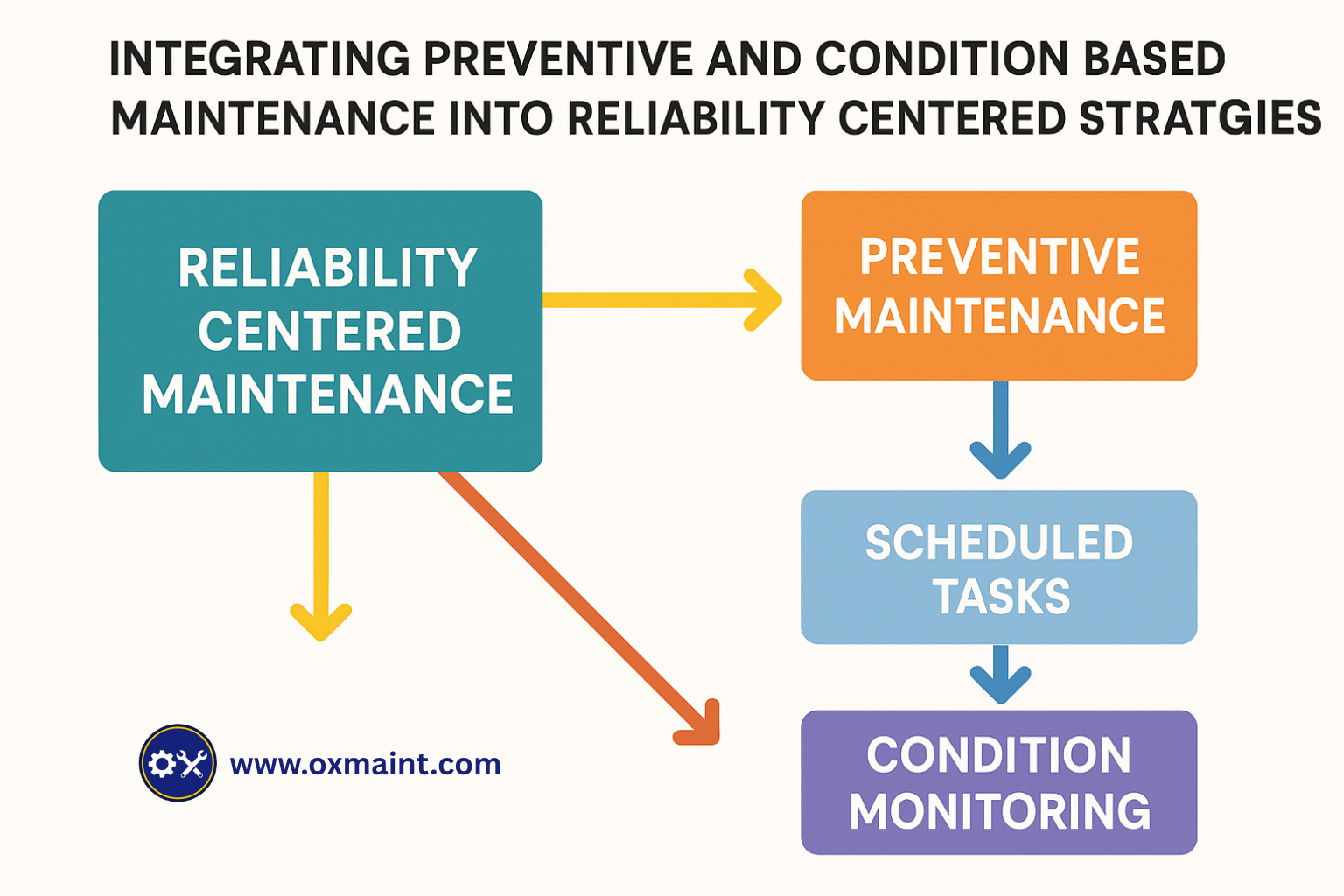
Reliability centered maintenance in pulp & paper is the difference between an operation that reacts to breakdowns and one that engineers them out — and in an industry where a single hour of paper machine downtime can cost $12,000–$35,000, that distinction defines profitability. This complete RCM guide walks through the seven classic questions, shows you how to identify the top failure modes on critical assets like digesters, refiners and Yankee dryers, and helps you choose the right maintenance strategy for each one. OxMaint's AI-powered CMMS and EAM platform is built for teams putting RCM into practice, with asset hierarchies that mirror your plant, failure-mode libraries linked to work orders, and analytics that prove your program is cutting unplanned downtime. You can Start Free Trial in minutes or book a personalized demo to see RCM workflows on your own asset data.
What if 40% of your unplanned downtime was preventable this quarter?
Most pulp & paper plants lose 300–800 production hours per year to failure modes that a structured RCM program can predict, prevent, or engineer out. OxMaint gives you the asset hierarchy, failure-mode tracking and condition-based triggers to make it happen — without spreadsheets, paper work orders, or guesswork.
What is reliability centered maintenance in pulp & paper?
Reliability centered maintenance (RCM) is a structured, asset-by-asset methodology for identifying every credible failure mode, understanding its operational consequence, and selecting the most cost-effective maintenance task — or redesign — to manage it. In a pulp & paper mill, where a single process upset on a recovery boiler or paper machine can idle 200+ operators and cost $35,000 per hour, RCM is the discipline that moves maintenance from a cost center to a margin protector.
A well-executed RCM program typically delivers 15–25% reductions in unplanned downtime and 10–20% lower total maintenance cost within 18 months of pilot launch.
— Benchmark range across process industries (SMRP / ISO 14224 data)RCM asks seven questions of every critical asset — from the digester to the winder — and uses the answers to build a defensible maintenance strategy. The output is not a binder on a shelf; it is a living set of PMs, condition-monitoring routes, and run-to-failure decisions managed inside your CMMS.
The seven RCM questions every pulp & paper team must answer
Originally codified in the aviation industry (MSG-3, 1978) and adapted across heavy process industries, these seven questions form the backbone of every pulp and paper reliability program. Each asset — whether a 500-ton press section or a 50-hp stock pump — goes through them in sequence.
Define operating context
What are the asset's functions and associated performance standards in its present operating context (production rate, quality, environmental, safety)?
Identify functional failures
In what ways can the asset fail to perform its functions — total loss, partial loss, or quality degradation?
Determine failure modes
What causes each functional failure? (e.g., bearing wear, seal degradation, plate fouling, control logic fault).
Describe failure effects
What happens when each failure mode occurs? (downtime duration, safety risk, environmental release, secondary damage).
Classify consequences
How does each failure matter — safety/environmental, operational (production loss), or non-operational (repair cost only)?
Select maintenance tasks
What proactive task — on-condition monitoring, time-based PM, failure-finding, or run-to-failure — is technically feasible and worth doing?
Default actions
If no proactive task is appropriate, what default action is required — a redesign, modification, or procedural change?
Top failure modes on critical pulp & paper assets
A pulp & paper mill operates thousands of rotating and stationary assets across steam, chemical recovery, stock preparation, and papermaking. RCM prioritizes the critical 10–15% that drive 80–90% of unplanned downtime. Below are the highest-impact failure modes your RCM analysis should capture — and that OxMaint's failure-mode library links directly to work orders and PM triggers.
| Asset / System | Top Failure Mode | Consequence | Best RCM Strategy |
|---|---|---|---|
| Paper machine press section | Roll bearing spalling / vibration | 8–24 hr unplanned stop, $100K–$840K loss | Condition monitoring (vibration + oil analysis) |
| Recovery boiler | Tube fouling / carryover | Efficiency loss, forced outage risk | Time-based PM + sensor-based soot-blowing |
| Digester (Kamyr) | Screen plugging / chip channeling | Kappa number variability, yield loss | Condition-based inspection + predictive analytics |
| Refiner plates | Plate wear / gap drift | Energy spike, freeness drift, quality loss | Runtime-based PM (plate exchange at defined MWh) |
| Yankee dryer | Condensate evacuation failure | Dryness loss, speed reduction, sheet breaks | Condition monitoring (differential pressure) |
| Stock pump (consistency) | Seal failure / cavitation | Stock leak, motor trip, 2–6 hr downtime | Run-to-failure (if redundant) or condition-based |
How to choose the right pulp and paper maintenance strategy for each asset
RCM does not default to preventive maintenance for everything — that is the most common mistake in pulp paper maintenance. Instead, it matches each failure mode to the task that is both technically feasible and worth the cost. Use the decision logic below to assign a strategy, then encode it as a PM, condition trigger, or deliberate run-to-failure decision inside OxMaint.
When to use it
Failure has no safety or environmental consequence, repair is cheap, and the asset is redundant or non-critical. Example: a secondary lighting circuit, a low-pressure utility hose, a standby pump with automatic switchover.
When to use it
Failure mode is age-related (wear-out pattern), and an intervention restores the asset to a known condition. Example: refiner plate exchange at 1,200 MWh, gearbox oil change at 4,000 run-hours, mechanical seal swap at 12 months.
When to use it
Failure mode shows a detectable warning sign (vibration trend, temperature rise, oil debris, pressure drop) and the PF interval is long enough to act. Example: paper machine bearing vibration, motor winding temperature, recovery boiler tube wall thickness.
When to use it
No proactive task is technically feasible or cost-effective, and the failure consequence is unacceptable. Example: upgrading a corrosion-prone alloy, re-routing a vibration-prone pipe, adding redundancy to a single-point-of-failure pump.
How to launch an RCM pilot in a pulp & paper plant — a 6-month timeline
You do not RCM a whole mill at once. The proven path is a focused 90–180 day pilot on one critical system — typically a paper machine, recovery boiler, or digester — that builds the methodology, the data, and the internal buy-in to scale. Here is the month-by-month roadmap OxMaint customers follow, with measurable outcomes at each gate.
Select pilot system & build asset hierarchy
Choose one critical asset system (e.g., PM #2 press section). Map the asset hierarchy in OxMaint — machine → section → component → sub-component — mirroring your plant P&ID. Pull 24 months of work-order history and downtime logs to establish the baseline MTBF and MTTR.
FMEA — identify failure modes & effects
Conduct a facilitated FMEA with operators, mechanics, and engineers. Document each failure mode, its effect, and its consequence category. Load the failure-mode library into OxMaint and link each to the relevant asset record so every future work order captures structured failure data.
Select maintenance strategies & build PMs
Apply the RCM decision logic to each failure mode. Build or revise PMs, condition-monitoring routes, and RTF decisions in OxMaint. Eliminate non-value-adding PMs (typically 15–30% of legacy PMs add no reliability value) and redirect those labor hours.
Execute, measure & adjust
Run the new strategy for 30 days. Track PM compliance (target >90%), unplanned downtime events, and mean time between failures on the pilot asset. Use OxMaint dashboards to compare against the Month 1 baseline and adjust thresholds or intervals based on real data.
Quantify impact & present to leadership
Measure the hard ROI: downtime hours avoided, maintenance cost per ton, and PM labor redistribution. A well-run pilot on a paper machine typically delivers $150K–$600K in avoided downtime within the first quarter. Present results to plant leadership with OxMaint's one-click executive reports.
Scale to the next critical system
Apply the proven methodology and OxMaint templates to the next asset system — stock preparation, recovery, or converting. The second system typically takes 40–60% less time because the failure-mode library, PM templates, and reporting structure already exist.
See OxMaint on your assets — book a 30-min demo
We'll load your asset hierarchy, walk through an RCM workflow on a paper machine or recovery boiler, and show you exactly how much downtime and cost you can recover. No slide deck — just the software on your data.
How OxMaint powers your pulp & paper RCM program
A spreadsheet cannot run an RCM program — it cannot capture structured failure data, trigger condition-based work orders, or prove that your strategy is working. OxMaint is built specifically for maintenance & reliability teams in heavy process industries, and it turns RCM theory into a living, measurable system. Here are four capabilities that map directly to RCM success.
Asset hierarchy that mirrors your plant
Build a multi-level asset tree — mill → process area → machine → section → component — that matches your P&ID and ISO 14224 coding. Every work order, failure record, and PM rolls up correctly so you can analyze reliability at any level.
Outcome: 100% traceability from downtime event to root-cause failure mode.
Failure-mode library linked to every work order
Pre-load the top failure modes for pumps, bearings, refiners, valves, and paper-machine components. Technicians select from a structured dropdown on closeout — not a free-text box — so your failure data becomes statistically usable, not noise.
Outcome: cut bad-failure-data from 60% to under 10% in the first quarter.
PM triggers on runtime or sensor data
Schedule PMs by calendar, run-hours, throughput (tons produced), or energy consumed (MWh on a refiner). Ingest vibration, temperature, and pressure data from your sensors and auto-generate work orders when RCM thresholds are crossed.
Outcome: 30–50% fewer unplanned downtime events via early intervention.
Analytics that prove RCM is working
Track MTBF, MTTR, PM compliance, and downtime cost per ton on live dashboards. Compare pilot-asset performance to the pre-RCM baseline with one click, and generate executive-ready reports that justify scaling the program.
Outcome: quantify $150K–$600K in avoided downtime per pilot system.
RCM pilot on a paper machine press section — the numbers
Consider a 300-asset paper machine where the press section averages 4 unplanned bearing failures per year, each causing 14 hours of downtime at $28,000/hour — a $1.57M annual loss. An RCM analysis reveals that 3 of the 4 failures show a detectable vibration trend 5–21 days before catastrophic failure. Here is how the strategy shift plays out.
| Metric | Before RCM (Reactive) | After RCM (Condition-Based) | Annual Impact |
|---|---|---|---|
| Unplanned press-section stops | 4 / year | 1 / year | 3 events eliminated |
| Downtime hours per event | 14 hr | 4 hr (planned) | 42 hr saved |
| Downtime cost (annual) | $1,568,000 | $112,000 | $1,456,000 saved |
| PM labor hours | 320 hr (fixed-interval) | 180 hr (condition-routed) | 140 hr reallocated |
| Bearing spend | $48,000 | $22,000 | $26,000 saved |
Net result: a single RCM pilot on one paper machine section delivers roughly $1.48M in recovered value in year one — plus 140 labor hours redirected from low-value fixed PMs to high-value condition-based routes. OxMaint's dashboards surface these numbers automatically, so the pilot pays for itself before you scale to the next system.
RCM in pulp and paper — your top questions answered
What is reliability centered maintenance in pulp & paper?
RCM is a structured methodology that identifies every credible failure mode on critical assets, evaluates its operational consequence, and selects the most cost-effective task — condition monitoring, time-based PM, run-to-failure, or redesign — to manage it. In pulp & paper, it is typically applied first to high-impact systems like paper machines, recovery boilers, and digesters where unplanned downtime costs $12,000–$35,000 per hour. You can see how OxMaint structures RCM workflows by booking a Book a Demo session.
How long does an RCM pilot take in a pulp & paper mill?
A focused RCM pilot on one critical system typically takes 90–180 days: Month 1 for asset-hierarchy build and baseline, Month 2 for FMEA, Month 3 for strategy selection and PM build, and Months 4–5 for execution and measurement. A well-run pilot on a paper machine press section often delivers $150K–$600K in avoided downtime within the first quarter, which justifies scaling to the next system.
What is the difference between RCM and preventive maintenance?
Preventive maintenance applies fixed-interval tasks (e.g., change oil every 90 days) to all assets regardless of actual condition or consequence. RCM is decision-based: it analyzes each failure mode and assigns the right strategy — which may be condition-based monitoring, time-based PM, run-to-failure, or redesign — based on the failure pattern and its operational impact. RCM typically eliminates 15–30% of legacy PMs that add no reliability value while strengthening the ones that matter.
Which assets should I prioritize for an RCM pilot?
Prioritize assets that have high downtime consequence ($/hour), frequent unplanned failures, and available condition-monitoring data. In pulp & paper, the best pilot candidates are usually a paper machine press section, a recovery boiler, or a continuous digester — because a single failure on these systems can cost $100K–$840K and the PF interval (time between detecting a warning sign and functional failure) is often long enough to act on.
How does OxMaint support an RCM implementation?
OxMaint provides the asset hierarchy, failure-mode library, PM scheduling, condition-based triggers, and reliability analytics that an RCM program needs to function. It links structured failure data to every work order, auto-generates PMs based on runtime or sensor thresholds, and produces dashboards that quantify MTBF, MTTR, PM compliance, and downtime cost per ton — so you can prove the RCM pilot is working and justify scaling it plant-wide. Start with a Start Free Trial to explore the RCM workflows on your own asset data.
Engineer out downtime. Start your RCM program in OxMaint today.
Join the maintenance & reliability teams using OxMaint to cut unplanned downtime 30–50%, extend asset life, and lower total maintenance cost — without spreadsheets or paper work orders.
Free 14-day trial · No credit card