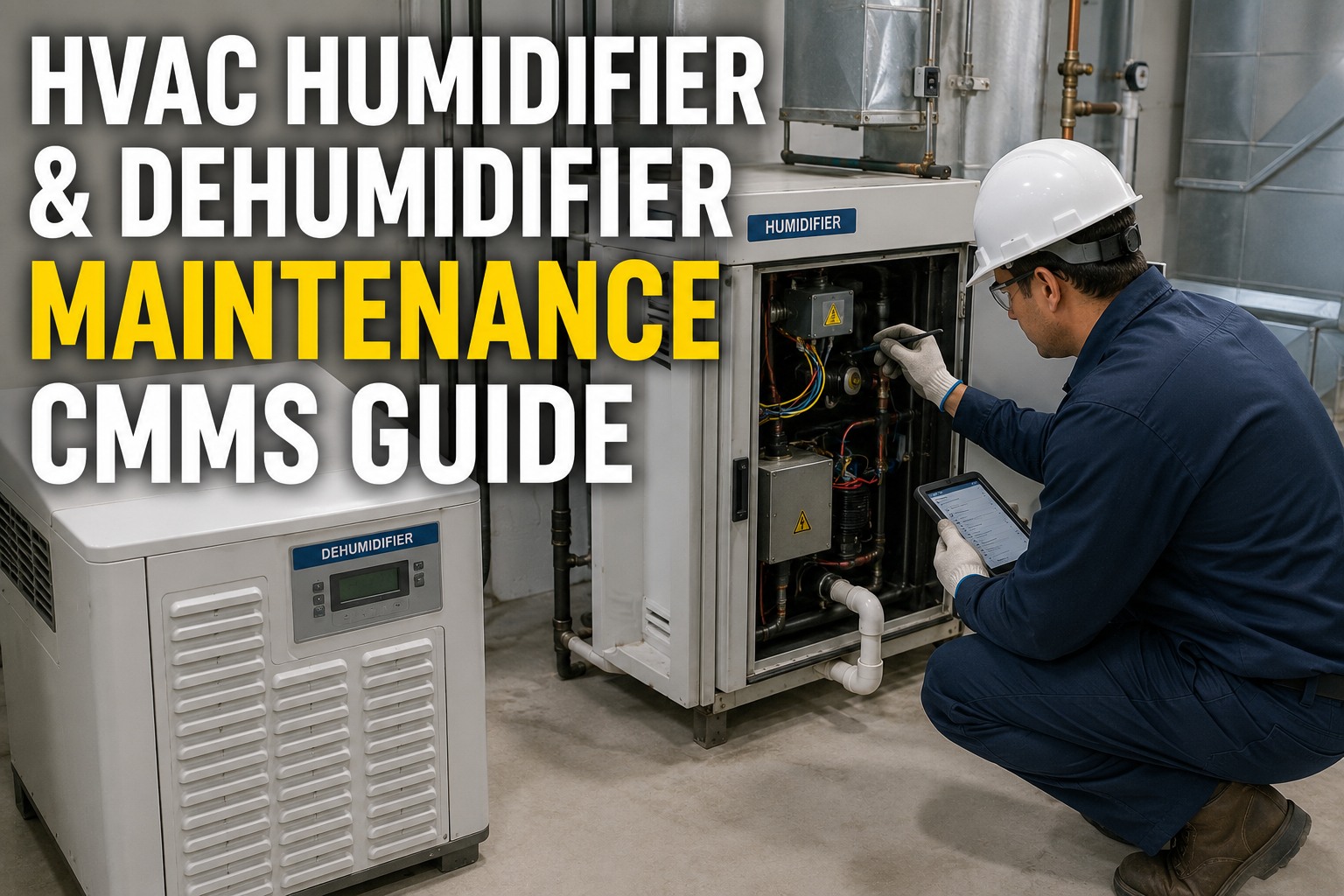
Humidity equipment is the part of an HVAC system that fails quietly and gets serviced last. A humidifier with a scaled steam canister or a clogged evaporative pad doesn't stop the building — it just delivers less moisture, runs longer, and, worse, can start pushing microbial growth and contaminated moisture back into the air people breathe. A dehumidifier with a fouled coil or blocked condensate drain lets relative humidity drift out of the ASHRAE 55 comfort band and invites moisture damage. What makes this equipment distinctive is that its maintenance isn't one discipline but three braided together — water quality, mechanical, and controls — and it runs year-round, on a cadence unlike seasonal heating or cooling gear. Neglect any one of the three and humidity control degrades. This guide covers HVAC humidifier and dehumidifier maintenance: the three maintenance domains, the service needs of each equipment type, keeping control reliable across seasons, and how a CMMS turns humidity upkeep into a scheduled, tracked program. Book a free humidity-system review.
Humidity Equipment Fails Quietly — and Gets Serviced Last
Water quality, mechanical, and controls braided into one year-round program. Neglect one and IAQ suffers.
3
Maintenance domains braided together: water, mechanical, controls
1–3
Seasons between steam-canister replacements in hard water
Annual
Minimum evaporative-pad replacement, each heating season
Year-round
Operation cadence, unlike seasonal heating or cooling gear
The Three Maintenance Domains
What sets humidity equipment apart is that a single unit demands three different kinds of maintenance at once. Miss any one and the others can't compensate — the machine either under-delivers or turns into an air-quality liability.
Water Quality
Scale, mineral buildup, biofilm, and stagnant water. Hard water scales steam canisters and clogs pads; stagnant water breeds mold. Treatment, descaling, and cleaning keep moisture clean and output steady.
Mechanical
Pads, canisters, coils, drain pans, condensate lines, fans, and dehumidifier compressors. Physical components that wear, clog, corrode, or foul and need inspection, cleaning, and scheduled replacement.
Controls
Humidistats and humidity sensors that decide when the equipment runs. A drifted sensor holds the wrong RH — over- or under-humidifying — so calibration against the ASHRAE 55 target is essential.
Humidifiers · Service by Type
Humidifiers aren't one machine — the type dictates the maintenance. Steam, evaporative, and reservoir designs each fail differently and demand a different cadence, so the program has to match the equipment on site.
STEAM
Steam / Canister Humidifiers
Electrodes or heating elements boil water in a canister; steam injects downstream. Scale accumulates fast in hard water — descaling monthly to quarterly and canister replacement every 1–3 seasons by water hardness. No standing water, but heating efficiency drops as scale builds.
EVAPORATIVE
Evaporative / Bypass Humidifiers
Water drips onto a pad; air evaporates it into the stream. Replace the pad (water panel) at least annually each heating season, sooner if crusted or clogged. Inspect the strainer, feed tube, distribution tray, and drain, and clean mineral buildup with a mild vinegar solution.
RESERVOIR
Drum & Reservoir Types
Older drum designs hold standing water and are prone to mold and biofilm — the highest microbial risk, needing frequent cleaning and disinfection. Many facilities are retiring them in favor of steam or evaporative units for exactly this reason.
Dehumidifiers · The Refrigerant-Cycle Chain
A refrigerant-cycle dehumidifier is mechanically an air conditioner tuned for moisture removal — warm humid air crosses a chilled evaporator coil, water condenses out, and the air is reheated and returned. Each link in that chain is a maintenance point.
01
Evaporator Coil
Where moisture condenses. Fouling or icing kills capacity — clean and de-ice on schedule; a dirty coil is the most common reason a unit stops removing water.
02
Drain Pan & Condensate Line
Condensed water must drain away. A blocked condensate line or fouled pan causes overflow, water damage, and microbial growth — clear and treat regularly.
03
Compressor & Refrigerant
The heart of the cycle. Compressor health, refrigerant charge, and condenser coil condition determine latent capacity — the same care a chiller compressor demands.
04
Reheat & Airflow
Dried air is reheated and returned. Fan condition, filters, and reheat coil keep the airflow and delivered conditions right, so RH lands where the control calls for it.
Build Your Humidity PM Program in 30 Minutes
Working session with our facilities team — bring your humidifier and dehumidifier list. We'll match a water, mechanical, and controls cadence to each type, and show how OxMaint schedules descaling, pad swaps, coil cleaning, and calibration automatically.
The IAQ Risk · Why Neglect Is Worse Than Downtime
With most equipment, a missed PM means it stops working. With humidity equipment, a missed PM can make it actively harmful — which is what raises the stakes on this program above simple availability.
An Unmaintained Humidifier Pushes Contaminated Moisture Into the Air
Stagnant water, biofilm, and mold in a neglected humidifier or a fouled dehumidifier drain don't just cut performance — they let the equipment release contaminated moisture back into the occupied space, degrading indoor air quality instead of improving it. Because humidity equipment sits in the air people breathe, its maintenance is a health control, not just a comfort one. That's why the cleaning, water-treatment, and drain-hygiene tasks aren't optional niceties — they're the core purpose, and skipping them turns a comfort system into an IAQ liability that no amount of running harder can fix.
Reliable Control Across Seasons
Humidity equipment works both sides of the year — humidifying in dry winter air, dehumidifying in humid summer — so the program follows the calendar. Timing PM to the seasonal handoff is what keeps control seamless.
Pre-Heating · Humidify Season
Replace evaporative pad / water panel
Descale steam canister, inspect elements
Clear strainer, feed tube, and drain
Calibrate humidistat to winter RH target
Pre-Cooling · Dehumidify Season
Clean evaporator coil, check for icing
Flush condensate line, treat drain pan
Verify compressor and refrigerant charge
Calibrate humidity sensor to summer RH target
How OxMaint Runs a Humidity Maintenance Program
OxMaint turns humidity upkeep into a scheduled, tracked program — type-specific PM cadences, water-treatment and calibration records, mobile execution, and IAQ-relevant compliance reporting, tying every humidifier and dehumidifier to the tasks that keep it reliable, from one dashboard on desktop or mobile.
Schedule
Type-Specific PM Cadences
Auto-generate descaling, pad replacement, coil cleaning, and drain flushing on the right cadence per equipment type — steam, evaporative, or refrigerant-cycle.
Water
Treatment & Hygiene Tasks
Track water treatment, canister replacement by hardness, and drain-hygiene tasks — the water-quality domain that protects both output and indoor air quality.
Calibrate
Humidistat & Sensor Records
Schedule and log humidistat and humidity-sensor calibration against the ASHRAE 55 RH target — so control holds the right setpoint season to season.
Execute
Mobile Checklists
Technicians work each service on mobile with type-specific checklists, photo capture, and parts logged — offline-capable, with QR tags on each unit.
Season
Seasonal Changeover Plans
Trigger pre-heating and pre-cooling PM bundles at the seasonal handoff, so humidify and dehumidify modes are both ready before demand arrives.
Report
IAQ & Compliance
Maintain the service and calibration history behind IAQ and comfort compliance, audit-ready across one building or a whole portfolio.
Keep Humidity Control Clean, Calibrated, and Reliable
Stop letting scale, clogged pads, and drifted sensors quietly degrade comfort and air quality. See how OxMaint runs humidity equipment as a tracked water, mechanical, and controls program across every season. Free forever plan available.
Frequently Asked Questions
Why does humidity equipment need three kinds of maintenance?
Because a humidifier or dehumidifier depends on water quality, mechanical condition, and controls all at once. Water quality governs scale, biofilm, and mold; mechanical condition covers pads, canisters, coils, drains, and compressors; and controls — the humidistat and humidity sensor — decide when and how much the unit runs. If any one is neglected, the others can't compensate: a perfectly clean unit with a drifted sensor still holds the wrong humidity, and a well-calibrated one with a scaled canister still under-delivers.
Book a review.
How often should humidifier components be serviced?
It depends on type and water hardness. Evaporative pads (water panels) should be replaced at least once per heating season, sooner if crusted or clogged, with the strainer, feed tube, and drain inspected regularly. Steam humidifiers typically need descaling monthly to quarterly and canister replacement every one to three seasons depending on water hardness. Older drum and reservoir types with standing water need frequent cleaning and disinfection because they are prone to mold. Hard-water regions push every cadence shorter.
What maintenance does a dehumidifier need?
A refrigerant-cycle dehumidifier works like an air conditioner tuned for moisture, so its maintenance follows the same chain: clean and de-ice the evaporator coil where moisture condenses, clear and treat the drain pan and condensate line to prevent overflow and microbial growth, verify compressor health and refrigerant charge for latent capacity, and keep the reheat coil, fan, and filters in order so delivered airflow and conditions are right. A dirty coil or blocked drain is the most common cause of a unit that stops removing moisture.
Start free.
Why is neglected humidity equipment an air-quality risk?
Because it sits directly in the air people breathe. Stagnant water, biofilm, and mold in an unmaintained humidifier, or a fouled dehumidifier drain pan, let the equipment release contaminated moisture back into the occupied space rather than clean humidity — degrading indoor air quality instead of improving it. That makes cleaning, water treatment, and drain hygiene a health control, not just a comfort measure, and it's why a missed PM on this equipment carries more risk than simple downtime.
How does OxMaint support humidity maintenance?
It auto-schedules type-specific PM — descaling, pad replacement, coil cleaning, drain flushing — on the right cadence for steam, evaporative, and refrigerant-cycle units; tracks water-treatment, canister-replacement, and drain-hygiene tasks; logs humidistat and sensor calibration against the ASHRAE 55 RH target; and triggers pre-heating and pre-cooling PM bundles at the seasonal handoff. Technicians execute on mobile with checklists and photo capture, and the service history stays audit-ready for IAQ and comfort compliance. A free forever plan is available.