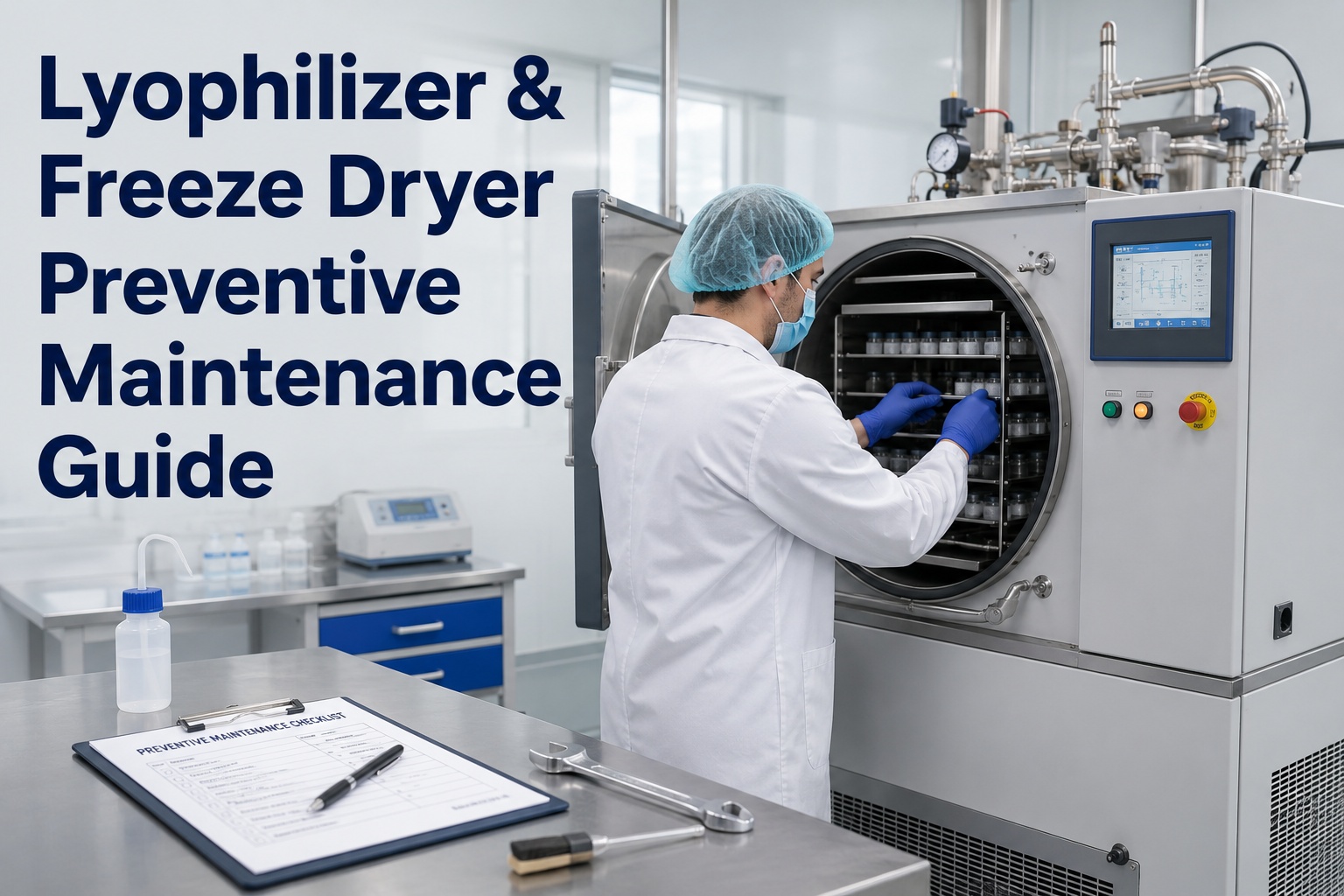
Pharmaceutical lyophilizer preventive maintenance is the difference between a validated, audit-ready freeze drying cycle and a batch loss worth hundreds of thousands of dollars. A structured freeze dryer PM program covering vacuum system maintenance, refrigeration checks, condenser defrosting, and chamber door seal replacement protects both product quality and cGMP compliance. OxMaint brings AI-powered CMMS scheduling, digital work orders, and calibration tracking to every pharmaceutical lyophilizer maintenance schedule — so your reliability team stays inspection-ready. Start Free Trial to digitize your lyophilizer PM workflow today.
Is one failed lyophilizer cycle costing you $250K per batch?
A single undetected vacuum leak or refrigeration drift can destroy an entire freeze-dried batch, trigger a deviation investigation, and stall validated production for weeks. OxMaint structures every lyophilizer preventive maintenance task — vacuum system service, refrigeration checks, seal replacement, and calibration — into a defensible, audit-ready CMMS workflow.
Lyophilizer Preventive Maintenance Schedule: Daily to Annual Tasks
A compliant pharmaceutical freeze dryer maintenance program operates on four time horizons. Each interval carries specific inspection points tied to FDA cGMP expectations and equipment validation protocols — missing any one creates audit exposure and cycle failure risk.
Operational Checks & Cycle Monitoring
- ✓ Verify chamber vacuum pump-down rate meets cycle specification
- ✓ Record condenser temperature at setpoint (typically −50°C to −85°C)
- ✓ Inspect door seal visually for debris, tears, or compression set
- ✓ Confirm shelf temperature uniformity across all shelves within ±1°C
- ✓ Log cycle data integrity — no gaps in batch recording
Vacuum System & Condenser Service
- ✓ Check vacuum pump oil level, color, and contamination level
- ✓ Inspect condenser coil for ice bridging or excessive frost buildup
- ✓ Test vacuum leak rate — target below 5 mTorr/min at baseline
- ✓ Drain and replace vacuum pump oil if milky or particulate-laden
- ✓ Verify all instrumentation readings against reference gauges
Refrigeration, Seals & Calibration Verification
- ✓ Replace chamber door O-ring seal and inspect sealing surfaces
- ✓ Perform refrigeration system leak test on compressor circuits
- ✓ Calibrate shelf temperature sensors and vacuum gauges against NIST-traceable standards
- ✓ Inspect and clean condenser after full defrost and melt-down cycle
- ✓ Test emergency backup systems — LN2 or alternate refrigeration switchover
Full Requalification & Major Component Overhaul
- ✓ Rebuild or replace vacuum pump — full seal and rotor service kit
- ✓ Replace all elastomer seals — door, viewports, valve ports, feedthroughs
- ✓ Conduct full refrigeration compressor service — oil, refrigerant charge, filter driers
- ✓ Execute factory-acceptance-level OQ requalification on temperature mapping
- ✓ Review and update validated PM master list in the CMMS for audit trail
Lyophilizer Vacuum Maintenance & Refrigeration Inspection Checklist
Vacuum integrity and refrigeration capacity are the two systems whose failure most frequently ends a batch. Here is the detailed inspection matrix pharmaceutical maintenance teams should run at every PM interval.
| System / Component | Inspection Task | Acceptance Criteria | PM Interval |
|---|---|---|---|
| Vacuum Pump | Oil change, gas ballast check, vibration reading | Ultimate vacuum ≤ 10 mTorr; vibration < 2.0 mm/s | 500–1,000 run hours |
| Chamber Door Seal | Visual inspection, leak-rate test, replacement | Leak rate < 5 mTorr/min; no visible compression set | Quarterly / replace annually |
| Condenser Coils | Defrost, ice load inspection, coil cleaning | Ice capacity within OEM spec; no bridging | Per cycle + weekly |
| Refrigeration Compressor | Oil level, refrigerant pressure, leak detection | Suction/discharge pressures within OEM range | Monthly / full service annually |
| Shelf Temperature Sensors | NIST-traceable calibration verification | ±0.5°C across all shelves at setpoint | Quarterly |
| Pirani / Capacitance Gauges | Calibration check against reference standard | Reading within ±2% of reference | Semi-annually |
| Isolation Valve (Condenser) | Seat inspection, actuator test, leak test | Zero pressure rise across closed valve | Quarterly |
| Silicone Oil Circulation | Level check, fluid condition, pump pressure | No discoloration; pressure stable at setpoint | Monthly |
How OxMaint Structures Your Lyophilizer CMMS for cGMP Compliance
Spreadsheets and paper logs cannot survive an FDA inspection. OxMaint converts every freeze dryer PM task into a digitally traceable, automatically triggered work order — with full audit trail, e-signature capture, and calibration tracking built in.
Automated PM Triggers
Schedule lyophilizer preventive maintenance by run-hours, cycles completed, or calendar date. OxMaint auto-generates work orders the moment a threshold is crossed — eliminating missed oil changes or overdue seal replacements.
Calibration & Certificate Tracking
Every vacuum gauge, shelf sensor, and pressure instrument is linked to its calibration certificate, NIST-traceable standard, and next-due date. Overdue calibrations flag automatically before the next batch release.
Digital Work Orders with E-Signatures
Replace paper PM checklists with OxMaint mobile work orders — technician name, timestamp, reading values, and electronic signature captured at every step. 21 CFR Part 11 compliant by design.
Spare Parts & Seal Inventory
Track O-ring kits, vacuum pump oil, refrigerant, and seal sets against minimum stock levels. OxMaint auto-generates purchase requisitions before a critical spare drops below safety stock.
A mid-size sterile injectables manufacturer operating three production lyophilizers was tracking PM on spreadsheets. After a door seal failed mid-cycle — destroying a batch valued at $310K and triggering a 12-day investigation — they deployed OxMaint. Automated quarterly seal replacements, run-hour-based vacuum pump service, and calibration tracking cut unplanned lyophilizer downtime by 47% and eliminated three recurring audit findings within the first year. Total documented savings: $1.2M in avoided batch losses and investigation costs.
Common Lyophilizer Failures & What They Cost When PM Is Deferred
Every freeze dryer failure mode has a measurable cost. Understanding the financial impact of deferred pharmaceutical lyophilizer maintenance is what justifies the investment in a structured CMMS program.
Stop betting batches on spreadsheets — see OxMaint on your lyophilizers
Book a 30-minute demo and we will map your freeze dryer PM schedule, calibration tracking, and spare parts workflow inside OxMaint — live, on your assets.
Pharmaceutical Lyophilizer Maintenance — FAQs
How often should pharmaceutical lyophilizer preventive maintenance be performed?
Daily operational checks, weekly vacuum system and condenser inspections, quarterly seal replacement and calibration verification, and annual full requalification with major component overhaul. The exact lyophilizer maintenance schedule should be based on OEM recommendations, validated cycle counts, and run-hour thresholds — all of which OxMaint tracks automatically to ensure no PM interval is missed. Start Free Trial to automate your schedule today.
What vacuum leak rate is acceptable for a pharmaceutical freeze dryer?
Most validated pharmaceutical lyophilizers require a leak rate below 5 mTorr per minute at baseline vacuum. Rates above this threshold typically indicate a degraded door seal, faulty isolation valve, or compromised vacuum feedthrough — all of which should trigger immediate PM action before the next production cycle begins.
How long does a lyophilizer chamber door seal last before replacement?
Silicone or fluorocarbon door O-ring seals typically require replacement every 3 to 6 months under heavy production use, or annually for lower-throughput units. Visual inspection for compression set, tears, and particulate contamination should occur daily, with leak-rate testing performed weekly and full replacement scheduled quarterly in most cGMP environments.
Can a CMMS help with FDA cGMP compliance for lyophilizer maintenance?
Yes — a CMMS like OxMaint provides the digital audit trail, electronic signatures, calibration certificate tracking, and automated PM scheduling that FDA inspectors expect under cGMP and 21 CFR Part 11. It replaces paper logs with timestamped, tamper-evident records that demonstrate every maintenance task was completed by qualified personnel on schedule.
What are the most common causes of lyophilizer batch failure?
The leading causes are vacuum leaks from degraded door seals, refrigeration drift causing condenser temperature excursions, shelf temperature sensor calibration drift, and isolation valve seat failures. Each of these failure modes is preventable with a structured preventive maintenance program — which is why validated facilities rely on OxMaint CMMS to trigger inspections before failures occur.
Your lyophilizers deserve maintenance software built for pharma
Join pharmaceutical reliability teams using OxMaint to cut unplanned freeze dryer downtime, pass every audit, and protect every batch — with AI-powered PM scheduling, digital work orders, and full calibration tracking.
Free 14-day trial · No credit card