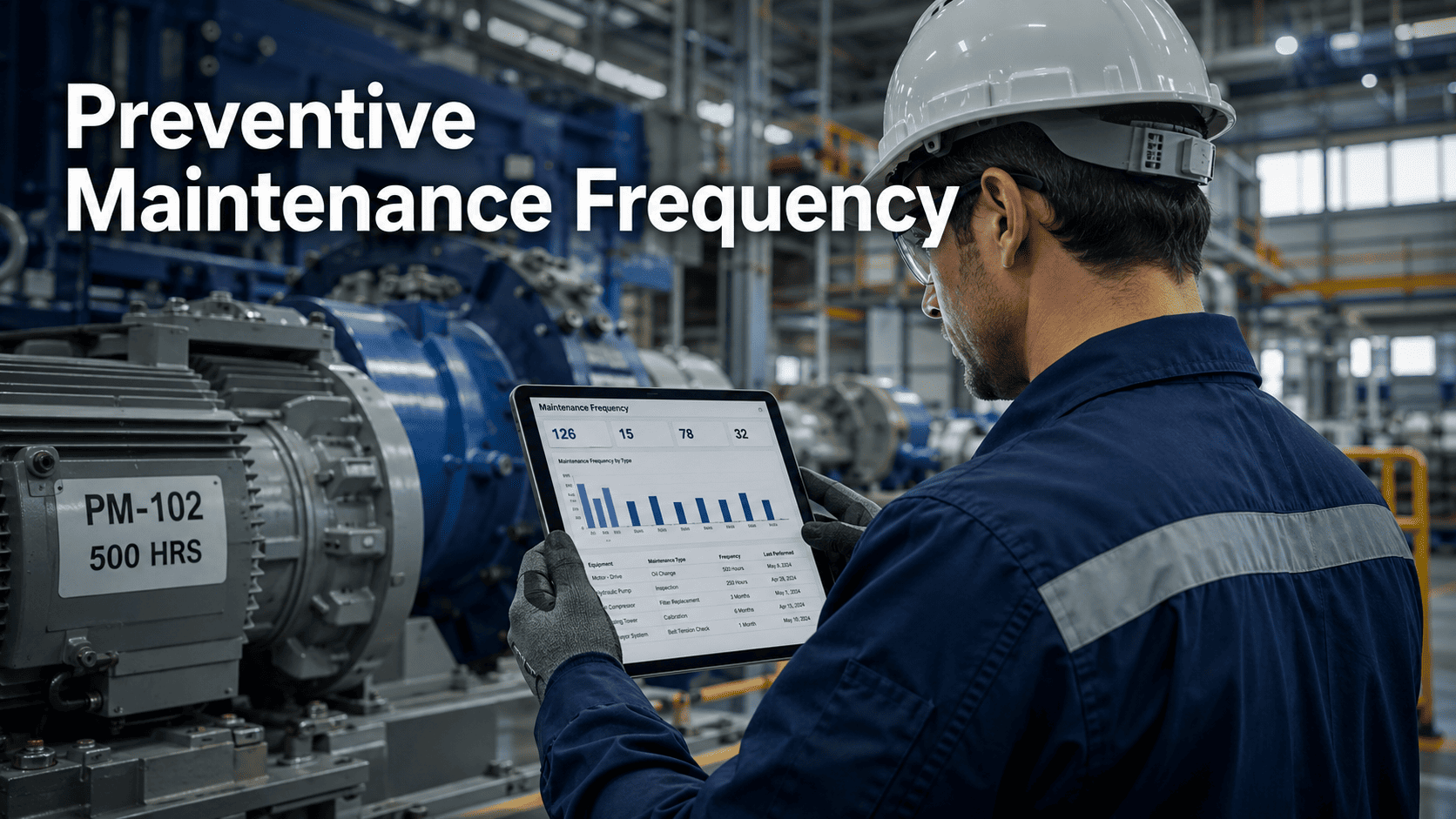
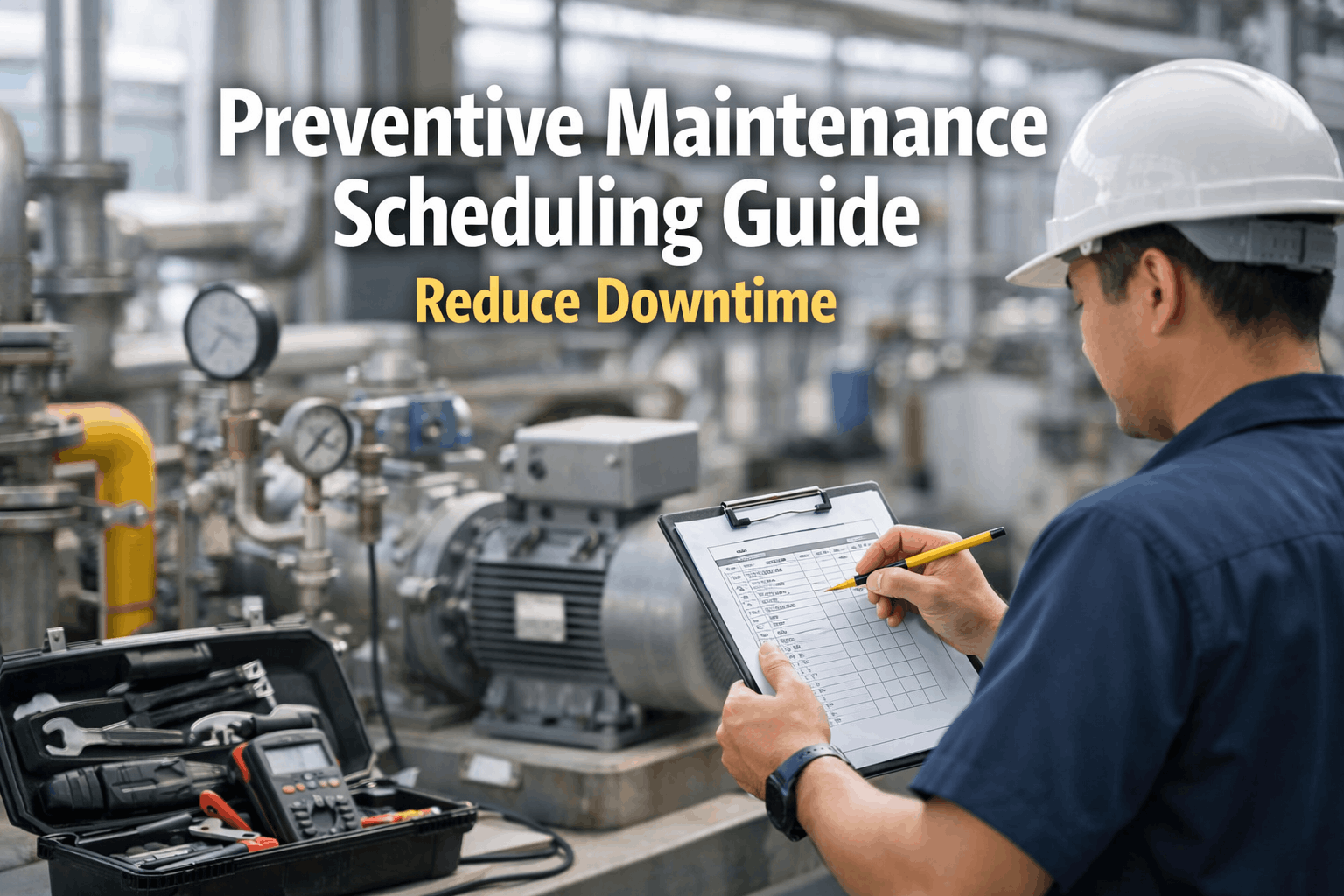
Preventive maintenance frequency — how often you service each piece of equipment — is the single variable that determines whether your PM program protects your assets or wastes your maintenance budget on work that's either unnecessary or too late. Service too rarely and equipment fails between PMs; service too often and you consume labor, parts, and downtime for no reliability gain. Getting the intervals right is a precision exercise that uses manufacturer data, real operating conditions, and asset failure history — and Oxmaint's AI-driven scheduling dynamically optimizes intervals as your equipment accumulates runtime data.
Stop guessing PM intervals — let AI calculate the right frequency for every asset based on real runtime and sensor data.
Dynamic PM intervals driven by IoT sensor data and failure history
94% AI prediction accuracy — catch failures before they happen
62% average reduction in unplanned downtime across 1,000+ clients
Trusted by maintenance teams managing 10,000+ assets · Live in days, not months
Preventive maintenance frequency is how often a specific piece of equipment receives scheduled maintenance — expressed as a time interval (every 30 days), a runtime interval (every 500 operating hours), or a usage interval (every 10,000 cycles). The right frequency keeps an asset in reliable operating condition without over-maintaining it. The wrong frequency — either direction — costs money and reduces reliability simultaneously.
Most facilities start with manufacturer-recommended intervals and should. But manufacturer specs assume average operating conditions. A pump running at 80% load in a clean environment needs different PM frequency than the same model running at 100% load in a high-temperature, high-humidity setting. Real-world PM frequency must account for actual operating conditions, not hypothetical ones.
The goal is condition-based or predictive frequency — servicing equipment when it needs it, not when a calendar says so. That requires sensor data, failure history, and an AI engine to correlate them. Start a free trial to see how Oxmaint calculates optimized intervals for your specific assets, or book a demo and we'll walk through your equipment list.
30–50%
Of PM tasks are performed too frequently or too rarely
Maintenance Technology industry survey
94%
AI prediction accuracy — Oxmaint IoT/sensor analysis
Documented across 1,000+ Oxmaint deployments
2–6 wks
Early failure warning lead time with AI monitoring
Oxmaint predictive maintenance benchmarks
62%
Less unplanned downtime with Oxmaint AI-CMMS
Client-documented outcomes
Setting PM intervals by calendar date alone ignores the actual condition of your equipment — a motor running 24/7 at high load needs service 2–3× more often than the same motor running 8 hours per day at half load.
Section 02
6 Factors That Determine the Right PM Frequency
Every factor below shifts the optimal interval — sometimes dramatically. Use all six together to set initial frequencies; then refine with real operating data.
Factor 01
Manufacturer Recommendations
OEM manuals specify service intervals based on designed operating conditions. Always start here. These intervals are your baseline — every other factor adjusts from them, but you need the baseline before you can adjust intelligently.
Factor 02
Operating Hours vs Calendar Time
Equipment that runs 24/7 wears out faster than equipment running 8 hours per day. If an asset runs twice the hours per day as the OEM assumed, cut your calendar interval in half — or switch to runtime-hour-based scheduling entirely.
Factor 03
Operating Load and Stress
A pump operating at 90% of rated capacity degrades faster than one at 60%. High-temperature, high-vibration, high-load environments compress service intervals significantly. Low-stress environments can safely extend intervals beyond manufacturer defaults.
Factor 04
Environmental Conditions
Dust, humidity, corrosive atmospheres, extreme temperatures, and chemical exposure all accelerate component wear. Outdoor equipment typically needs 30–50% more frequent service than equivalent indoor equipment in a clean, climate-controlled environment.
Factor 05
Asset Age and Condition History
Older assets approaching end-of-life typically need shorter PM intervals as components near their wear limits. Equipment with a history of premature failures needs tighter intervals than similar equipment with a clean maintenance record.
Factor 06
Criticality of the Asset
The consequence of failure matters as much as the likelihood. A critical production asset with high failure cost justifies tighter intervals even if the equipment runs fine. A non-critical asset with easy repair may safely run longer intervals even in high-stress conditions.
Section 03
Recommended PM Frequencies by Equipment Type
These intervals represent standard industry baselines for common industrial equipment types under typical operating conditions. Adjust based on the six factors above for your specific environment.
Equipment Type
Daily / Weekly
Monthly / Quarterly
Annual / Runtime
Electric Motors
Visual check, temperature (daily)
Lubrication, vibration check (monthly)
Insulation resistance, overhaul (annual or 8,760 hrs)
Centrifugal Pumps
Seal check, vibration (weekly)
Bearing lubrication, alignment (monthly)
Full inspection, impeller check (annually)
HVAC Systems
Filter check (weekly)
Filter replacement, coil inspection (monthly)
Full system service, refrigerant check (semi-annual)
Compressors
Oil level, pressure (daily)
Oil/filter change (quarterly or 500 hrs)
Valve inspection, full overhaul (annually or 4,000 hrs)
Conveyor Systems
Belt tension, lubrication (weekly)
Bearing check, alignment (monthly)
Full belt inspection, drive overhaul (annually)
Electrical Panels
Visual/thermal scan (monthly)
Torque checks, cleaning (quarterly)
Full infrared thermography, arc flash review (annually)
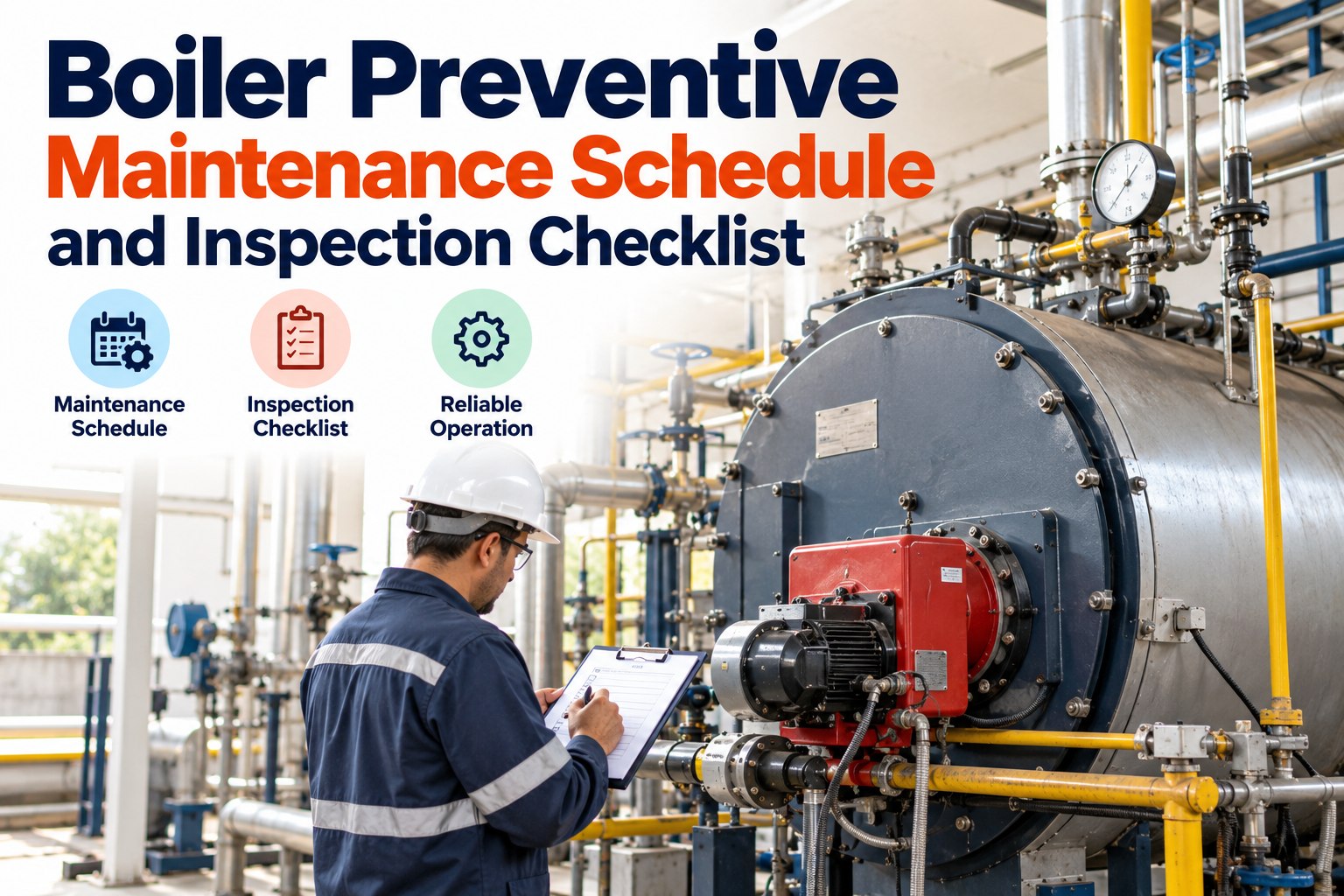
Boilers
Water treatment, pressure (daily)
Blow-down, safety valve (monthly)
Full inspection, regulatory certification (annually)
Fleet Vehicles
Pre-trip safety check (daily)
Oil change, tire rotation (every 5,000–10,000 mi)
Full service, brake inspection (annually or per mileage)
These are starting baselines — your actual intervals should be calibrated to your specific operating data. Oxmaint's inspection management system tracks every reading and uses the data to tighten or extend intervals intelligently. Start a free trial to load your equipment list and get AI-recommended intervals, or book a demo and we'll map your asset base.
Section 04
The Cost of Wrong PM Frequency — 4 Operational Pain Points
Intervals Too Long → Equipment Fails Between PMs
When service intervals exceed actual wear rates, components degrade past the point of PM recovery before the next scheduled task. The result is unexpected failures with emergency repair costs 3–5× higher than planned maintenance.
Avg emergency repair premium: $14,200 per event
Intervals Too Short → Labor and Parts Wasted
Over-maintaining equipment in good condition wastes technician hours, consumes parts prematurely, and generates unnecessary production interruptions for service. High-frequency PM on low-wear equipment is budget drain disguised as diligence.
Over-PM waste: 15–25% of maintenance budget in many facilities
One-Size Intervals Miss Asset Variation
Setting the same interval for every motor, every pump, or every HVAC unit ignores real differences in age, load, environment, and condition. Uniform intervals simultaneously over-maintain some assets and under-protect others.
30–50% of PM tasks are at the wrong frequency — Maintenance Tech survey
Production ramp-ups, seasonal temperature swings, new product lines, and aging assets all change the optimal PM interval — but static schedules stay fixed until someone manually reviews them. By the time the review happens, failures have already occurred.
Most PM calendars go 12–18 months without interval review
Section 05
How Oxmaint Determines the Right PM Frequency for Every Asset
Capability 01
IoT Sensor Integration
Oxmaint's predictive maintenance engine connects to vibration, temperature, pressure, and runtime sensors via PLC/IoT feeds. Real operating data — not assumptions — drives every interval calculation.
Capability 02
AI Interval Optimization
Machine learning models analyze sensor trends and failure history to calculate the optimal PM interval for each individual asset — not a fleet average. One motor gets 30-day intervals; another identical model in harder conditions gets 18-day intervals.
Capability 03
Runtime-Hour Scheduling
For equipment where runtime hours matter more than calendar time, Oxmaint schedules PMs by actual operating hours tracked through sensor integration — not guessed from shift logs or manual entries.
Capability 04
Failure Prediction Alerts
When sensor data trends toward a failure pattern, Oxmaint flags the asset and auto-generates an unscheduled inspection work order — catching failures 2–6 weeks before they occur, regardless of where the asset sits in its PM cycle.
Capability 05
Interval Review Reporting
Oxmaint's analytics dashboard surfaces assets that failed between PMs (interval too long) and assets consistently in perfect condition at PM time (interval possibly too short) — so interval reviews are data-driven, not guesswork.
Capability 06
Condition-Based Maintenance
For assets with AI Vision Camera coverage, Oxmaint's NVIDIA-powered camera system detects degradation visually — cracks, corrosion, leaks — and triggers PMs based on actual condition, not time elapsed.
AI-optimized PM intervals mean every asset gets serviced exactly when it needs it — not too soon, not too late. Start a free trial and Oxmaint begins learning your asset operating patterns from day one, or book a demo to see the interval optimization dashboard live.
AI-driven interval optimization reduces over-PM waste by 20–30% while simultaneously improving reliability — less maintenance spend, better asset uptime, same team.
Section 06
PM Frequency Results — Documented Outcomes
94%
AI Prediction Accuracy
Failure forecasts from sensor data
62%
Less Unplanned Downtime
Oxmaint client average
80%
Less Inspection Time
AI Vision Camera vs manual rounds
99.2%
AI Detection Accuracy
Cracks, leaks, thermal anomalies
40%
Longer Asset Lifespan
vs reactive-only programs
25%
Lower Maintenance Cost
U.S. DoE benchmark for AI-optimized PM
Section 07
Frequently Asked Questions
How do I know if my current PM frequency is correct?
Two failure signals tell you your intervals are wrong. First, if any asset fails between scheduled PMs, the interval is too long for that asset's actual operating conditions. Second, if an asset is consistently in near-perfect condition at every PM (no wear signs, no readings outside spec), the interval may be too short — you're servicing equipment that doesn't need it yet. Track both signals in your CMMS and adjust intervals when either pattern appears. Oxmaint's analytics dashboard flags both automatically.
Should PM intervals be based on calendar time or runtime hours?
It depends on the equipment and how variable its utilization is. For equipment running consistent hours daily, calendar-based intervals work fine — the correlation between calendar time and runtime is stable. For equipment with highly variable use (vehicles, production lines with seasonal demand variation, backup generators), runtime-hour-based intervals are more accurate because they reflect actual wear, not elapsed time. Oxmaint supports both scheduling modes and can automatically track runtime hours via sensor integration.
What happens to PM frequency when equipment ages?
As equipment ages past the midpoint of its designed lifespan, failure rates increase and PM intervals should shorten proportionally. A motor with 15 years of service in a 20-year rated lifespan may need 30–40% more frequent service than it did in its first decade. Oxmaint's AI models incorporate asset age as a scheduling variable, automatically tightening intervals as equipment approaches end-of-life without requiring manual recalculation from the maintenance team.
Can predictive maintenance replace preventive maintenance entirely?
Predictive maintenance complements but doesn't fully replace preventive maintenance — it optimizes it. Predictive systems are excellent at catching developing failures in monitored assets, but not every failure mode is detectable through sensors before it happens. Regulatory compliance also typically requires documented scheduled maintenance regardless of asset condition. The optimal maintenance strategy combines time-based PM (for compliance and lubricant/filter services), condition-based PM (triggered by sensor readings), and predictive monitoring (for failure forecasting). Oxmaint runs all three layers on a single platform.
Right Asset. Right Interval. Right Time.
Stop Guessing How Often to Service Your Equipment
Oxmaint's AI reads your actual sensor data, failure history, operating hours, and asset condition to calculate the optimal PM interval for every piece of equipment — dynamically, not once at setup. Every asset gets serviced exactly when it needs it. No over-maintenance waste. No failures between scheduled PMs.
94% AI prediction accuracy — catch failures 2–6 weeks early
Dynamic interval optimization driven by real sensor data