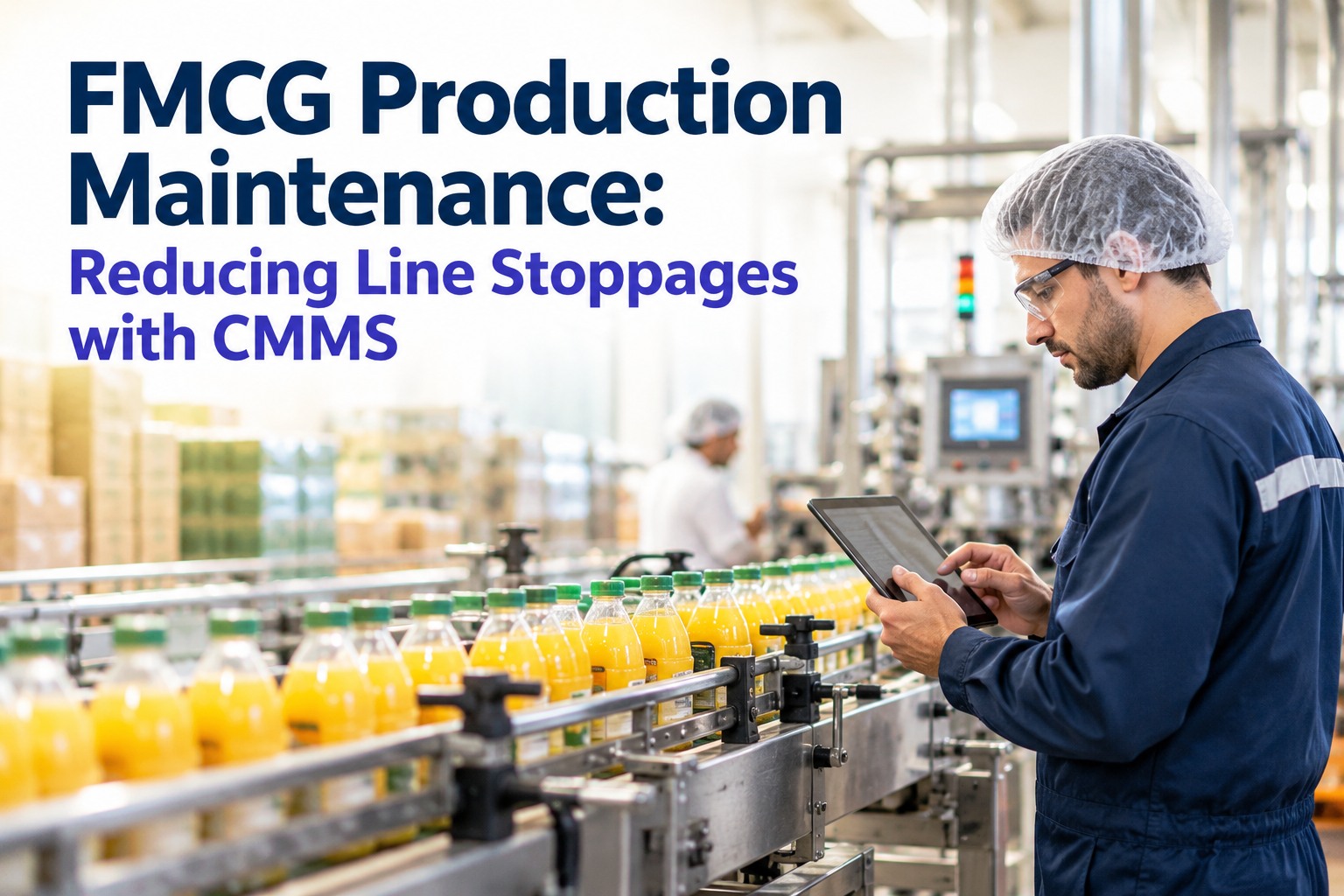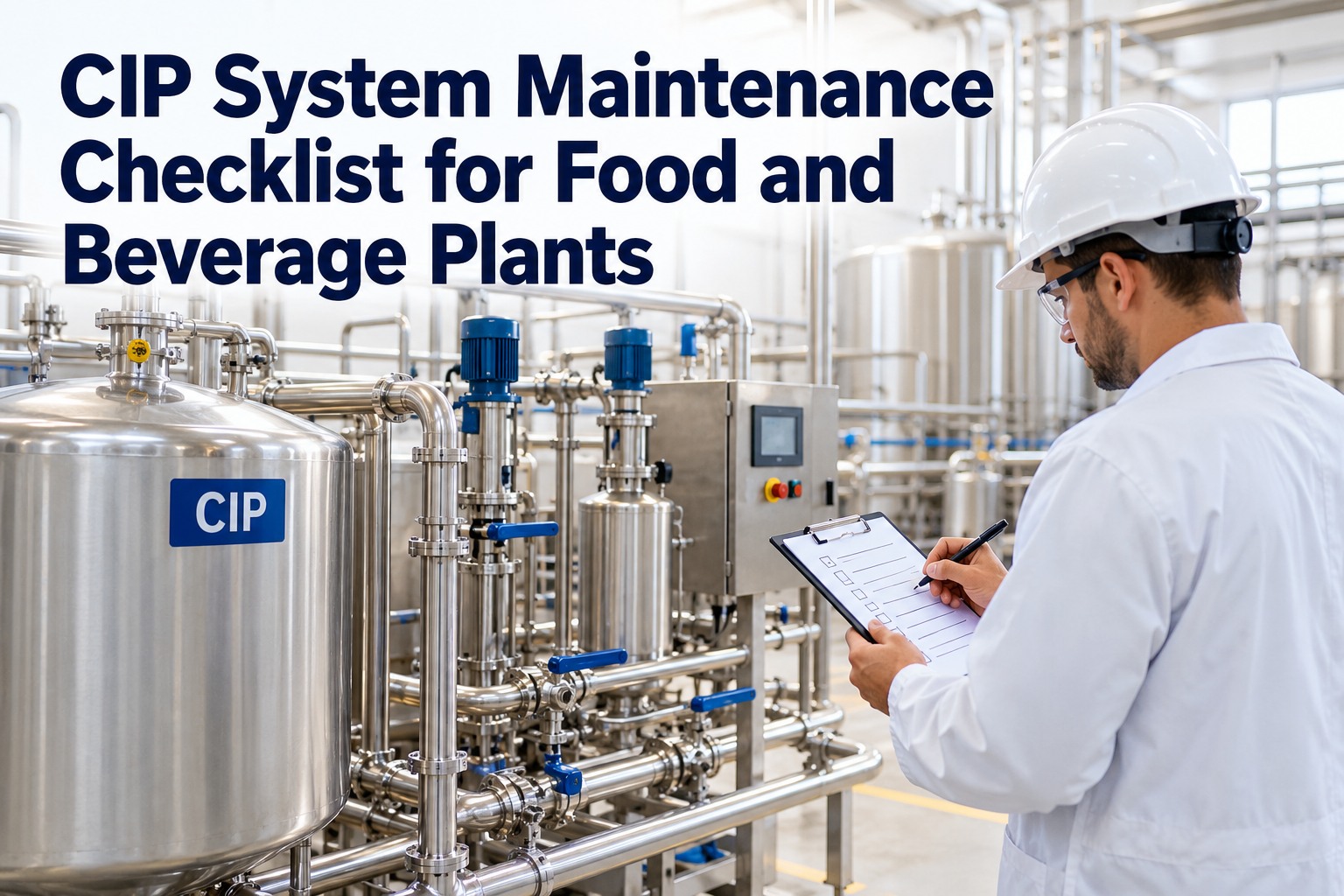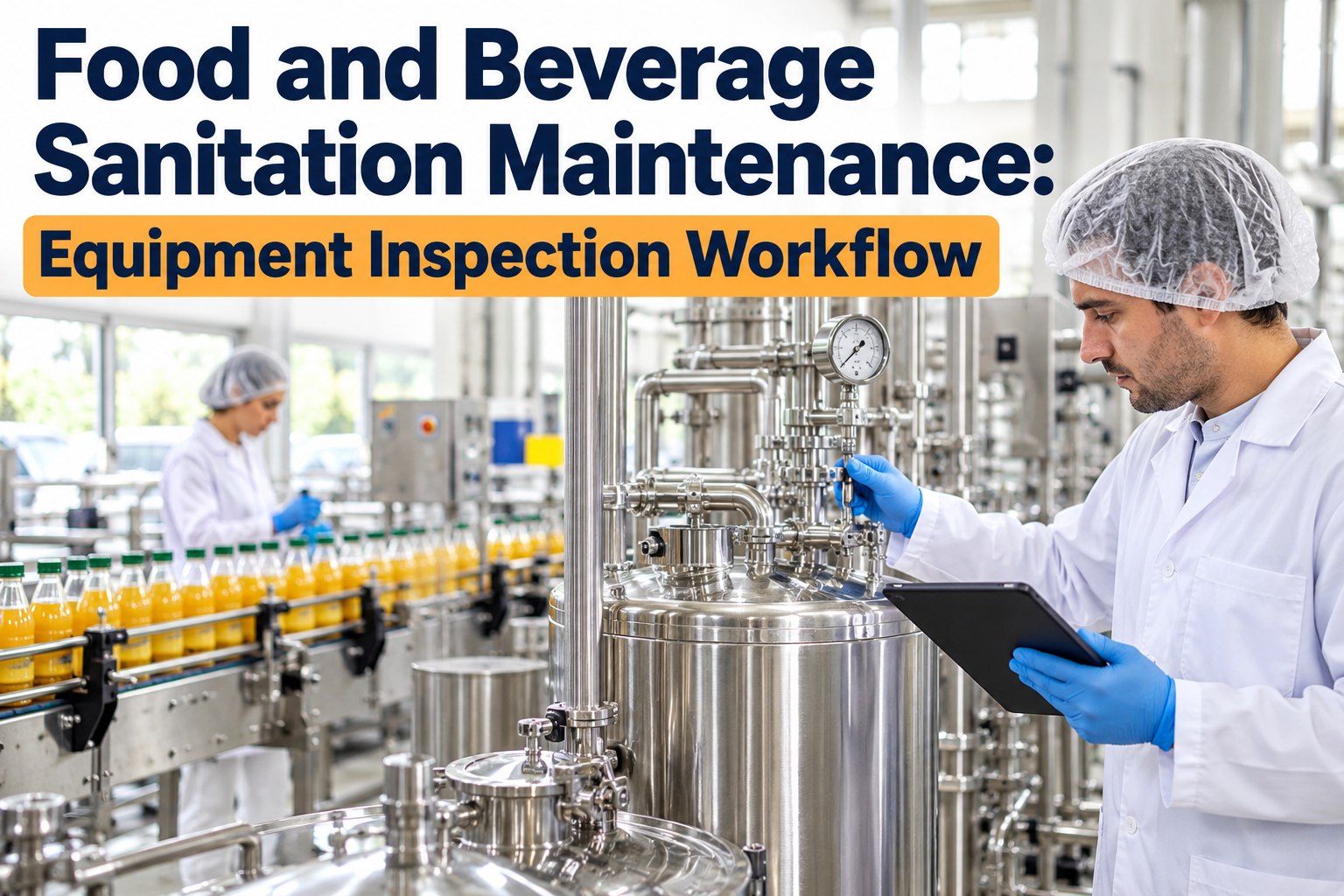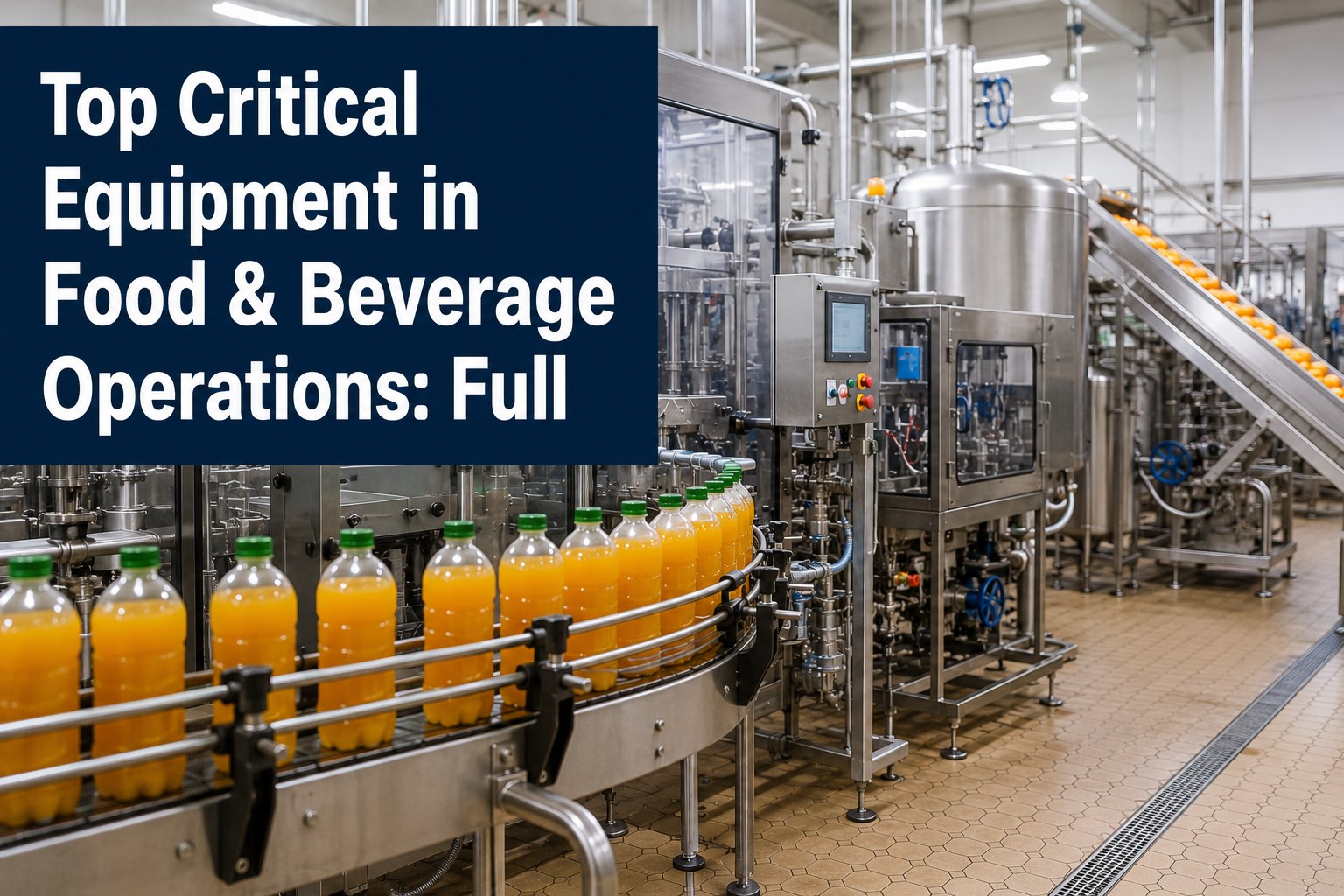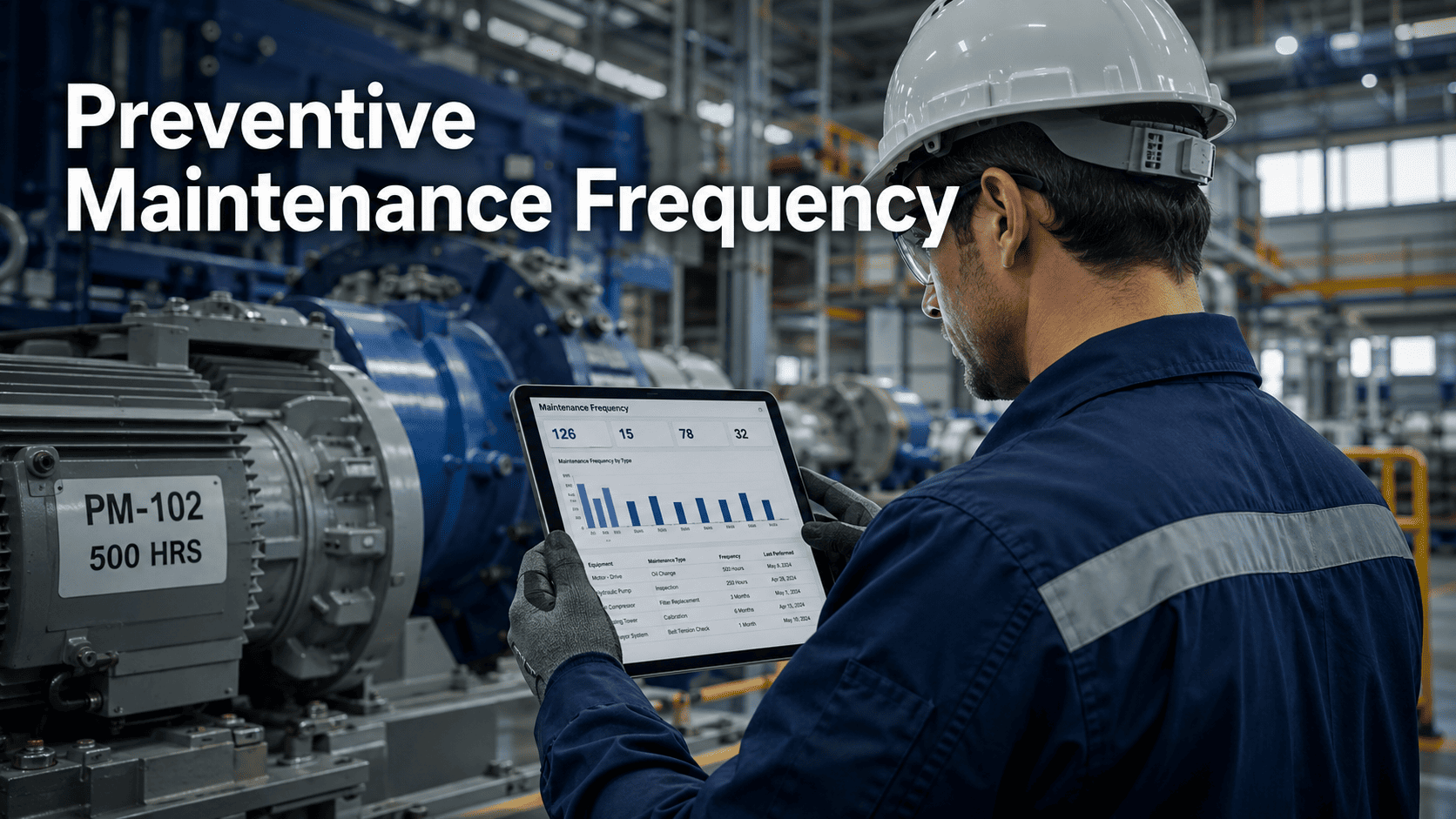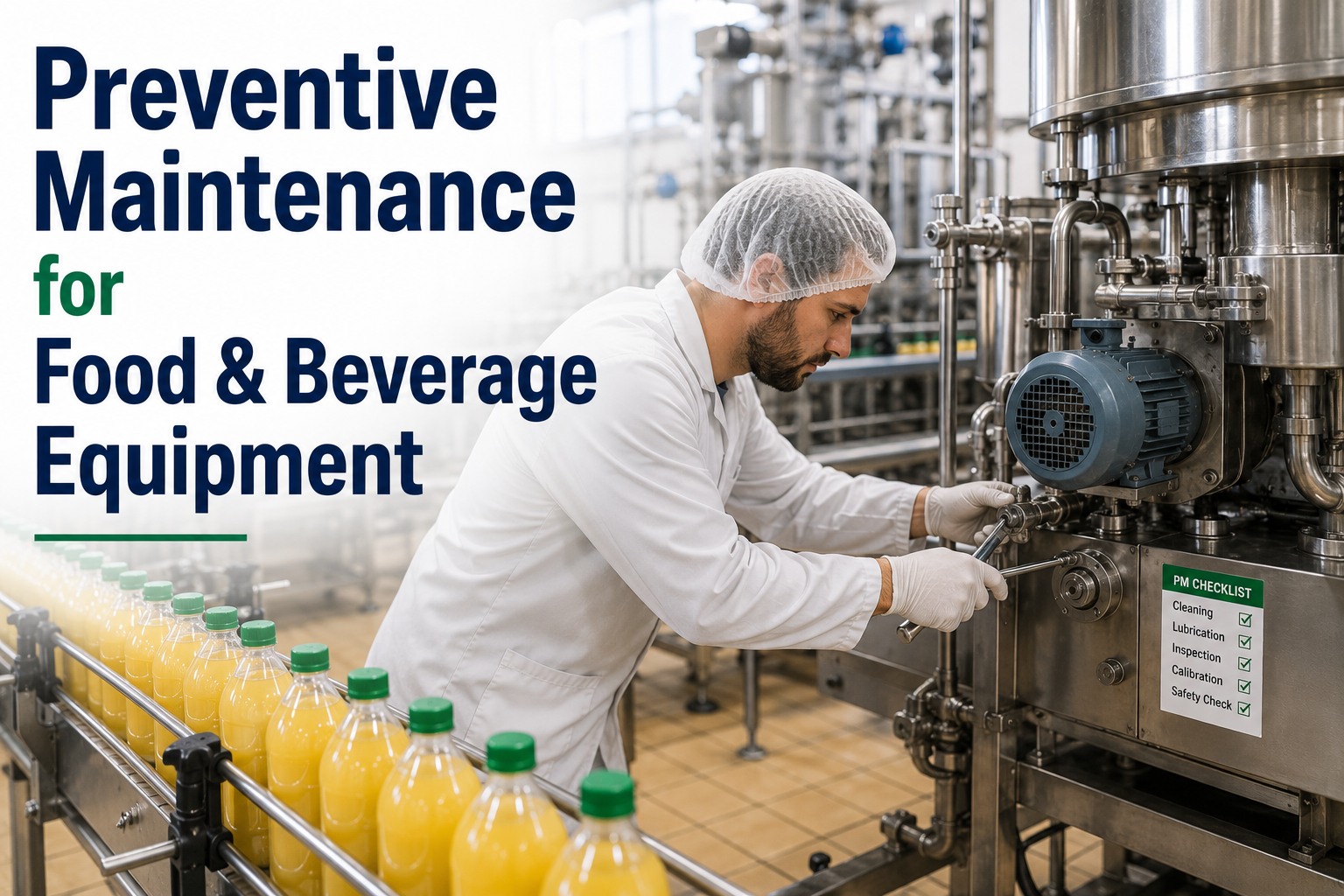
Food and beverage equipment maintenance is the single largest determinant of whether your packaging line hits its OEE target or loses a shift to unplanned downtime. A disciplined preventive maintenance (PM) program for fillers, mixers, cookers, and conveyors can cut unplanned downtime by 30–50% and extend asset life by 20–40%. OxMaint's AI-powered CMMS gives F&B maintenance managers the PM libraries, mobile technician workflows, and analytics needed to move from reactive firefighting to predictive reliability — you can Start Free Trial today or book a personalized demo to see it on your assets.
F&B Equipment Reliability
Is reactive maintenance eating your production line's OEE?
Unplanned filler or conveyor failures cost F&B plants an average of $12,000–$50,000 per hour in lost throughput, scrap, and rushed parts. A disciplined preventive maintenance strategy — built on the right CMMS structure — flips that cost curve. OxMaint helps you schedule, track, and optimize PMs across every critical asset so your lines run at target OEE, shift after shift.
The Cost of Inaction
What poor F&B equipment PM really costs your plant
A 180-asset food production plant spending $42,000 annually on reactive repairs and expedited parts typically loses an additional $180,000–$300,000 in unscheduled downtime per year. When a filler goes down mid-shift, the cost isn't just the mechanic's overtime — it's lost line throughput, scrapped product held outside temperature spec, delayed shipments, and the cascading effect on downstream packaging equipment. Food and beverage preventive maintenance isn't a cost center; it's the cheapest insurance policy your production line has.
Annual Downtime Cost
Unplanned Downtime Hours × Lost Throughput Rate + Scrap + Overtime
Example: 3 filler failures/yr × 6 hrs × $8,500/hr + $4,200 scrap + $2,800 OT = $160,200 annual exposure
Annual PM Investment
Planned PM Hours × Labor Rate + Parts + CMMS Software Cost
Example: 120 PM hrs/yr × $65/hr + $3,500 parts + $1,800 CMMS = $13,100 annual investment
The ratio is stark: every dollar invested in structured food equipment PM typically returns $4–$8 in avoided downtime, scrap, and emergency repair costs. Yet many F&B plants still manage maintenance on spreadsheets or paper work orders — making it impossible to track PM compliance, spot failure trends, or prove audit readiness. OxMaint's CMMS digitizes the entire PM workflow so nothing falls through the cracks.
PM Checklist by Equipment Type
Food & beverage equipment preventive maintenance checklist
Different F&B assets have different failure modes, compliance requirements, and PM frequencies. Below is a structured PM checklist for the four most critical equipment categories in food and beverage production. OxMaint comes pre-loaded with PM library templates for each — customizable to your specific OEM specifications and production schedule.
Fillers & Cappers
Daily / Weekly / Monthly- Inspect fill nozzles for product buildup and wear
- Verify fill volume accuracy to ±0.5% target
- Lubricate cam followers and guide rails
- Check capper torque calibration against spec
- Sanitize filler bowl per CIP protocol
Mixers & Blenders
Weekly / Monthly- Inspect agitator seals for leakage and wear
- Grease bearings per OEM lubrication chart
- Check gearbox oil level and condition
- Verify bowl temperature control accuracy
- Test motor amperage under load
Conveyors & Packaging
Daily / Weekly- Inspect belt tension, tracking, and wear patterns
- Lubricate chain drives and sprockets
- Check photo-eye sensors and reject mechanisms
- Inspect guard interlocks for safety compliance
- Test VFD fault codes and alarm history
Refrigeration & Cookers
Daily / Monthly / Quarterly- Log refrigerant pressures and suction temp
- Clean condenser coils and evaporator fins
- Calibrate temperature probes to NIST standard
- Inspect heat exchanger gaskets and plates
- Test safety relief valves and alarms
PM Frequency Framework
How to structure PM intervals for food production equipment
The best F&B maintenance teams don't just "do PMs" — they tier PM frequency by criticality, failure mode, and regulatory requirement. The table below maps a typical PM interval framework for a mid-size food and beverage plant running two shifts. OxMaint automatically schedules these intervals based on meter readings (cycles, runtime hours), calendar triggers, or condition-based sensor data.
| PM Tier | Equipment Examples | Trigger | Frequency | Typical Duration | Avg. Parts Cost |
|---|---|---|---|---|---|
| Tier 1 — Operator Care | Conveyors, fillers, sealers | Shift start / end | Daily | 10–15 min | $0–$15 |
| Tier 2 — Routine PM | Mixers, cappers, labelers | Calendar / runtime hours | Weekly | 30–60 min | $25–$80 |
| Tier 3 — Deep PM | Cookers, refrigeration, compressors | Calendar / cycles | Monthly | 2–4 hrs | $150–$500 |
| Tier 4 — Overhaul | Filler heads, gearbox, heat exchangers | Meter / condition-based | Quarterly / Annual | 4–8 hrs | $800–$3,500 |
| Tier 5 — Predictive | Critical motors, pumps, bearings | Vibration / temp / IoT sensor | Continuous monitoring | Automated | As needed |
How OxMaint Helps
How OxMaint transforms F&B preventive maintenance
OxMaint is built for the realities of food and beverage production — high-speed lines, strict compliance, and zero tolerance for unplanned downtime. Here's how our AI-powered CMMS maps directly to the F&B maintenance challenges that keep plant managers up at night.
Pre-Built F&B PM Libraries
Start with proven PM templates for fillers, mixers, cookers, conveyors, and refrigeration — then customize to your OEM specs. OxMaint eliminates the blank-slate problem so your PM program is live in days, not months.
Mobile Technician Workflow
Technicians receive work orders on their mobile devices with step-by-step checklists, safety procedures, parts required, and photo documentation. No more paper work orders left on a clipboard or lost between shifts.
AI-Powered Predictive Alerts
OxMaint's AI analyzes vibration, temperature, and runtime data to predict equipment failures 7–21 days before they happen. Shift from time-based PM to condition-based maintenance and catch bearing failures, motor degradation, and thermal anomalies early.
Audit-Ready Compliance Logs
Every PM, inspection, and repair is automatically logged with timestamps, technician ID, parts used, and photo evidence. Generate FDA, HACCP, and GFSI audit reports in seconds — not days of digging through filing cabinets.
"We switched from spreadsheets to OxMaint and saw our filler line PM compliance jump from 62% to 94% in the first quarter. Unplanned downtime on our packaging line dropped by 38% — the ROI was clear within the first month."
Implementation Timeline
From spreadsheets to structured PM in 30 days
Most F&B plants fear that switching to a CMMS means months of implementation disruption. With OxMaint, the typical path from reactive to preventive takes about four weeks — and your first PM schedules go live in week one. Here's what the rollout looks like for a mid-size food or beverage plant.
Asset Import & PM Library Setup
Import your equipment list (CSV, spreadsheet, or ERP sync). Apply OxMaint's pre-built F&B PM templates for fillers, mixers, conveyors, and refrigeration. Assign criticality ratings and PM frequencies.
Technician Onboarding & Mobile Setup
Invite technicians, configure mobile app access, and run a pilot PM on 5–10 critical assets. Technicians complete checklists on their phones with photo documentation and parts consumption tracking.
Full PM Schedule Activation
Activate automated PM scheduling across all assets. OxMaint generates work orders based on calendar triggers, runtime meters, or condition sensors. Managers get real-time compliance dashboards.
Analytics & Predictive Tuning
Review PM completion rates, mean time between failures (MTBF), and downtime trends. Enable AI predictive alerts on critical assets. Optimize PM frequency based on actual failure data — not guesswork.
See OxMaint on your filling line — book a 30-minute demo
We'll show you how OxMaint's PM libraries, mobile work orders, and predictive AI fit your specific F&B equipment — from fillers and mixers to conveyors and refrigeration. No generic slideshow. Just your assets, your challenges, your ROI.
Frequently Asked Questions
Food & beverage equipment maintenance FAQ
What is preventive maintenance for food and beverage equipment?
Preventive maintenance for F&B equipment is the scheduled, proactive servicing of fillers, mixers, conveyors, cookers, and refrigeration systems to prevent unplanned failures. It includes routine inspections, lubrication, calibration, parts replacement, and cleaning — performed at set intervals based on runtime hours, cycles, or calendar triggers. The goal is to maintain OEE targets, extend asset life, and ensure compliance with food safety standards like HACCP and GFSI.
How often should food processing equipment be serviced?
Most F&B equipment requires daily operator care checks (10–15 minutes), weekly routine PM (30–60 minutes), monthly deep PM (2–4 hours), and quarterly or annual overhauls (4–8 hours). Critical assets like fillers and refrigeration may need condition-based monitoring with IoT sensors for continuous health tracking. OxMaint lets you set PM frequencies by calendar, runtime meter, or sensor threshold — and automatically adjusts based on actual failure data. You can Start Free Trial to configure intervals for your specific assets.
What does a CMMS do for food and beverage maintenance?
A CMMS (Computerized Maintenance Management System) digitizes work orders, PM scheduling, asset tracking, spare parts inventory, and maintenance analytics. For F&B plants, it replaces paper work orders and spreadsheets with a centralized system that ensures PM compliance, provides audit-ready documentation, and uses AI to predict equipment failures before they cause downtime. This typically cuts unplanned downtime 30–50% and improves PM completion rates to 90%+.
How much does F&B maintenance software cost?
F&B CMMS software typically costs $40–$150 per user per month, depending on features and asset count. A 180-asset plant might spend $1,500–$3,600 annually on software — against $180,000+ in avoided downtime costs. The payback period is usually under 3 months. OxMaint includes PM libraries, mobile work orders, predictive AI, and compliance reporting in a single platform.
How do I switch from paper work orders to a CMMS?
The switch typically takes 2–4 weeks. Start by importing your asset list, applying PM library templates, and onboarding technicians on the mobile app. Run a pilot on 5–10 critical assets before full rollout. OxMaint provides onboarding support, pre-built F&B PM templates, and a simple CSV import tool — so your first scheduled PMs can go live in week one. Most plants see PM compliance jump from 50–60% to 90%+ within the first quarter.
Stop firefighting. Start preventing.
Every shift without structured PM is a shift closer to the next unplanned filler failure. OxMaint gives your F&B maintenance team the tools to schedule, track, and optimize preventive maintenance — so your production lines hit OEE targets and your audits pass without stress.
Free 14-day trial · No credit card required