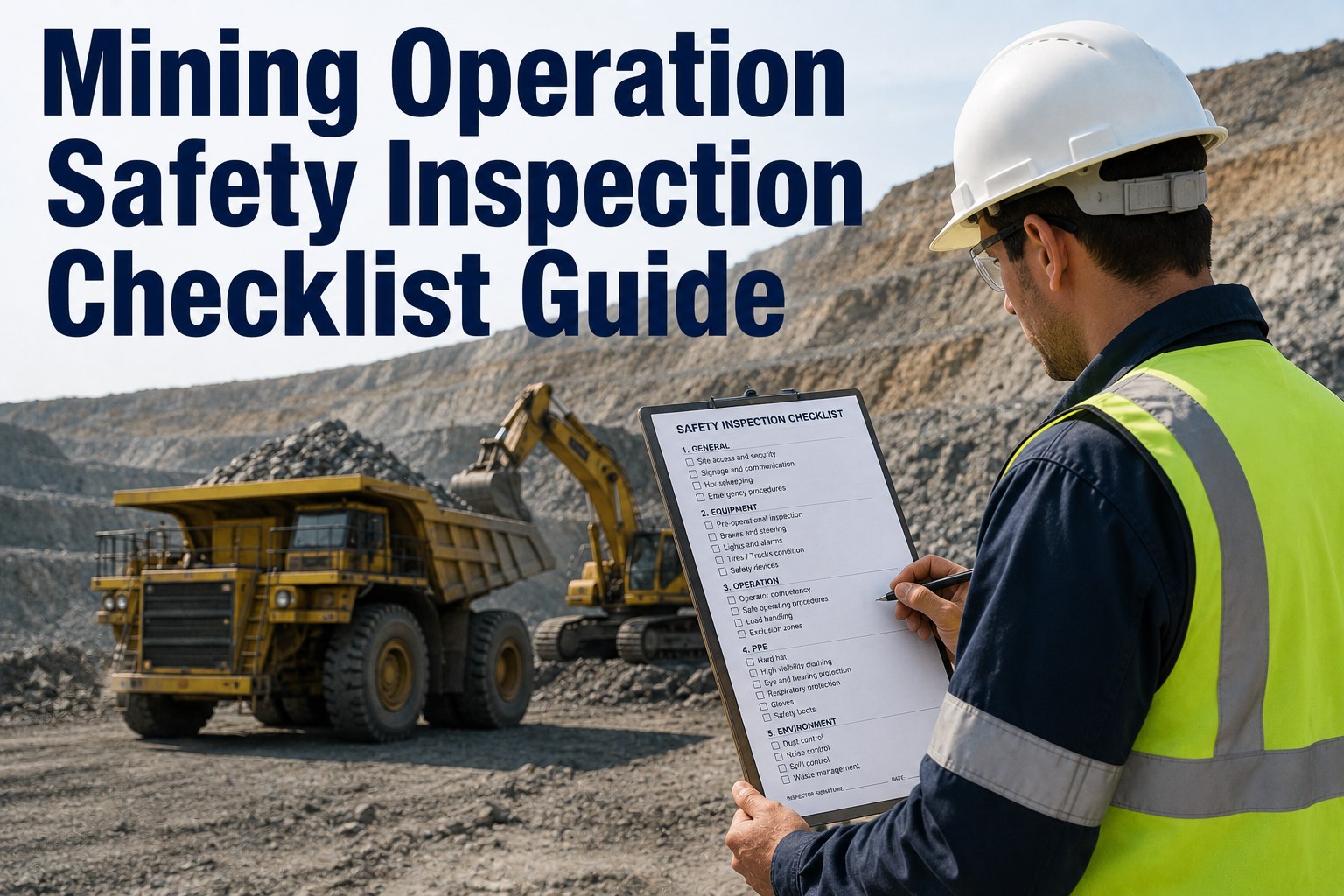
A mining operation safety inspection checklist is a structured, item-by-item audit of equipment condition, safety devices, operating readings, and site hazards that keeps a mine compliant with MSHA and OSHA standards — and catches small defects before they become shutdown-level failures. The biggest reason mine inspections fail isn't missing knowledge; it's inconsistency across technicians, shifts, and sites. This guide gives you an audit-ready mining operation safety inspection checklist template, the pass/fail criteria behind each item, and the MSHA-aligned requirements your records must satisfy. It also shows how OxMaint's CMMS delivers the checklist to a technician's phone as a scheduled work order, captures photo evidence against every line item, and escalates any fail automatically — so no reading, defect, or corrective action falls through the cracks. If you want to digitize this checklist today, Start Free Trial and have your first inspection live in under an hour.
The Mining Operation Safety Inspection Checklist Your Team Can Defend to Any Inspector
Every inspection point that matters — visual condition, operating readings, safety devices, wear limits — with pass/fail criteria, photo evidence, and a complete asset history. Standardize how every inspection gets done, on every shift, at every site.
The Real Cost of Inconsistent Mine Safety Inspections
MSHA issued over 120,000 citations and orders in a recent year, and a large share trace back to hazards a structured walkaround would have caught. When inspections live on paper, clipboards, and memory, three things break down.
The pattern is always the same: one technician checks brake pedal travel, the next just glances at it. One shift logs conveyor belt condition, the next skips it because the form is back at the office. A digital mining operation safety inspection checklist eliminates that variance — every item, every reading, every photo, every time.
Mining Operation Safety Inspection Checklist: 6 Inspection Zones
A defensible mine safety inspection covers six zones. Use these as the backbone of your template — each item needs a clear pass/fail criterion, not a vague "check" box.
Mobile Equipment Pre-Op
- Brakes: service, parking, and retarder tested under load
- Tires/tracks: cuts, pressure, tread depth within wear limits
- Hydraulics: no leaks, hoses free of abrasion and bulging
- ROPS/FOPS structure and seatbelts intact and functional
- Horns, backup alarms, lights, and cameras operational
Fixed Plant & Conveyors
- Guarding in place on all moving parts and nip points
- Emergency pull-cords and e-stops tested along full belt run
- Belt tracking, splice condition, and roller noise assessed
- Motor temps, amperage, and vibration readings logged
- Dust suppression sprays and skirting functioning
Electrical & Power
- Cable insulation, trailing cable handling, and splice condition
- Ground-fault and ground-check monitors tested and tagged
- Panel doors closed, labeled, and clear of stored material
- Lockout/tagout stations stocked; procedures posted at source
Ventilation & Atmosphere
- Airflow readings at working faces against ventilation plan
- Methane and gas monitors calibrated within required interval
- Fans, regulators, and stoppings inspected for damage or leaks
- Dust sampling current; respirable dust controls operating
Ground Control & Site Conditions
- Highwalls, berms, and bench faces checked for loose material
- Roof/rib support installed per ground control plan
- Haul roads: grade, drainage, signage, and berm height compliant
- Standing water, spillage, and housekeeping hazards flagged
Emergency & Fire Readiness
- Fire extinguishers and suppression systems charged and tagged
- Refuge chambers/escapeways stocked, signed, and unobstructed
- First-aid kits, eyewash stations, and spill kits complete
- Communication systems and emergency contacts verified
Mining Operation Safety Inspection Requirements: What to Record
An inspector or auditor doesn't ask "did you check it?" — they ask "show me the record." Every checklist line needs a measurable criterion, an evidence type, and a defined escalation path when it fails.
| Inspection Item | Pass Criterion | Evidence to Capture | If It Fails |
|---|---|---|---|
| Service brakes | Holds machine on max grade; pedal travel within OEM spec | Reading + technician attestation | Tag out of service; priority work order |
| Hydraulic hoses | No weeping, abrasion through outer braid, or weep at fittings | Photo of suspect hose + location | Replace before next shift; parts check |
| Conveyor pull-cord | Stops belt from any point along full run | Test result logged per cord segment | Belt locked out until repaired |
| Gas monitor calibration | Within manufacturer interval; bump test passed | Calibration date + certificate photo | Unit swapped; area re-monitored |
| Berm height | At least mid-axle height of largest haul truck | Photo + measurement at flagged points | Dozer dispatched; area flagged |
| Fire suppression | Charge in green zone; inspection tag current | Tag photo + gauge reading | Extinguisher swapped same day |
In OxMaint, each row above becomes a checklist line with a required reading, a mandatory photo on fail, and an automatic escalation rule — the corrective work order exists before the technician walks away from the asset.
How MSHA and OSHA Shape Your Mine Inspection Program
Surface and underground mines answer to MSHA under 30 CFR — and the recordkeeping expectations are specific. Build your checklist around these four pillars and audits stop being stressful.
Workplace Examinations
MSHA requires a workplace exam each shift for each working place, with records of conditions found and corrective actions taken. Digital checklists timestamp the exam, the examiner, and every corrective action automatically.
Training Records
MSHA Part 48 (and Part 46 for surface) demand documented miner training — new miner, annual refresher, task training. Link training status to inspection assignments so only qualified techs sign off on critical items.
Injury & Illness Logs
Support operations not under MSHA jurisdiction fall to OSHA recordkeeping. A single platform capturing near-misses and first-aid cases keeps your OSHA 300 log accurate without a parallel paper trail.
Retrievable History
Whether it's an MSHA inspector or an insurance auditor, the question is the same: prove it. OxMaint stores every completed inspection against the asset — searchable by date, technician, item, or failure — in seconds.
What Digital Inspections Are Worth: A 240-Asset Surface Mine
Consider a surface operation running 240 assets — haul trucks, loaders, dozers, crushers, and conveyors — spending roughly $38K a year on supervisor time chasing paper checklists and re-entering findings.
Even at half these assumptions, the payback on a CMMS subscription lands inside the first quarter — and the inspection program finally runs the same way on night shift as it does on days.
Digitize Your Mining Operation Safety Inspection Checklist with OxMaint
OxMaint is an AI-powered CMMS + EAM platform built for exactly this: turning inspection checklists into scheduled, traceable, audit-proof work. Four capabilities do the heavy lifting.
Mobile Checklist Work Orders
Deliver the full checklist to any phone or tablet as a scheduled work order. Technicians tap through items, log readings, and attach photos — even offline at the face. Result: 100% completion visibility, zero paper.
Automatic Fail Escalation
Any failed item instantly spawns a corrective work order with the photo and reading attached, routed to the right crew. Defects get fixed before the next shift — cutting unplanned downtime 30–50%.
Asset History & Analytics
Every inspection, reading, and repair stacks against the asset record. Spot repeat failures, track MTBF, and walk into any MSHA or OSHA audit with a complete, searchable history in seconds.
PM Scheduling & Reminders
Set shift-daily, weekly, and monthly inspection cadences once — OxMaint auto-generates and assigns them, escalating overdue items to supervisors. Nothing slips because someone forgot a clipboard.
See OxMaint Running This Checklist on Your Assets
Book a 30-minute demo and we'll build your mining operation safety inspection checklist live — mobile capture, fail escalation, and audit-ready history included.
Mining Operation Safety Inspection Checklist: Common Questions
What should a mining operation safety inspection checklist include?
It should cover six zones: mobile equipment pre-op checks (brakes, tires, hydraulics, ROPS), fixed plant and conveyors (guarding, e-stops, belt condition), electrical systems, ventilation and gas monitoring, ground control and haul roads, and emergency/fire readiness. Every item needs a measurable pass/fail criterion and a defined escalation path.
How often are mine safety inspections required?
MSHA requires a workplace examination at least once each shift for each working place, plus pre-operational checks on mobile equipment before it's put into service. Deeper PM inspections typically run weekly, monthly, and quarterly by asset class. A CMMS schedules all of these automatically so nothing is missed across shifts.
What records does MSHA expect during an inspection or audit?
MSHA expects documented workplace exam records showing conditions found and corrective actions taken, equipment examination and maintenance records, and MSHA Part 48 (or Part 46) training records. Digital records with timestamps, examiner identity, and photo evidence are far easier to defend than paper logs. Book a Demo to see how OxMaint produces these records on demand.
Can I use a digital mining operation safety inspection checklist underground or offline?
Yes. OxMaint's mobile app captures checklist items, readings, and photos offline at the face or in the pit, then syncs automatically when connectivity returns. You get the same timestamped, audit-ready record as a connected inspection — no paper fallback needed.
How do I move from paper checklists to a digital system without disrupting shifts?
Start with your highest-risk asset class — usually haul trucks or conveyors — and digitize that one checklist first. Most teams are running digital inspections within a week and fully migrated in 30 days. Start Free Trial, import your existing checklist, and assign the first work order the same day.
Make Every Mine Inspection Consistent, Traceable, and Audit-Ready
Standardize your mining operation safety inspection checklist across every technician, shift, and site — with photo evidence, automatic escalation, and a complete asset history.
Free 14-day trial · No credit card · Live in under an hour