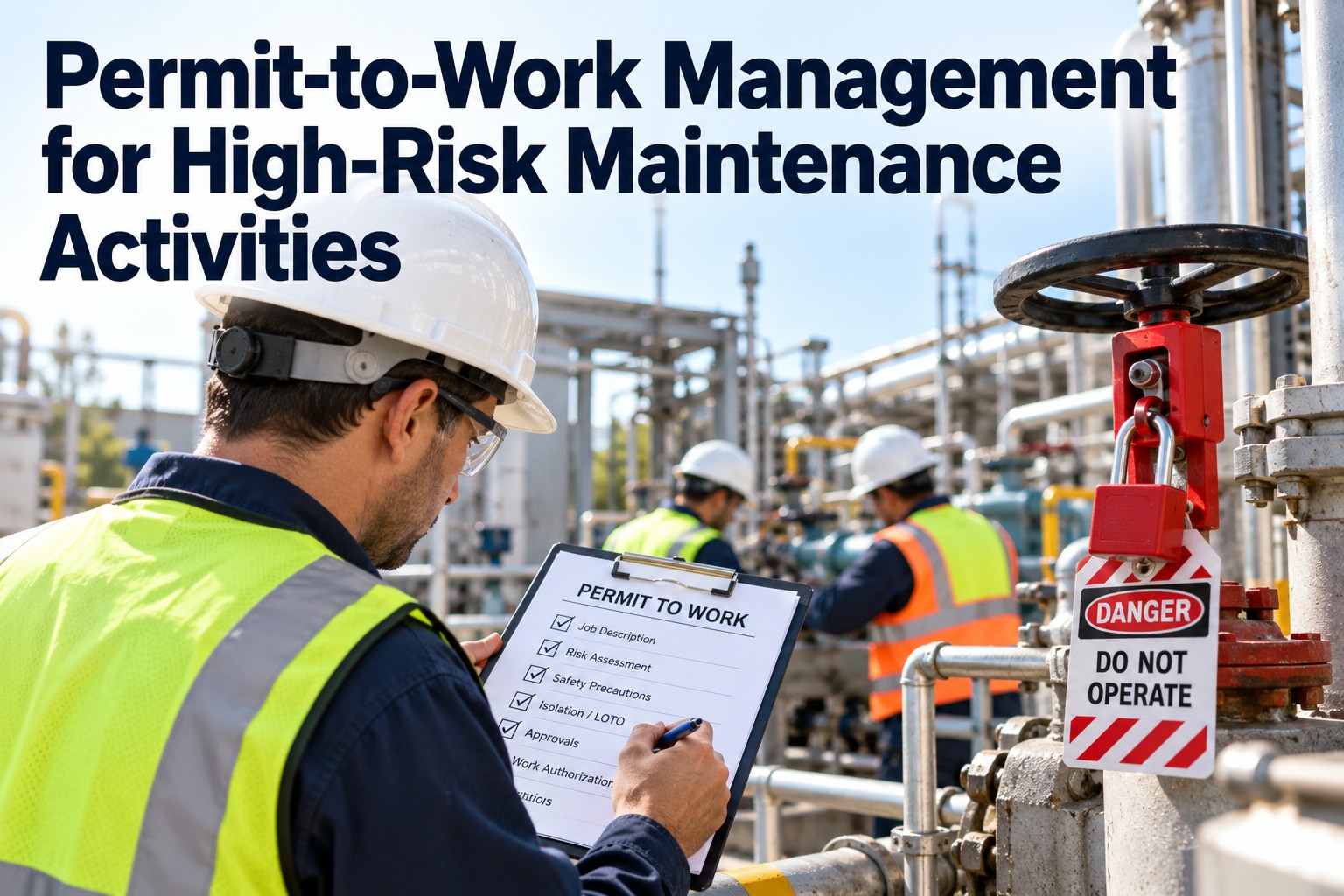
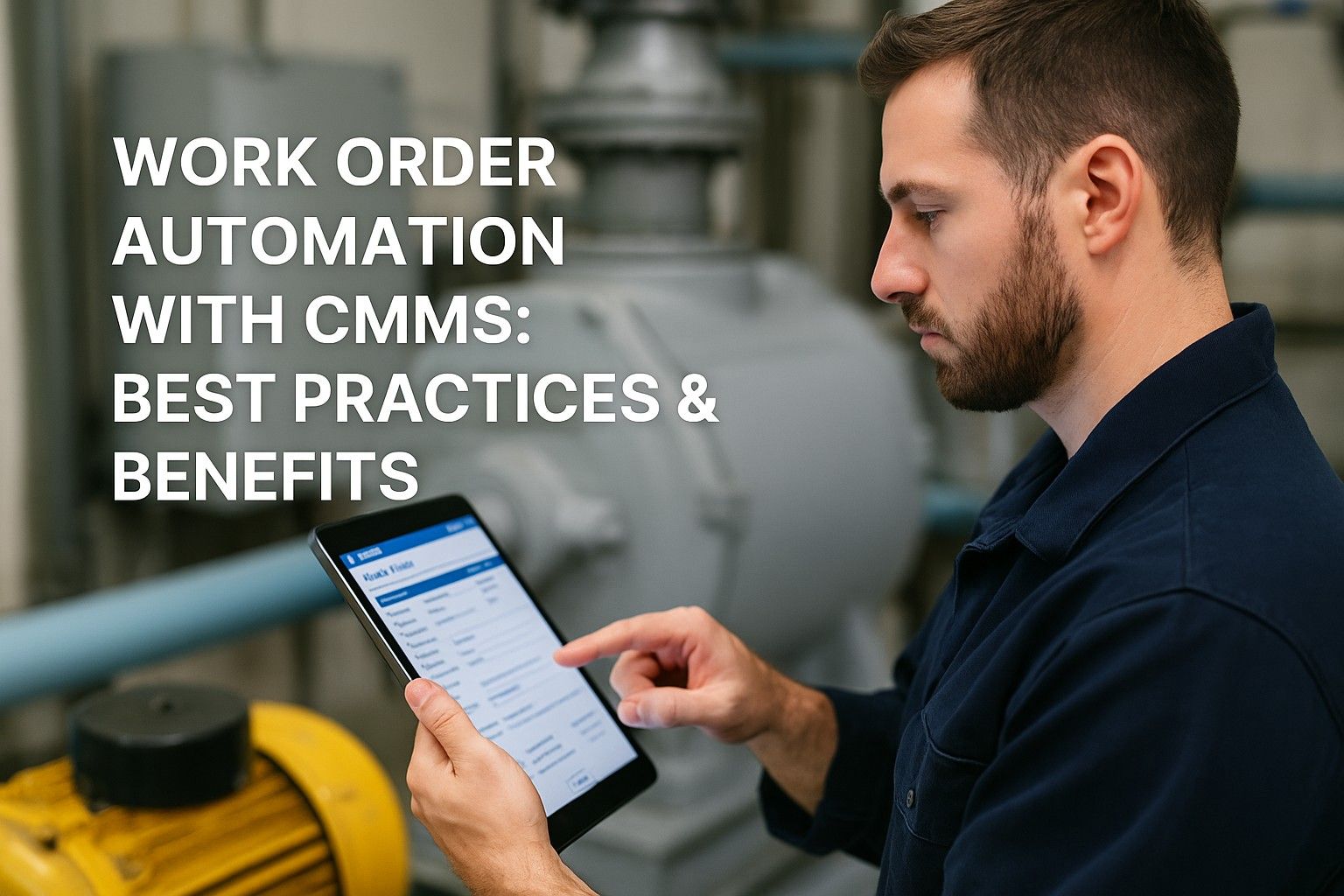
The most dangerous maintenance jobs — welding near fuel, entering a boiler drum, working on live switchgear — are the ones a single missed step can turn fatal. A permit to work is the control that stands between the job and that outcome: a documented agreement that the hazards are identified, the isolations are in place, and the right people have signed off before anyone starts. On paper, that control leaks — steps get skipped, a permit's state is lost at shift handover, two conflicting jobs run in the same space unnoticed. The 1988 Piper Alpha disaster, where 167 workers died partly because a permit's status wasn't communicated at handover, is the reason PTW exists in its modern form. OxMaint AI maintenance management software runs the permit as an enforced digital workflow tied to the work order, so no step is skipped and no permit is ever invisible.
Maintenance Safety · Permit to Work · High-Risk Activities · 2026
Make Every High-Risk Job Pass Through a Permit That Can't Be Skipped
Hot work, confined space, electrical isolation, working at height — the jobs most likely to kill are the ones where a paper permit fails silently. A digital permit-to-work system enforces the sequence: hazards assessed, isolations verified, authorizations signed, before the job starts and until it's formally closed. OxMaint AI ties each permit to its work order, blocks authorization when training has lapsed, flags conflicting jobs in the same area, and keeps an audit trail no one can backdate.
1Request & assess
→
2Authorize & isolate
→
3Execute under permit
→
4Close & hand back
7%
of major process-safety accidents linked to PTW failures
~11%
mean human-error rate in paper PTW execution
80%
of LOTO injuries involve untrained workers
6 stages
the permit lifecycle, enforced in sequence
The Permit Lifecycle — Enforced, Not Assumed
A permit isn't a form you fill in once; it's a sequence that has to happen in order, every time. A digital system makes each stage a gate the next can't open without. Start free and run the full permit sequence in OxMaint AI.
1
Request & Issuance
The permit is raised against a specific work order and asset — every permit ties to a real job.
2
Precondition & Hazard Check
Mandatory steps completed in sequence — atmospheric tests, area inspection, PPE — none skippable.
3
Authorization
Role-based sign-off, with a training gate that blocks approval if the authorizer's credentials have lapsed.
4
Isolation
Lock application and voltage/energy-absence verification recorded against the equipment isolated.
5
Work Execution
The permit stays live and tracked; shift handover requires formal acknowledgment, not a verbal brief.
6
Closure & Hand-Back
Formal close-out returns the equipment to service and archives the complete permit record.
The High-Risk Permit Types
Different hazards demand different permits, each with its own preconditions and its own regulatory anchor. These are the five that cover most high-risk maintenance. Book a demo to configure each permit type in OxMaint AI.
Hot Work
29 CFR 1910.252 · NFPA 51B
Welding, grinding, cutting, brazing. Requires combustible-area inspection, a fire watch, suppression status, and post-work monitoring.
Electrical Isolation / LOTO
29 CFR 1910.147 · NFPA 70E
Switchgear, transformers, bus work. Requires isolation-point verification, lock sequence, voltage-absence test, and arc-flash PPE.
Confined Space Entry
29 CFR 1910.146
Drums, hoppers, vaults. Requires atmospheric testing (O₂, LEL, toxic), entrant/attendant roles, a rescue plan, and continuous monitoring.
Working at Height
29 CFR 1910.28 · 1926.502
Stacks, towers, scaffolding. Requires fall-arrest inspection, weather checks, exclusion zones, and rescue capability.
Excavation & Civil
29 CFR 1926.651–652
Underground cables, foundations, drainage. Requires utility clearance, soil classification, shoring specs, and egress plans.
One system, every permit
OxMaint AI runs each type with its own preconditions and sign-offs.
Start free →
A Paper Permit Can Be Skipped, Backdated, or Lost at Handover.
Every one of those is a documented cause of fatal incidents — and none of them is visible until after. A digital permit enforces the sequence, verifies training before it lets anyone sign, and flags conflicting jobs in the same space. OxMaint AI closes the gaps paper leaves open.
Where Paper Permits Fail — and Digital Closes the Gap
The failure modes are well documented across decades of incident studies. Each is a gap a digital, work-order-linked permit removes by design. Start free and close each gap in OxMaint AI.
| Failure mode | On paper | Digital PTW |
|---|
| Skipped steps | Steps completed out of order or missed | Sequence enforced — next gate stays locked |
| Shift handover gaps | Verbal brief loses permit state | Formal acknowledgment required to continue |
| Conflicting jobs (SIMOPS) | Invisible across separate binders | Location conflicts flagged on issuance |
| Unauthorized signers | Training not systematically checked | Training gate blocks lapsed authorizers |
| Backdating | Timestamps editable after the fact | Immutable, time-stamped audit trail |
| Missing documentation | Manually compiled, gaps common | Full record generated on demand |
How OxMaint AI Runs Permit-to-Work
A permit is only a control if it's enforced and tied to the work it governs. OxMaint AI builds PTW into the same system that runs the work order. Start free and make the permit part of the job in OxMaint AI.
Permit Tied to Work Order
Every permit is raised against a specific job and asset — no permit floats free of the work it authorizes.
Enforced Sequence
Preconditions and sign-offs completed in order; the next step can't open until the last one is done.
Training Gate
Authorization is blocked automatically when the signer's credentials have expired.
SIMOPS Conflict Flagging
Two hazardous jobs in the same location are flagged before the second permit is issued.
Live Permit Dashboard
Every active permit visible in one view — with formal, logged shift handover.
Immutable Audit Trail
Time-stamped, tamper-proof records that produce the full audit package on demand.
Frequently Asked Questions
What is a permit to work?
A formal, documented control for high-risk jobs — confirming hazards are assessed, isolations are in place, and the right people have authorized the work before it starts and until it's closed.
Start free and run it in OxMaint AI.
Which activities need a permit?
Hot work, confined space entry, electrical isolation/LOTO, working at height, and excavation are the common high-risk categories — each with its own preconditions.
Book a demo of the permit types.
How is a digital PTW safer than paper?
It enforces the step sequence, blocks unauthorized or untrained signers, flags conflicting jobs, and keeps a tamper-proof trail — removing the gaps that cause most PTW-linked incidents.
Sign up free and close the gaps.
How does PTW relate to LOTO?
Lockout/tagout is the isolation control inside an electrical or energy-isolation permit — the permit governs the whole job, LOTO secures the energy. Most LOTO injuries involve untrained workers.
Book a demo of isolation tracking.
How does a CMMS improve permit management?
OxMaint AI ties each permit to its work order, enforces the sequence, verifies training, flags conflicts, and archives an immutable record — so the control actually holds.
Start free and see it work.
Turn the Permit From a Form Into a Control That Holds.
The highest-risk maintenance depends on a permit doing its job — and a paper permit fails in exactly the ways that get people hurt. A digital, enforced, work-order-linked permit removes the skipped step, the lost handover, and the unseen conflict by design. OxMaint AI runs permit-to-work as part of the same system that runs the work, so every high-risk job is authorized, isolated, tracked, and closed — with a record that proves it.