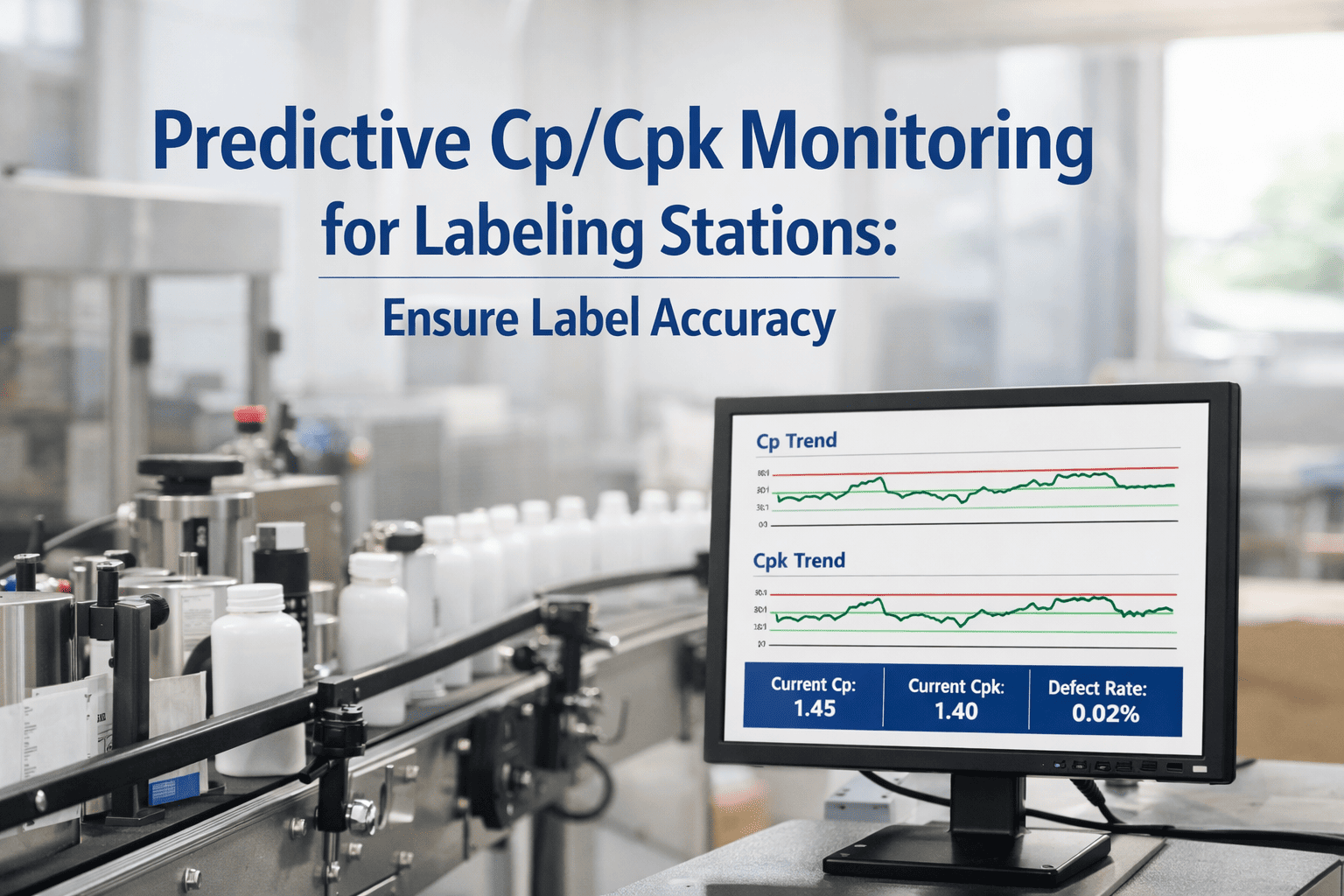
Every pharmaceutical tablet that leaves a coating pan carries the fingerprint of process capability. When Cp/Cpk indices drift during a coating run, the consequences ripple across quality, compliance, and cost—batch holds, deviation investigations, and potential patient safety risks. Yet most coating operations still calculate capability after the batch is finished, discovering problems only when it is too late to fix them. Predictive Cp/Cpk monitoring flips this approach entirely: it tracks capability indices in real time, forecasts drift before specification limits are breached, and connects quality signals directly to maintenance actions while the pan is still turning. Schedule a consultation to see how Oxmaint brings predictive SPC intelligence to your coating lines.
The Hidden Cost of Reactive Coating Quality
Pharmaceutical coating is deceptively complex. A pan coater juggles spray rate, atomization pressure, pan speed, inlet air temperature, and tablet bed dynamics simultaneously—all of which must stay in harmony to produce uniform film thickness and consistent weight gain. When even one parameter shifts subtly, Cpk degrades silently. Traditional quality workflows catch this degradation only during end-of-batch sampling or, worse, during QC release testing days later.
$180K
Average cost of a single coating batch deviation including investigation, rework, and delayed release
72%
Of coating deviations are traceable to gradual parameter drift that was detectable before failure
4.2 hrs
Average time between drift onset and detection using periodic manual sampling methods
Stop discovering coating drift after the damage is done. Oxmaint monitors Cp/Cpk continuously and alerts your team the moment capability trends toward specification limits.
What Cp and Cpk Actually Tell You About Your Coating Pan
Process capability indices are the statistical language of coating quality. They translate raw process variation into a single number that tells you whether your coating pan can consistently produce tablets within GMP specification limits. Understanding the distinction between Cp and Cpk is essential for interpreting predictive monitoring dashboards correctly.
Cp — Process Potential
Cp measures how much room your coating process variation has within the specification window. A Cp of 2.0 means your process spread uses only half the available specification width. It assumes the process is perfectly centered—which it rarely is.
Cpk — Actual Capability
Cpk accounts for how off-center your process actually runs. A coating pan with Cp of 1.8 but Cpk of 1.1 has enough spread capacity but is drifting toward one specification limit—often caused by spray rate imbalance or nozzle wear. Predictive monitoring catches this centering shift early.
From Sensor to Corrective Action: The Monitoring Pipeline
Predictive Cpk monitoring is not a single tool—it is a pipeline that transforms raw coating pan data into proactive quality decisions. Each stage adds intelligence, moving from simple measurement to predictive intervention.
Sense
NIR probes, weight sensors, and temperature transmitters capture coating weight gain, film thickness, and process parameters at sub-second intervals throughout the run
Calculate
Rolling Cp/Cpk computation updates continuously as data accumulates, using adaptive windowing to balance statistical validity with sensitivity to recent shifts
Predict
Machine learning models project the Cpk trajectory forward, estimating when capability will breach the 1.33 GMP threshold if the current trend continues uncorrected
Act
Sign up for Oxmaint to automatically generate maintenance work orders when drift is detected—nozzle cleaning, calibration, or parameter adjustment—before capability is compromised
Which Coating Attributes Demand Cpk Tracking
Not every measurement on a coating pan carries equal weight. Predictive monitoring must focus on the critical quality attributes (CQAs) that directly impact tablet performance, patient safety, and GMP compliance. Here are the attributes where Cpk tracking delivers the most value.
Coating Weight Gain
Typical spec: 3.0% +/- 0.5%
The primary CQA. Directly impacts drug release profile for functional coatings and appearance uniformity for cosmetic coats. Even 0.2% drift from target can shift Cpk below acceptable limits on tight-spec products.
Film Thickness Uniformity
Measured via NIR or OCT probes
Inter-tablet and intra-tablet thickness variation determines dissolution consistency. Critical for enteric and modified-release coatings where a few microns of variation can alter drug bioavailability.
Surface Roughness
Visual + instrument assessment
Roughness deviations signal spray pattern breakdown, over-wetting, or suspension instability. Poor surface quality leads to downstream packaging issues and patient compliance concerns.
Residual Moisture
Exhaust humidity + tablet temp
Excess moisture in the film compromises stability and accelerates degradation. Real-time exhaust temperature and humidity data feed Cpk calculations to flag drying imbalance before it affects shelf life.
See Cpk tracking across all your coating CQAs in one dashboard. Book a walkthrough and our team will demonstrate how Oxmaint visualizes capability trends specific to your tablet coating process.
Cpk does not degrade randomly. Specific equipment conditions and process parameter shifts drive capability downward in predictable patterns. Understanding these root causes is what makes predictive monitoring actionable—each drift signature points to a specific maintenance or process correction.
Drift Root Causes and Predictive Signatures
Root Cause
Cpk Effect
Early Warning Signal
CMMS Action
Nozzle Wear or Clogging
Spray pattern distortion causes weight gain variability spike
Increasing RSD in weight gain within rolling 50-tablet window
Auto-generate nozzle inspection/replacement work order
Pump Calibration Drift
Systematic shift in mean weight gain, Cpk centering degrades
Mean weight gain trending consistently above or below target
Schedule pump recalibration during next batch changeover
Spray rate/pressure ratio deviating from historical baseline
Flag coating solution prep team for viscosity verification
Inlet Air Heater Aging
Temperature overshoot/undershoot affects drying rate and film quality
Temperature recovery time after setpoint change increasing
Trigger heater element inspection and preventive replacement
Pan Drive Belt Wear
RPM fluctuation changes tablet exposure to spray zone
Pan speed variability amplitude exceeding baseline by 15%+
Create drive belt tension check and replacement order
Exhaust Filter Loading
Reduced airflow disrupts thermal balance of coating process
Exhaust-inlet temperature differential narrowing over batches
Schedule filter inspection or replacement based on pressure drop
Before and After: What Changes with Predictive Monitoring
The operational difference between periodic sampling and continuous predictive Cpk tracking is not incremental—it is transformational. Here is what that shift looks like on a working coating line.
Periodic Sampling vs. Predictive Cpk Intelligence
End-of-Batch Sampling
Pull 10-20 tablets every 30-60 minutes for weight check
Cpk calculated after batch completion from aggregated data
Drift often discovered 2-4 hours after it begins
No link between parameter changes and capability impact
Batch hold and rework decisions made reactively
3-5%typical coating batch rejection rate
Predictive Cpk Monitoring
Continuous in-line data from every tablet pass through spray zone
Running Cpk updates every 30 seconds throughout coating
Drift predicted 15-30 minutes before threshold breach
Root cause linked to specific parameter or equipment shift
Proactive adjustment keeps every batch in specification
<0.5%rejection rate with predictive intervention
Move from Batch-End Surprises to Mid-Batch Intelligence
Oxmaint bridges coating pan sensors and your maintenance team. Real-time Cpk dashboards, predictive drift alerts, and automated work orders keep every coated batch within GMP specification—without waiting for the lab report.
Regulatory expectations for process capability in pharmaceutical coating are well established. Schedule a demo to see how Oxmaint documents compliance-ready Cpk levels automatically for every coating batch run on your equipment.
Cpk < 1.00
Incapable
Immediate process stop required. Root cause investigation mandatory. Batch hold with potential rejection and deviation report filed.
1.00 — 1.33
Marginal
Increased sampling frequency triggered. Corrective action plan initiated. CAPA may be required depending on trend duration.
1.33 — 1.67
Capable
Standard monitoring maintained. Meets FDA and EMA expectations for validated pharmaceutical coating processes.
Investing in predictive capability monitoring on pharmaceutical coating lines produces measurable returns across quality, compliance, throughput, and material efficiency. These results are drawn from facilities that integrated SPC-driven monitoring with CMMS-automated maintenance response.
62%
Fewer coating batch deviations filed
70%
Faster batch release cycle time
45%
Reduction in OOS investigation hours
40%
Less coating material wasted per batch
1.67+
Sustained Cpk achievable across coating runs
Model your coating line savings. Create a free Oxmaint account and our pharmaceutical specialists will calculate the ROI potential for your specific coating operations.
Deploying predictive Cpk monitoring on your coating pans is a phased integration between your existing sensors, Oxmaint CMMS, and your quality management system. The roadmap below reflects a typical pharmaceutical coating line deployment.
Week 1–2
Baseline and Audit
Audit existing coating pan sensors, PAT infrastructure, and historical batch data. Establish current Cp/Cpk baselines for each critical quality attribute and map specification limits against GMP requirements.
Week 3–4
Connect and Configure
Integrate sensor data streams into Oxmaint. Configure SPC control rules, Cpk alert thresholds, and automated work order triggers that link quality signals to maintenance actions.
Week 5–6
Train Predictive Models
Train drift forecasting algorithms on your historical batch data. Calibrate sensitivity against known deviation events and validate prediction accuracy before going live.
Week 7+
Live Predictive Monitoring
Activate real-time Cpk dashboards, predictive alerting, and auto-generated maintenance work orders. Continuous model refinement from live production data improves accuracy with every batch.
We used to calculate Cpk after the batch and hope for the best. Now we watch it update every 30 seconds during coating. Last month, predictive alerting caught a nozzle degradation pattern 22 minutes before Cpk would have dropped below 1.33—enough time to swap the nozzle and save a batch worth over $150,000. That single save paid for the entire system.
— VP of Quality, Oral Solid Dosage Manufacturer
Turn Coating Capability from a Lagging Metric into a Leading Indicator
Your end-of-batch report cannot catch Cpk sliding from 1.45 to 1.18 mid-run. Oxmaint connects your coating pan sensors to live SPC dashboards, forecasts capability drift before limits are breached, and triggers the right maintenance action automatically—keeping every coated batch within GMP compliance.
How is Cp different from Cpk on a coating pan, and why track both?
Cp tells you whether your coating process has enough inherent precision to fit within spec limits—assuming perfect centering. Cpk tells you how well the process is actually centered. A coating pan with Cp of 1.8 but Cpk of 1.1 has low variability but is drifting toward one limit, often from spray rate imbalance or nozzle wear. Tracking both simultaneously lets you distinguish centering issues (adjust setpoint) from variability issues (investigate root cause). Sign up for Oxmaint to visualize both indices in real time across your coating equipment.
How many data points does the system need before Cpk becomes reliable?
A minimum of 25-30 individual measurements is needed for a statistically meaningful Cpk estimate. With modern in-line sensors sampling every few seconds, this threshold is typically reached within the first 5-10 minutes of coating. The system uses a rolling-window approach so Cpk becomes progressively more reliable as the batch progresses while remaining sensitive to recent shifts through weighted calculations.
Can predictive Cpk monitoring help justify real-time release testing?
Yes. Maintaining documented, continuous Cpk above 1.33 throughout a coating process is one of the strongest evidence bases for reduced end-product testing and RTRT strategies. Regulatory agencies recognize that a process demonstrated to be in statistical control—with continuous capability documentation—may warrant reduced sampling. Book a demo to discuss how Oxmaint supports your RTRT regulatory submission with audit-ready Cpk records.
Which coating pan brands and types are compatible?
The system works with all standard pharmaceutical coating equipment—perforated pan coaters from O'Hara, Thomas Engineering, Bohle, GEA, and Syntegon, as well as solid pan coaters and fluid bed systems. Oxmaint integrates with existing SCADA, MES, and historian systems to pull data regardless of equipment brand, supporting both aqueous and solvent-based processes from lab to production scale.
How does Oxmaint CMMS close the loop between quality drift and maintenance?
When Cpk trends indicate equipment-related drift—such as nozzle wear, heater aging, or filter loading—Oxmaint automatically generates prioritized work orders, assigns them to the correct technician, and tracks completion. This closed loop between quality monitoring and maintenance execution ensures capability issues are resolved before they become deviations or batch failures. Create your free account to explore the full integration.
By oxmaint
✨
Experience Oxmaint's Power
Take a personalized tour with our product expert to see how OXmaint can help you streamline your maintenance operations and minimize downtime.