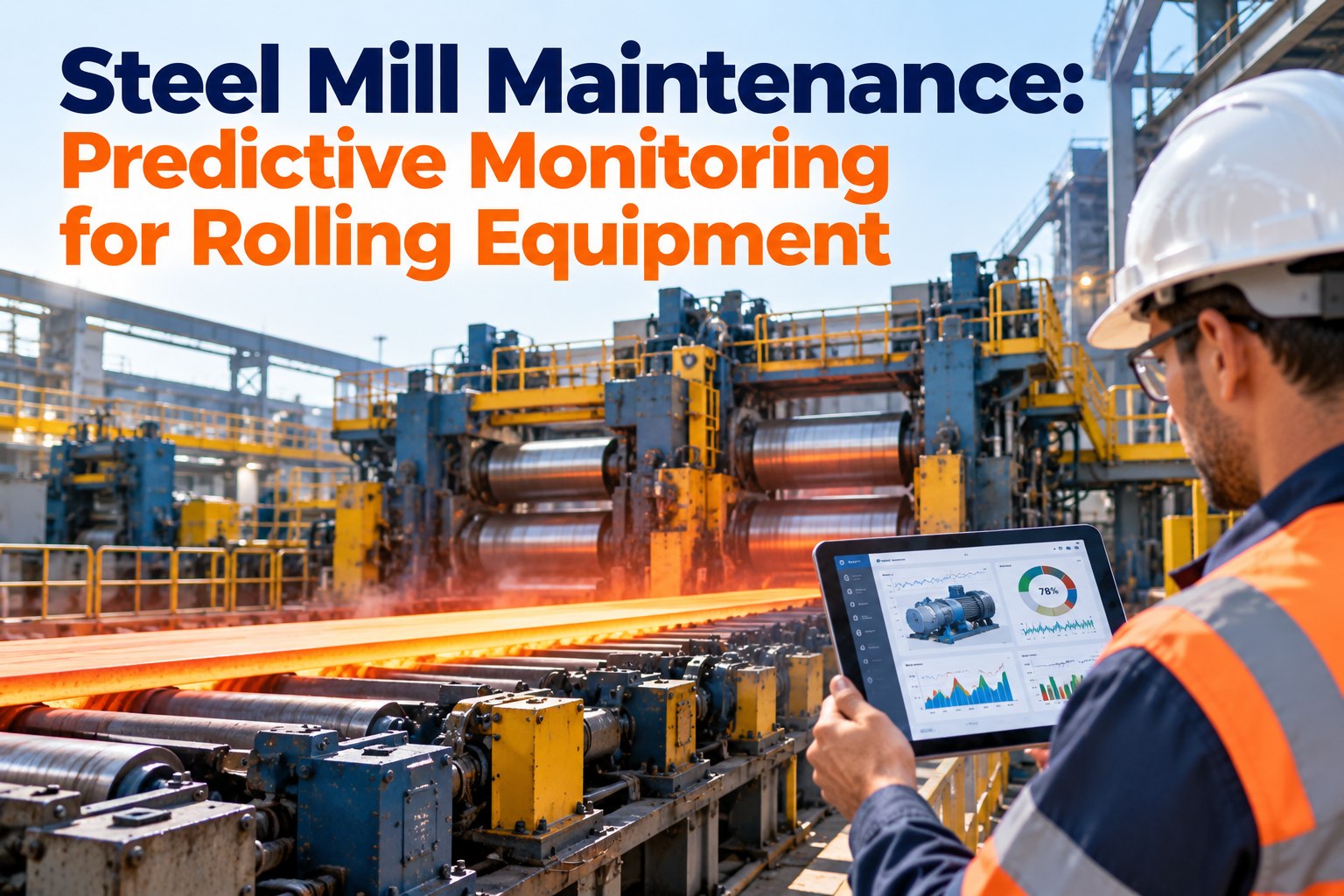
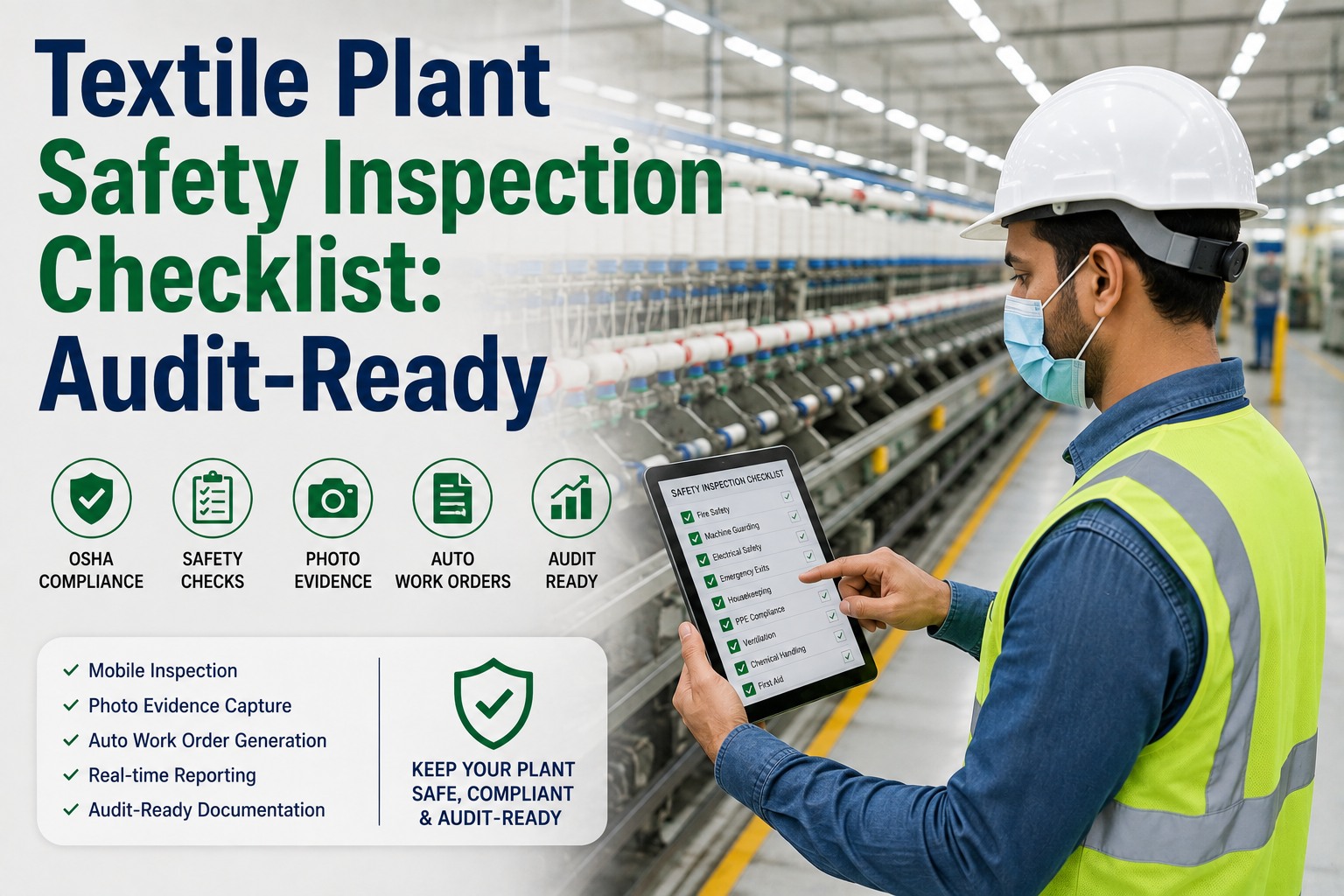
An EHS auditor arrives at a steel plant with one question that governs everything else: can you produce the evidence, on demand, that your controls are working? Not the policy binder — the raw evidence. The 247 confined-space permits closed with rescue-plan verification. The daily CO monitor bump-test logs across every blast furnace approach. The corrective actions from last quarter's near-miss log, closed on time, with owner sign-off. Paper systems fail this test in the first hour. Oxmaint is the maintenance management software steel plants use to make every EHS control a digital, time-stamped, photo-backed record — so the audit file is already assembled the day the auditor walks in. Start a free Oxmaint trial and stand up a digital EHS audit checklist across your plant in a day, or book a demo to see the ISO 45001 evidence trail on your own audit categories.
Steel Plant · EHS Compliance · ISO 45001 : 2018
Steel Plant EHS Audit Checklist: Updated 2026 Requirements
Every clause, every evidence artifact, every corrective-action workflow — a full audit-ready framework covering OSHA, ISO 45001, EPA NESHAP fenceline monitoring, and Factory Inspectorate readiness, built for the coke ovens, blast furnaces, BOF, ladle metallurgy, and rolling mills that define an integrated steel works.
-
10
ISO 45001 clauses, all auditable — clauses 4–10 carry the audit burden
-
47%
of LOTO fatalities occur when written procedures exist but are not followed
-
3×
faster audit response time with digital permit and inspection records
-
6 mo
audit frequency for high-risk work — confined space, hot work, lifting
The Audit Terrain
Seven Audit Domains That Cover an Integrated Steel Works
A steel plant EHS audit is not one audit — it is seven overlapping scopes running against different regulations, on different cycles, with different evidence expectations. Treat them as one and findings hide in the seams between them. This is the working map: each domain, what an auditor is actually asking to see, and the severity signal it carries into a citation. Build your checklist around these seven and no scope is left uncovered.
-
01
Coke Ovens & Battery Operations
EPA NESHAP fenceline benzene monitoring at coke oven batteries. Auditors want continuous monitor calibration records, door leak inspection logs, and pushing emissions data.
Severity: Critical -
02
Blast Furnace & Cast House
CO poisoning is a leading fatality cause in this zone. Evidence: continuous gas monitoring, bump-test logs, bleeder valve opacity readings against permit thresholds.
Severity: Critical -
03
BOF, EAF & Ladle Metallurgy
High-priority ladle crane inspection records, molten-metal contact procedures, and slag-processing opacity monitoring. OSHA crane citations are frequent here.
Severity: High -
04
Rolling & Finishing Mills
Guarding compliance and hearing conservation are consistently cited across rolling, pickling, and coating lines. Vibration and noise dosimetry records required.
Severity: High -
05
Confined Space & Permit-to-Work
ISO 45001 requires documented hazard ID, risk assessment, and permit-to-work for high-risk work. Every extension needs a new timestamp and authoriser identity.
Severity: Critical -
06
LOTO & Energy Isolation
During relines, hundreds of contractors perform hot work on high-energy assets. Paper LOTO slips prevent real-time oversight and risk severe OSHA lockout violations.
Severity: High -
07
Environmental & HazCom
Chromium fenceline monitoring at integrated iron and steel facilities. Worn chemical labels and outdated SDS registries are immediate HazCom violations.
Severity: Medium-High
ISO 45001 Clause Matrix
What Each Auditable Clause Actually Requires
Clauses 1–3 are introductory. Clauses 4–10 carry the audit weight, and every finding traces back to one of them. This matrix is the internal-audit skeleton: read it left to right and you have the clause, what a lead auditor asks for, and the evidence artifact Oxmaint stores against it. High-risk processes such as confined space, hot work, and lifting warrant a 6-month audit interval; the rest run on a rolling 12-month programme.
| Clause | Audit Scope | What Auditors Ask For | Evidence Artifact in Oxmaint |
|---|---|---|---|
| 4 | Context of the organisation | Internal / external issue register, interested parties, scope statement | Site-level context register with revision control |
| 5 | Leadership & worker participation | Signed OH&S policy, responsibilities matrix, consultation records | Role assignments per asset, meeting logs, e-signatures |
| 6 | Planning — hazards & risks | Hazard identification, risk assessment, legal register, objectives | Digital HIRA per work area, control effectiveness log |
| 7 | Support — competence, awareness, information | Training records, competency assessments, document control | Per-worker training matrix with expiry alerts |
| 8 | Operation — controls & permits | Permit-to-work, LOTO, contractor management, emergency preparedness | Permit workflow, LOTO checklist per asset, drill records |
| 9 | Performance evaluation & internal audit | Monitoring data, audit programme, management review minutes | Auto-generated KPI reports, audit schedule, review pack |
| 10 | Improvement — incident & nonconformity | Incident investigation, root cause, corrective action closure | CAPA tracker with owner, due date, verification step |
Three Audit Cycles
Pre-Monsoon, Annual, and Regulatory Readiness
Steel plants that run one annual audit and call it complete are the plants that get surprised. Every credible programme runs three distinct cycles, each on the timing that matches its hazard profile — seasonal risks before the season, system health annually, and regulatory readiness continuously.
-
Apr–May
Pre-Monsoon Inspection
Structural integrity, drainage, electrical safety, material storage, emergency preparedness for adverse weather. Deadline: before June 1 annually. Skipping this is how a January audit fails to catch the drainage failure that floods the mill in June.
-
Annual
Comprehensive Annual Review
Plant-wide review covering safety KPIs, incident investigation closure, statutory training, PPE audit, and safety management system documentation. Aligned to licence renewal and ISO 45001 surveillance cycles.
-
Continuous
Regulatory Inspection Readiness
OSHA PSM, Factory Inspectorate, State Pollution Control Board, EPA NESHAP fenceline. Each runs on its own cycle. Documentation must be current every day, not assembled the week before.
The Field Checklist
High-Risk Work Areas: What Every Inspector Checks
The line items below are the ones auditors and inspectors reach for first because they carry the highest fatality and citation weight in a steel plant. Each item is a mandatory field in a digital checklist inside Oxmaint — a missed entry blocks work-order closure, and a "fail" answer auto-creates a corrective-action work order routed to the responsible owner.
-
Confined Space Entry
- Atmospheric test — O₂, LEL, CO, H₂S — logged at entry and every 30 min
- Rescue plan documented and rescue team on standby
- Authoriser identity and timestamp on original permit and every extension
- Entrant / attendant log with sign-in and sign-out
- Ventilation running and verified before entry
-
Lockout / Tagout
- Energy isolation steps pulled from stored per-asset LOTO procedure
- All energy sources — electrical, hydraulic, steam, pneumatic — isolated
- Try-out completed before work begins
- Every worker's personal lock applied and photographed
- Restoration sequence signed by authorised person
-
Hot Work & Contractor Control
- Fire watch assigned and equipped, extinguisher within reach
- Combustibles cleared to 11 m or protected with fire blanket
- Gas readings before ignition — LEL below permit limit
- Contractor competency verified against training matrix
- Permit closed with 60-minute post-work fire watch confirmed
-
Emissions & Environmental
- Fenceline benzene / chromium monitor calibration current
- Bleeder valve opacity readings logged against permit threshold
- Slag processing and beaching opacity within limit
- Coke oven door leak inspection completed on schedule
- HAP source-to-control-device map current per NESHAP
-
Cranes & Lifting
- Daily pre-use inspection completed by operator with photo
- Ladle crane periodic inspection within OSHA interval
- Wire-rope inspection log complete for all high-priority cranes
- Load charts posted and rigger certified for lift plan
- Molten-metal path clear and exclusion zone barricaded
-
PPE & Hazard Communication
- PPE hazard assessment current per OSHA 1910.132
- SDS registry accessible at point of use, no expired sheets
- Chemical labels legible on every container in storage
- Hearing conservation dosimetry data current for >90 dBA zones
- Respirator fit test records within one-year expiry
Paper Fails at the Wrong Moment
"247 Confined Space Permits, in Under Five Minutes"
During a recent ISO 45001 recertification, an EHS manager at an integrated steel works filtered 12 months of confined-space permits by type and date range and produced 247 complete records to the auditor in under five minutes. The audit was passed with zero major non-conformances on safety documentation for the first time in three cycles. That is the difference a digital audit trail makes.
The Evidence Chain
From Field Observation to Closed Corrective Action
An audit finding is only closed when the chain from observation to verified corrective action is complete, time-stamped, and signed. Oxmaint enforces this flow — a checklist "fail" cannot dead-end in a notebook, and a corrective action cannot be marked closed without verification evidence. This is what a defensible clause 10 program looks like on the ground.
-
1
Field Observation
Inspector answers "fail" on a mobile checklist item, tags a photo and GPS location, and adds a narrative. Timestamp is captured automatically.
-
2
Auto Work Order
The failed item triggers a corrective-action work order routed to the responsible owner, with severity, due date, and reference to the source clause.
-
3
Root Cause & Fix
Owner records root-cause analysis and the corrective work performed — parts used, labour hours, and any process or training update generated.
-
4
Verification
A second inspector re-inspects the item and photographs the corrected condition. Verification signature is required to close the record.
-
5
Audit-Ready Record
The complete chain is filterable by clause, area, or date range — the exact filters an auditor uses. No assembly required at audit time.
Why Digital Wins
Paper Audit vs Oxmaint Digital Audit — Side by Side
| Audit Activity | Paper / Spreadsheet Process | With Oxmaint |
|---|---|---|
| Producing 12 months of permits for auditor | 2–3 days searching permit books across departments | Under 5 minutes, filtered by type and date |
| LOTO compliance during reline | Paper slips, no real-time oversight, citation risk | Per-asset LOTO checklist, digital sign-off per lock |
| Fenceline monitor calibration evidence | Scattered across notebooks and email attachments | Auto-scheduled PM, calibration log per instrument |
| Corrective action closure tracking | Spreadsheet drifts, findings quietly age out | CAPA tracker with owner, due date, escalation |
| Training record retrieval for a specific worker | HR file pull, days of lag, gaps common | Per-worker matrix with expiry alerts, instant lookup |
| Near-miss to work-order conversion | Reported, then lost between departments | Direct conversion, traceable through to closure |
Built for Steel Plants
How Oxmaint Runs the EHS Audit Checklist End to End
-
Digital Checklists
Mandatory Fields and Mobile Photo Capture
Every audit item is a structured field with acceptance criteria. Mobile capture with photo evidence and GPS tagging — no more clipboards, no more missing fields, no more illegible entries.
-
Permit Workflow
Confined Space, Hot Work, and LOTO in One Flow
Permits generate with pre-populated energy isolation steps from the asset record. Every extension recorded with new timestamp and authoriser identity — the unambiguous audit trail OSHA 1910.146 requires.
-
CAPA Tracker
Corrective Actions With Owner, Due Date, Escalation
Every failed checklist item spawns a corrective action work order. Overdue actions escalate to the site safety lead. Nothing quietly ages out on a spreadsheet.
-
Emissions Log
NESHAP-Aligned Monitoring and Opacity Records
Fenceline benzene and chromium monitor schedules, bleeder valve opacity readings, and HAP source-to-control mapping — all logged against permit thresholds automatically.
-
Training Matrix
Per-Worker Competency With Expiry Alerts
Statutory training, competency assessments, and refresher schedules per worker. Expiry alerts prevent an out-of-date certification from surfacing in an audit finding.
-
Audit Reports
OSHA and Factory Inspector-Ready Output
Clause 9.3 management-review packs generated on demand: permit volumes, closure rates, overdue counts, repeat permit types signalling systematic hazard management deficiencies.
Measured Outcomes
What Steel Plants Gain When Oxmaint Runs EHS Compliance
-
3×
Faster Audit Response
Filterable digital records collapse audit-day retrieval from days of searching to minutes of filtering — evidence pulled live in front of the auditor.
-
Zero
Major Non-Conformances
Integrated steel works using Oxmaint have passed ISO 45001 recertification with zero major non-conformances on safety documentation for the first time in three audit cycles.
-
100%
Permit Traceability
Every confined-space, hot-work, and LOTO permit carries a full chain of atmospheric tests, authoriser signatures, and extension records — no permit book gaps.
-
6 mo
High-Risk Audit Cadence
Automated 6-month audit scheduling for confined space, hot work, and lifting operations — the interval ISO 45001 auditors expect for the highest-risk processes.
Frequently Asked
Steel Plant EHS Audit Questions
How often should a steel plant conduct internal EHS audits?
At minimum quarterly across the plant, with a comprehensive annual review aligned to licence renewal and ISO 45001 surveillance. High-risk areas — hot metal handling, confined space, BFG pipelines, cranes — warrant monthly targeted inspections and 6-month rolling audits per ISO 45001 clause 9.2.2. Start a free Oxmaint trial to configure your full audit cadence in a day.
Can Oxmaint generate audit reports ready for OSHA or Factory Inspector review?
Yes. The reporting module generates summary reports of permit activity, inspection completion, and corrective-action closure by type, area, or time period — the exact filters an inspector applies during a site visit. Management-review packs align to ISO 45001 clause 9.3 out of the box.
Does the platform handle EPA NESHAP fenceline monitoring evidence?
Yes. Oxmaint tracks new HAP monitoring requirements, maps each pollutant to its source and control device, schedules opacity readings, and logs results against permit thresholds automatically — covering coke oven benzene fenceline and integrated iron and steel chromium fenceline programs. Book a demo to see the NESHAP evidence trail mapped to your emission stacks.
How is LOTO compliance managed during a major reline with hundreds of contractors?
Each asset's LOTO procedure is stored as a structured checklist in the equipment record. When a work order requires LOTO, the permit generates pre-populated with the energy isolation steps for that asset, and every contractor lock is digitally signed. That is the real-time oversight paper slips cannot deliver.
Does Oxmaint support the free forever plan for smaller compliance teams?
Yes. Compliance teams can start on the free forever plan, digitise a core checklist library and permit workflow, and scale into the full platform when audit scope and evidence volume expand. Sign up for the free Oxmaint plan and stand up your first digital EHS audit today.
Audit · Evidence · Closure
The Audit File Should Already Be Assembled When the Auditor Arrives
Every clause, every permit, every corrective action — filterable, timestamped, and signed. Oxmaint is the maintenance management software steel plants use to make ISO 45001, OSHA, and NESHAP compliance a continuous digital record instead of a week of pre-audit scrambling. Walk into your next audit with the evidence already there.