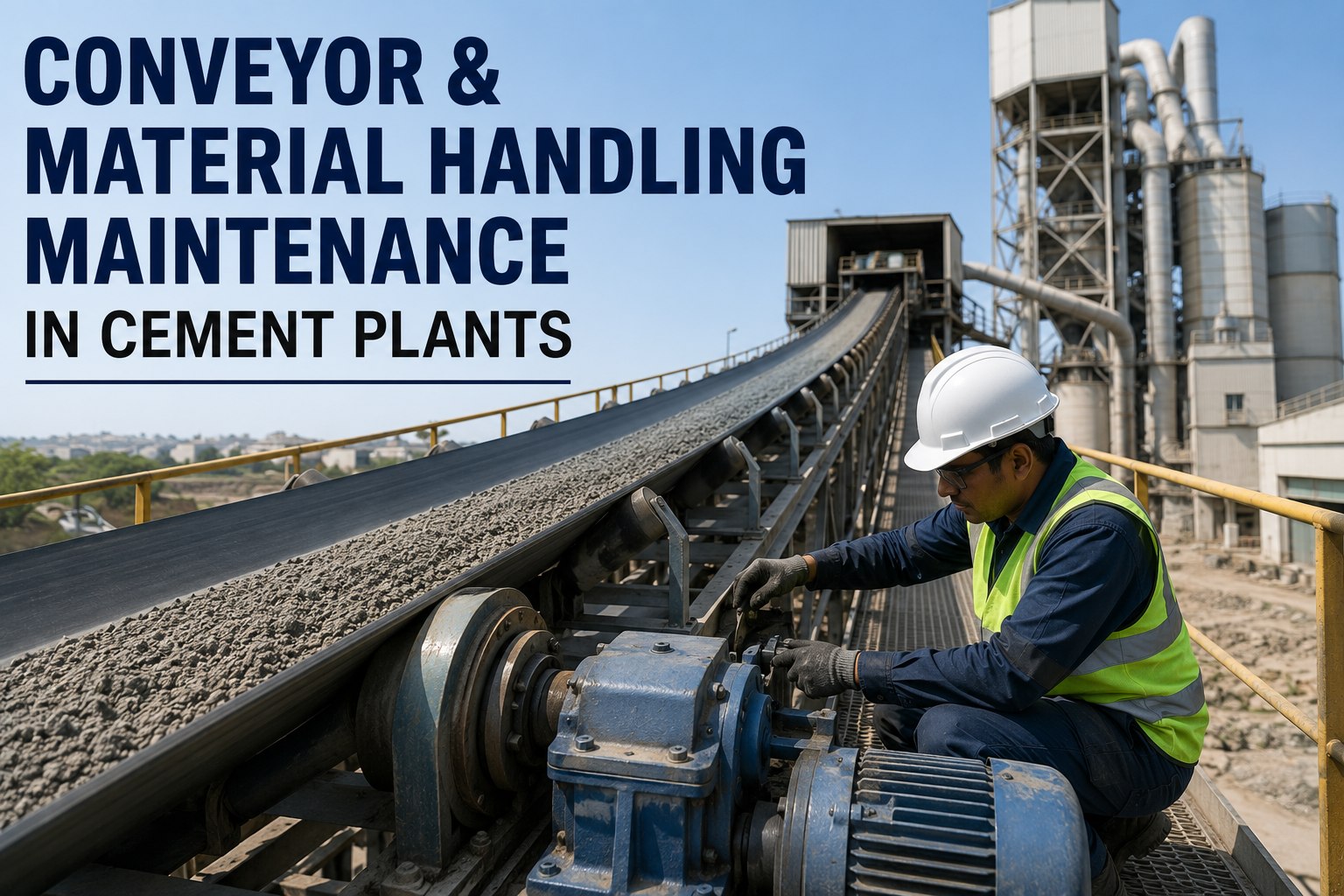
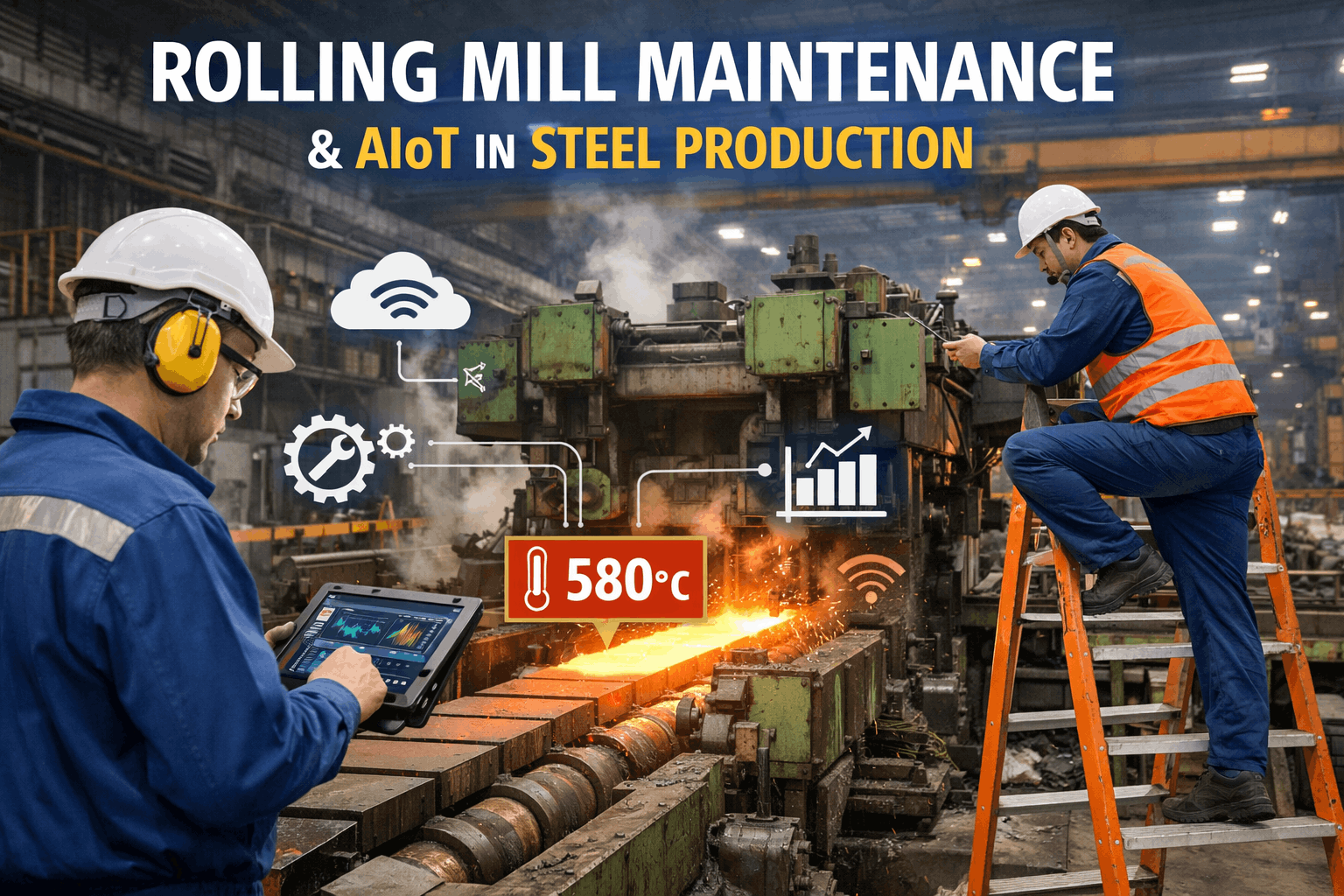
In a steel plant, the conveyors are the circulatory system — ore, coke, sinter, and slag move on belts that run hot, heavy, and nearly nonstop, and when one stops, the process downstream of it stops with it. The failures that cause that are rarely sudden: a seized idler burns through the cover and can start a fire, a worn splice lets go under tension, a mistracking belt spills tonnes before anyone notices. Each is visible days ahead to someone running the right check at the right interval. This is the full steel-plant conveyor and material-handling inspection checklist — component by component, by frequency, with the steel-specific concerns of heat, abrasion, and dust built in, as checkable items you can run on the walk. OxMaint AI schedules each check by operating hours, logs the findings against the conveyor, and turns a flagged defect into a work order.
Steel & Heavy Industry · Conveyors & Material Handling · Inspection Checklist · 2026
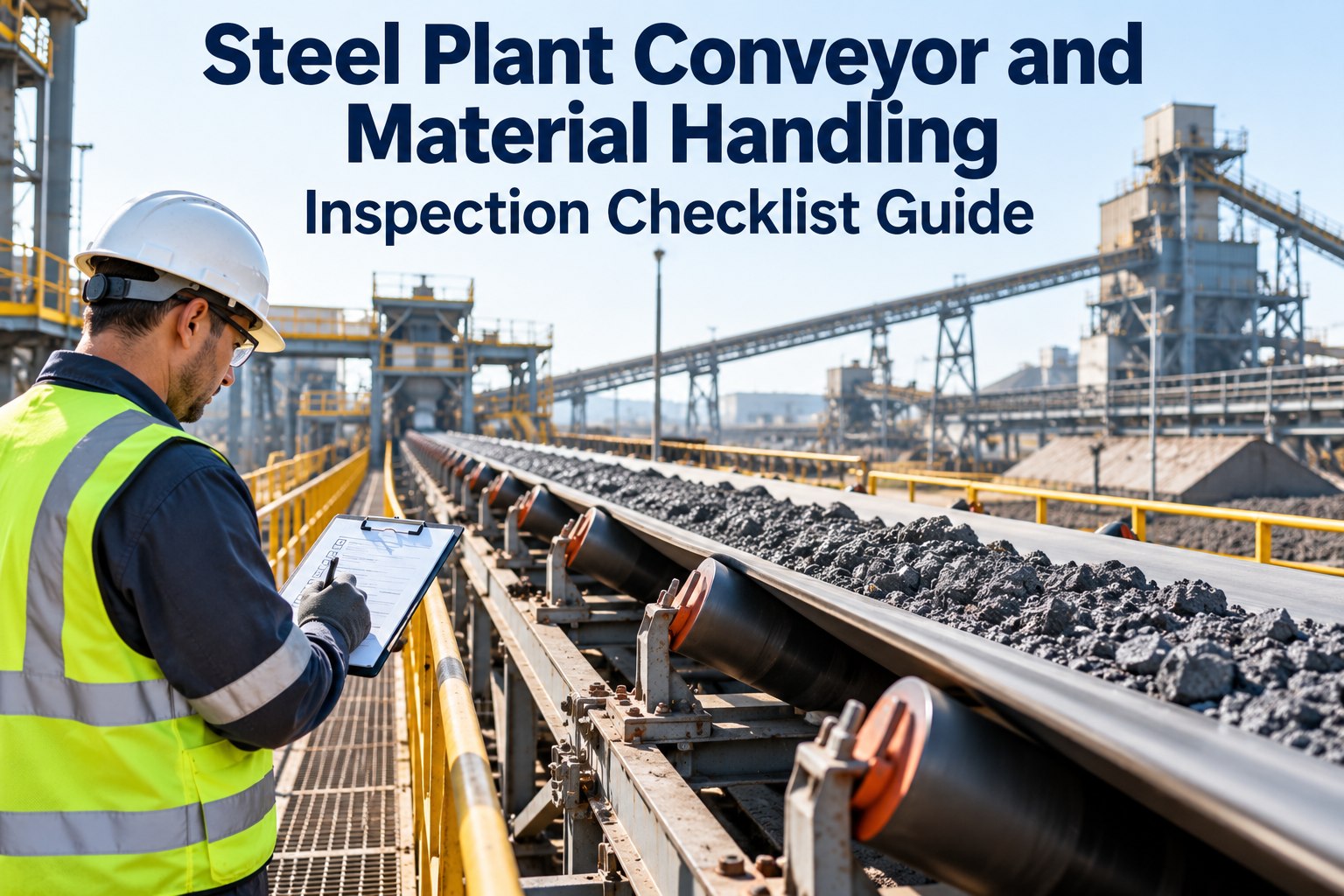
Steel Plant Conveyor and Material Handling Inspection Checklist Guide
A steel-plant conveyor runs hot, abrasive, and continuous — and a seized idler or a failing splice can take a whole process line down. This checklist covers every component — belt, tracking, idlers, pulleys, splices, drives, scrapers, safety devices — as checkable tasks by frequency, with the heat, abrasion, and dust concerns specific to steel. Run it on the walk and findings log straight to the asset. OxMaint schedules each check by run-hours and raises a work order on any defect.
gearbox oil and PM keyed to operating time, not the calendar
Heat · abrasion · dust
the three forces that drive steel-conveyor wear
Finding → WO
a flagged defect becomes a tracked work order
How to Use This Checklist
Run the daily items each shift, the weekly and monthly service on cadence, and the annual block during a planned outage. Key the gearbox and lubrication tasks to operating hours, not calendar days — steel conveyors run continuously. In a CMMS, each check is raised automatically and a flagged item becomes a work order. Start free and load the whole program into OxMaint AI.
A Seized Roller Doesn't Just Fail — It Can Start a Fire.
That's what makes the steel-conveyor walk more than housekeeping. A roller bearing that seizes keeps turning against a moving belt, and the friction burns through the cover and can ignite coal or coke dust. The squeal a shift walk catches today is the fire it prevents next week — which is why the daily listen-and-look and the finding-to-work-order link matter as much as any overhaul.
Daily, weekly, monthly, and outage tasks raised on operating hours — gearbox oil keyed to run-time, not the calendar.
Mobile Inspection Walk
Operators complete the walk on a tablet with photos of wear, spillage, or damage at each conveyor.
Finding to Work Order
A flagged defect auto-generates a work order with the photo, location, and priority attached.
Belt-Lifecycle Trending
Cover-thickness readings trended to forecast the next belt change before it fails mid-process.
Failure-Zone Logging
Idler and component failures logged by location to surface chronic problem spots for redesign.
Spares Management
Belt, idler, and scraper stock tracked, with reorder triggers so a critical spare is never out.
Frequently Asked Questions
What should a daily conveyor walk cover?
Belt surface for cuts, tracking drift, idler and pulley noise, spillage at transfer points, drive-motor heat and sound, and a test of pull-cord stops and guards — the fast-moving dangers. Start free and schedule the walk in OxMaint.
Why key gearbox and lubrication tasks to run-hours?
Steel-plant conveyors run nearly continuously, so operating hours, not calendar days, reflect real wear — gearbox oil changes around every 2,500 hours and greasing track actual duty.
Why is a seized idler so dangerous?
A seized roller keeps rubbing against the moving belt; the friction burns through the cover and can ignite coal or coke dust — which is why bearing noise is a daily check, not a monthly one.
What makes steel-plant conveyors different to maintain?
Heat (coke/sinter belts past 200°C), heavy abrasive loads (ore, slag, coke at high tonnage), tramp iron, and fine dust — each accelerates a specific wear mode the checklist targets.
How does a CMMS help with conveyor maintenance?
OxMaint schedules each check by run-hours, captures the walk on mobile with photos, turns findings into work orders, trends belt thickness to forecast replacement, and logs failures by location.
Keep the Material Moving — Catch the Failure on the Walk.
In a steel plant, a conveyor failure stops everything downstream — and nearly every one shows up first as a squeal, a drift, or a thinning cover. Run the checklist by component and frequency, record every finding, and act before the breakdown. OxMaint schedules the program by run-hours, trends the wear, and turns each finding into a work order.