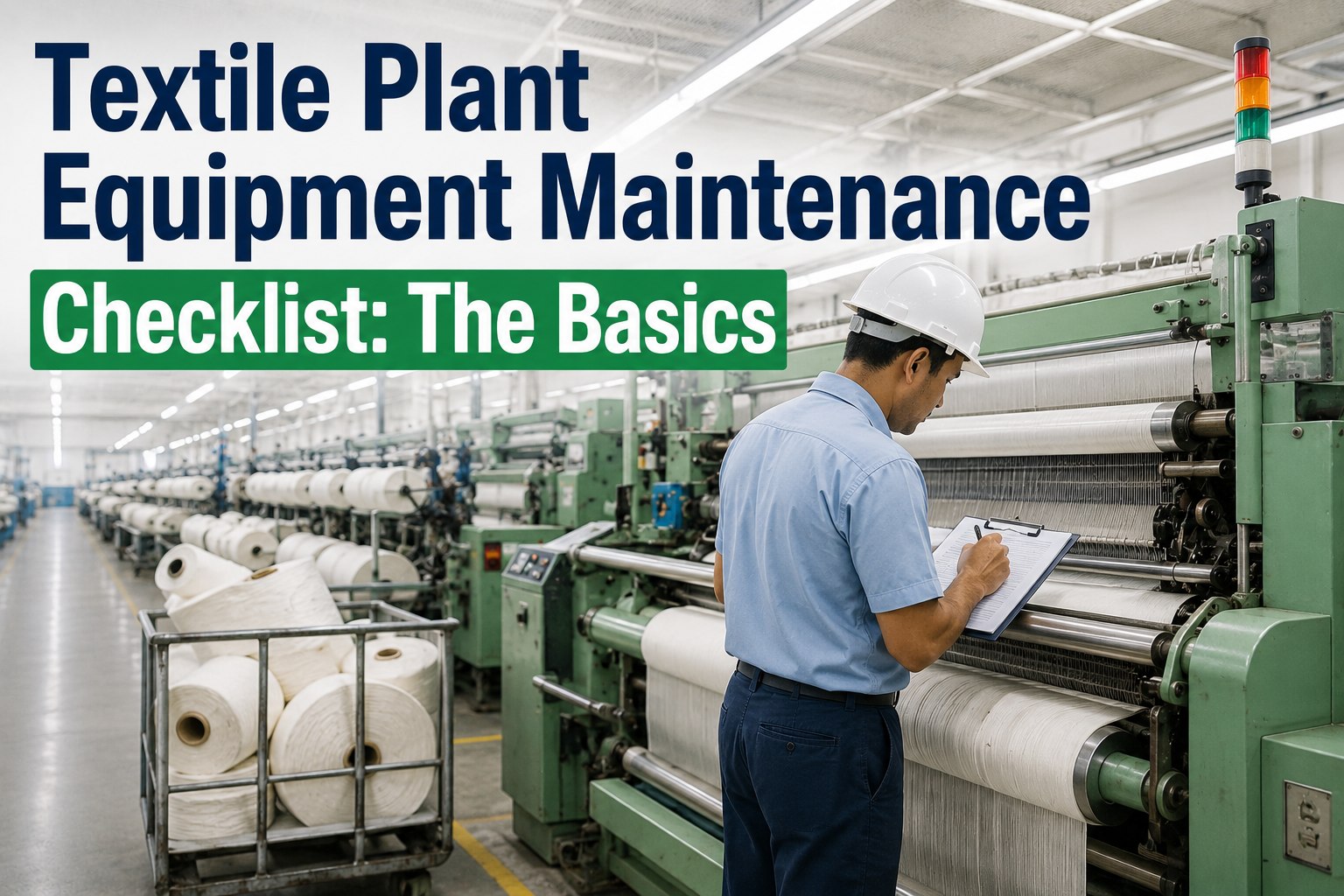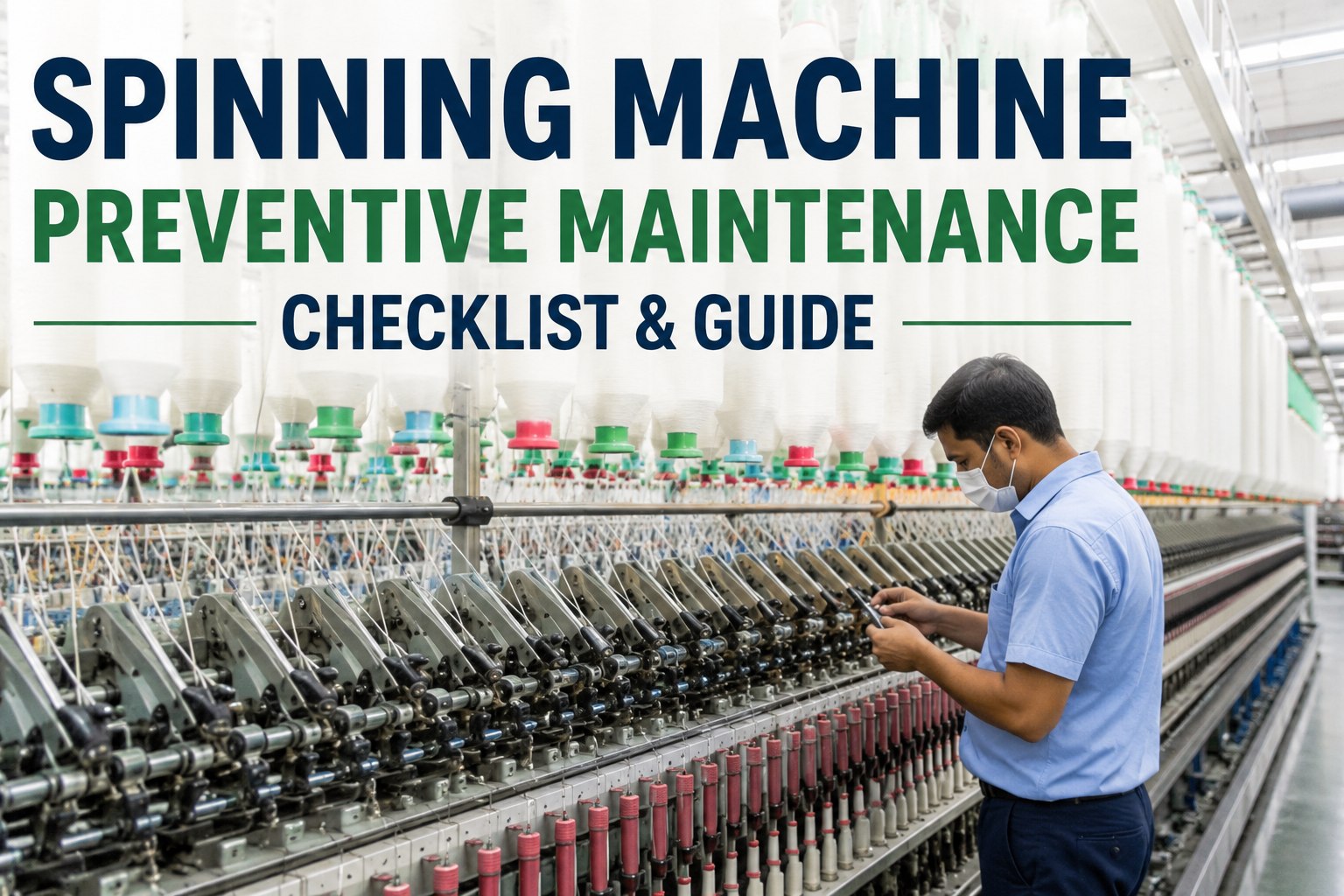
In a textile mill, a machine rarely fails all at once. Long before a loom actually stops, a worn heddle frame is already pulling warp threads out of alignment and a dirty shuttle mechanism is quietly stamping skip weaves into the fabric. The breakdown is the visible failure; the invisible one is the roll of downgraded cloth that shipped before anyone noticed. That is what makes textile maintenance different from most industries: a poorly maintained machine degrades product quality well before a technician sees a problem, and by then the defect is woven in. Add the raw cost of a stoppage — unplanned downtime runs anywhere from $5,000 to $50,000+ per hour depending on the department, and a single loom-bank failure can disrupt the entire downstream finishing schedule — and preventive maintenance stops being a cost centre and becomes quality control. Plants that move from reactive to planned maintenance with a CMMS typically cut unplanned downtime by around 30% and repair times by 25% within six months. This guide covers how to run PM across spinning, weaving, dyeing, and finishing. Start a free Oxmaint trial and schedule PM across every textile production stage, or book a demo to see lubrication routes and loom PM tracked on mobile.
Textile · Preventive Maintenance · Maintenance Manager
Textile Manufacturing CMMS & Preventive Maintenance Guide
How textile manufacturers use a CMMS to schedule PM for spinning, weaving, dyeing, and finishing equipment — cutting unplanned downtime by up to 30%, protecting fabric quality, and keeping every production stage running with mobile work orders.
-
30%
less unplanned downtime within six months of CMMS adoption
-
$5K–50K+
cost of unplanned downtime per hour by department
-
40–50%
of premature bearing failures caused by lubrication errors
-
15%
of spinning capacity lost to unplanned stoppages
Four Stages, Four Failure Modes
Every Production Stage Fails Differently
Textile production runs fibre to finished fabric through four stages, and each has its own dominant failure mode and its own PM focus. A maintenance program that treats a spinning frame like a dyeing vessel will miss what actually breaks. Here is what fails at each stage — and what PM prevents it.
-
Spinning
Fails from: ring & traveller wear, spindle bearing failure, drafting-roller eccentricity, cot deterioration PM focus: bearing checks on runtime hours, lubrication cycles, roller alignment, and blow-room lint control. -
Weaving
Fails from: reed damage, dobby/jacquard failure from lint, crank-bearing seizure, weft-insertion & stop-motion faults PM focus: loom timing and reed alignment on interval milestones, shedding-zone lint removal, and lubrication. -
Dyeing
Fails from: temperature drift, pump-seal wear, valve-integrity loss, boiler faults — causing batch failures & uneven dyeing PM focus: IoT-linked thermal alerts to work orders, seal and valve checks, and dosing-system calibration. -
Finishing
Fails from: roller misalignment, needle & cam wear, stenter-frame drift — degrading fabric hand and dimensional stability PM focus: cycle-count-based needle and cam inspection, roller alignment, and stenter setting verification.
Because the stages are interconnected, a failure upstream cascades: a single loom-bank outage disrupts the entire downstream finishing schedule. Book a demo to see stage-specific PM templates across the textile line.
The Two Root Causes
Almost Every Failure Traces to Two Things
Across all four stages, the same two culprits dominate textile breakdowns. Get these two under control with disciplined PM and the majority of unplanned stoppages disappear before they start.
-
01
Lubrication Errors
40–50% of premature bearing failures The leading cause of failure. Wrong grade, wrong quantity, or a missed point destroys bearings early. Fix it with manufacturer-specified grades (ISO VG 32 or 46 turbine oil for main sumps), colour-coded labelled points, calibrated grease guns measured in grams, and every event logged in the CMMS to audit for over-lubrication. -
02
Dust & Lint Accumulation
2nd most common cause Lint packs into shedding mechanisms, dobby and jacquard heads, and drafting zones, causing stoppages and contamination defects. Fix it with scheduled cleaning routes — suction checks, comb clearing, and shedding-zone lint removal — tracked as recurring PM work orders, not left to ad-hoc wiping.
Both are entirely preventable with a schedule and a record — which is exactly what a CMMS enforces. Sign up for Oxmaint to run colour-coded lubrication routes and lint-cleaning schedules.
The PM Rhythm
Daily, Weekly, and the 500-Hour Service
Textile PM runs on a layered cadence — light checks every shift, deeper work weekly, and a full service on a runtime or calendar milestone, whichever comes first. A CMMS triggers each layer automatically against machine runtime hours.
- Daily Visual & lubrication checks Every shift: visual inspection, lubrication-point checks, and lint clearing on the highest-contamination zones — the first line against both root causes.
- Weekly Mechanical checks Belt tension, roller alignment, suction system, and comb condition — catching drift before it becomes a fabric defect or a stoppage.
- 500–1000h Full service · or quarterly A complete service every 500–1,000 operating hours or quarterly, whichever comes first — wearable replacement, bearing service, and full calibration.
Triggering the full service on runtime hours rather than a fixed date matches PM to how hard each machine actually ran. Book a demo to see runtime-hour PM triggers across spinning and weaving.
Maintenance Is Quality Control
The Defect Was Woven In Before the Machine Ever Stopped
A worn heddle frame misaligns warp threads. A dirty shuttle creates skip weaves. Drifting loom timing produces uneven weft. None of these trip an alarm — they just downgrade the cloth, roll after roll, until a quality check or a returned order finds them. That is the hidden cost of reactive maintenance in textiles: not only the stoppage, but the defective fabric that shipped in the meantime. Tracking calibration and PM against every machine in a CMMS keeps timing, alignment, and cleanliness inside spec — so quality is protected on the loom, not caught at inspection.
Oxmaint for Textile Mills
How Oxmaint Runs Textile Maintenance
-
Runtime-Based PM
Triggers on Hours, Not Guesswork
Track runtime hours per machine and auto-trigger bearing inspections, lubrication, and full services before vibration anomalies become stoppages — each spinning frame, loom, and finishing line on its own interval.
-
Lubrication Control
Colour-Coded Routes, Logged
Every lubrication point labelled and scheduled, with grade and gram quantity recorded per event — so the leading cause of bearing failure is auditable, and over-lubrication is caught before it does damage.
-
Mobile Work Orders
Job Cards on the Floor
Technicians receive lint-cleaning routes, lubrication checks, and repair jobs on a phone or tablet — logging spares used, technician notes, and completion against the exact machine, online or offline.
-
Spare Parts
Drop Pins to Combs, Tracked
Drop pins, sensors, drives, bearings, belts, and combs tracked with min/max levels and auto-reorder — ending the stockouts that turn a quick fix into an extended stoppage.
-
Breakdown History
Every Failure, Instantly Recalled
Access breakdown history, technician notes, spares used, and previous failures per machine — so a recurring reed or bearing fault is spotted as a pattern and designed out, not repeated.
-
Audit Logs
Compliance-Ready Records
Clear logs of maintenance, calibrations, and inspections for buyers, compliance teams, and safety auditors — the documented history a textile audit demands, generated from day-to-day work.
Frequently Asked
Textile Maintenance Questions
How much can a CMMS reduce textile plant downtime?
Plants moving from reactive to planned maintenance with a CMMS typically see around a 30% reduction in unplanned downtime and 25% faster repair times within six months, with condition-based approaches pushing downtime reduction higher still. The gains come from catching lubrication and lint issues on schedule, triggering service on runtime hours, and having spares and history on hand so repairs are fast. Sign up for Oxmaint to start cutting textile downtime.
What is the leading cause of textile machine failure?
Lubrication errors — wrong grade, wrong quantity, or missed points — account for 40–50% of premature bearing failures in textile plants. The second most common cause is dust and lint accumulation in shedding mechanisms and drafting zones. Both are fully preventable with scheduled routes and logged records, which is why they are the first things a textile CMMS program should lock down.
How does maintenance affect fabric quality, not just uptime?
A poorly maintained machine degrades quality long before it breaks. Worn heddle frames misalign warp threads, dirty shuttle mechanisms create skip weaves, and drifting loom timing produces uneven weft — defects woven into the cloth and shipped before anyone notices. Scheduling calibration and cleaning against each machine keeps timing, alignment, and cleanliness in spec, protecting quality on the machine rather than catching it at final inspection. Book a demo to see calibration and PM tracked per machine.
How often should textile machines be serviced?
On a layered cadence: daily visual and lubrication checks, weekly mechanical checks (belt tension, roller alignment, suction, combs), and a full service every 500–1,000 operating hours or quarterly, whichever comes first. A CMMS triggers the full service on actual runtime hours rather than a fixed date, so a machine that ran hard is serviced sooner than one that sat idle — matching maintenance to real wear. Sign up for Oxmaint to automate the daily, weekly, and runtime PM cadence.
Lubricate · Clean · Calibrate · Track
Protect the Fabric on the Machine, Not at Inspection
Every missed lubrication point, packed lint zone, and drifting loom timing is a stoppage forming and a defect being woven in. Oxmaint gives textile maintenance managers one platform to schedule stage-specific PM across spinning, weaving, dyeing, and finishing, enforce lubrication and lint routes, trigger service on runtime hours, keep spares and history on hand, and hold the audit-ready records buyers demand — cutting downtime while protecting quality at the source.